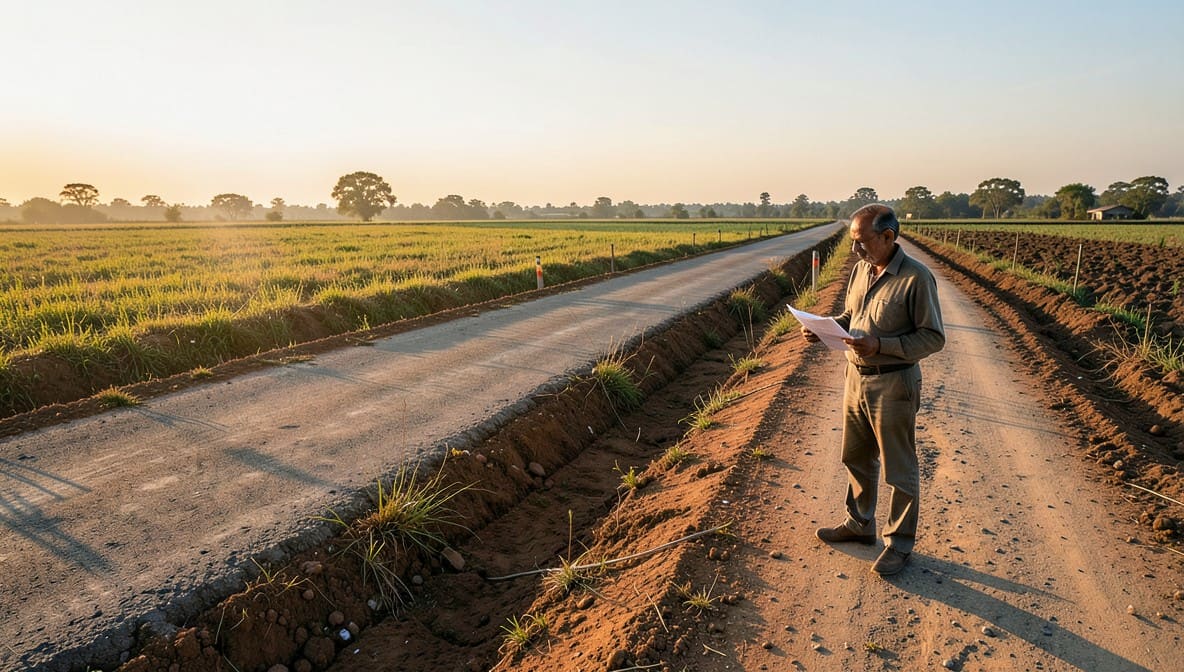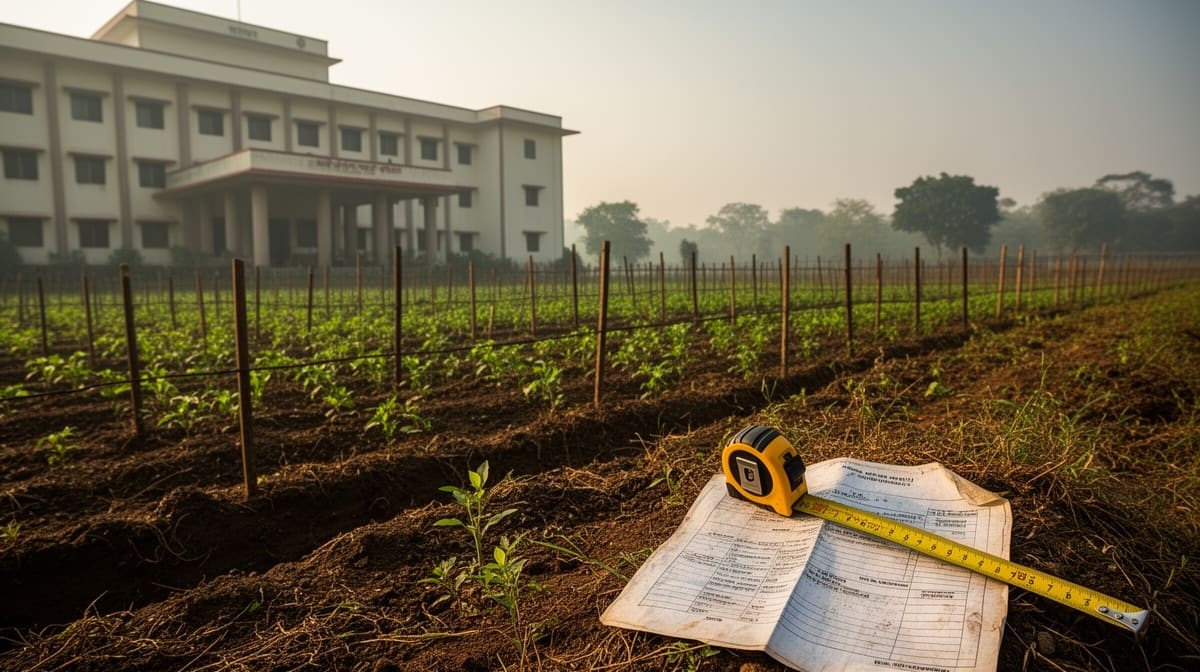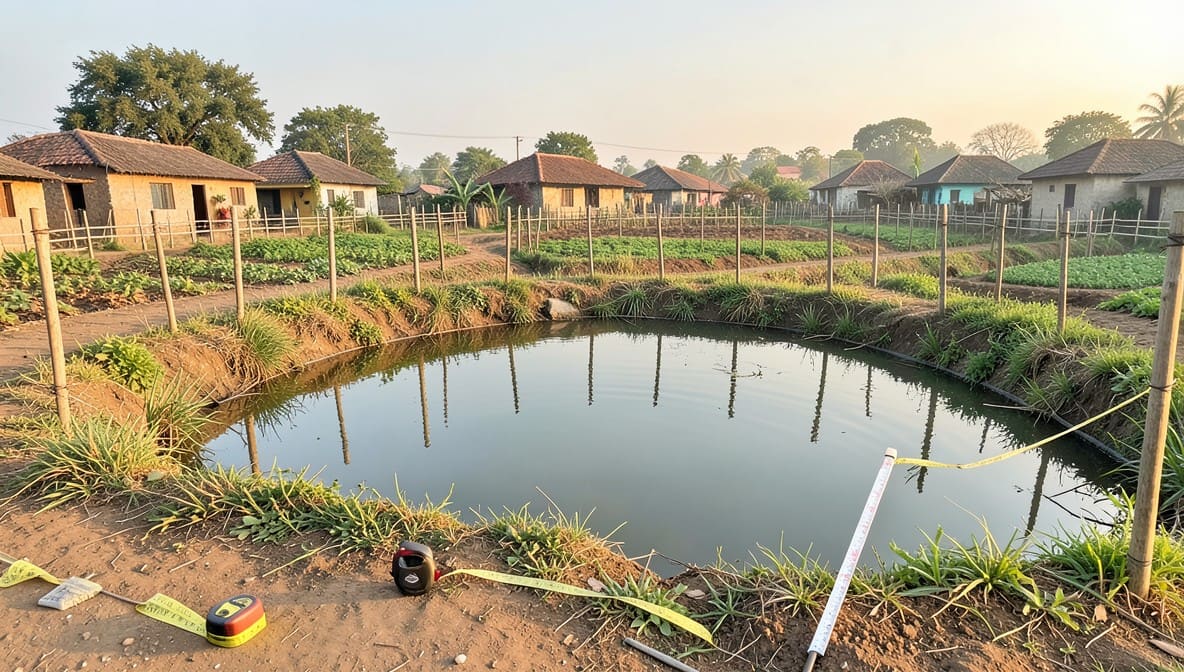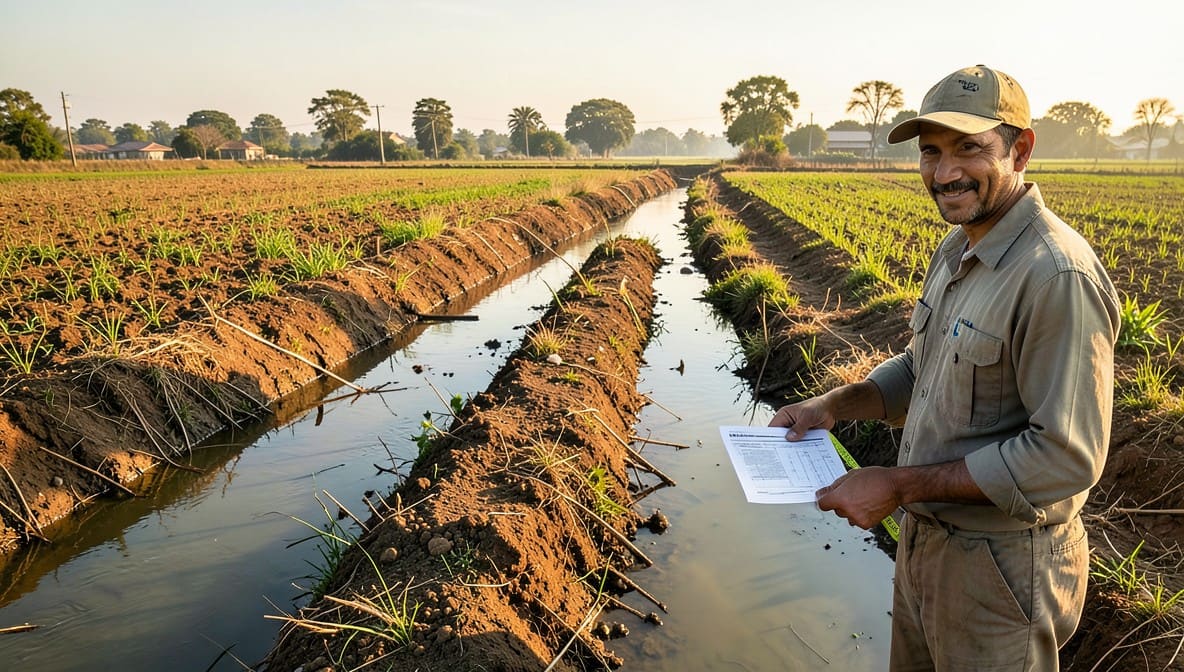
The Chhattisgarh High Court has affirmed that even partial, unauthorized use of private land for public infrastructure triggers an obligation to provide compensation, regardless of formal acquisition procedures. This ruling reinforces the principle that state agencies cannot appropriate land without due process, even if the extent is minimal.
Background & Facts
The Dispute
The petitioners, four siblings and a daughter of the late Bindabai, are recorded owners of land bearing Khasra No. 686/2, measuring 0.38 acre, situated in Village Parasada, Tahsil Akaltara, District Janjgir-Champa. A portion of this land, specifically 0.12 dismil (approximately 0.06 acre), was used by respondents for the construction of the Khatola Minor Canal without any formal notification, survey, or payment of compensation under the Land Acquisition Act or any other statutory framework.
Key Facts
- The petitioners’ mother, Bindabai, originally held title to the land and filed prior representations regarding its unauthorized use.
- On 24.05.2022, the local Patwari conducted a demarcation and submitted Report Ex. P-2, confirming that 0.12 dismil of the petitioners’ land had been utilized for the canal construction.
- Despite this report, the Executive Engineer, Hasdev Canal Water Management Division, issued a communication dated 12.06.2023 (Annexure P-4) to the Collector, falsely stating that no part of the petitioners’ land had been used for the canal, without referencing the demarcation report.
- The petitioners filed an application before the Collector on 03.07.2023 seeking compensation, which remained undecided.
- The land in question is not part of any notified acquisition project; the use was purely ad hoc and unauthorized.
Procedural History
- 24.05.2022: Demarcation report (Ex. P-2) prepared by Patwari confirming unauthorized use of 0.12 dismil.
- 12.06.2023: Executive Engineer’s report (Annexure P-4) erroneously denies land use, ignoring Ex. P-2.
- 03.07.2023: Petitioners submit formal application to Collector for compensation; no decision issued.
- 19.03.2026: Writ Petition No. 1221 of 2026 filed before the High Court of Chhattisgarh.
Relief Sought
The petitioners sought:
- A direction to the respondents to decide the compensation claim for the 0.12 dismil of land used for canal construction.
- A timeline for adjudication.
- Any other relief deemed just, including costs.
The Legal Issue
The central question was whether the unauthorized and uncompensated use of private land by a state agency for public infrastructure constitutes a violation of fundamental rights under Article 300A of the Constitution, and whether the affected landowners are entitled to compensation even in the absence of formal acquisition proceedings.
Arguments Presented
For the Petitioner
Learned counsel for the petitioners submitted that the use of land without consent, notice, or compensation violates the right to property under Article 300A, which mandates that no person shall be deprived of property save by authority of law. The demarcation report (Ex. P-2) is conclusive evidence of physical appropriation. The Executive Engineer’s report dated 12.06.2023, which ignored this document, was misleading and amounted to suppression of material facts. The petitioners had exhausted all administrative remedies by filing the application on 03.07.2023, which remained pending without reason.
For the Respondent
Learned counsel for the State did not dispute the factual assertions. He conceded that the demarcation report was not considered in the earlier communication and acknowledged the need for a fresh adjudication. He expressed no objection to the petitioners filing a fresh application with the Collector, accompanied by the demarcation report, and agreed that the matter should be decided expeditiously.
The Court's Analysis
The Court observed that while the land was not formally acquired under the Land Acquisition Act, the physical appropriation of 0.12 dismil for public infrastructure without any legal authority or compensation is a clear deprivation of property. The Court emphasized that Article 300A does not require formal acquisition to trigger the obligation of compensation; any unauthorized taking by the State must be remedied.
"The demarcation report dated 24-5-2022, prepared by the Patwari, is an official record and cannot be disregarded merely because it contradicts an internal report of the Executive Engineer."
The Court noted that the Executive Engineer’s communication dated 12.06.2023 was not only incomplete but also misleading, as it omitted the only concrete evidence of land use. The failure of the Collector to decide the application filed on 03.07.2023 amounted to administrative inaction, which the Court could not countenance.
The Court declined to adjudicate the merits of the compensation claim at this stage, as the factual determination required technical assessment by the revenue authorities. However, it held that the petitioners were entitled to a fair, timely, and reasoned decision on their claim.
The Verdict
The writ petition was disposed of with directions. The petitioners were granted liberty to file a fresh application before the Collector (Respondent No. 2) within 15 days, accompanied by the demarcation report (Ex. P-2). The Collector is directed to decide the application expeditiously, preferably within 60 days of filing. If the demarcation confirms land use, Respondents No. 2 and 3 must determine and pay appropriate compensation and other benefits within six months. Any fresh demarcation, if required, must be conducted during this period. All pending interlocutory applications are dismissed.
What This Means For Similar Cases
Unauthorized Use Triggers Compensation Obligation
- Practitioners must now argue that Article 300A applies even when land is not formally acquired under the Land Acquisition Act.
- Any physical appropriation by a government department - whether for canals, roads, or utilities - without consent or compensation is actionable.
- Demarcation reports by Patwaris or revenue officials are admissible and binding evidence of land use.
Administrative Delay Is Not an Excuse
- Failure to decide applications within reasonable time constitutes a violation of the right to effective remedy.
- Courts will not hesitate to impose timelines on revenue authorities for adjudicating land claims, even in the absence of formal acquisition.
- The burden shifts to the State to justify non-decision or suppression of evidence.
Procedural Integrity Over Technicalities
- Internal departmental reports that contradict official revenue records (like demarcation reports) are not entitled to primacy.
- Courts will prioritize documented, field-level evidence over bureaucratic assertions.
- Practitioners should always attach and highlight demarcation reports, survey maps, and Patwari records in land-related writ petitions.