The Chhattisgarh High Court has clarified that the recognition of Scheduled Tribe status cannot be extended to an applicant merely because a relative has been accepted as a member of the same tribal community. The judgment underscores the necessity of establishing a direct blood relationship to claim inheritance of tribal identity under statutory caste certification procedures.
Background & Facts
The Dispute
The petitioner, Padum S/o Rohit Das, seeks the issuance of a Scheduled Tribe certificate for himself and his family, asserting membership in the 'Gond' tribal community. The dispute arose after Dhaneshwar S/o Rupan, a neighbor and respondent, filed an application under Section 170-B of the Chhattisgarh Land Revenue Code, 1959, challenging the petitioner’s claim to tribal status and alleging fraudulent land records. The Sub-Divisional Officer (Revenue), Udaipur, initially dismissed Dhaneshwar’s application on 08.07.2020 after a statutory inquiry. Dhaneshwar appealed this decision, triggering a chain of administrative and appellate orders that ultimately led to this writ petition.
Key Facts
- The petitioner resides in Village Jaipur, Tehsil Lakhanpur, District Surguja, Chhattisgarh
- Respondent No. 5, Dhaneshwar, filed an application under Section 170-B of the Chhattisgarh Land Revenue Code, 1959 on grounds that petitioner’s land was fraudulently recorded in his name due to false tribal status
- Sub-Divisional Officer (Revenue), Udaipur, passed an order dated 08.07.2020 dismissing Dhaneshwar’s application after due inquiry
- Dhaneshwar filed a review application against the SDO’s order, which was dismissed on 15.09.2020
- Dhaneshwar then filed an appeal before the Collector, Surguja, which was partly allowed by order dated 11.05.2023
- The Collector’s order relied on the District Level Caste Scrutiny Committee’s order dated 23.01.2021, which cancelled the caste certificate of Bindeshwar S/o Rajaram Gond (petitioner’s nephew)
- The Collector directed the SDO to review the 08.07.2020 order in light of the District Committee’s findings
- The Commissioner, Surguja Division, dismissed the petitioner’s appeal against the Collector’s order by order dated 25.06.2024
- The petitioner filed a review petition against the Commissioner’s order, which was rejected on 28.04.2025
- The District Level Committee referred the matter to the High-Level Caste Scrutiny Committee, Raipur
- The High-Level Committee, by order dated 21.02.2025, cancelled Bindeshwar’s caste certificate on grounds of improper lineage through his great-grandmother, Bandhano D/o Bhagat Gond, but explicitly accepted that Bindeshwar belongs to the 'Gond' tribal community
- The petitioner has not produced any documentary evidence establishing a direct blood relationship between himself and Bindeshwar
Procedural History
- 08.07.2020: SDO (Revenue), Udaipur, dismissed Dhaneshwar’s application under Section 170-B
- 15.09.2020: Review application by Dhaneshwar dismissed by SDO
- 11.05.2023: Collector, Surguja, partly allowed appeal, set aside SDO’s order, directed review
- 23.01.2021: District Level Caste Scrutiny Committee cancelled Bindeshwar’s caste certificate
- 25.06.2024: Commissioner dismissed petitioner’s appeal against Collector’s order
- 28.04.2025: Commissioner rejected petitioner’s review petition
- 21.02.2025: High-Level Caste Scrutiny Committee, Raipur, cancelled Bindeshwar’s certificate but affirmed his tribal identity
- 17.03.2026: Writ Petition No. 720 of 2026 decided by Chhattisgarh High Court
The Parties' Positions
Petitioner’s Position: The High-Level Committee’s acceptance of Bindeshwar’s tribal identity should automatically validate the petitioner’s claim, as they are related. The impugned orders by the Collector and Commissioner are based on outdated findings of the District Committee, which were superseded by the High-Level Committee’s order.
Respondents’ Position: The petitioner has failed to establish any direct blood relationship with Bindeshwar. Acceptance of tribal status by one individual does not confer it upon another without proof of lineage. The burden lies on the petitioner to prove descent.
Relief Sought
The petitioner seeks:
- Quashing of the Collector’s order dated 11.05.2023
- Quashing of the Commissioner’s orders dated 25.06.2024 and 28.04.2025
- Restoration of the SDO’s order dated 08.07.2020
- Direction to issue a fresh Scheduled Tribe certificate to the petitioner and his family based on the High-Level Committee’s findings
- Restraint on disturbance of petitioner’s land
The Legal Issue
Can an applicant claim Scheduled Tribe status based solely on the recognition of tribal identity of a relative, without establishing a direct blood relationship or common ancestry?
Arguments Presented
For the Petitioner
The petitioner’s counsel argued that the High-Level Caste Scrutiny Committee’s order dated 21.02.2025, while cancelling Bindeshwar’s certificate on procedural grounds, explicitly affirmed his belonging to the 'Gond' community. Since Bindeshwar is the petitioner’s nephew, the petitioner contended that this affirmation should be sufficient to validate his own claim. He relied on the principle of consistency in administrative decisions and argued that the Collector and Commissioner erred in relying on the earlier District Committee order, which had been superseded.
For the Respondent
The State counsel countered that the High-Level Committee’s acceptance of Bindeshwar’s tribal identity does not create a legal presumption in favor of the petitioner. The petitioner had not submitted any birth records, family trees, ancestral documents, or other evidence to establish a direct lineage between himself and Bindeshwar. The law requires affirmative proof of descent, not mere association. The absence of such proof rendered the petitioner’s claim legally unsustainable.
The Court's Analysis
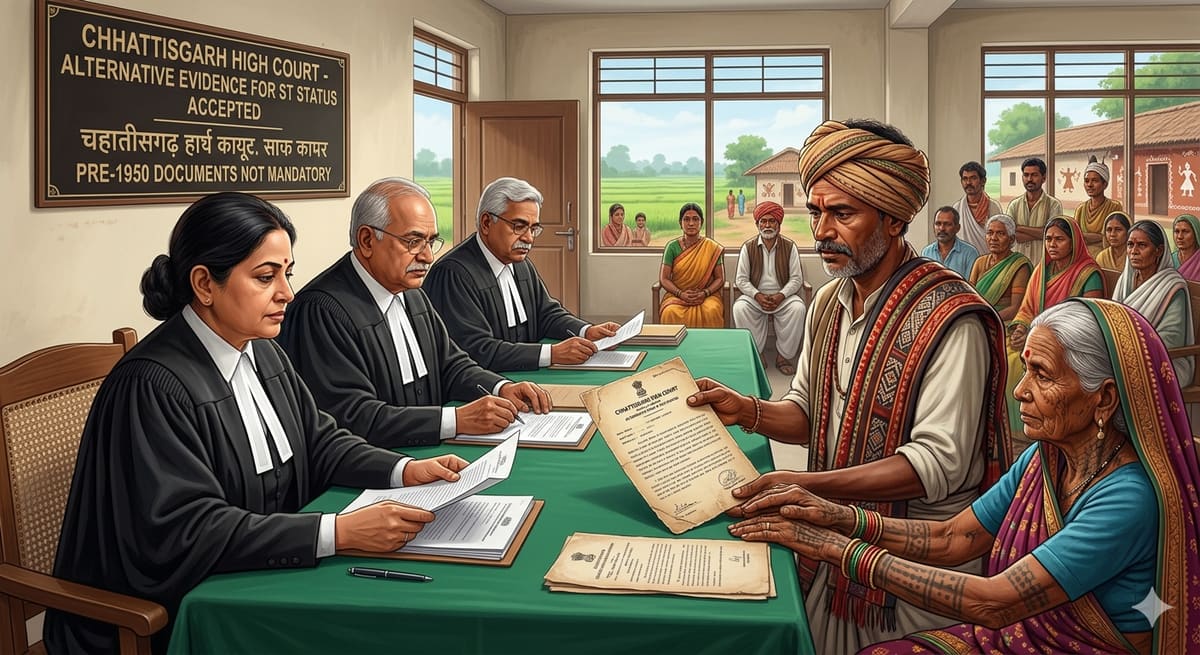
The Court examined the statutory framework under the Chhattisgarh Land Revenue Code, 1959, and the procedural guidelines for caste certification. It noted that the District Level Committee’s order dated 23.01.2021 had been superseded by the High-Level Committee’s order dated 21.02.2025, which, while cancelling Bindeshwar’s certificate on grounds of improper lineage, explicitly acknowledged his membership in the 'Gond' tribal community.
"The High-Level Committee has accepted that Bindeshwar S/o Rajaram Gond belongs to the 'Gond' tribal community."
The Court emphasized that this acceptance, though significant, does not automatically extend to the petitioner. The judgment clarified that caste certification is a personal determination based on individual lineage. The Court observed that the petitioner had not produced any evidence - such as birth certificates, ancestral records, or affidavits from elders - to establish a direct blood relationship with Bindeshwar.
The Court further held that administrative authorities are bound by the principle of individual proof. Even if a relative’s tribal status is confirmed, the applicant must independently establish descent. The Collector and Commissioner were not at fault for relying on the earlier District Committee order, as the petitioner had not brought the High-Level Committee’s order to their attention during the appellate process.
The Court declined to adjudicate the merits of the petitioner’s claim, noting that the appropriate forum for proving lineage remains the Sub-Divisional Officer (Revenue), who is empowered to conduct a fresh inquiry upon submission of documentary evidence.
The Verdict
The writ petition was dismissed. The Court held that the petitioner has not established a direct blood relationship with Bindeshwar S/o Rajaram Gond and therefore cannot claim Scheduled Tribe status based on his relative’s recognition. The petitioner is at liberty to approach the Sub-Divisional Officer (Revenue), Udaipur, with documentary proof of lineage to support a fresh application. No directions were issued for issuance of a caste certificate. All pending applications were disposed of.
What This Means For Similar Cases
Proof of Lineage Is Mandatory
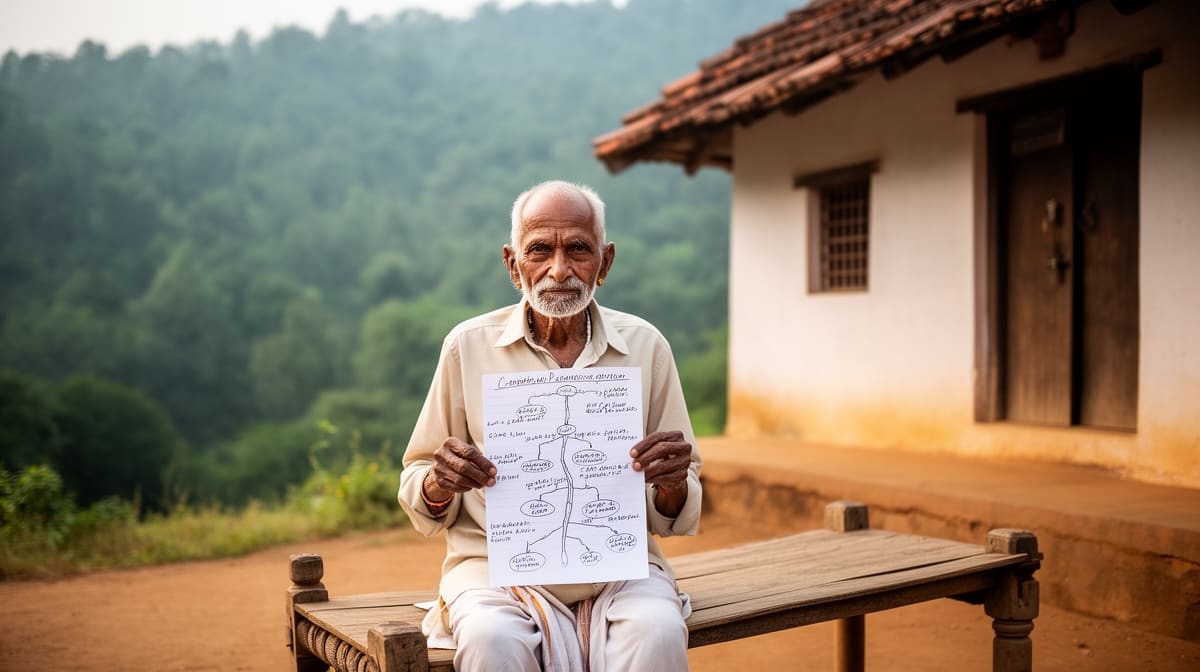
- Practitioners must advise clients seeking caste certification through relatives to collect and submit birth records, family trees, ancestral affidavits, or village panchayat records establishing direct descent
- Mere reference to a relative’s accepted tribal status is insufficient without documentary proof of blood relation
- Applications based on association rather than lineage will be rejected at all levels
Administrative Authorities Must Not Presume Status
- District and State-level committees may affirm tribal identity of an individual, but this affirmation does not create a precedent for unrelated applicants
- Revenue officers are not obligated to infer familial relationships from third-party caste determinations
- Each application must be evaluated on its own merits with independent evidence
Strategic Implications for Litigation
- Petitioners must file fresh applications before the SDO with supporting documents before approaching higher forums
- Writ petitions seeking direct issuance of caste certificates without exhausting administrative remedies will be dismissed
- Legal notices should be drafted to demand specific evidence from applicants, not merely rely on third-party orders