The Chhattisgarh High Court has reaffirmed a foundational principle of civil procedure: revenue authorities have no legal power to issue stay orders in land disputes. This judgment clarifies the jurisdictional boundaries between revenue and civil courts, offering critical guidance to practitioners handling property-related litigation.
Background & Facts
The Dispute
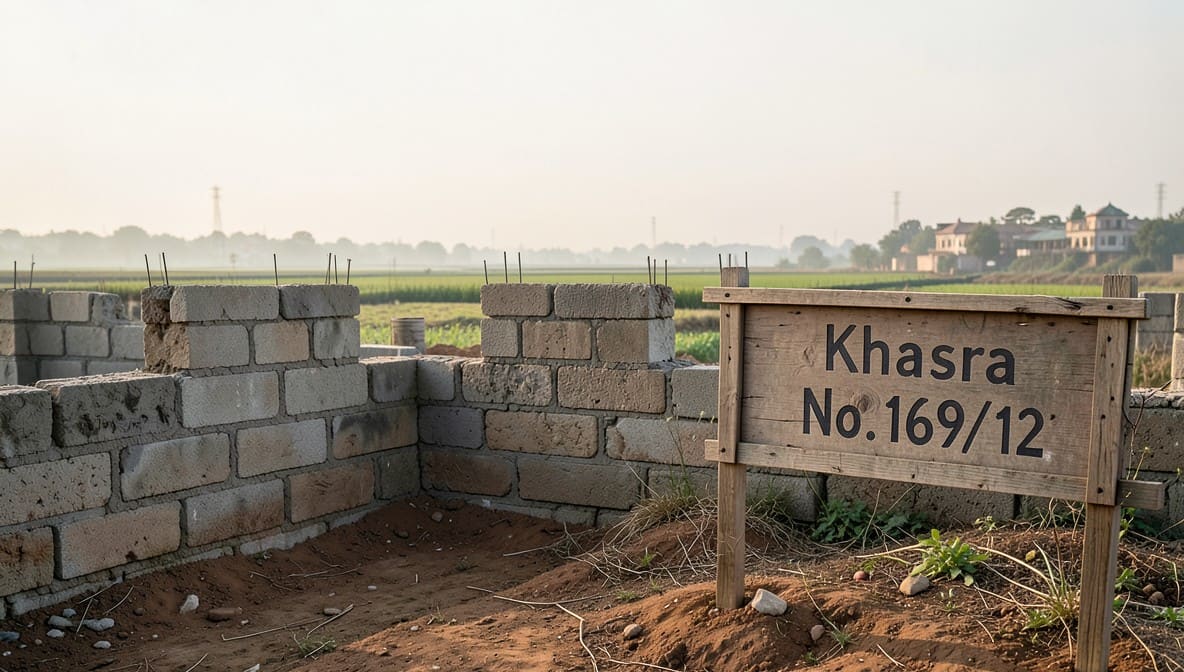
The petitioner, Mohanlal S/o Sonau, is the recorded owner and occupant of land bearing Khasra No. 5515/6, measuring 0.07 acre, situated in Jaijaipur, Tehsil Jaijaipur, District Sakti, Chhattisgarh. Adjacent to this land is Khasra No. 5515/3, which belongs to the private respondent, Vinay Kumar Agrawal. The petitioner commenced construction on his own land. In response, respondent no. 3 filed a complaint alleging encroachment upon his land. Based on this complaint, respondent no. 2, the Tehsildar of Jaijaipur, initiated Revenue Case No. 202602310800033/B-121/2025-26 and passed an order of status quo on 19.02.2026, restraining the petitioner from continuing construction.
Key Facts
- The petitioner is the lawful owner of Khasra No. 5515/6 as per land records
- Construction activity commenced on the petitioner’s own land in early 2026
- Respondent no. 3 filed a complaint with the Tehsildar alleging encroachment on Khasra No. 5515/3
- The Tehsildar issued an order of status quo on 19.02.2026 (Annexure P-1) under Revenue Case No. 202602310800033/B-121/2025-26
- No civil suit for injunction had been filed by respondent no. 3 prior to the revenue order
Procedural History
- 19.02.2026: Tehsildar, Jaijaipur, passed order of status quo in Revenue Case No. 202602310800033/B-121/2025-26
- 18.03.2026: Writ Petition No. 1174 of 2026 filed before the High Court of Chhattisgarh
- 18.03.2026: Hearing conducted before Hon’ble Justice Naresh Kumar Chandravanshi
Relief Sought
The petitioner sought:
- Quashing of the status quo order dated 19.02.2026
- Vacating the stay imposed by the Tehsildar
- Dismissal of the revenue proceedings initiated by respondent no. 3
- Permission to resume construction on his land without interference
The Legal Issue
The central question was whether a Tehsildar, acting under revenue jurisdiction, has the legal authority to issue a stay or injunction order in a land dispute between private parties, or whether such power is exclusively vested in the civil court under the Code of Civil Procedure.
Arguments Presented
For the Petitioner
Learned counsel contended that revenue courts, including Tehsildars, are statutorily empowered only to determine questions of land ownership, tenancy, and revenue assessment under the Chhattisgarh Land Revenue Code. They have no jurisdiction to grant injunctions or stay orders, which are purely civil remedies. Reliance was placed on the settled precedent in W.P. No. 235/2020 (Smt. Vandana Gupta v. State of Chhattisgarh), wherein this Court had held that only civil courts possess the power to grant injunctions under Section 94 and Order XXXIX of the CPC. The impugned order was therefore ultra vires and liable to be quashed.
For the Respondent
The State and Tehsildar argued that the revenue officer was merely acting to preserve the status quo pending adjudication of a genuine dispute over encroachment. They contended that the order was procedural and not an injunction in the technical sense, and that the revenue administration must have some interim power to prevent irreparable harm during pendency of revenue proceedings.
The Court's Analysis
The Court examined the statutory framework governing revenue officers and the civil jurisdiction under the Code of Civil Procedure. It observed that the powers of a Tehsildar are confined to revenue matters under the Chhattisgarh Land Revenue Code, 1959, and do not extend to granting injunctive relief. The Court reiterated its own prior holding in Smt. Vandana Gupta v. State of Chhattisgarh (16.09.2021), which had unequivocally held that "the power to grant injunction is vested exclusively in the jurisdictional civil court, and revenue courts have no such power."
"Revenue courts cannot grant order of injunction."
The Court emphasized that even if a revenue officer acts in good faith, the exercise of jurisdiction beyond statutory limits renders the order void ab initio. The order dated 19.02.2026, which restrained construction, was not a mere administrative direction but a coercive injunction affecting property rights. Such an order can only be issued by a civil court after satisfying the conditions of irreparable injury, balance of convenience, and prima facie case under Order XXXIX CPC.
The Court further noted that respondent no. 3 had not approached the civil court for an injunction, indicating that the remedy sought was improperly channelled through the revenue forum. The existence of a pending revenue case does not confer jurisdiction where none exists under law.
The Verdict
The writ petition was allowed. The Court quashed the status quo order dated 19.02.2026 passed by the Tehsildar, Jaijaipur, in Revenue Case No. 202602310800033/B-121/2025-26. The petitioner is permitted to resume construction on Khasra No. 5515/6 without interference. The remaining revenue proceedings may continue, but without any injunctionary restraint. All pending interlocutory applications are dismissed.
What This Means For Similar Cases
Revenue Officers Cannot Issue Injunctions
- Practitioners must immediately challenge any stay order issued by a Tehsildar or Revenue Officer in land disputes
- Such orders are void and can be quashed summarily under Article 226
- No need to exhaust alternative remedies - writ jurisdiction is maintainable
Civil Court Remedy Is Exclusive
- Any party seeking to restrain construction or possession must file a suit for injunction under Order XXXIX CPC in the appropriate civil court
- Filing a complaint with the revenue authority will not halt construction; it only triggers a revenue inquiry
- Delay in approaching civil court may prejudice the claimant’s case on balance of convenience
Procedural Misuse Must Be Flagged
- Lawyers must identify when civil remedies are being improperly sought through revenue forums
- This judgment provides a ready precedent to oppose such tactics in pending cases across Chhattisgarh
- The ruling reinforces the separation of civil and revenue jurisdictions, preventing forum shopping