The Chhattisgarh High Court has reaffirmed the limited jurisdiction of executing courts, holding that they cannot adjudicate claims of title or possession over property outside the scope of a decree. This judgment clarifies a critical boundary in civil execution proceedings, ensuring that disputes over land ownership must be resolved in original suits, not through summary execution applications.
Background & Facts
The Dispute
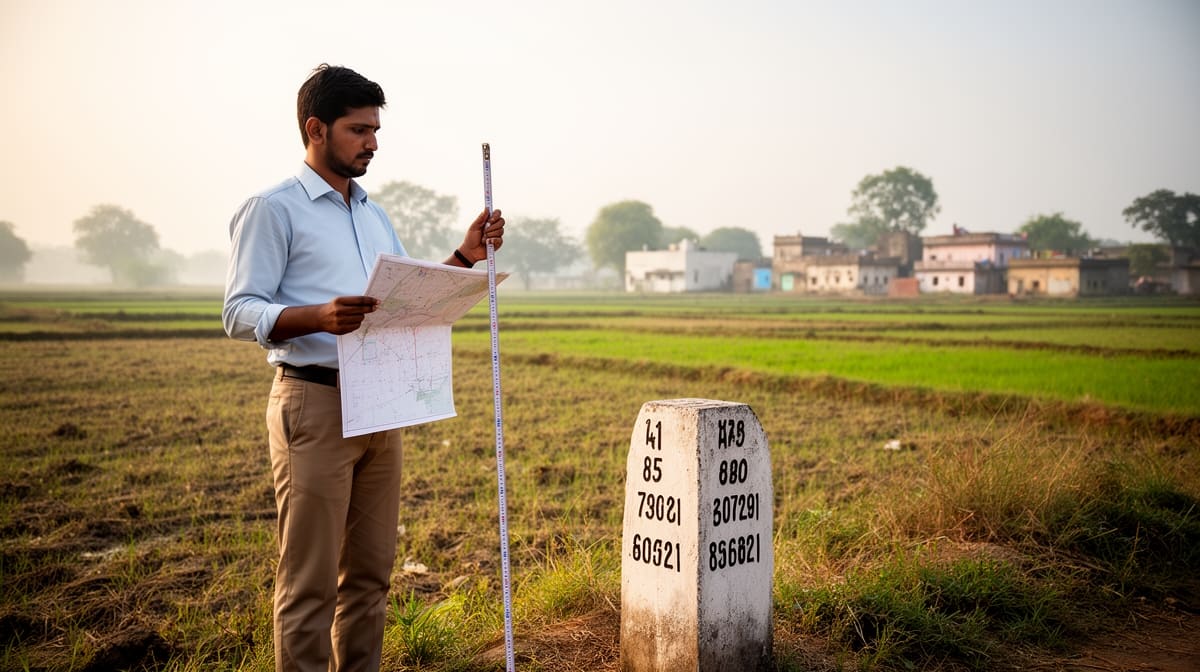
The dispute arose from a long-standing land conflict between Komalchand Jain (defendant/judgment debtor) and Madanlal Gupta (plaintiff/decree holder) over a parcel of land in Village Gaurela, District Bilaspur. The core issue was the precise extent of land transferred under two registered sale deeds: one dated 27.04.1974 in favor of Komalchand Jain (then Hukumchand Jain), and two subsequent deeds dated 25.06.1975 and 03.04.1976 in favor of Madanlal Gupta. The plaintiff claimed ownership over portions of the land not covered by the defendant’s deed and alleged encroachment.
Key Facts
- The original owner, Lal Amol Singh, sold 140 feet × 180 feet to Hukumchand Jain via registered sale deed dated 27.04.1974.
- Madanlal Gupta purchased additional portions from Amol Singh’s heirs via registered sale deeds dated 25.06.1975 and 03.04.1976.
- A criminal proceeding under Section 145 CrPC was initiated in 1976 (Criminal Case No. 91/1976), resulting in an ex parte attachment order on 27.05.1976.
- On 26.09.1978, the Sub-Divisional Magistrate directed the parties to approach the Civil Court and kept the property under attachment until further order.
- The civil suit was filed by Madanlal Gupta seeking declaration, mandatory injunction, and possession.
- The Trial Court, by order dated 01.10.2015, partly decreed the suit, recognizing the plaintiff’s title over specific portions marked on the plaint map (including area अ, ज, ल, क) and directing possession.
- The First Appellate Court modified the decree on 28.07.2016, limiting possession to area अ, ज, छ, प, ह, द, ल, क.
- Execution proceedings commenced, and possession was delivered to the decree holder as per the Majkuri report dated 12.02.2011.
- The appellant (judgment debtor) alleged that the decree holder had taken possession of additional land marked as प, छ, ह, द and म, ग, द, न - areas not included in the decree.
Procedural History
- 27.04.1974: Registered sale deed executed in favor of Hukumchand Jain (appellant’s predecessor).
- 25.06.1975: Registered sale deed executed in favor of Madanlal Gupta (respondent).
- 03.04.1976: Second registered sale deed executed in favor of Madanlal Gupta.
- 27.05.1976: Ex parte attachment order passed under Section 145 CrPC.
- 26.09.1978: Magistrate directed parties to approach Civil Court; property remained under attachment.
- 21.12.1983: Section 145 CrPC proceedings concluded; defendant declared in possession.
- 12.01.1984: Possession delivered to defendant under Section 145 CrPC.
- 1986: Civil suit filed by plaintiff (Execution Case No. 220-A/1986).
- 01.10.2015: Trial Court decreed suit in part, directing possession over specified areas.
- 28.07.2016: First Appellate Court modified decree, narrowing possession area.
- 16.10.2010: Second Appeal dismissed by High Court.
- 29.10.2010: SLP dismissed by Supreme Court.
- 12.02.2011: Revenue Inspector and Halka Patwari submitted report confirming possession boundaries; no excess possession found.
- 26.09.2011: Executing Court rejected application under Order XXVI Rule 9 for Commissioner appointment.
- 01.10.2015: Executing Court dismissed application under Order XXI Rules 98, 99, 100, 101 read with Section 151 CPC.
- 28.07.2016: Additional District Judge dismissed appeal against 01.10.2015 order.
- 05.02.2016: Civil Revision No. 55/2013 dismissed for want of prosecution.
- 18.03.2026: Judgment delivered by Chhattisgarh High Court.
Relief Sought
The appellant sought to set aside the Executing Court’s order dated 01.10.2015 and the First Appellate Court’s order dated 28.07.2016, claiming that the decree holder had taken possession of land beyond the decree’s scope. He sought restoration of possession over the disputed areas (प, छ, ह, द and म, ग, द, न) and a direction for the court to adjudicate his claim under Order XXI Rules 98 - 101 CPC.
The Legal Issue
The central question was whether an executing court, under Order XXI Rules 98, 99, 100, and 101 of the Code of Civil Procedure, has jurisdiction to adjudicate a claim of title or possession over land that is not part of the decree or the execution map.
Arguments Presented
For the Appellant
The appellant’s counsel argued that the executing court erred in dismissing his application under Order XXI Rules 98 - 101 CPC without framing issues, recording evidence, or granting a proper hearing. He relied on Jini Dhanrajgir v. Shibu Mathew (2023) 20 SCC 76 and Ramkumar v. Pankaj (2010) MP 921 to contend that such applications must be decided after full adjudication, including evidence and cross-examination. He asserted that the decree holder had taken possession of land beyond the decree’s boundaries, and the executing court was obligated to investigate and remedy this illegal dispossession.
For the Respondent
The respondent did not appear before the High Court despite service of notice. No counter-arguments were presented.
The Court's Analysis
The Court examined the scope of Order XXI Rules 98 - 101 CPC, which permit an executing court to adjudicate disputes concerning possession, title, or interest in property - but only when such disputes arise in relation to the property covered by the decree. The Court emphasized that the executing court’s jurisdiction is strictly confined to the execution of the decree as it stands, and it cannot act as a court of original jurisdiction to re-litigate title.
"The provisions of Order XXI Rules 98, 99, 100 and 101 of the CPC are not a substitute for a regular civil suit to determine title. They are meant to resolve disputes arising in the course of execution of a decree, not to reopen final adjudications on ownership."
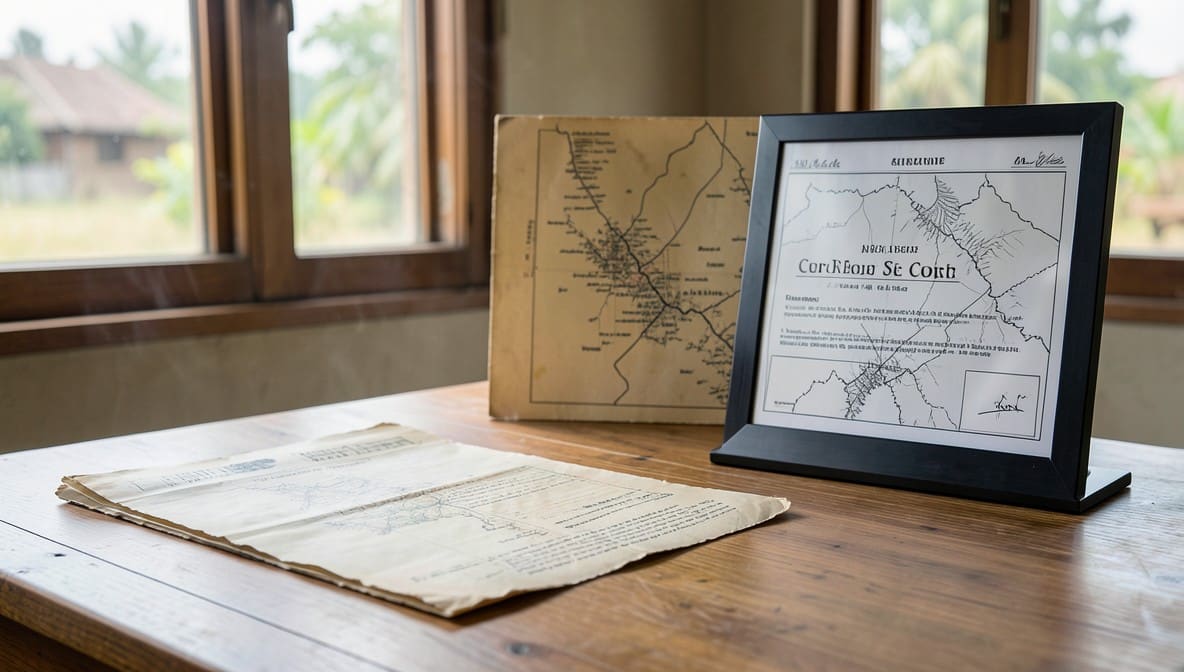
The Court noted that the Revenue Inspector’s report dated 12.02.2011, prepared in the presence of both parties and local officials, confirmed that the decree holder had not taken possession of any land beyond the decree’s boundaries. The disputed areas (प, छ, ह, द and म, ग, द, न) were not referenced in the plaint map, the decree, or the execution map. Therefore, the appellant’s grievance did not arise from the execution of the decree but from a claim of title over separate land.
The Court distinguished the cited precedents, observing that Jini Dhanrajgir and Ramkumar dealt with procedural compliance in applications under Order XXI Rules 98 - 101 - but only where the dispute was within the decree’s scope. Here, the dispute was extraneous. The Court held that if the appellant believed the decree holder had wrongfully taken possession of land outside the decree, his remedy lay in filing a separate civil suit for declaration and injunction, not in invoking execution proceedings.
The Court further observed that the appellant’s application was an attempt to reopen issues already finally decided by the Trial Court, Appellate Court, and affirmed by the Supreme Court. The principle that "an executing court cannot go beyond the decree" is well-settled, and the executing court acted correctly in rejecting the application.
The Verdict
The second appeal was dismissed. The High Court upheld the orders dated 01.10.2015 and 28.07.2016, confirming that the executing court had no jurisdiction to adjudicate title claims over land not included in the decree. The appellant was granted liberty to pursue any available legal remedy in an appropriate civil court, if advised.
What This Means For Similar Cases
Execution Courts Cannot Decide Title
- Practitioners must not file applications under Order XXI Rules 98 - 101 CPC to challenge ownership of land outside the decree’s scope.
- Such claims must be raised in a separate civil suit under Section 9 CPC.
- Courts will dismiss applications under Order XXI Rules 98 - 101 if the property in dispute is not referenced in the decree or execution map.
Documentation Is Decisive in Execution
- Revenue reports, execution maps, and survey records are critical evidence in determining whether possession exceeds the decree.
- Any claim of excess possession must be substantiated with documentary proof matching the decree’s boundaries.
- Oral testimony or general allegations without reference to the decree’s description will not suffice.
Limitation on Reopening Decrees
- A decree is final on its face; executing courts cannot modify, reinterpret, or expand its terms.
- Attempts to challenge the decree’s scope through execution applications are deemed abuse of process.
- Parties must exhaust remedies in original suits before execution begins, not after.