The Chhattisgarh High Court has affirmed that while conviction under the NDPS Act for possession of contraband must be upheld where evidence is conclusive, the sentence must reflect proportionality, especially when the quantity is modest and the accused has endured prolonged pre-trial incarceration. This judgment reinforces the principle that justice delayed is justice denied, even in drug-related offences.
Background & Facts
The Dispute
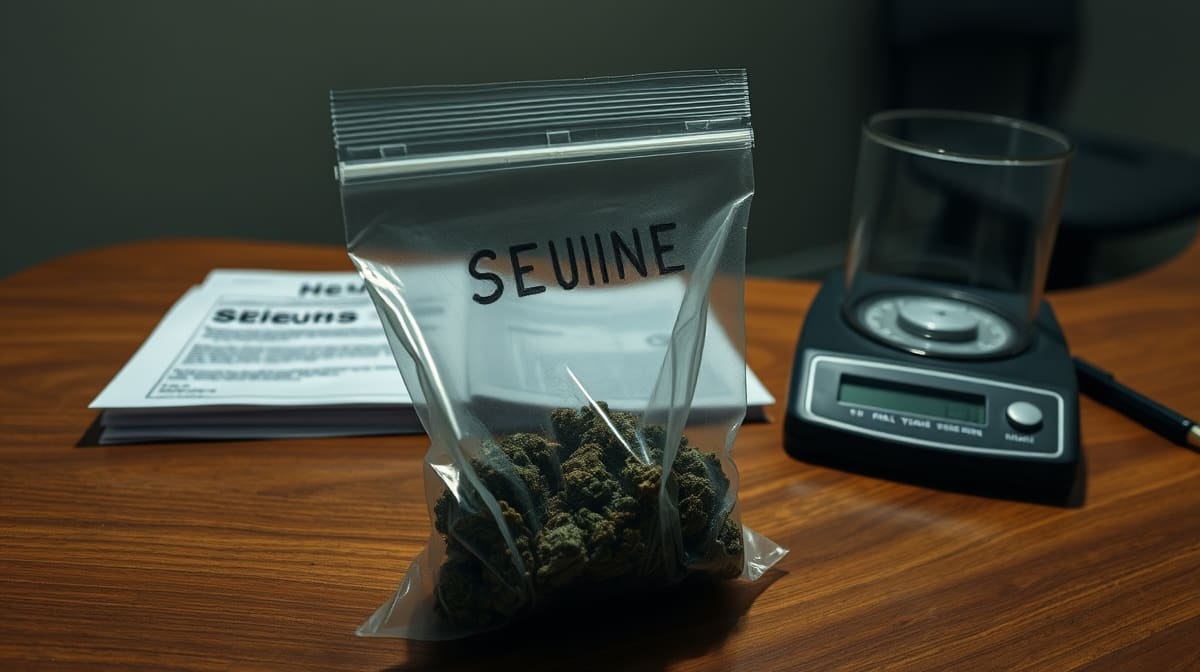
The appellant, Nandu Prasad Patel, was arrested on 11.01.2015 at Dongargarh Railway Station, Platform No. 1, after a secret information led the Government Railway Police (G.R.P.), Dongargarh, to suspect him of carrying cannabis for sale. A bag seized from him was found to contain 2 kg of cannabis. The G.R.P. issued a notice under Section 50 of the Narcotic Drugs and Psychotropic Substances Act, 1985, and conducted a search in the presence of witnesses.
Key Facts
- The contraband seized was 2 kg of cannabis (ganja)
- The appellant was arrested on 11.01.2015
- The charge sheet was filed after investigation
- The prosecution examined 12 witnesses and exhibited 44 documents
- The appellant denied all allegations during his statement under Section 313 CrPC
- The Regional Forensic Science Laboratory confirmed the seized substance was cannabis
- The appellant has been in custody since arrest
Procedural History
- 11.01.2015: Arrest of appellant at Dongargarh Railway Station
- 2015: Special Case No. 03/2015 initiated before Special Judge (NDPS Act), Rajnandgaon
- 19.05.2016: Trial Court convicted appellant under Section 20(b)(ii)(B) of NDPS Act and sentenced him to 5 years rigorous imprisonment and a fine of Rs. 20,000
- 17.03.2026: Appeal heard before the Chhattisgarh High Court
- As of the date of judgment, the appellant had undergone 1 year and 9 months of imprisonment
Relief Sought
The appellant sought reduction of the 5-year sentence to the period already undergone (1 year 9 months), arguing that further incarceration would be unjust given the delay and the modest quantity of contraband. He did not challenge the conviction on merits.
The Legal Issue
The central question was whether the sentence of 5 years rigorous imprisonment under Section 20(b)(ii)(B) of the NDPS Act, for possession of 2 kg of cannabis, should be reduced to the period already undergone by the appellant, given the prolonged litigation and absence of aggravating circumstances.
Arguments Presented
For the Appellant
Counsel for the appellant conceded the conviction was legally sound but argued that the sentence was disproportionate. He emphasized that the appellant had already served 1 year and 9 months of a 5-year term, and the case had remained pending for over 11 years. He relied on the principle of proportionality in sentencing and the doctrine that undue delay in trial must be factored into sentencing, citing State of Punjab v. Baldev Singh and State of Haryana v. Bhagwan Das.
For the Respondent
The State opposed the reduction, contending that the trial court’s sentence was within the statutory minimum and maximum under Section 20(b)(ii)(B), and that the quantity of cannabis, though modest, still attracted a mandatory minimum sentence. It argued that the conviction was based on solid evidence and that sentence modification would undermine deterrence.
The Court's Analysis
The Court first examined the procedural compliance under Sections 42, 52-A(3), and 55 of the NDPS Act and found no infirmity. The forensic report confirmed the seized substance as cannabis, and the chain of custody was intact. The Court held that the conviction was legally sustainable.
However, the Court turned to sentencing. It noted that while Section 20(b)(ii)(B) prescribes a minimum of 10 years for quantities exceeding 1 kg, the appellant was convicted under the sub-clause for quantities between 1 kg and 2 kg, which carries a minimum of 5 years. The Court observed that the quantity of 2 kg, while above the threshold, was not large-scale trafficking.
"Considering the above facts and circumstances of the case, particularly, considering the fact that the contraband Ganja seized from the possession of the appellant is 02 Kg in total; he has already undergone about 01 year and 09 months out of the period of 05 years sentence imposed upon him by the trial Court, I am of the considered opinion that the ends of justice would be met if, while upholding the conviction imposed upon the appellant, the jail sentence awarded to him is reduced to the period already undergone by him."
The Court emphasized that the appellant had been in custody since 2015 and that the trial had dragged on for over a decade. It held that further incarceration beyond the time already served would serve no rehabilitative or deterrent purpose and would amount to a denial of justice. The Court distinguished this case from those involving large-scale trafficking or repeat offenders.
The Verdict
The appellant’s conviction under Section 20(b)(ii)(B) of the NDPS Act was upheld. However, the 5-year rigorous imprisonment sentence was reduced to the period already undergone - 1 year and 9 months. The fine of Rs. 20,000 remains in force; if unpaid, the appellant shall undergo an additional 1 year of rigorous imprisonment as directed by the trial court. The Court directed the immediate release of the appellant upon compliance with the fine condition.
What This Means For Similar Cases
Sentence Proportionality Trumps Mandatory Minimums in Low-Quantity Cases
- Practitioners must argue that mandatory minimum sentences under NDPS Act must be tempered by the actual quantity, absence of trafficking intent, and duration of pre-trial detention
- Courts may now reduce sentences to time served where the contraband quantity is at the lower end of the statutory bracket and delay exceeds 5 years
Delay in Trial Is a Mitigating Factor in Sentencing
- Prolonged litigation, especially beyond 5 - 6 years, must be formally raised as a ground for sentence reduction
- Courts are now more willing to consider delay as a factor under Article 21, even in drug offences
- This judgment provides a clear precedent for filing applications under Section 439 CrPC or appeals seeking sentence commutation on grounds of undue delay
Documentation of Custody Duration Is Critical
- Defence counsel must maintain and submit a certified record of the accused’s custody duration from jail records
- This should be annexed to appeals or bail applications to enable courts to make informed sentencing decisions