The Chhattisgarh High Court has clarified that the existence of construction on disputed land does not automatically oust the jurisdiction of Civil Courts in suits for declaration of title and recovery of possession, provided the plaintiff establishes title through valid revenue documents. This judgment reinforces the principle that statutory bars under land revenue codes must be strictly construed and do not extend to disputes between private parties over encroachment.
Background & Facts
The Dispute
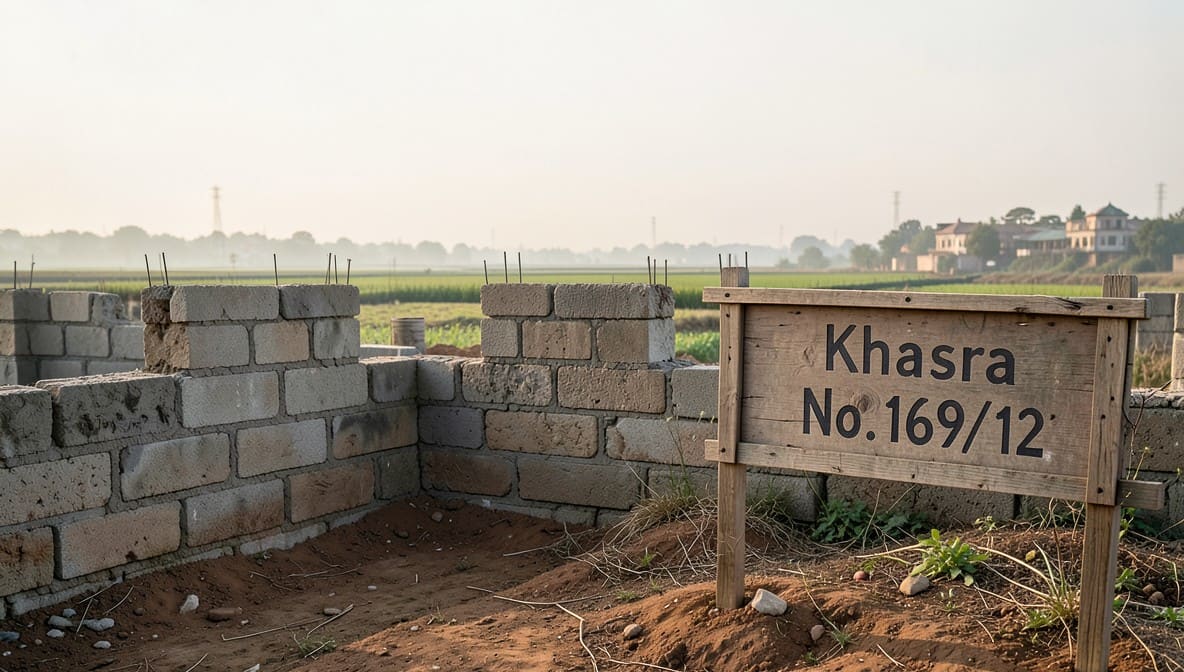
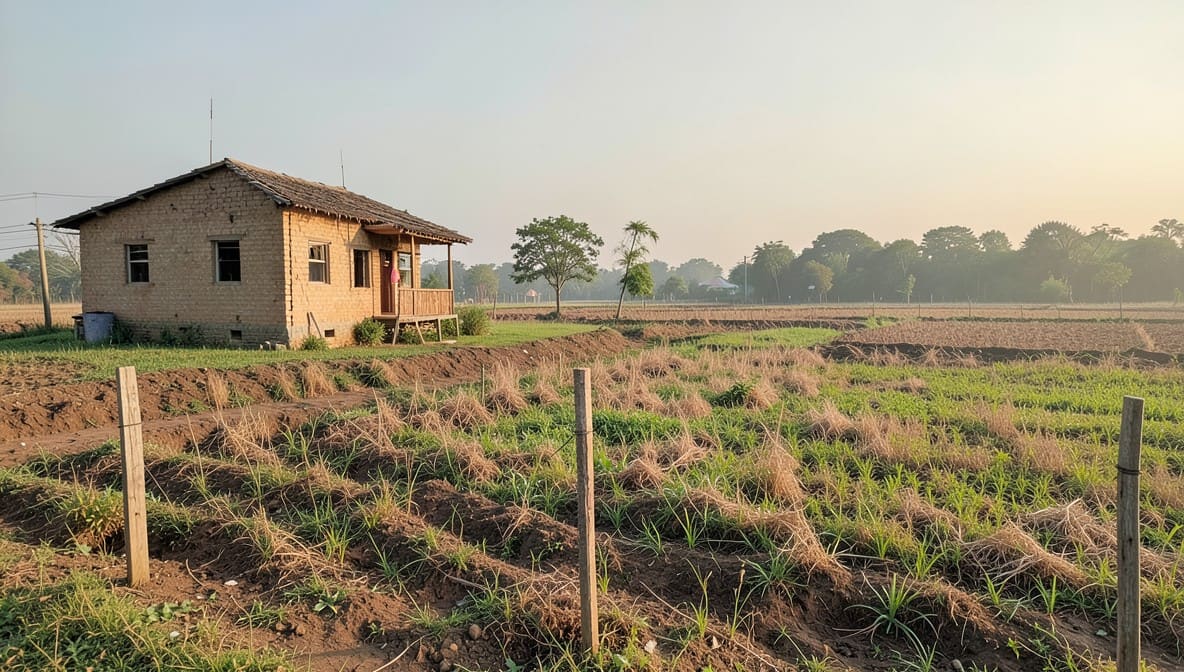
The plaintiff, Ashok Kumar, claimed ownership of agricultural land bearing Khasra No. 1115/1A1/4, admeasuring 1.011 hectares, situated in Village Dharamjaigarh, District Raigarh. He alleged that the defendant, Shivnandan, encroached upon a 40 sq. meter portion (10 meters x 4 meters) on the eastern side of the land and constructed a house thereon while the plaintiff was residing in Ambikapur for his petrol pump business.
Key Facts
- The plaintiff was granted a patta (Ex. P-4) for the land by the State, which was subsequently confirmed by the competent authority vide order (Ex. P-5)
- Revenue records were updated to reflect the plaintiff as Bhumiswami vide order (Ex. P-6)
- The plaintiff cultivated the land and maintained revenue records (Ex. P-1 to P-12) as evidence of title
- The defendant claimed the land was Government land and asserted continuous possession for 18 years
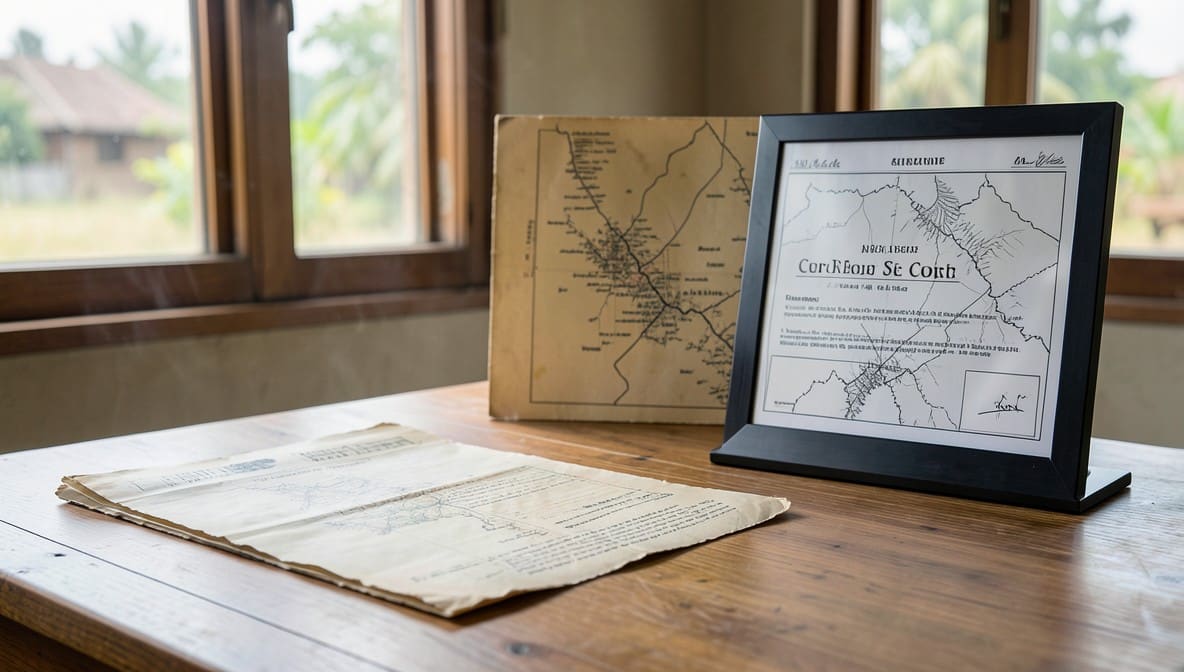
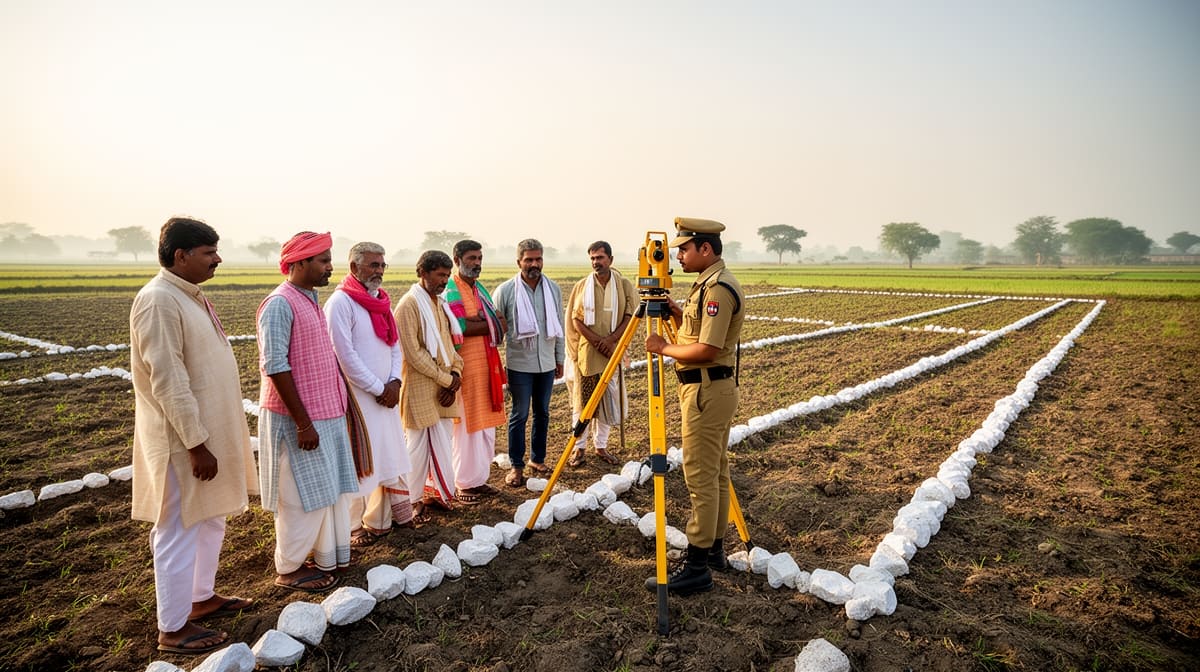
- On 14.03.2008, the Revenue Inspector conducted demarcation (Ex. P-8) and prepared a Panchanama (Ex. P-9), which revealed the encroachment
- The demarcation report was supplied to the plaintiff on 09.04.2008
- The plaintiff filed an application under Section 250 of the Chhattisgarh Land Revenue Code on 15.05.2009 for restoration of possession, which was dismissed on 24.06.2009 on grounds of jurisdictional bar due to construction
- The plaintiff’s appeal before the Sub-Divisional Officer was dismissed on 09.06.2010 on grounds of limitation
- The plaintiff filed Civil Suit No. 01-A/2011 on 12.07.2011 seeking declaration of title, recovery of possession, and permanent injunction
Procedural History
- 12.07.2011: Civil Suit No. 01-A/2011 filed before Civil Judge, Class II, Raigarh
- 28.01.2019: Trial Court dismissed the suit, holding that revenue records alone do not confer title, encroachment was unproven, and Civil Court lacked jurisdiction under Section 257 CLRC
- 04.09.2024: First Appellate Court (District Judge, Gharghoda) allowed the appeal, set aside the Trial Court’s judgment, and decreed the suit in favor of the plaintiff
- 19.03.2026: Second Appeal filed before Chhattisgarh High Court under Section 100 CPC
The Parties' Positions
Plaintiff (Respondent No. 1): Asserted title through patta, confirmation order, and revenue entries; claimed encroachment was established by demarcation report and defendant’s own admission that he built on Government land; argued cause of action arose on 14.03.2008; suit filed in 2011 was within limitation.
Defendant (Appellant): Denied title, claimed long, continuous, and peaceful possession for 18 years; challenged demarcation report as ex parte and inadmissible under Section 129 CPC; contended Section 257 CLRC barred Civil Court jurisdiction due to construction of a house.
Relief Sought
The plaintiff sought: (1) declaration of title over the suit property; (2) recovery of possession of the 40 sq. meter encroached portion; (3) permanent injunction restraining the defendant from further encroachment or interference.
The Legal Issue
The central question was whether the Civil Court retains jurisdiction under Section 9 of the Code of Civil Procedure to adjudicate a suit for declaration of title and recovery of possession when the disputed land has been encroached upon and a house constructed thereon, despite the bar under Section 257 of the Chhattisgarh Land Revenue Code.
Arguments Presented
For the Appellant
Counsel argued that the First Appellate Court erred in reversing the Trial Court’s finding that Section 257 CLRC bars Civil Court jurisdiction when construction exists on land. He contended that the demarcation report (Ex. P-8) and Panchanama (Ex. P-9) were inadmissible as they were prepared without the defendant’s presence, violating Section 129 CPC. He further asserted that the plaintiff’s long non-cultivation and failure to implead other alleged encroachers rendered the claim unreliable. The defendant claimed 18 years of continuous possession, making the suit barred by limitation.
For the Respondent
Counsel submitted that the plaintiff’s title was established through a valid patta (Ex. P-4), its confirmation (Ex. P-5), and subsequent recording in revenue records (Ex. P-6). He argued that Section 257 CLRC applies only to disputes between the State and a person, not between two private parties where one is an alleged encroacher. The demarcation report was an official record duly proved and corroborated by the defendant’s admission that he built on Government land. The cause of action arose on 14.03.2008, and the suit filed in 2011 was well within limitation. The plea of adverse possession was unsupported by consistent evidence.
The Court's Analysis
The Court emphasized that the scope of a Second Appeal under Section 100 of the Code of Civil Procedure is limited to substantial questions of law and does not permit re-appreciation of evidence. The findings of the First Appellate Court are binding unless shown to be perverse, based on no evidence, or involving a material error of law.
Regarding title, the Court held that while revenue entries alone do not confer title, they carry significant evidentiary value when supported by a valid source of title. The patta and its confirmation by competent authority constituted such a source. The Trial Court erred in rejecting the plaintiff’s claim solely on the ground that revenue records were insufficient, without considering the corroborative documentary chain.
"The source of title having been duly proved, the finding of the First Appellate Court is just and proper."
On encroachment, the Court found the demarcation report and Panchanama to be official documents duly proved. The defendant’s admission that he constructed a house on land he believed to be Government land significantly strengthened the plaintiff’s case. The absence of the defendant during demarcation did not invalidate the report, as it was part of the official record and corroborated by other evidence.
"The contention that the demarcation was conducted in absence of the defendant is of no avail, as the documents are part of official record and have been duly proved, and in any case stand corroborated by other evidence."
On jurisdiction, the Court distinguished between disputes involving the State and those between private parties. Section 257 CLRC bars Civil Courts only when the dispute is between the Government and a person, or between two persons where the State’s title is directly in question. Here, the dispute was between the plaintiff, who held a patta, and the defendant, an alleged encroacher. The suit sought relief under Section 9 of the CPC, which grants Civil Courts jurisdiction over all civil suits unless expressly barred. The bar under Section 257 was not attracted.
On limitation, the Court held that the cause of action arose on 14.03.2008, when the demarcation revealed the encroachment. The suit filed in 2011 was within the three-year limitation period. The defendant’s claim of adverse possession failed due to contradictory statements and lack of consistent, hostile, and uninterrupted possession.
The Verdict
The Second Appeal was dismissed. The judgment and decree of the First Appellate Court dated 04.09.2024 were upheld. The plaintiff’s title was confirmed, and he was granted possession of the 40 sq. meter encroached portion. A permanent injunction was issued against the defendant from further interference. No costs were awarded.
What This Means For Similar Cases
Civil Court Jurisdiction Prevails Over Section 257 CLRC in Private Encroachment Disputes
- Practitioners must argue that Section 257 CLRC applies only when the State is a direct party to the dispute
- Where title is established via patta or revenue records, and the suit is between two private parties over encroachment, Section 9 CPC confers jurisdiction on Civil Courts
- Rely on State of U.P. v. Mohd. Noor and Rajendra Singh v. State of Chhattisgarh to support that statutory bars must be strictly construed
Demarcation Reports Are Admissible Even Without Defendant’s Presence
- Official demarcation reports and Panchanamas prepared by Revenue Authorities are admissible as public documents under Section 35 of the Indian Evidence Act
- Absence of a party during demarcation does not render the report inadmissible if it is duly proved and corroborated by other evidence
- Admissions by the defendant regarding construction on disputed land can independently substantiate encroachment
Adverse Possession Requires Consistent, Hostile, and Uninterrupted Proof
- Mere long possession is insufficient; the claimant must prove possession that is open, hostile, and continuous for 12 years
- Contradictory statements on duration of possession (e.g., 15 vs. 18 years) fatally undermine the defense
- Courts will not accept vague assertions of possession without documentary or witness support