The Chhattisgarh High Court has affirmed that a conviction under Section 304-B IPC cannot be sustained without clear proof of cruelty or harassment related to dowry demand soon before the woman’s death. The judgment underscores the necessity of rigorous evidentiary standards in cases involving alleged dowry deaths, reinforcing the principle that acquittals based on plausible factual interpretations must not be disturbed absent perversity or illegality.
Background & Facts
The Dispute
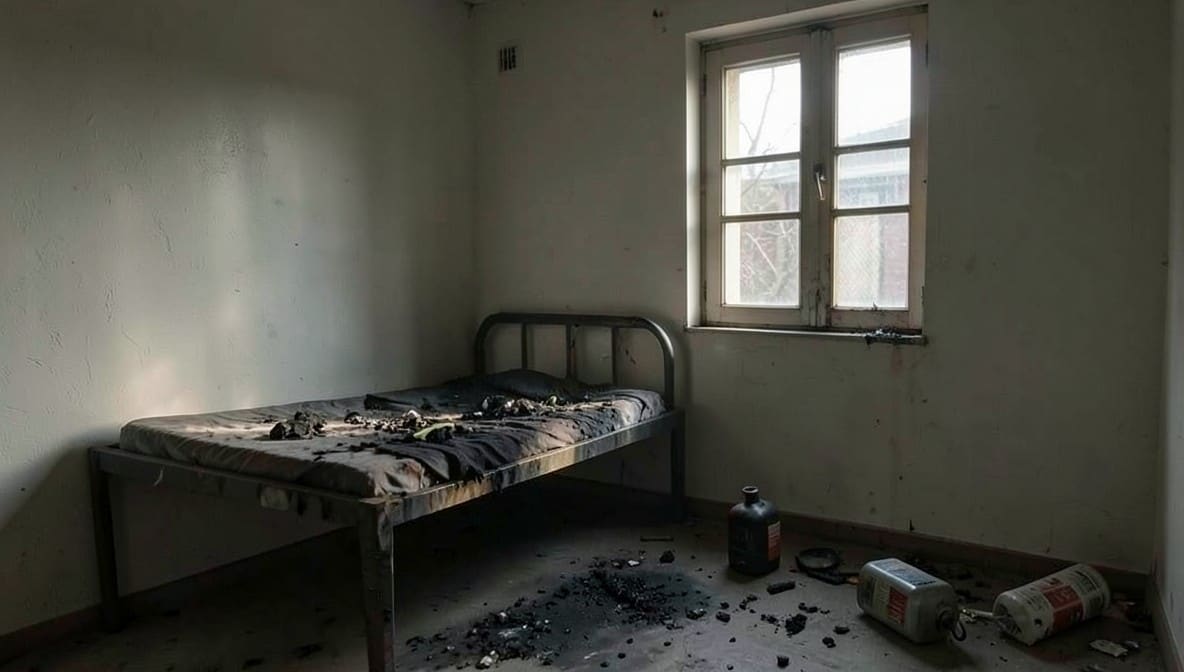
The case arose from the death of Smt. Kunti Bai, aged approximately 20 years, who was found burnt to death in her matrimonial home in Village Navrangpur, Police Station Lormi, District Mungeli, on 23.06.2014 at approximately 07:00 PM. She had been married to the accused Jagdeep Jaiki Lonia for about two years and had a 15-month-old son. Her father, Ghashi Ram Lonia, lodged an FIR at Police Station Lormi on 02.07.2014 alleging that her death was not due to accidental or suicidal causes but was a result of homicidal burning, possibly linked to dowry demands.
Key Facts
- The deceased, Smt. Kunti Bai, was married to accused Jagdeep Jaiki Lonia on or about 23.06.2012.
- She died on 23.06.2014, within seven years of marriage.
- The postmortem report (Ex-P/28) by Dr. Jitendra Paikra (PW-11) concluded death was due to extensive thermal burns.
- Forensic Science Laboratory (FSL) report (Ex-P/28) found no traces of flammable substances such as petrol or diesel.
- Viscera report (Ex-P/29) revealed no presence of chemical poisons.
- Dr. Paikra admitted in cross-examination that the injuries could have resulted from an electric shock and that he could not opine whether the death was homicidal, suicidal, or accidental.
- The deceased had previously attempted suicide by consuming poison six months prior to her marriage and was treated at CIMS Bilaspur.
- PW-1 (father) and PW-2 (brother) admitted in cross-examination that the deceased had a short temper and had attempted suicide before marriage.
- Only PW-2 Hariram alleged that Jagdeep had slapped the deceased for dowry demand; no other witness corroborated this.
- No independent evidence of dowry demand, harassment, or cruelty in the period immediately preceding death was established.
- No prior complaints or documents regarding dowry demands were produced by the prosecution.
Procedural History
- 23.06.2014: Death of Smt. Kunti Bai.
- 02.07.2014: FIR lodged by Ghashi Ram Lonia at Police Station Lormi.
- 2014: Investigation completed; charge sheet filed under Sections 302/34, 304-B, and 201 IPC.
- 21.08.2017: Additional Sessions Judge, Mungeli, acquitted all accused respondents.
- 2018: Two appeals filed - ACQA No.45/2018 by complainant Ghashi Ram Lonia and ACQA No.304/2018 by the State of Chhattisgarh.
- 16.03.2026: Hearing concluded before Division Bench of Chhattisgarh High Court.
Relief Sought
The appellants sought reversal of the acquittal and conviction of the accused under Sections 302/34, 304-B, and 201 IPC. The complainant and State contended that the trial court erred in ignoring material evidence and misappreciating witness testimony.
The Legal Issue
The central question was whether the prosecution had established beyond reasonable doubt that the deceased was subjected to cruelty or harassment by her husband or his relatives for or in connection with any demand for dowry soon before her death, as required under Section 304-B of the Indian Penal Code.
Arguments Presented
For the Appellant/Petitioner
Counsel for the complainant and the State argued that the trial court erred in acquitting the accused despite the presence of circumstantial evidence. They contended that the death occurring within seven years of marriage, coupled with the nature of burns and the absence of any natural cause, raised a strong inference of dowry-related homicide. They relied on the testimony of PW-2 Hariram, who stated that the accused slapped the deceased for dowry, and argued that minor contradictions in other witnesses’ statements should not lead to acquittal. They cited Charan Singh v. State of Uttarakhand and Shoor Singh v. State of Uttarakhand to assert that once the basic ingredients of Section 304-B are established, the presumption under Section 113-B of the Evidence Act applies.
For the Respondent/State
Counsel for the accused supported the acquittal, arguing that the prosecution failed to prove any cruelty or harassment in connection with dowry demand. They emphasized that the only allegation of violence was a single, uncorroborated statement by PW-2, and that the deceased had a history of suicidal tendencies. They highlighted the absence of any prior complaints, medical records of injuries, or witness testimony indicating ongoing harassment. They relied on the postmortem and FSL reports, which ruled out foul play, and argued that the trial court’s conclusion that the death could have been accidental or suicidal was legally plausible.
The Court's Analysis
The High Court undertook a meticulous review of the trial court’s reasoning and the evidentiary record. It emphasized that the burden of proving the essential ingredients of Section 304-B IPC rests entirely on the prosecution and that the presumption under Section 113-B of the Evidence Act arises only after these ingredients are established.
"The expression ‘dowry’ is ordained to have the same meaning as in Section 2 of the Dowry Prohibition Act, 1961. The expression ‘cruelty’, as explained, contains in its expanse, apart from the conduct of the tormentor, the consequences precipitated thereby qua the lady subjected thereto. Be that as it may, cruelty or harassment by the husband or any relative of his for or in connection with any demand of dowry, to reiterate, is the gravamen of the two offences."
The Court noted that while the death occurred within seven years of marriage, the prosecution failed to establish that the deceased was subjected to cruelty or harassment soon before her death. The sole allegation of a slap by the accused was uncorroborated and contradicted by the admission of the deceased’s father that she had a short temper and had previously attempted suicide.
The Court further relied on the Supreme Court’s judgment in Mallappa v. State of Karnataka, which held that appellate courts must not interfere with acquittals unless the trial court’s view is legally unsustainable, perverse, or marred by illegality. The trial court had correctly observed that the nature of death could not be conclusively determined as homicidal, and that the absence of any evidence of dowry demand or sustained harassment rendered the prosecution’s case speculative.
The High Court also noted that the trial court had comprehensively evaluated all oral and documentary evidence, including the postmortem and FSL reports, and had rightly concluded that the prosecution had failed to discharge its burden beyond reasonable doubt.
The Verdict
The appeals were dismissed. The Chhattisgarh High Court upheld the acquittal of all accused respondents under Sections 302/34, 304-B, and 201 IPC. The Court found no perversity or illegality in the trial court’s appreciation of evidence and affirmed that the prosecution had failed to prove the essential ingredients of Section 304-B IPC beyond reasonable doubt. No conviction was ordered, and no sentence was imposed.
What This Means For Similar Cases
Prosecution Must Prove Cruelty, Not Just Death
- Merely establishing that a woman died within seven years of marriage and suffered burns is insufficient for conviction under Section 304-B IPC.
- The prosecution must independently prove cruelty or harassment in connection with dowry demand immediately before death.
- Absence of such proof negates the applicability of the presumption under Section 113-B of the Evidence Act.
Trial Court’s Appraisal of Evidence Is Paramount
- Appellate courts must respect a trial court’s factual findings unless they are perverse or legally untenable.
- Minor inconsistencies in witness testimony cannot be grounds for reversal if the trial court has reasonably explained them.
- Where two views are possible, the benefit of doubt must go to the accused.
Medical and Forensic Evidence Cannot Be Ignored
- Postmortem and forensic reports that rule out foul play or fail to indicate homicidal intent must be given decisive weight.
- If no flammable substances or poisons are found, and the cause of death remains ambiguous, the prosecution’s case weakens significantly.
- Courts must avoid speculative inferences in the absence of concrete evidence linking death to dowry-related cruelty.