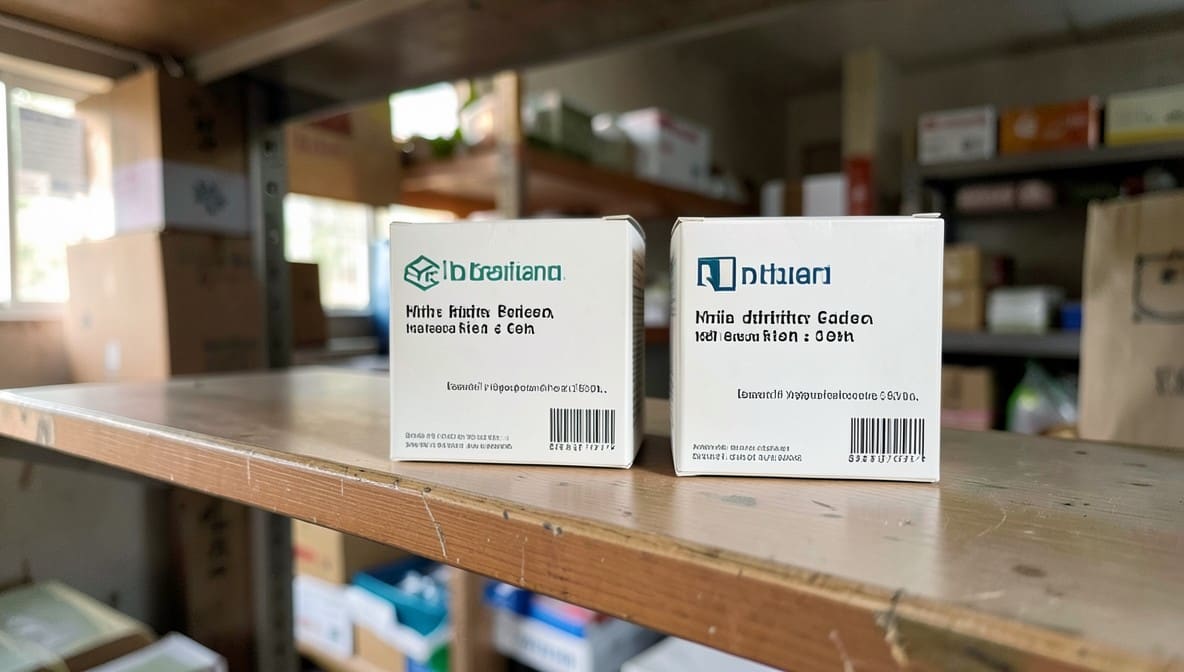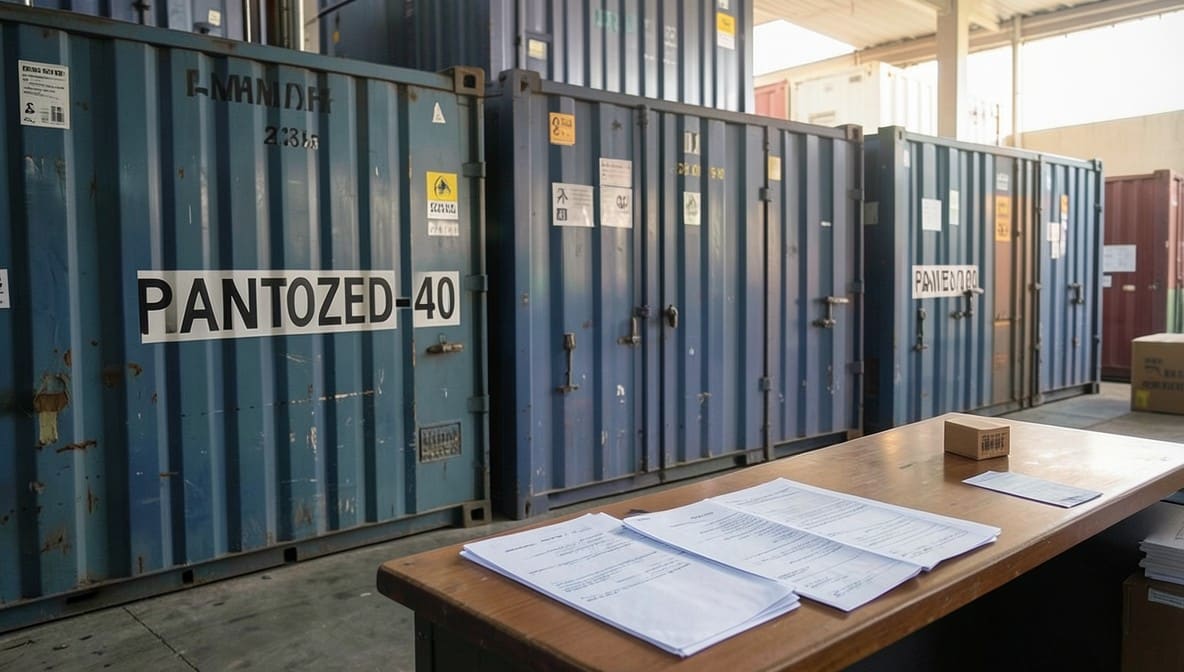
The Bombay High Court has clarified that manufacturing and exporting goods bearing a deceptively similar trademark from India constitutes actionable use under the Trade Marks Act, 1999, granting an interim injunction to the registered proprietor of 'PANTOCID' against a Kenyan entity's use of 'PANTOZED-40'. This ruling reinforces territorial enforcement of Indian trademark rights even where infringement occurs abroad, provided the infringing act originates within India.
Background & Facts
The Dispute
The Plaintiff, Sun Pharma Laboratories Limited, is the registered proprietor of the trademark 'PANTOCID' for pharmaceutical products containing the active ingredient Pantoprazole, used to treat acid-related gastrointestinal disorders. The Defendant, Zawadi Healthcare Limited, a Kenyan entity, is alleged to have adopted the mark 'PANTOZED-40' for identical products, which are manufactured in Mumbai by Defendant No. 2 and exported to Kenya.
Key Facts
- The Plaintiff’s predecessor secured registration of 'PANTOCID' under the Trade and Merchandise Marks Act, 1958 on 19th February, 1998.
- The Plaintiff is the subsequent proprietor of the mark, with registrations in India and multiple foreign jurisdictions including Kenya.
- The Plaintiff’s products are marketed as 'PANTOCID', 'PANTOCID DSR', 'PANTOCID-D', 'PANTOCID-IV', 'PANTOCID-HP', and 'PANTOCID-IP' - all Schedule-H drugs containing Pantoprazole.
- Sales turnover and promotional expenditure data from 1999 to 2022 demonstrate substantial goodwill and reputation.
- In January 2023, the Plaintiff discovered the Defendant’s product 'PANTOZED-40' being sold online and exported from India to Kenya.
- The Defendant has not filed any application for registration of 'PANTOZED-40' in India.
- Defendant No. 1 holds a registration for 'PANTOZED' in Kenya, dated 25th June, 2021.
- The active ingredient in both products is Pantoprazole, an International Non-Proprietary Name (INN) published by the Registrar in 2012.
- The Defendants claim the prefix 'PANTO' is generic and commonly used, citing over 1,300 trademarks with 'PANTO' in the Trade Marks Registry.
- The Plaintiff’s registration predates the 2012 INN list and the Kenyan registration.
Procedural History
- 19th February, 1998: Registration of 'PANTOCID' granted under the Trade and Merchandise Marks Act, 1958.
- 14th December, 2007: Plaintiff filed a subsequent application for 'PANTOCID' (application no. 802552), which was opposed.
- 25th June, 2021: Defendant No. 1 registered 'PANTOZED' in Kenya.
- January 2023: Plaintiff discovered Defendant’s product 'PANTOZED-40' being exported from India.
- 18th March, 2023: Commercial IP Suit No. 183 of 2025 filed in Bombay High Court seeking injunction.
- 28th March, 2023: Affidavits in reply filed by Defendants.
- 12th March, 2026: Interim Application (L) No. 4610 of 2023 reserved for order.
- 1st April, 2026: Order pronounced.
The Parties' Positions
Plaintiff (Sun Pharma Laboratories Limited):
- Claims exclusive rights in the registered mark 'PANTOCID' since 1998.
- Argues 'PANTOZED-40' is deceptively similar in sound and appearance.
- Asserts that manufacturing in India and exporting to Kenya constitutes use under Section 56 of the Trade Marks Act, 1999.
- Denies that 'PANTO' alone is generic; emphasizes the unique combination 'PANTO' + 'CID' as distinctive.
- Contends that prior opposition to a later application (2007) is irrelevant to infringement of a validly registered mark.
Defendants (Zawadi Healthcare Limited and Manufacturer):
- Argue 'PANTO' is derived from Pantoprazole, an INN, and thus cannot be monopolized.
- Cite over 500 trademarks with 'PANTO' prefix and 5,000 with 'CID' suffix to claim common usage.
- Assert that 'PANTOZED' is dissimilar to 'PANTOCID' and phonetically distinct.
- Claim prior registration in Kenya confers legitimacy.
- Argue suppression of the 2007 opposition proceedings estops the Plaintiff.
- Challenge jurisdiction, asserting no cause of action arises in Mumbai.
Relief Sought
The Plaintiff seeks an interim injunction restraining the Defendants from:
- Manufacturing, selling, exporting, or advertising any product bearing the mark 'PANTOZED' or 'PANTOZED-40'.
- Using any mark deceptively similar to 'PANTOCID'.
- Passing off their goods as those of the Plaintiff.
The Legal Issue
The central question was whether Section 56 of the Trade Marks Act, 1999 renders the export of goods bearing a deceptively similar mark from India as actionable use, and whether the mark 'PANTOZED-40' is deceptively similar to the registered mark 'PANTOCID' despite both being derived from the INN 'PANTOPRAZOLE'.
Arguments Presented
For the Appellant/Petitioner
The Plaintiff relied on Section 56 of the Trade Marks Act, 1999, which deems application of a mark to goods intended for export as use in relation to those goods. It further invoked Section 29(6), which explicitly includes export as an act of infringement. The Plaintiff argued that 'PANTOCID' is not merely a prefix but a unique combination of 'PANTO' (from Pantoprazole) and 'CID' (from acid), creating a distinctive mark since 1998. It cited Cadila Health Care Ltd. v. Cadila Pharmaceuticals Ltd. to emphasize that phonetic similarity in pharmaceuticals demands heightened scrutiny due to risk of patient harm. The Plaintiff contended that the 2007 opposition proceedings related to a non-registered, withdrawn application and were immaterial to infringement of its validly registered mark.
For the Respondent/State
The Defendants argued that 'PANTO' is a generic prefix derived from Pantoprazole, an INN, and thus cannot be exclusively claimed. They cited over 1,300 registered trademarks with 'PANTO' and 5,000 with 'CID' to assert common usage. They relied on F. Hoffmann-La Roche v. Geoffrey Manner and Schering v. Alkem to argue that common elements in drug names cannot confer exclusivity. They claimed 'PANTOZED' and 'PANTOCID' are phonetically distinct, as 'ZED' differs from 'CID'. They further contended that the Plaintiff’s suppression of its 2007 opposition proceedings estopped it from claiming exclusivity, invoking Prestige Lights Ltd. v. SBI and S.K. Sachdeva v. Educare. They also challenged jurisdiction, asserting no sale or marketing occurred in India.
The Court's Analysis
The Court began by affirming that the Plaintiff’s registration of 'PANTOCID' in 1998 predates the 2012 publication of Pantoprazole as an INN. Under Section 159(2) of the Trade Marks Act, 1999, registrations under the 1958 Act are preserved as if granted under the 1999 Act. Thus, the subsequent INN prohibition cannot invalidate the prior registration.
"The registration of Plaintiff’s trade mark cannot be affected by the subsequent prohibition on use of an 'INN'."
The Court rejected the Defendants’ argument that 'PANTO' is generic and therefore unprotectable. It held that while 'PANTO' may be descriptive, the combination with 'CID' creates a distinctive mark. The Court emphasized that trademark law protects the whole mark, not its dissected parts, citing Lupin Ltd. v. Eris Lifesciences.
"It is the appropriation of the mark substantially from generic word which is descriptive and incapable of registration and not the unique combination derived from portion of generic drug and the ailment that it treats."
On deceptive similarity, the Court found that 'PANTOCID' and 'PANTOZED' are phonetically similar. 'CID' and 'ZED' are pronounced similarly, especially in Indian English, and in the context of pharmaceuticals, even minor phonetic confusion can lead to dangerous misprescription. The Court distinguished Schering v. Alkem, where the suffixes were clearly distinct, and relied on Sun Pharma v. Finecure, where 'PANTOCID' and 'PANTOPACID' were held deceptively similar.
Regarding export, the Court held that Section 56 explicitly treats export as use, and Section 29(6) makes such use actionable as infringement. The manufacturing in Mumbai and export to Kenya constituted infringement under Indian law, regardless of the Kenyan registration.
"The activity of Defendant No. 2 of manufacturing the impugned product with the impugned mark carried out in India and exporting the impugned products from India is liable for an infringement action as such use constitutes use of the trademark."
The Court dismissed the estoppel argument, holding that infringement claims are based on the validity of the registered mark, not on the conduct in unrelated opposition proceedings. The 2007 application was withdrawn and irrelevant to the 1998 registration.
The Court declined to grant relief on passing off, noting no evidence that the Defendants’ products were sold or marketed in India, and thus no damage to goodwill within the territory.
The Verdict
The Plaintiff succeeded on the claim of trademark infringement. The Court granted an interim injunction restraining the Defendants from manufacturing, exporting, selling, or advertising any product bearing the mark 'PANTOZED' or 'PANTOZED-40' in India or for export from India. The injunction shall remain in force until final disposal of the suit. The Court directed the Defendants to file an affidavit of compliance within 14 days. Costs of Rs. 50,000 were awarded to the Plaintiff.
What This Means For Similar Cases
Export from India Triggers Territorial Infringement
- Practitioners must now treat export of infringing goods from India as actionable under Section 56 and 29(6) of the Trade Marks Act, 1999.
- Foreign registrations do not shield manufacturers based in India from liability.
- Injunctions can be granted even if the infringing product is sold only abroad, provided manufacturing occurs in India.
Distinctive Combination Trumps Generic Prefixes
- Merely deriving a mark from an INN does not render it non-distinctive if combined with a unique suffix.
- Courts will assess the mark as a whole - dissecting into 'PANTO' and 'CID' is legally impermissible.
- Evidence of prior use and registration remains paramount, even if later INN lists are published.
Prosecution History Does Not Bar Infringement Claims
- Oppositions to later applications do not estop a registered proprietor from enforcing an earlier valid registration.
- The doctrine of prosecution history estoppel applies only when the same mark is involved in both proceedings.
- Practitioners should focus on the validity and use of the registered mark, not unrelated prosecution conduct.