The Bombay High Court has clarified that employees of Primary Ashram Schools, even if engaged for extended periods, cannot invoke the jurisdiction of the School Tribunal under the Maharashtra Employees of Private Schools (Conditions of Service) Regulation Act, 1977, as such institutions are excluded from the statutory definition of 'private school'. This ruling reinforces the boundaries of statutory remedies available to teachers in government-supported residential institutions.
Background & Facts
The Dispute
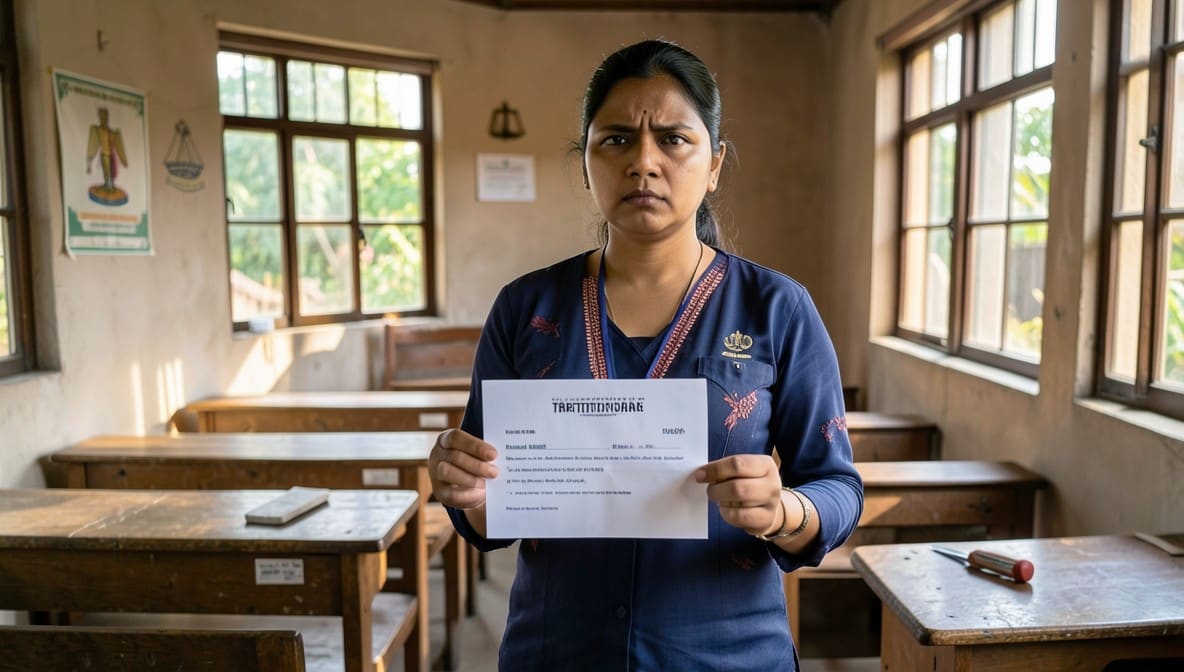
The petitioner, Sunil Madhukar Kamble, a member of the Scheduled Caste community, claimed continuous employment as an Assistant Teacher from 01.06.2002 until his alleged oral termination on 17.11.2019 at a school run by Respondent No.3, a managing body operating an Ashram School in Pune. He held a B.A. and B.Ed. degree and alleged that his appointment was made pursuant to a public advertisement in the newspaper 'Lokmat' on a vacant, permanent post. He further claimed to have performed duties in both the Primary and Secondary sections of the school.
Key Facts
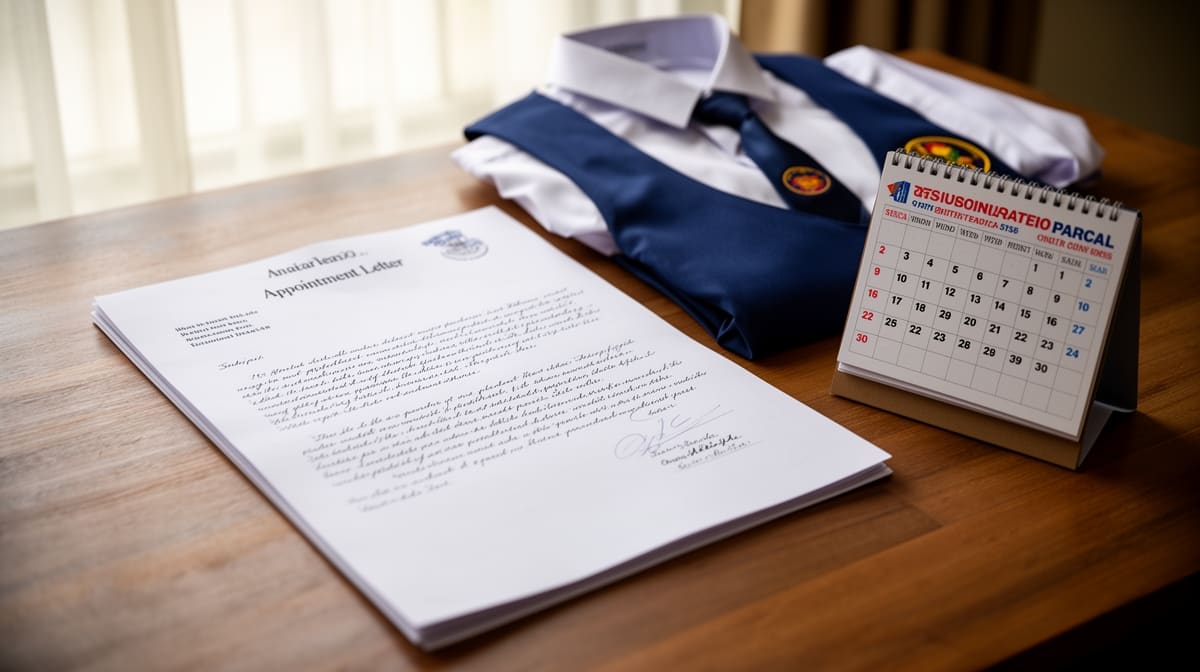
- The petitioner was initially appointed on 01.06.2002 for a fixed tenure ending 30.04.2003
- A second appointment was issued for the period 05.06.2003 to 30.04.2004
- No subsequent appointment or continuation order was issued after 30.04.2004
- The petitioner claimed continuous service until 17.11.2019, relying on experience certificates, attendance letters, and certificates from educational authorities
- The school was established in 2002 under the Central Government Scheme for residential schools for Scheduled Caste students
- Government Resolution dated 13.01.2006 granted permission to run the school subject to conditions
- Recognition for the Primary School up to 7th standard was granted by the Education Officer (Primary), Zilla Parishad, Pune on 09.01.2007
- Government Resolution dated 26.07.2010 vested administrative control of Ashram Schools in the Social Welfare Department
- The Primary and Secondary Ashram Schools operate as distinct institutions with separate management, Head Masters, and UDISE numbers
- The petitioner produced an experience certificate dated 08.06.2009, which the respondents challenged as fabricated, noting the signatory was not Head Master on that date
Procedural History
- 01.06.2002: Initial appointment as Assistant Teacher (fixed tenure)
- 30.04.2003: First tenure expired
- 05.06.2003: Second appointment issued
- 30.04.2004: Second tenure expired; no further appointment issued
- 29.04.2004: Notice issued to petitioner informing termination of service
- 08.06.2009: Alleged experience certificate issued (disputed by respondents)
- 17.11.2019: Alleged oral termination of services
- 03.12.2019: Petitioner filed Appeal No.55 of 2019 before the School Tribunal, Pune under Section 9 of the MEPS Act
- 15.02.2022: School Tribunal dismissed the appeal, holding the institution was a Primary Ashram School not covered under the MEPS Act
- 22.12.2022: Writ Petition No.11769 of 2022 filed before the Bombay High Court
- 01.04.2026: Judgment delivered by the Bombay High Court
The Parties' Positions
Petitioner’s Position: Claimed permanent employment since 2002, discharged duties in Secondary Section, and was illegally terminated without due process. Argued that the school’s dual sections rendered it a 'private school' under the MEPS Act.
Respondents’ Position: Petitioner was employed only on fixed-term contracts ending in 2004. No further appointment was issued. The institution is a Primary Ashram School governed by the Social Welfare Department, outside the scope of the MEPS Act. The experience certificate is forged.
Relief Sought
The petitioner sought reinstatement with continuity of service, payment of back wages from 17.11.2019, and damages for illegal termination. He also sought a declaration that his service from 2002 to 2019 was valid and protected under the MEPS Act.
The Legal Issue
The central question was whether a Primary Ashram School, operating under the administrative control of the Social Welfare Department and recognized only up to the 7th standard, qualifies as a 'private school' under Section 2(20) of the Maharashtra Employees of Private Schools (Conditions of Service) Regulation Act, 1977, thereby enabling its employees to invoke the jurisdiction of the School Tribunal under Section 9.
Arguments Presented
For the Petitioner
The petitioner’s counsel argued that the school functioned with both Primary and Secondary sections under one campus, making it a composite institution covered under the MEPS Act. He relied on the initial appointment order and experience certificates to establish continuous service of 17 years. He contended that the Tribunal erred in ignoring documentary evidence and misapplied the law by treating the school as purely primary. He invoked principles of natural justice and equitable estoppel, asserting that long service created a legitimate expectation of permanency.
For the Respondent/State
The respondents’ counsel argued that the institution was established under a Central Scheme for Scheduled Caste students and was governed by the Social Welfare Department. He cited Government Resolutions dated 13.01.2006 and 26.07.2010 to show that Ashram Schools were outside the ambit of the MEPS Act. He emphasized that the petitioner’s appointments were strictly temporary and expired by efflux of time. He challenged the authenticity of the experience certificate and highlighted the absence of salary records or continuation orders after 2004. He relied on Suryakant Shesharao Panchal v. Vasanrao Naik Vimukta Jati Bahatakya Jamati Adarsha Prasarak Mandal and Dagadu v. President, Anandrao Naik Shikshan Prasarak Mandal to establish that Primary Ashram Schools are not 'private schools' under the MEPS Act.
The Court's Analysis
The Court undertook a detailed examination of the statutory definition of 'private school' under Section 2(20) of the MEPS Act, which includes institutions run by private bodies but excludes those established or substantially aided by the State for specific social welfare purposes. The Court noted that the school in question was established under a Central Government scheme for Scheduled Caste students and was administratively controlled by the Social Welfare Department as per Government Resolution dated 26.07.2010.
"The record clearly demonstrates that the Primary and Secondary Ashram Schools are administratively distinct institutions having separate management, separate Head Masters and separate UDISE numbers."
The Court rejected the petitioner’s argument that co-location of sections rendered the institution a 'private school'. It held that statutory coverage depends on institutional character and administrative control, not physical proximity. The Court further observed that the petitioner’s claim of continuous service from 2002 to 2019 was unsupported by any appointment order, salary slips, or service records after 2004. The experience certificate dated 08.06.2009 was found to be unreliable, as the signatory was not the Head Master on that date.
The Court affirmed the Tribunal’s finding that the petitioner was employed only in a Primary Ashram School, which falls outside the scope of the MEPS Act. It emphasized that the Tribunal’s conclusion was based on a proper appreciation of documentary evidence and was not perverse. The Court reiterated the settled legal position that employees of Primary Ashram Schools must seek remedies before the Social Welfare Department, not the School Tribunal.
The Verdict
The writ petition was dismissed. The Bombay High Court upheld the School Tribunal’s order dated 15.02.2022, confirming that the petitioner’s employment in a Primary Ashram School did not fall within the ambit of the MEPS Act. The Court found no illegal termination, no violation of natural justice, and no jurisdictional error. The petitioner’s claims of continuous service and entitlement to reinstatement or back wages were rejected for lack of credible evidence and statutory basis.
What This Means For Similar Cases
Primary Ashram Schools Are Statutorily Excluded
- Practitioners must verify whether an institution is governed by the Social Welfare Department or operates under a Central Scheme before filing under the MEPS Act
- Merely having secondary classes on the same campus does not bring a Primary Ashram School within the MEPS Act
- Government Resolutions vesting administrative control in Social Welfare Departments are decisive in determining statutory applicability
Documentary Evidence Must Be Authentic and Continuous
- Claims of long-term service require uninterrupted appointment orders, salary records, and service confirmations
- Experience certificates lacking proper authentication or issued by unauthorized personnel are inadmissible
- Absence of post-2004 documentation fatally undermines claims of continuous employment
Remedies Lie Outside the School Tribunal
- Employees of Primary Ashram Schools must approach the Social Welfare Department or appropriate administrative forums
- Writ petitions under Article 226 will not lie where statutory remedies are unavailable due to jurisdictional exclusion
- Courts will not entertain claims based on equitable estoppel when statutory frameworks explicitly exclude the category of employment