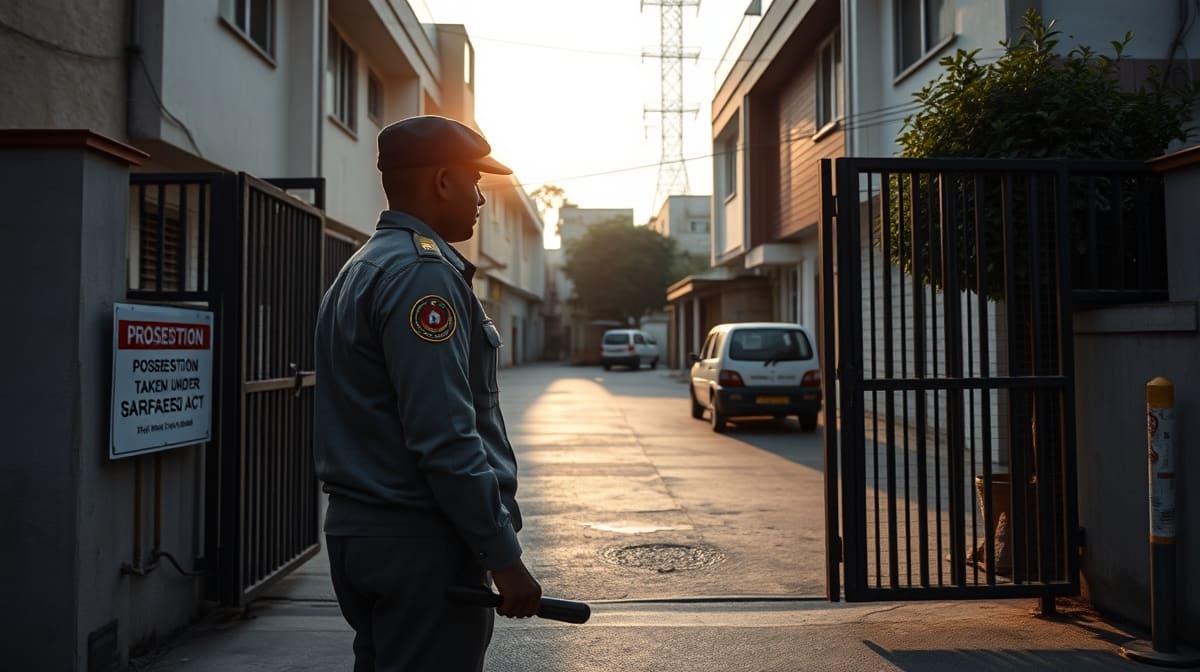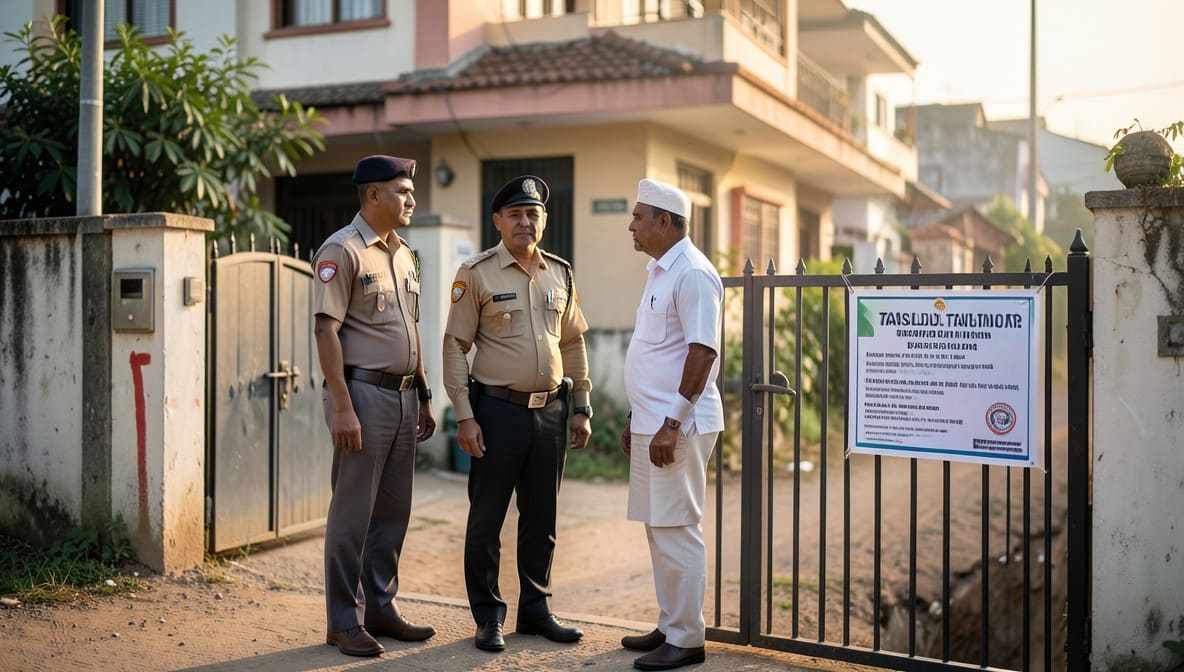
The Bombay High Court has issued a strong directive affirming the enforceability of secured creditor rights under the SARFAESI Act, rejecting borrower trespass as a tactic to frustrate lawful recovery. In a decisive order, the Court mandated state authorities to physically reclaim and hand over possession of a secured asset, setting a clear precedent for judicial support to financial institutions facing deliberate obstruction.
Background & Facts
The Dispute
The petitioner, Jana Small Finance Bank Ltd., is a registered secured creditor under the Securitisation and Reconstruction of Financial Assets and Enforcement of Security Interest Act, 2002 (SARFAESI Act). The bank initiated enforcement proceedings against defaulting borrowers for a secured asset located in Sinnar, District Nashik. After obtaining an order under Section 14 of the SARFAESI Act from the competent Magistrate on 17 May 2023, the bank took physical possession of the asset on 15 October 2024.
Key Facts
- The secured asset was mortgaged by the borrowers to secure a loan facility extended by the petitioner-bank
- The Section 14 order dated 17.05.2023 was issued by the Magistrate after due compliance with procedural requirements under the SARFAESI Act
- Physical possession was lawfully taken by the bank on 15.10.2024
- Subsequently, the borrowers unlawfully trespassed into the secured asset, re-entering and occupying the premises without authority
- On 08.12.2025, the bank filed complaints with the Sinnar Police Station and approached the competent Magistrate seeking repossession
- Despite these efforts, the bank has been unable to retain or regain possession due to continued trespass and obstruction by the borrowers
- The bank’s attempts to enforce its rights under the SARFAESI Act have been repeatedly thwarted, causing financial and operational harm
Procedural History
- 17.05.2023: Magistrate’s order under Section 14 of SARFAESI Act passed for possession of secured asset
- 15.10.2024: Bank took physical possession of the asset
- 08.12.2025: Borrowers trespassed; bank filed police complaint and approached Magistrate
- 02.04.2026: Writ Petition No. 3726 of 2026 filed before Bombay High Court seeking enforcement of possession
Relief Sought
The petitioner sought immediate and effective enforcement of the Section 14 order, including direction to state authorities to remove trespassers, restore possession, and ensure future compliance without further delay.
The Legal Issue
The central question was whether the courts can compel state authorities, including Tehsildars and police, to actively enforce possession of a secured asset under the SARFAESI Act when borrowers repeatedly trespass and obstruct lawful recovery.
Arguments Presented
For the Petitioner
The petitioner argued that the borrowers’ repeated trespass constitutes a deliberate circumvention of the SARFAESI Act’s enforcement mechanism, undermining the legislative intent to empower secured creditors. It relied on the statutory framework under Section 14, which vests the Magistrate with authority to assist in possession, and emphasized that the bank had fully complied with all procedural requirements. The bank contended that judicial inaction in such cases erodes confidence in the financial system and encourages borrower defiance.
For the Respondent
The learned Additional Government Pleader, on instructions, acknowledged the bank’s lawful possession and confirmed that the Tehsildar had already fixed 16 April 2026 for re-taking possession. No substantive legal opposition was raised; the state accepted the need for enforcement and cooperated with the Court’s direction.
The Court's Analysis
The Court observed that the borrowers’ conduct after lawful possession was taken amounted to a blatant defiance of judicial authority and statutory process. It noted that the SARFAESI Act was enacted precisely to address such obstructive tactics by defaulting borrowers, ensuring that secured creditors are not left helpless despite obtaining legal orders.
"Such acts of the borrowers are making a mockery of the rule of law and the petitioner-bank, which is a secured creditor, is frustrated in its attempts to take action under the provisions of the Securitisation Act."
The Court emphasized that the Magistrate’s order under Section 14 is not a mere formality but a binding directive enforceable by the state machinery. The Court held that the Tehsildar, as the designated executive officer under the Act, bears the duty to execute possession, and the police must provide necessary assistance - including reasonable force - to ensure compliance. The Court rejected any notion that repeated trespass could nullify the efficacy of a Section 14 order.
The Verdict
The petitioner succeeded. The Court directed the Tehsildar, Sinnar, District Nashik, to take physical possession of the secured asset and hand it over to the petitioner-bank on 16 April 2026. The Senior Police Inspector, Sinnar Police Station, was directed to provide sufficient police assistance, including lady constables, and to use adequate, reasonable, and necessary force to effect possession. Non-compliance by either official will result in personal appearance before the Court on the next listing. The matter is listed for compliance on 21 April 2026.
What This Means For Similar Cases
State Authorities Must Act, Not Delay
- Practitioners representing secured creditors can now cite this judgment to compel Tehsildars and police to execute SARFAESI Act possession orders without undue delay
- Passive compliance is insufficient; authorities must proactively remove trespassers using lawful force
Trespass Does Not Invalidate Section 14 Orders
- Borrowers cannot nullify a valid Section 14 order by re-entering the asset
- Courts will treat repeated trespass as contemptuous conduct warranting coercive measures
Police Assistance Is Mandatory, Not Discretionary
- The Court’s explicit direction to deploy lady constables and use reasonable force sets a precedent for operational protocols in enforcement
- Financial institutions should formally request police assistance in writing at the time of filing SARFAESI applications
Enforcement Timelines Are Judicially Enforceable
- Courts will fix concrete dates for possession and hold officials personally accountable
- Practitioners should seek specific compliance dates in SARFAESI petitions to enable future contempt proceedings