Bombay High Court judgments

2134 Bombay High Court judgments explained in plain English: what was decided, the law applied and why it matters. Page 47 of 89.

Pre-POSH Domestic Enquiry | Fairness Under Standing Orders Suffices, Not Vishaka Committee Structure: Bombay HC
Case Law Analysis
|Bombay High Court

Pre-POSH Domestic Enquiry | Fairness Under Standing Orders Suffices, Not Vishaka Committee Structure: Bombay HC

The Bombay High Court has ruled that for sexual harassment inquiries conducted before the POSH Act, procedural fairness under certified Standing Orders is sufficient to validate a domestic enquiry-no Vishaka Complaints Committee is required. This clarifies the legal standard for employers and labour courts handling legacy cases, ensuring disciplinary processes aren't invalidated by anachronistic compliance demands.

Domestic Enquiry Bias | Mere Dissatisfaction Insufficient; Concrete Evidence Required to Invalidate Fair Procedure Under IDA : Bombay HC
Case Law Analysis
|Bombay High Court

Domestic Enquiry Bias | Mere Dissatisfaction Insufficient; Concrete Evidence Required to Invalidate Fair Procedure Under IDA : Bombay HC

The Bombay High Court has clarified that allegations of bias in domestic enquiries under the Industrial Disputes Act cannot be sustained by mere dissatisfaction or subjective complaints. Fairness is upheld when signed statements are recorded, cross-examination is permitted, and procedural flexibility is applied-setting a critical benchmark for employers and labour courts handling disciplinary proceedings.

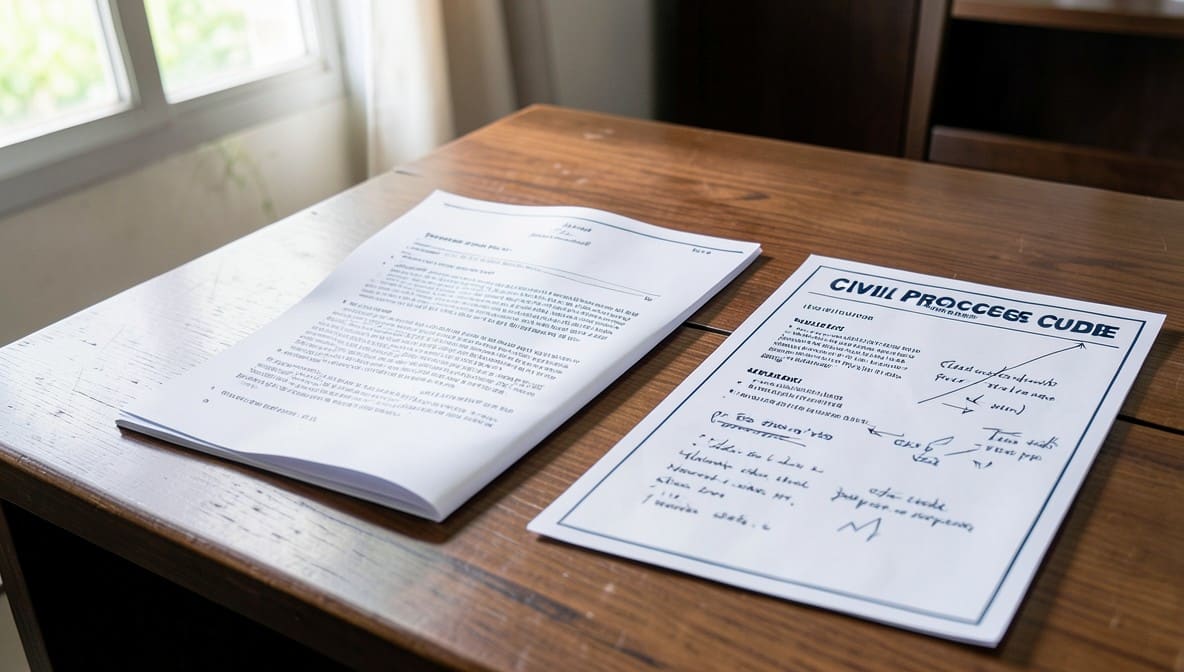
Order XI Rule 1(5) CPC | Bombay HC Permits Late Document Production If Referenced in Plaint and No Prejudice to Defendant
Case Law Analysis
|Bombay High Court

Order XI Rule 1(5) CPC | Bombay HC Permits Late Document Production If Referenced in Plaint and No Prejudice to Defendant

Bombay High Court rules that documents expressly referred to in the plaint may be produced later under Order XI Rule 1(5) CPC, provided no prejudice is caused to the defendant. The decision underscores procedural fairness by allowing plaintiffs to submit evidence post-filing if already mentioned in the pleadings, balancing efficiency with due process.

Section 14 SARFAESI Act | State Must Enforce Physical Possession Against Trespassers Even During DRT Proceedings: Bombay HC
Case Law Analysis
|Bombay High Court

Section 14 SARFAESI Act | State Must Enforce Physical Possession Against Trespassers Even During DRT Proceedings: Bombay HC

The Bombay High Court has ruled that state authorities cannot refuse to assist secured creditors in reclaiming possession of secured assets from trespassers, even if borrowers have filed objections before the DRT. This clarifies that the enforcement mechanism under Section 14 is not stayed by pending proceedings, reinforcing the creditor’s statutory right to immediate possession.

Article 19(1)(b) | Vague Law-and-Order Concerns Cannot Justify Denial of Ambedkar Birth Anniversary Procession : Bombay HC (Nagpur Bench)
Case Law Analysis
|Bombay High Court

Article 19(1)(b) | Vague Law-and-Order Concerns Cannot Justify Denial of Ambedkar Birth Anniversary Procession : Bombay HC (Nagpur Bench)

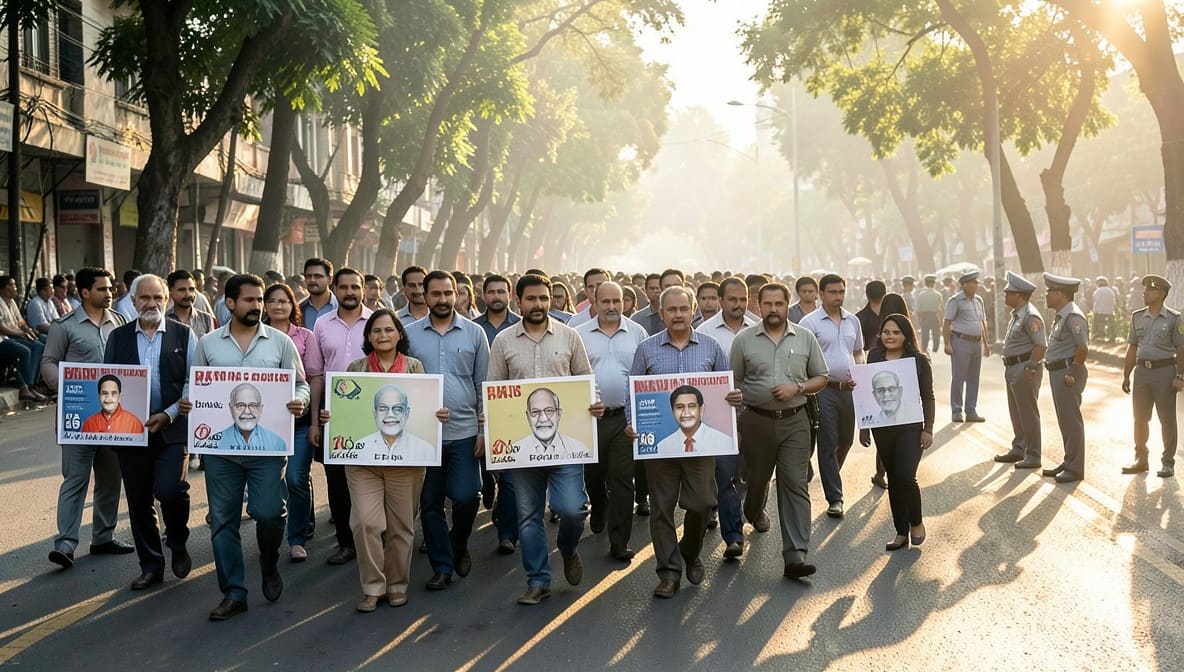
The Bombay HC (Nagpur Bench) struck down the denial of a procession permit for Dr. Ambedkar’s birth anniversary, ruling that speculative fears of unrest and police shortages are insufficient to override the fundamental right to peaceful assembly. This sets a critical precedent for cultural and commemorative processions nationwide, affirming that authorities must articulate concrete, evidence-based threats-not generic apprehensions-to restrict constitutional rights.

Administrative Delay Cannot Bar Exam Eligibility | Bombay HC Waives Age Limit for Public Prosecutor Recruitment Due to State's Lapse : Bombay HC
Case Law Analysis
|Bombay High Court

Administrative Delay Cannot Bar Exam Eligibility | Bombay HC Waives Age Limit for Public Prosecutor Recruitment Due to State's Lapse : Bombay HC

Bombay High Court rules that candidates cannot be penalized for exceeding the age limit in public recruitment due to the state's administrative delay. The court directed Maharashtra to accept applications for Additional Public Prosecutor posts, emphasizing equitable relief under natural justice principles. This sets a precedent for similar cases involving government recruitment delays.

Section 83 RP Act | Non-Disclosure of EVM-VVPAT Discrepancies Fatal to Election Petition: Bombay HC
Case Law Analysis
|Bombay High Court

Section 83 RP Act | Non-Disclosure of EVM-VVPAT Discrepancies Fatal to Election Petition: Bombay HC

Bombay High Court dismisses an election petition under Section 83 of the Representation of the People Act for failing to disclose material facts about EVM-VVPAT discrepancies, reinforcing strict compliance with procedural requirements. The ruling underscores that election challenges cannot proceed without full disclosure of alleged irregularities, impacting future petitioners and electoral litigation strategy.

RTE Act Exemption for Minority Schools | TET Qualification Not Mandatory Pending SC Ruling: Bombay HC Conditionally Approves Teacher Appointment
Case Law Analysis
|Bombay High Court

RTE Act Exemption for Minority Schools | TET Qualification Not Mandatory Pending SC Ruling: Bombay HC Conditionally Approves Teacher Appointment

Bombay High Court ruled that minority educational institutions are not bound by TET qualification requirements under the RTE Act until the Supreme Court delivers its final verdict. The court conditionally approved an assistant teacher's appointment, emphasizing the interim exemption applies to all minority schools.

Section 21-A MCS Act | De-Registration of Co-operative Society Requires Proof of Fraud at Registration Stage : Bombay HC
Case Law Analysis
|Bombay High Court

Section 21-A MCS Act | De-Registration of Co-operative Society Requires Proof of Fraud at Registration Stage : Bombay HC

Bombay HC clarifies that de-registration under Section 21-A of the Maharashtra Co-operative Societies Act mandates evidence of fraud during registration, not merely title disputes, pending FIRs, or procedural lapses. The ruling restores the society's registration, reinforcing that fraud must be proven at the inception stage for de-registration to be valid.

ULC Act Repeal | Vesting Without Physical Possession Abates Proceedings; Mere Section 10(3) Notification Insufficient for State Ownership : Bombay HC
Case Law Analysis
|Bombay High Court

ULC Act Repeal | Vesting Without Physical Possession Abates Proceedings; Mere Section 10(3) Notification Insufficient for State Ownership : Bombay HC

The Bombay High Court has ruled that under the ULC Act repeal, land declared surplus but never taken into physical possession by the State reverts automatically to the original owner. A notification under Section 10(3) alone, without actual possession or control, cannot sustain State ownership post-repeal, rendering all pending proceedings abated. This clarifies a critical loophole affecting thousands of landowners whose properties were notified but never acquired.

Section 302 IPC | Septicemia Following Stab Wounds Does Not Break Causal Chain for Murder Conviction : Bombay HC
Case Law Analysis
|Bombay High Court

Section 302 IPC | Septicemia Following Stab Wounds Does Not Break Causal Chain for Murder Conviction : Bombay HC

The Bombay High Court affirms that a death occurring days after a violent assault due to septicemia directly traceable to the injuries still constitutes murder under Section 302 IPC. This ruling reinforces that medical complications arising naturally from unlawful violence do not interrupt legal causation, impacting how prosecutors and courts assess delayed fatalities in homicide cases.

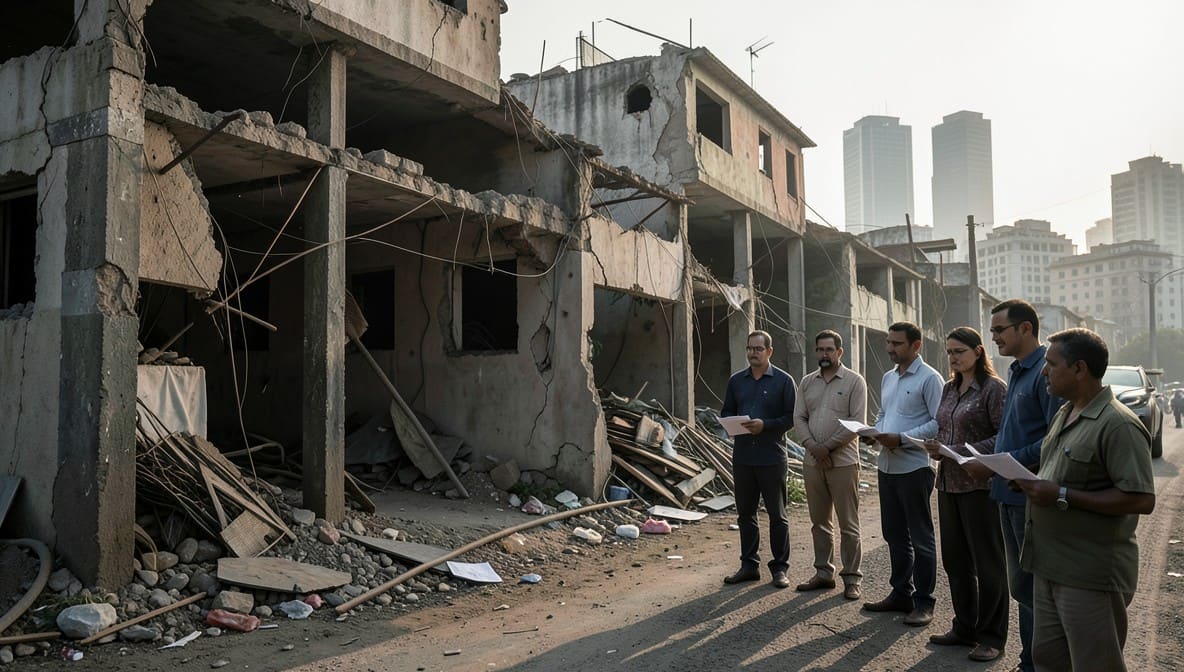
Transit Rent Entitlement | Must Commence from Date of Demolition, Not Eligibility Certification: Bombay HC
Case Law Analysis
|Bombay High Court

Transit Rent Entitlement | Must Commence from Date of Demolition, Not Eligibility Certification: Bombay HC

The Bombay High Court has ruled that transit rent for displaced slum dwellers must be paid from the date their dwellings are demolished, not from the date they are formally certified as eligible. This ensures that affected families are not penalized for bureaucratic delays in processing their claims, reinforcing the constitutional right to housing under Article 21 and placing a direct financial obligation on developers from the moment displacement occurs.

Section 125 CrPC | Child Maintenance Must Reflect Actual Status and Inflationary Costs, Not Rigid Income Shares : Bombay HC (Nagpur Bench)
Case Law Analysis
|Bombay High Court

Section 125 CrPC | Child Maintenance Must Reflect Actual Status and Inflationary Costs, Not Rigid Income Shares : Bombay HC (Nagpur Bench)

The Bombay High Court has ruled that child maintenance under Section 125 CrPC must be calibrated to the child’s actual standard of living, educational needs, and inflationary pressures - not merely a fixed percentage of the father’s income. This shifts the legal standard from mechanical formulas to a dynamic, child-centric assessment, impacting all pending and future maintenance petitions across India.

Section 39(3) Maharashtra Village Panchayats Act | One-Month Deadline for Appellate Decisions Is Mandatory, No Extensions Permitted : Bombay HC (Nagpur Bench)
Case Law Analysis
|Bombay High Court

Section 39(3) Maharashtra Village Panchayats Act | One-Month Deadline for Appellate Decisions Is Mandatory, No Extensions Permitted : Bombay HC (Nagpur Bench)

The Bombay High Court has ruled that the one-month statutory deadline under Section 39(3) of the Maharashtra Village Panchayats Act is absolute and non-negotiable, rejecting any request for extension. This sets a binding precedent for all rural administrative appeals in Maharashtra, ensuring timely justice and curbing executive delay in panchayat governance.

Section 6 Hindu Succession Act | Daughters Entitled to Coparcenary Rights Retrospectively Even If Father Died Pre-2005: Bombay HC (Nagpur Bench)
Case Law Analysis
|Bombay High Court

Section 6 Hindu Succession Act | Daughters Entitled to Coparcenary Rights Retrospectively Even If Father Died Pre-2005: Bombay HC (Nagpur Bench)

Bombay High Court's Nagpur Bench rules that daughters are coparceners by birth under the amended Hindu Succession Act, 2005, regardless of whether their father died before the amendment's effective date. The judgment overturns the prior 'notional partition' approach, ensuring gender-equal inheritance rights in ancestral property for all daughters, irrespective of the father's date of death.