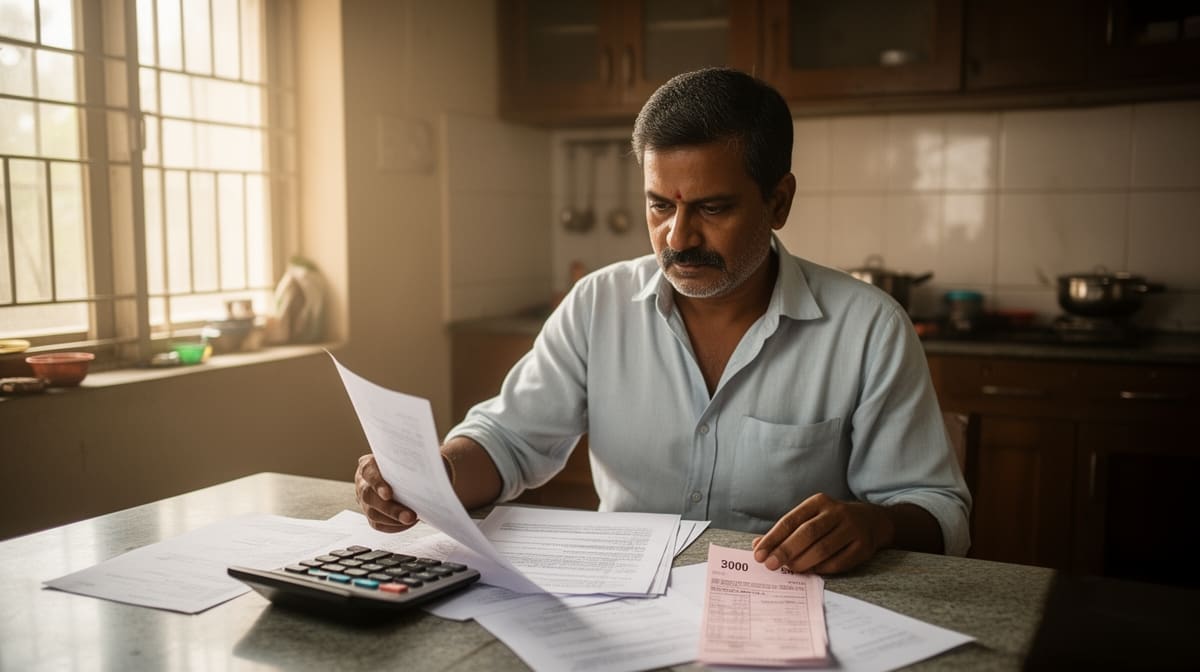
The Bombay High Court has reaffirmed that maintenance for a minor child under Section 125 CrPC must reflect the child’s right to a dignified life consistent with the parents’ status, not merely a bare subsistence level. In a significant ruling, the Court enhanced monthly maintenance from Rs.15,000 to Rs.30,000, emphasizing that financial capacity, educational needs, and emotional well-being cannot be reduced to arithmetic formulas.
Background & Facts
The Dispute
The present revision application challenges the Family Court’s order dated 25.04.2023 granting maintenance of Rs.15,000 per month to a minor child under Section 125 of the Code of Criminal Procedure. The child, Mast. Mihir s/o Pankaj Bagade, born on 16.08.2012, is the only dependent of his father, Dr. Pankaj Bagade, a Senior Medical Officer. His mother, Dr. Nisha Bagade, is also a medical professional and the child’s natural guardian. The marital tie between the parents remains legally intact, though they have been living separately since 2011.
Key Facts
- The marriage was solemnized on 27.05.2010.
- The child was born on 16.08.2012.
- The mother was pursuing her MBBS at the time of marriage and later prepared for postgraduate entrance examinations.
- The respondent (father) filed a petition for restitution of conjugal rights (A-96/2015) in 2015, which was not successful.
- The mother alleged domestic cruelty, including verbal abuse and physical assault during her internship at Bilaspur in 2011, leading to her permanent departure from the matrimonial home.
- The child has been residing with his mother in Rajnandgaon, Chhattisgarh, since infancy.
- The mother’s take-home salary in 2022 was Rs.70,000 per month, with annual increments.
- The respondent’s monthly salary as Senior Medical Officer at Regional Mental Hospital, Nagpur, was Rs.1,50,000 in 2022.
- The respondent’s father, a retired BSNL employee, receives a pension of Rs.50,000 - 55,000 per month and is not financially dependent on the respondent.
- The respondent admitted to having paid some school fees and expenses for extracurricular activities but provided no consistent or documented support.
- The mother submitted bills for school uniforms (Exh.36), stationery (Exh.35), medical treatment (Exh.37), and other daily necessities.
- The respondent did not pay any insurance premium for the child.
Procedural History
- 27.05.2010: Marriage between the parties.
- 16.08.2012: Birth of the applicant child.
- 2011: Mother left matrimonial home after alleged cruelty and refusal of cohabitation.
- 2015: Respondent filed Petition for Restitution of Conjugal Rights (A-96/2015).
- 2016: Mother filed Petition for maintenance under Section 125 CrPC (E-184/2016).
- 2016: Respondent filed petition for dissolution of marriage (N.A-1392/2016).
- 25.04.2023: Family Court granted maintenance of Rs.15,000 per month from date of order.
- 07.12.2016: Date of filing of maintenance petition (basis for retrospective relief).
- 16.03.2026: Revision application reserved.
- 08.04.2026: Judgment pronounced by the Bombay High Court, Nagpur Bench.
Relief Sought
The applicant sought enhancement of maintenance from Rs.15,000 to Rs.50,000 per month, with retrospective effect from 07.12.2016, and litigation costs. The Court granted partial relief.
The Legal Issue
The central question was whether the quantum of maintenance under Section 125 CrPC for a minor child must be determined solely by a fixed income-sharing ratio (e.g., 2:1), or whether the Court must holistically assess the child’s status, the father’s financial capacity, the mother’s non-monetary contributions, and the rising costs of education and upbringing.
Arguments Presented
For the Petitioner
The applicant’s counsel argued that the Rs.15,000 monthly maintenance was grossly inadequate given the father’s income of Rs.1,50,000 and the child’s needs as the son of two medical professionals. Reliance was placed on Michael A. B. Lobo v. Smitha Michael Lobo, Rajnesh v. Neha, and Kalyan Dey Chowdhury v. Rita Dey Chowdhury to assert that maintenance must ensure the child’s dignity and educational aspirations. The mother’s salary, though substantial, was insufficient to cover rising educational, medical, and extracurricular expenses alone. The father’s lack of direct involvement and failure to contribute meaningfully beyond sporadic payments was highlighted.
For the Respondent
The respondent’s counsel contended that the mother, being a working professional, shared equal responsibility for the child’s upkeep. Reliance was placed on Padmja Sharma v. Ratan Lal Sharma to argue for a 2:1 contribution ratio. It was submitted that the father had already borne some expenses and was willing to continue doing so. The mother’s alleged refusal to cohabit was cited to diminish the father’s moral obligation.
The Court's Analysis
The Court rejected the rigid application of income-sharing ratios, emphasizing that Section 125 CrPC is a social welfare provision designed to prevent destitution, not to adjudicate marital fault or enforce equal financial burdens. The Court observed:
"The object of the maintenance proceedings is not to punish a person for his past neglect, but to prevent vagrancy by compelling those who can provide support to those who are unable to support themselves and who have a moral claim to support."
The Court noted that while the mother’s income was significant, her role extended far beyond financial contribution. Her physical presence, emotional labor, supervision of education, healthcare coordination, and moral guidance constituted a full-time, unpaid responsibility that could not be quantified in monetary terms. The Court held:
"One cannot put value to the time and effort put in by the mother in upbringing of the child."
The Court further clarified that maintenance under Section 125 CrPC is not confined to food, clothing, or shelter, but includes education, health, hobbies, and social development - all essential for a child’s holistic growth. The Court cited Rajnesh v. Neha to affirm that the primary obligation to meet educational and essential expenses ordinarily rests upon the father, especially when the mother is already bearing the primary custodial burden.
The Court explicitly rejected the notion that maintenance should be determined by arithmetic formulas:
"Maintenance cannot be determined by applying rigid arithmetic standards. There is no fixed percentage or rigid calculation that can universally apply to all cases."
It emphasized that the child’s right to maintain a standard of living consistent with his parents’ status is protected under Article 21 of the Constitution, and that this right overrides claims of financial creditors under laws like the IBC or SARFAESI Act, as held in Apurva v. Dolly & Ors.
The Court also noted the respondent’s failure to disclose any other dependents, his father’s independent pension, and his lack of insurance or consistent financial support for the child.
The Verdict
The revision application was allowed. The Court enhanced the monthly maintenance from Rs.15,000 to Rs.30,000, effective from the date of filing of the petition - 07.12.2016 - until the child becomes financially independent. The respondent was also directed to pay Rs.10,000 towards litigation expenses. The order is binding and enforceable as a decree.
What This Means For Similar Cases
Maintenance Must Reflect the Child’s Status, Not Just Parental Income
- Practitioners must argue that maintenance under Section 125 CrPC must align with the child’s expected standard of living, not merely the parents’ income ratio.
- Courts must consider the child’s aspirations, educational institution fees, extracurricular activities, and medical needs as integral components of maintenance.
- A child of professionals cannot be denied a dignified upbringing merely because the custodial parent is employed.
The Mother’s Non-Monetary Contributions Are Legally Significant
- The custodial parent’s emotional labor, time investment, and supervisory duties are not offset by salary alone.
- Courts must avoid treating maintenance as a zero-sum game between parents.
- Evidence of daily care - school drop-offs, homework supervision, medical appointments - should be documented and presented as part of the maintenance claim.
No Fixed Formula Applies - Context Is Paramount
- The 2:1 income-sharing rule from Padmja Sharma is not mandatory; it is merely a guideline.
- Each case requires a fact-specific, holistic assessment.
- Judges must prioritize the child’s welfare over procedural convenience or simplistic arithmetic.
- Maintenance orders must be retrospective to the date of application to prevent deprivation during litigation.