Bombay High Court judgments

2128 Bombay High Court judgments explained in plain English: what was decided, the law applied and why it matters. Page 30 of 89.

Section 12-A Commercial Courts Act | Suit Not Rejected Under Order VII Rule 11 CPC If Kept in Abeyance for Mandatory Mediation : Bombay HC
Case Law Analysis
|Bombay High Court

Section 12-A Commercial Courts Act | Suit Not Rejected Under Order VII Rule 11 CPC If Kept in Abeyance for Mandatory Mediation : Bombay HC

The Bombay High Court has ruled that non-compliance with Section 12-A’s pre-institution mediation requirement does not warrant rejection of a commercial suit under Order VII Rule 11 CPC, provided the court has directed mediation and kept the suit in abeyance. This protects litigants from procedural dismissal when courts actively facilitate mediation, reinforcing the Act’s intent to encourage settlement without penalizing procedural delays caused by judicial direction.

Revisional Jurisdiction | Revenue Minister Cannot Set Aside Land Sale Orders Based on Private Contractual Breach : Bombay HC
Case Law Analysis
|Bombay High Court

Revisional Jurisdiction | Revenue Minister Cannot Set Aside Land Sale Orders Based on Private Contractual Breach : Bombay HC

The Bombay High Court struck down the Revenue Minister's order that overturned the cancellation of a land sale permission, ruling that private contractual payment terms cannot override statutory restrictions under the Maharashtra Land Revenue Code. This reinforces that revisional powers under revenue law are strictly bounded by statutory intent, not private agreements - a critical check on administrative overreach in land transactions involving inam and Occupant Class II lands.

Section 44-A CPC | Certificate of Non-Satisfaction Filed Post-Filing Can Cure Jurisdictional Defect in Foreign Decree Execution : Bombay HC
Case Law Analysis
|Bombay High Court

Section 44-A CPC | Certificate of Non-Satisfaction Filed Post-Filing Can Cure Jurisdictional Defect in Foreign Decree Execution : Bombay HC

The Bombay High Court holds that failure to file the mandatory certificate under Section 44-A(2) CPC at the time of filing an execution petition does not invalidate the proceeding if cured later through a penal notice and subsequent submission. This ruling empowers decree holders in reciprocating territories by treating procedural lapses as curable, not jurisdictional, reducing technical dismissals and promoting enforcement of foreign judgments.

Section 37 Arbitration and Conciliation Act | Judicial Review of Interim Orders Permissible Only if Arbitrator’s Decision is Perverse or Capricious: Bombay HC
Case Law Analysis
|Bombay High Court

Section 37 Arbitration and Conciliation Act | Judicial Review of Interim Orders Permissible Only if Arbitrator’s Decision is Perverse or Capricious: Bombay HC

The Bombay High Court has reaffirmed that courts must not interfere with arbitral interim orders unless they are perverse, capricious, or demonstrate manifest illegality. This ruling strengthens the autonomy of arbitral tribunals in complex slum redevelopment disputes, ensuring that balance-of-convenience assessments remain within the arbitrator’s domain unless grossly flawed.

Section 34 Arbitration Act | Arbitral Award Cannot Be Set Aside for Mere Disagreement With Evidence Appreciation Absent Perversity : Bombay HC
Case Law Analysis
|Bombay High Court

Section 34 Arbitration Act | Arbitral Award Cannot Be Set Aside for Mere Disagreement With Evidence Appreciation Absent Perversity : Bombay HC

The Bombay High Court reaffirms that courts must not re-evaluate evidence or substitute their own findings in arbitration appeals unless the tribunal’s reasoning is perverse, illegal, or violates natural justice. This reinforces the finality of arbitral awards and protects party autonomy in commercial disputes, signaling that judicial intervention is limited to procedural or jurisdictional flaws - not substantive disagreements.

Copyright Protection for Trade Dress Survives Trademark Refusal | Slavish Reproduction of Artistic Label Constitutes Infringement : Bombay HC
Case Law Analysis
|Bombay High Court

Copyright Protection for Trade Dress Survives Trademark Refusal | Slavish Reproduction of Artistic Label Constitutes Infringement : Bombay HC

The Bombay High Court ruled that even when a trademark application is refused, the slavish copying of an original artistic label design triggers copyright infringement and passing off claims. This affirms that visual trade dress with creative expression is independently protected under copyright law, empowering brand owners to combat imitation regardless of trademark status.

Possession Transfer Negates Cheating Under BNS Sections 318(4) & 3(5) | Anticipatory Bail Granted: Bombay HC
|Bombay High Court

Possession Transfer Negates Cheating Under BNS Sections 318(4) & 3(5) | Anticipatory Bail Granted: Bombay HC

The Bombay High Court granted anticipatory bail to accused individuals after finding that the mere transfer of possession of property to the complainant, following payment, defeats the essential ingredient of deceit required for cheating under BNS Sections 318(4) and 3(5). This ruling clarifies that financial transactions coupled with actual delivery of possession cannot be construed as criminal fraud, offering critical protection to property sellers and transactional parties facing baseless complaints.

Anticipatory Bail: Interim Protection Cannot Be Revoked Absent Incriminating Evidence or Non-Cooperation | Bombay HC
Case Law Analysis
|Bombay High Court

Anticipatory Bail: Interim Protection Cannot Be Revoked Absent Incriminating Evidence or Non-Cooperation | Bombay HC

The Bombay High Court has ruled that interim anticipatory bail protection cannot be withdrawn merely because investigation remains incomplete or evidence is not yet seized. Where the applicant has consistently cooperated with investigators and no incriminating material links them to the offense, continued protection is a constitutional safeguard against arbitrary detention.

Public Premises Act Section 5(1) | Appellate Court Cannot Rely on New Evidence to Overturn Eviction for Unauthorised Subletting : Bombay HC
|Bombay High Court

Public Premises Act Section 5(1) | Appellate Court Cannot Rely on New Evidence to Overturn Eviction for Unauthorised Subletting : Bombay HC

The Bombay High Court struck down an appellate order that reversed eviction and compensation under the Public Premises Act, holding that unauthorised subletting without consent voids tenancy and appellate courts cannot introduce new evidence not presented before the Estate Officer. This reinforces the strict procedural boundaries in public property eviction cases, affecting statutory tenants and sub-lessees nationwide.

MEP Rules 1981 Rule 33(5) | Suspension Does Not Nullify Headmaster’s Administrative & Financial Powers : Bombay HC
|Bombay High Court

MEP Rules 1981 Rule 33(5) | Suspension Does Not Nullify Headmaster’s Administrative & Financial Powers : Bombay HC

The Bombay High Court has ruled that suspending a headmaster under the MEP Rules 1981 only halts salary payments, not the exercise of statutory administrative and financial duties. This clarifies that educational institutions cannot unilaterally strip suspended headmasters of their core functions during investigations, safeguarding institutional continuity and due process in public education management.

No Retrospective Recovery of Electricity Subsidy Without Statutory Authority | CGRF Jurisdiction Upheld Against MSEDCL : Bombay HC
Case Law Analysis
|Bombay High Court

No Retrospective Recovery of Electricity Subsidy Without Statutory Authority | CGRF Jurisdiction Upheld Against MSEDCL : Bombay HC

The Bombay HC has ruled that MSEDCL cannot claw back previously paid VM subsidies through retrospective debit adjustments without explicit legal authorization, reinforcing that Consumer Grievance Redressal Forums have the authority to nullify such unlawful billing practices. This sets a critical precedent for industrial and CETP consumers nationwide, ensuring subsidy benefits cannot be arbitrarily revoked after the fact.

Section 103 Maharashtra Cooperative Societies Act | Interim Liquidation Does Not Terminate Voting Rights in Federal Cooperative Elections : Bombay HC
Case Law Analysis
|Bombay High Court

Section 103 Maharashtra Cooperative Societies Act | Interim Liquidation Does Not Terminate Voting Rights in Federal Cooperative Elections : Bombay HC

The Bombay High Court has ruled that an interim liquidation order under Section 103 of the Maharashtra Cooperative Societies Act does not extinguish a cooperative society’s right to vote in federal cooperative elections. This protects the democratic participation of member societies until a final winding-up order is passed, reinforcing that legal status and electoral rights remain intact during provisional proceedings. The decision upholds natural justice and the continuity of cooperative governance structures.

BNS Sections 333, 78, 126(2), 351(4) | Bail Granted in Stalking Cases Despite Non-Bailable Status, No Prior Record, and Non-Violent Nature : Bombay HC
Case Law Analysis
|Bombay High Court

BNS Sections 333, 78, 126(2), 351(4) | Bail Granted in Stalking Cases Despite Non-Bailable Status, No Prior Record, and Non-Violent Nature : Bombay HC

The Bombay High Court has ruled that even non-bailable stalking offences under the Bharatiya Nyaya Sanhita do not automatically bar bail when the accused has no prior criminal record and the conduct, while persistent, lacks physical violence or threat to life. This sets a critical precedent for bail jurisprudence in cyber and emotional stalking cases, affirming that proportionality and personal liberty must guide judicial discretion under BNS.

Section 91 Maharashtra Co-operative Societies Act | District Election Officer Cannot Invalidate Society Resolutions; Judicial Remedy Required : Bombay HC
Case Law Analysis
|Bombay High Court

Section 91 Maharashtra Co-operative Societies Act | District Election Officer Cannot Invalidate Society Resolutions; Judicial Remedy Required : Bombay HC

The Bombay High Court holds that a District Co-operative Election Officer lacks jurisdiction to adjudicate the validity of a society’s resolution appointing a delegate. Only a court under Section 91 of the Maharashtra Co-operative Societies Act, 1960, can examine such disputes, safeguarding procedural integrity in cooperative elections and preventing administrative overreach in voter list management.

Section 69 IT Act | Donor's Unexplained Credits Cannot Justify Tax Liability on Donee Without Direct Evidence : ITAT Mumbai
Case Law Analysis
|Bombay High Court

Section 69 IT Act | Donor's Unexplained Credits Cannot Justify Tax Liability on Donee Without Direct Evidence : ITAT Mumbai

ITAT Mumbai ruled that tax authorities cannot impute unexplained investments on a homemaker-donee merely because the donor's source of funds is unverified. The tribunal emphasized that the burden of proof lies on the revenue to establish undisclosed income directly attributable to the assessee, not merely through familial transactions.

Section 354 MMC Act | Humanitarian Relief Granted Despite Final Judgment: Bombay HC Grants 8-Week Demolition Stay for Senior Citizens
Case Law Analysis
|Bombay High Court

Section 354 MMC Act | Humanitarian Relief Granted Despite Final Judgment: Bombay HC Grants 8-Week Demolition Stay for Senior Citizens

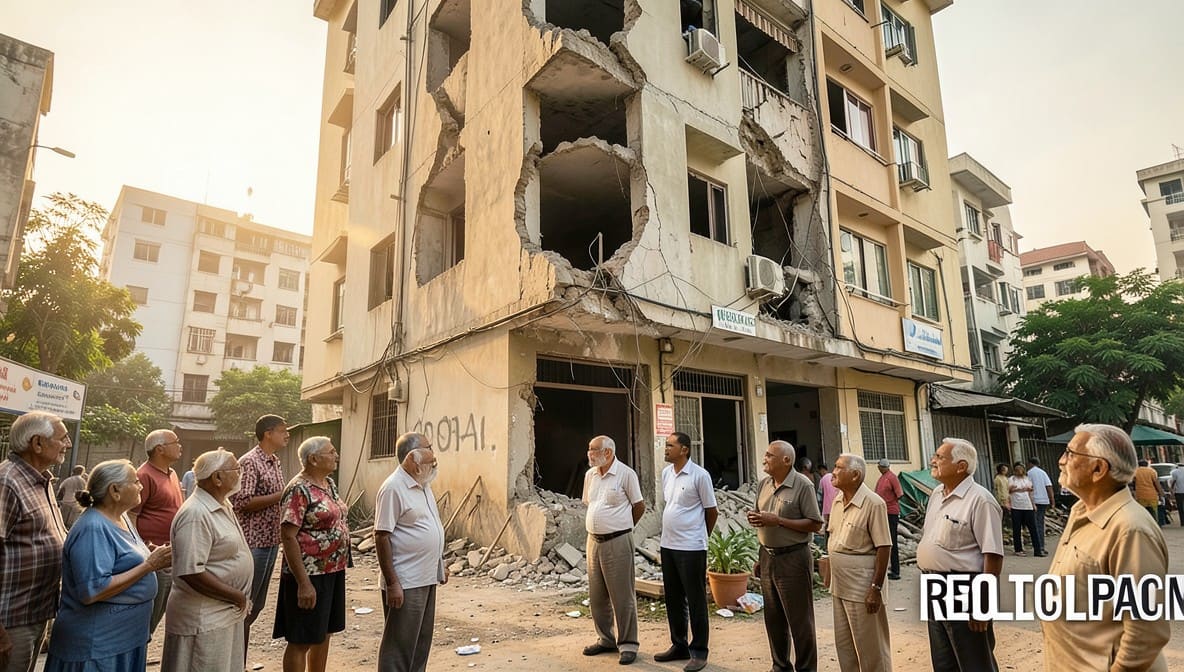
Bombay High Court grants eight-week interim protection to senior citizen residents facing demolition under Section 354 of the Mumbai Municipal Corporation Act, despite dismissal of their SLP by the Supreme Court. The court balances humanitarian concerns with final judicial orders, allowing time for relocation without extending legal challenge.

Contingent Contracts Under Section 32 TPA | Fault of Plaintiff in Securing Permission Does Not Void Agreement: Bombay HC (Nagpur Bench)
|Bombay High Court

Contingent Contracts Under Section 32 TPA | Fault of Plaintiff in Securing Permission Does Not Void Agreement: Bombay HC (Nagpur Bench)

The Bombay High Court (Nagpur Bench) clarified that a contingent contract under Section 32 of the Transfer of Property Act does not automatically become void if permission for transfer is denied due to the plaintiff's fault. The ruling underscores that contractual obligations persist unless the contingency is legally impossible, not merely due to one party's failure to comply.

Order XLI Rule 4 CPC | Procedural Defect in Legal Representative Substitution Does Not Abate Appeal If Merits Heard: Bombay HC (Nagpur Bench)
Case Law Analysis
|Bombay High Court

Order XLI Rule 4 CPC | Procedural Defect in Legal Representative Substitution Does Not Abate Appeal If Merits Heard: Bombay HC (Nagpur Bench)

Bombay High Court's Nagpur Bench holds that failure to amend the memorandum of appeal to include legal representatives does not abate the appeal if substantive merits have already been heard. The ruling distinguishes between procedural lapses and substantive rights, ensuring justice prevails over technical defects in property and asset disputes.

IBC Moratorium | Writ Petition Maintainable Against Recovery Officer's Order Despite Statutory Bar : Bombay HC
Case Law Analysis
|Bombay High Court

IBC Moratorium | Writ Petition Maintainable Against Recovery Officer's Order Despite Statutory Bar : Bombay HC

Bombay High Court holds that a writ petition challenging a Recovery Officer's order remains maintainable during an IBC moratorium, balancing the need for urgent relief against statutory remedies. The ruling clarifies that the moratorium under Section 14 of the IBC does not automatically oust High Court's writ jurisdiction, impacting creditors and corporate debtors seeking interim protection.

Private Settlement Between Adult Parties Overrides State Opposition | FIR Quashing Under BNS Mandatory When Complainant Refuses to Testify : Bombay HC
|Bombay High Court

Private Settlement Between Adult Parties Overrides State Opposition | FIR Quashing Under BNS Mandatory When Complainant Refuses to Testify : Bombay HC

Bombay High Court holds that continued prosecution after settlement between adult parties amounts to abuse of process, even if the State opposes quashing. The ruling reinforces that private compounding under Bhartiya Nyaya Sanhita prevails when the complainant refuses to support the case, setting a precedent for similar criminal disputes.