The Bombay High Court has reaffirmed the limited scope of judicial review under Section 34 of the Arbitration and Conciliation Act, 1996, holding that mere disagreement with an arbitral tribunal’s factual findings or evidence appreciation does not justify setting aside an award. The judgment underscores the principle that arbitral tribunals are the sole arbiters of evidence, and courts must not substitute their own views unless the award is perverse or illegal.
Background & Facts
The Dispute
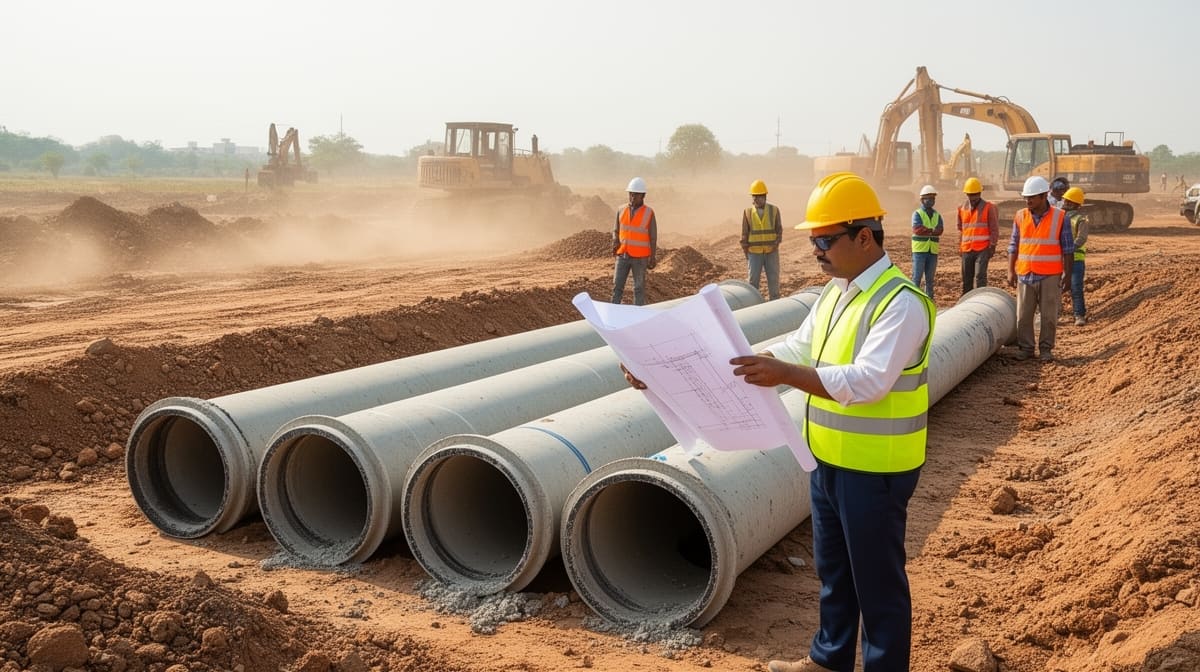
Midaas Construction Company Private Limited ("Midaas") entered into a Work Order dated 27.08.2015 with Hindustan Construction Company Ltd. ("HCC") for execution of road infrastructure works under a larger contract between HCC and the Ministry of Road Transport and Highways ("MORTH"). The Work Order, valued at Rs. 124 crores, covered road widening, strengthening, and minor structures along a 65.87-kilometre stretch of National Highway 233. Midaas was responsible for procuring most materials, while HCC supplied certain key inputs. The Work Order was structured as an item-rate contract, distinct from HCC’s EPC contract with MORTH.
Key Facts
- The Main Contract with MORTH was executed on 11.11.2014 for Rs. 393 crores.
- The Work Order between Midaas and HCC was issued on 27.08.2015 for Rs. 124 crores.
- HCC’s email dated 28.08.2015 referred to the Rs. 124 crore order as "initial" and noted that expansion required internal approval.
- Midaas raised Running Account Bills ("RA Bills") periodically, some of which were paid.
- On 14.12.2017, HCC directed Midaas to vacate the site within four days, citing MORTH’s intent to foreclose the Main Contract.
- On 02.02.2018, HCC formally instructed Midaas to cease work and demobilize, assuring payment for completed work after joint measurement.
- Midaas submitted a Pre-Final Bill dated 11.04.2018 for Rs. 32.51 crores, claiming unpaid work.
- Midaas alleged that joint measurement was abandoned, forcing unilateral inspection.
- HCC did not certify or pay the Pre-Final Bill.
- Midaas issued a notice of dispute on 22.11.2018 and invoked arbitration.
- Midaas claimed Rs. 165 crores as the true value of the Work Order, Rs. 5.95 crores as rate revision, Rs. 32.51 crores as unpaid Pre-Final Bill, and Rs. 100.58 crores as damages.
- Midaas had completed approximately 12% of structural works.
- On 25.01.2018, Midaas emailed HCC confirming it had executed work "in consonance with the Work Order" and requested no change in terms.
Procedural History
- 27.08.2015: Work Order executed between Midaas and HCC for Rs. 124 crores.
- 14.12.2017: HCC directs Midaas to vacate site.
- 02.02.2018: HCC issues formal demobilization notice.
- 11.04.2018: Midaas submits Pre-Final Bill for Rs. 32.51 crores.
- 22.11.2018: Midaas issues notice of dispute triggering arbitration.
- 01.08.2023: Arbitral Tribunal issues Impugned Award - partially allows claims, rejects Rs. 165 crore valuation, rate revision, Pre-Final Bill, and damages.
- 02.08.2023: Midaas receives Impugned Award.
- 30.08.2023: HCC files Section 33 application for correction.
- 11.10.2023: Section 33 application dismissed.
- 09.01.2024: Midaas files Section 34 petition before Bombay High Court.
- 30.04.2026: Matter reserved for judgment.
- 08.06.2026: Judgment pronounced.
Relief Sought
Midaas sought to set aside the Impugned Award on four grounds: (1) incorrect valuation of Work Order at Rs. 124 crores instead of Rs. 165 crores; (2) rejection of Rs. 5.95 crore rate revision claim; (3) rejection of Rs. 32.51 crore Pre-Final Bill due to alleged disregard of oral evidence; and (4) denial of damages despite termination attributable to HCC.
The Legal Issue
The central question was whether the Bombay High Court could interfere with an arbitral award under Section 34 of the Arbitration and Conciliation Act, 1996 merely because it disagreed with the tribunal’s appreciation of evidence, or whether such interference is permissible only when the award is patently illegal, perverse, or suffers from a manifest error on the face of the record.
Arguments Presented
For the Petitioner
Midaas contended that the Arbitral Tribunal ignored vital evidence, including HCC’s email dated 28.08.2015, Minutes of Meeting dated 14.04.2016, correspondence on rate revision, and oral testimony regarding submission of documents for the Pre-Final Bill. It argued that the tribunal’s rejection of the Rs. 165 crore valuation was arbitrary, as business efficacy principles were not applied. Midaas further asserted that the tribunal failed to consider HCC’s letter to MORTH dated 28.12.2017, which indicated that termination was due to HCC’s failure, not Midaas’s. It relied on Bhanumati Bhuta and Deccan Chronicle Holdings to argue that an award must speak for itself and cannot be defended post hoc with reasons not stated in the award.
For the Respondent
HCC countered that the Work Order was unambiguously for Rs. 124 crores, with no binding agreement for Rs. 165 crores. It emphasized that Clause 3.1, 3.2.2, 5, and 15(q) of the Work Order fixed rates, and no mutual agreement on revision existed. HCC argued that Midaas’s Pre-Final Bill lacked supporting documentation and that its own RA Bills were properly certified. Regarding damages, HCC contended that termination was contractual under Clause 15(m), which provided for automatic termination of the Work Order upon MORTH’s foreclosure of the Main Contract, with no entitlement to damages. HCC also highlighted Midaas’s own admission on 25.01.2018 that the Work Order value was Rs. 124 crores, and that the damages claim was speculative, having been revised multiple times from Rs. 125.83 crores to Rs. 100.58 crores.
The Court's Analysis
The Court emphasized that Section 34 does not permit re-appreciation of evidence or substitution of the tribunal’s view for another plausible interpretation. The tribunal’s findings on the Work Order value, rate revision, and Pre-Final Bill were all rooted in the documentary and oral evidence before it. The Court noted that while Midaas pointed to several documents - including the 28.08.2015 email and July 2016 Minutes - these did not constitute a binding agreement for a higher value or revised rates. The tribunal’s conclusion that no firm agreement on rate revision existed was reasonable, given the absence of quantified consent or mutual acceptance.
"It is not open to this Court to re-appreciate evidence or to substitute one plausible reading of the evidence with another."
The Court rejected Midaas’s argument that the tribunal ignored evidence, holding that the tribunal had referenced the documents in question and merely found them insufficient to alter its conclusion. The Court further observed that Midaas’s own communication dated 25.01.2018, acknowledging the Rs. 124 crore value, supported the tribunal’s view. Regarding damages, the Court held that termination under Clause 15(m) was contractual and automatic, and that Midaas failed to establish any breach or wrongful act by HCC. The tribunal was not obligated to invent a basis for damages where none was pleaded or proven.
The Court cited Dyna Technologies, Associate Builders, Ssangyong, and OPG Power to reaffirm that implied reasons, if discernible, may uphold an award. It concluded that the tribunal’s reasoning, even if not exhaustive, was adequate and fell within the zone of reasonableness.
The Verdict
The petition was dismissed. The Bombay High Court upheld the Impugned Award dated 01.08.2023 in its entirety. The Court held that no ground under Section 34 was made out for setting aside the award. The tribunal’s findings on valuation, rate revision, Pre-Final Bill, and damages were sustained. No monetary relief was granted to Midaas. The Court directed that all actions pursuant to the award be completed upon receipt of the downloaded judgment from the Court’s website.
What This Means For Similar Cases
Arbitral Tribunals Are Final Fact-Finders
- Practitioners must accept that courts will not re-evaluate witness credibility or weigh documentary evidence afresh under Section 34.
- Challenges based on "ignored evidence" must demonstrate perversity - not mere disagreement.
- Oral testimony alone, without corroborating documentation, is unlikely to override a tribunal’s factual conclusion.
Contractual Termination Clauses Are Enforceable
- Clause 15(m) of the Work Order, which triggered automatic termination upon MORTH’s foreclosure, was decisive.
- Parties cannot claim damages for termination if the contract explicitly provides for it without liability.
- Allegations of fault must be pleaded with specificity and supported by contemporaneous evidence.
Damages Claims Require Concrete Pleading
- Speculative or multiple revisions of damage claims (e.g., Rs. 125.83 cr → Rs. 100.58 cr) undermine credibility.
- Damages must be linked to a proven breach, not merely to the value of the contract.
- Courts will not infer a basis for damages where none was pleaded or proven before the tribunal.