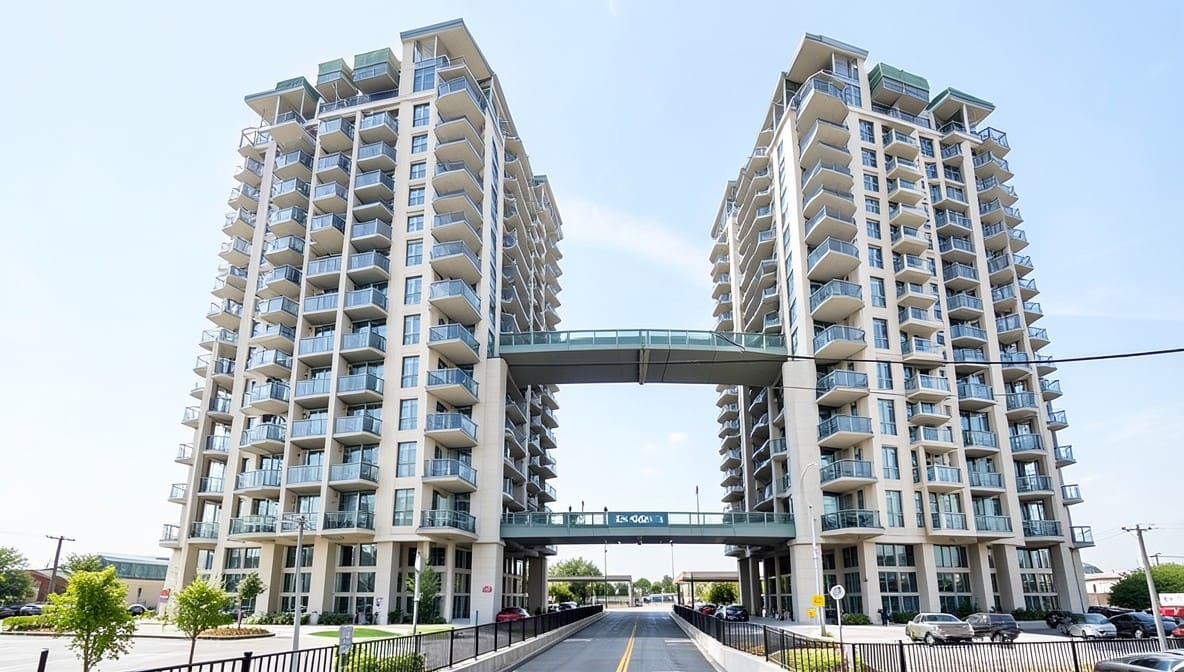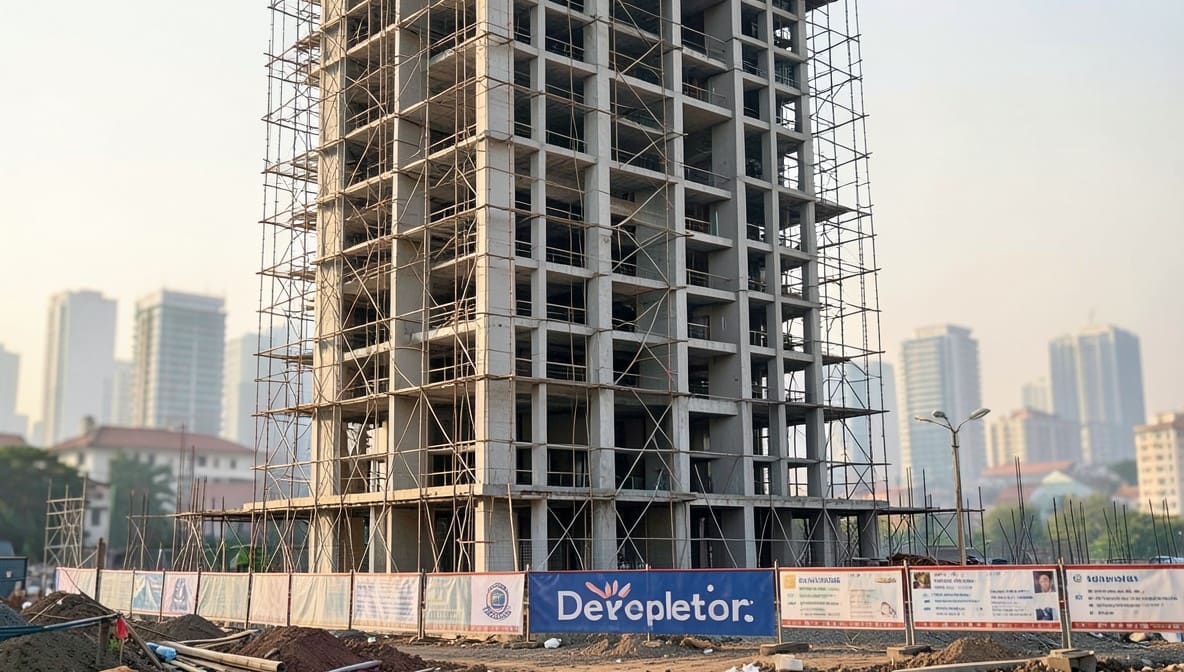
The Bombay High Court has reaffirmed the limited scope of judicial intervention in interlocutory orders passed by arbitral tribunals under Section 37 of the Arbitration and Conciliation Act, 1996. In dismissing a challenge to an interim order that restrained both parties from altering the status quo in a complex slum redevelopment project, the Court emphasized that arbitrators, as masters of the evidence, are best positioned to fashion equitable interim relief.
Background & Facts
The Dispute
The dispute arose between Muskaan Builders and Developers (Petitioner) and Savli Sahakari Griha Nirman Sanstha and Susheetal Sahakari Girhanirman Sanstha (Respondents) over the implementation of a slum redevelopment project. The parties entered into a Development Agreement on 25.11.2009, which contained an arbitration clause. After initial disputes, the agreement was terminated on 09.11.2010, but a Supplemental Development Agreement was executed on 22.07.2013, imposing new obligations including a prohibition on changes to Muskaan’s constitution and a ban on creating third-party rights in the project.
Key Facts
- The Supplemental DA explicitly prohibited any change in the composition of Muskaan, treating such change as a ground for termination.
- On 29.01.2020, Muskaan entered into an agreement with Kushrav Builders, whereby Mr. Ramesh Shah of Kushrav financed the project in exchange for entitlements to future constructed areas.
- A board displaying Kushrav’s name was erected on the project site in 2020, coinciding with Muskaan’s application for an Occupation Certificate.
- Muskaan denied any formal association with Kushrav, but admitted the existence of financial arrangements.
- One partner of Muskaan resigned after execution of the Supplemental DA, constituting a change in composition.
- Savli and Susheetal jointly terminated the Development Agreement on 09.11.2010, but Susheetal later withdrew its termination, asserting that the project was jointly owned and that termination would harm its interests.
- Dwellers originally from Savli’s land were relocated to a building constructed on Susheetal’s land.
- No formal apportionment of benefits or liabilities between Savli and Susheetal had been documented.
Procedural History
- 25.11.2009: Original Development Agreement executed.
- 09.11.2010: Development Agreement terminated by Savli and Susheetal.
- 22.07.2013: Supplemental Development Agreement executed.
- 13.01.2022: Savli invoked arbitration alleging breaches under the Supplemental DA.
- 15.03.2022: Savli and Susheetal filed a Section 9 petition before the Bombay High Court seeking interim relief; Muskaan undertook not to create third-party rights.
- 10.04.2023: Section 9 Court extended the interim restraint for six weeks, which remained in force.
- 11.01.2025: Sole Arbitrator passed impugned interlocutory order:
- Stayed termination of the Development Agreement.
- Prohibited Muskaan from creating third-party rights.
- Prohibited Savli from appointing a new developer or creating third-party rights.
- Declined to appoint a receiver.
- 08.06.2025: Muskaan filed Arbitration Petition (L) No. 5840 of 2025 under Section 37 challenging the arbitral order.
- 08.06.2026: Bombay High Court delivered judgment.
The Parties' Positions
For the Petitioner (Muskaan)
- Argued that the change in composition was not material and did not prejudice Savli.
- Contended that the prohibition on third-party rights was unjustified since no formal assignment had occurred.
- Claimed the arbitral order was one-sided, as it restrained Muskaan but did not compel Savli to perform its obligations.
- Asserted that the balance of convenience favored Muskaan, and the interim order was therefore erroneous.
For the Respondents (Savli and Susheetal)
Savli:
- Maintained that the change in Muskaan’s composition and creation of third-party rights were clear breaches of the Supplemental DA.
- Argued that the arbitral order was a balanced interim measure preserving the subject matter of arbitration.
Susheetal:
- Stated it had withdrawn termination and opposed any action that would disrupt the project.
- Highlighted that dwellers from Savli’s land were accommodated on its land, and termination would unfairly burden it.
- Emphasized the absence of any apportionment mechanism between the two societies.
Relief Sought
Muskaan sought to set aside the arbitral order dated 11.01.2025, particularly the injunctions restraining it from creating third-party rights and preventing Savli from appointing a new developer. It also sought a direction to lift the restraint on its ability to manage the project freely.
The Legal Issue
Whether the High Court, under Section 37 of the Arbitration and Conciliation Act, 1996, can interfere with an interlocutory order passed by an arbitral tribunal where the tribunal has balanced competing interests, stayed termination despite a prima facie breach, and imposed mutually binding restraints to preserve the status quo.
Arguments Presented
For the Petitioner
Muskaan relied on the principle that interim orders must be strictly proportionate and that the arbitral tribunal had erred by imposing a restraint on third-party rights despite Muskaan’s denial of any formal assignment. It argued that the tribunal ignored the fact that the change in composition was not intentional or prejudicial, and that the injunction against Savli was inconsistent with the tribunal’s finding that Muskaan’s balance of convenience favored it. It contended that the order was arbitrary and lacked a rational basis.
For the Respondent
Savli argued that the tribunal correctly applied the prima facie case, irreparable injury, and balance of convenience tests under Section 17 of the Act. It emphasized that the contractual prohibition on change in composition was unambiguous and that the erection of Kushrav’s board on site constituted a clear violation. Savli also highlighted that Susheetal’s opposition to termination reinforced the tribunal’s decision to maintain the status quo. The respondents contended that the order was a reasonable, temporary measure to prevent multiplicity of litigation and preserve the subject matter of arbitration.
The Court's Analysis
The Court undertook a rigorous review of the arbitral tribunal’s reasoning, applying the settled principle that Section 37 petitions are not appeals on merits but are confined to reviewing whether the tribunal’s discretion was exercised perversely, capriciously, or in disregard of settled legal principles. The Court cited Wander Ltd. v. Antox India (P) Ltd. and Jute Corporation of India Ltd. v. CIT to affirm that appellate interference is impermissible merely because the court would have reached a different conclusion.
"The appellate court will not reassess the material and seek to reach a conclusion different from the one reached by the court below if the one reached by that court was reasonably possible on the material."
The Court found that the arbitral tribunal had correctly identified a prima facie breach of the Supplemental DA through the change in Muskaan’s composition. It noted that the tribunal did not grant termination, despite this breach, and instead imposed a stay - a clear indication of judicial restraint. The tribunal further balanced the interests of all stakeholders, including Susheetal, whose land housed relocated dwellers and whose rights remained undefined.
The Court emphasized that the tribunal’s order was not one-sided: while Muskaan was restrained from creating third-party rights, Savli was equally restrained from appointing a new developer or altering the project structure. The injunctions mirrored each other, preserving the status quo pending final adjudication. The Court held that the tribunal’s reliance on the continuing effect of the Section 9 Court’s order from March 2022 was legally sound and prevented multiplicity of proceedings.
The Court rejected Muskaan’s argument that the restraint on third-party rights was unjustified, noting that the erection of Kushrav’s board and the financial arrangements created a plausible risk of alienation of project rights - a risk the tribunal was duty-bound to mitigate. The tribunal’s conclusion that evidence must be led to determine whether the change in composition amounted to an indirect assignment was a reasonable procedural safeguard.
The Court concluded that the arbitral tribunal’s order was neither perverse nor implausible. It was a nuanced, context-sensitive interim arrangement designed to protect the integrity of the arbitration process while preventing irreversible harm to any party.
The Verdict
The petition was dismissed. The Bombay High Court upheld the arbitral tribunal’s interlocutory order dated 11.01.2025 in its entirety. The injunctions restraining Muskaan from creating third-party rights and Savli from appointing a new developer remain in force. The Court declined to award costs at this stage, leaving the matter of costs to be determined by the arbitral tribunal upon final award. All parties are bound to comply with the interim order pending the conclusion of arbitration.
What This Means For Similar Cases
Interim Orders Are Presumptively Valid Unless Perverse
- Practitioners must treat Section 37 petitions as high-threshold challenges, not merits-based appeals.
- Courts will not substitute their view for that of the arbitral tribunal unless the order is irrational, arbitrary, or ignores binding precedent.
- The burden lies on the petitioner to demonstrate perversity, not mere disagreement.
Status Quo Preservation Is Central in Multi-Party Disputes
- In complex redevelopment projects involving multiple stakeholders, tribunals may impose mutually binding restraints even if one party has a prima facie breach.
- The presence of third parties (e.g., co-developers, dwellers, or financiers) justifies broader interim protections.
- Courts will uphold orders that prevent irreversible changes to the subject matter of arbitration.
Contractual Prohibitions on Composition Changes Are Enforceable
- Provisions prohibiting changes in partnership composition are not void for uncertainty or public policy - they are binding contractual obligations.
- Even partial changes (e.g., partner resignation) may trigger termination rights if explicitly stipulated.
- Denial of formal assignment does not negate the risk of de facto alienation if financial or operational control shifts.