The Bombay High Court has affirmed that the slavish reproduction of an original artistic label design can constitute copyright infringement and passing off, even when the underlying word mark is refused registration. The judgment clarifies that copyright protection extends to the expressive arrangement of elements in product packaging, independent of trademark status.
Background & Facts
The Dispute
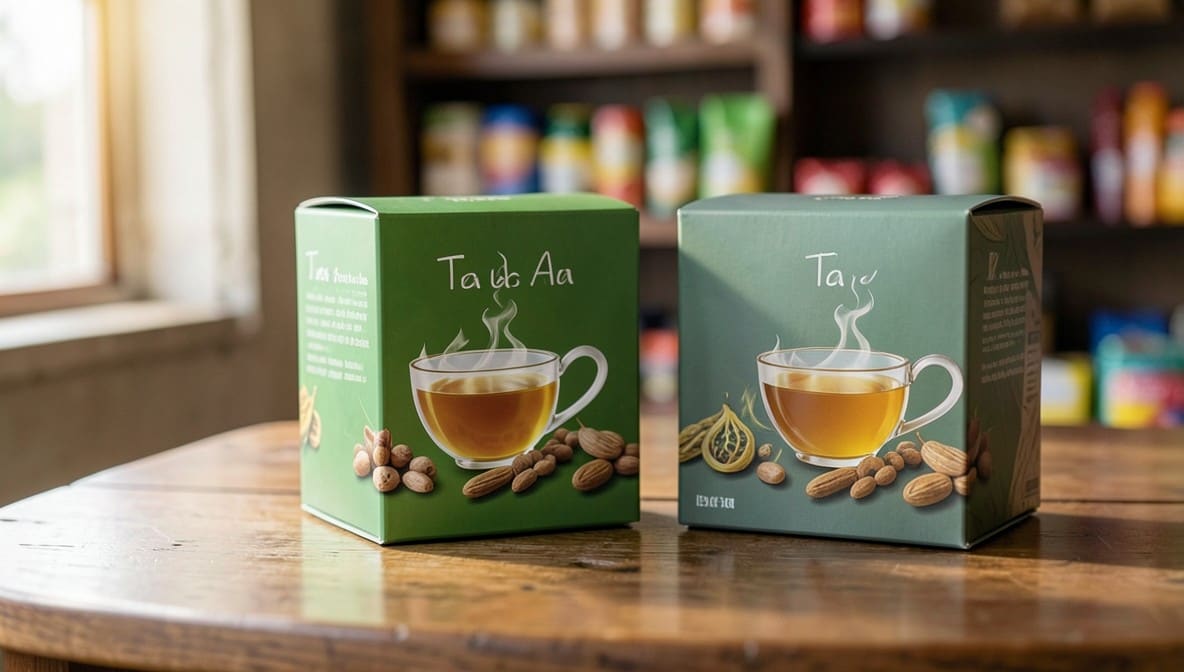
The Plaintiff, Anil Srichand Kundnani, proprietor of Bhagyalaxmi Tea Centre, alleges that the Defendant, Pruthvi Ishwar Patel, proprietor of Maa Bahucharaji Sales, has copied the distinctive artistic label design of the Plaintiff’s premium tea brand "UMANG". The Defendant’s product, marketed under the label "UTSAHA", allegedly replicates the Plaintiff’s trade dress in colour scheme, layout, imagery, and typographic styling, leading to consumer confusion.
Key Facts
- The Plaintiff began using the "UMANG" label design in 2009 for packaged tea and coffee products.
- The Plaintiff holds registered word mark "UMANG" in Class 30 (registered 03.10.2019) and Class 38 (registered 03.10.2019), and also in Class 16 (registered 03.10.2019).
- The Plaintiff applied for registration of the device mark "UMANG" (Application No. 6015727) on 23.04.2009, which was opposed and remains pending.
- The Plaintiff obtained copyright registration for the "UMANG" label artwork on 21.11.2023, with the author listed as Mr. Chirag Vasantkumar Gadesha.
- The Plaintiff’s annual sales turnover for 2021 - 2024 was approximately Rs. 19,58,92,397, with Rs. 615,02,031 for FY 2022 - 2023.
- The Defendant applied for registration of the device mark "UTSAHA" on 27.06.2023, which was objected to by the Trademark Registry.
- The Defendant obtained copyright registration for its artwork on 06.06.2024.
- The Plaintiff issued a cease and desist notice on 15.02.2024, to which the Defendant responded on 17.03.2024.
- The Defendant filed opposition to the Plaintiff’s application for "UMANGAM" (a variation of "UMANG") on 24.07.2024, alleging deceptive similarity.
- The Plaintiff’s original trademark application for the label mark (No. 3275370) was refused on 02.06.2016 on the ground of conflict with a prior registered word mark "UMANG" owned by Mr. Umesh Agarwal.
Procedural History
- 23.04.2009: Plaintiff first adopted and used the "UMANG" label design.
- 02.06.2016: Trademark application No. 3275370 for the label mark refused by Registrar of Trademarks.
- 21.11.2023: Plaintiff obtained copyright registration for the "UMANG" label artwork.
- 27.06.2023: Defendant applied for registration of "UTSAHA" as a device mark.
- 15.02.2024: Plaintiff issued cease and desist notice to Defendant.
- 06.06.2024: Defendant obtained copyright registration for its "UTSAHA" artwork.
- 14.06.2024: Bombay High Court granted ex parte ad-interim injunction restraining Defendant from using the impugned label.
- 20.07.2024: Defendant filed affidavit opposing continuation of interim relief.
- 08.06.2026: Court reserved order; judgment pronounced on same date.
The Parties' Positions
Plaintiff’s Position: The "UMANG" label is an original artistic work created in-house, with substantial goodwill and sales. The Defendant’s "UTSAHA" label is a slavish reproduction of the Plaintiff’s trade dress, including identical green background, cardamom bed, stylized cup, placement of "JALARAM"/"sociality", and overall layout. The refusal of the trademark application in 2016 was based on word mark conflict, not artistic similarity, and does not invalidate copyright.
Defendant’s Position: The Plaintiff is not the rightful owner of the copyright as the author is a third party with no deed of assignment. The copyright registration is invalid under Section 45 of the Copyright Act because the Plaintiff’s trademark application was refused. The use of green, cardamom, and tea cup is common in the industry. The Defendant’s artwork is independent and its copyright registration is valid.
Relief Sought
The Plaintiff seeks continuation and confirmation of the ad-interim injunction against the Defendant’s use of the "UTSAHA" label, and ultimately, a permanent injunction against infringement of copyright and passing off.
The Legal Issue
The central question was whether copyright protection for an original artistic label design can be denied solely because the underlying word mark was refused registration under the Trademark Act, and whether the slavish reproduction of a trade dress constitutes infringement even if the defendant holds a later copyright registration.
Arguments Presented
For the Appellant/Petitioner
The Plaintiff relied on Sanjay Soya Private Limited v. Narayani Trading Company and ITC Limited v. Britannia Industries Limited to argue that copyright protects the expression of ideas in artistic works, not the underlying idea. The Plaintiff submitted that the label’s unique arrangement - shaded green background, cardamom bed, stylized cup, placement of text in curved red rectangles - is an original artistic expression. The refusal of trademark application No. 3275370 was based on Section 11(1) of the Trademark Act due to a conflicting word mark, not because the artwork was unoriginal or similar to another design. The Plaintiff further argued that Rule 70(3) of the Copyright Rules, 2013, was complied with, as the NOC from the author was submitted. The Defendant’s failure to serve notice under Rule 70(9) and its use of a cropped version of the artwork demonstrated bad faith.
For the Respondent/State
The Defendant contended that the Plaintiff cannot claim copyright ownership because the registration certificate names a third party as author without a deed of assignment. The Defendant argued that Section 45(1) of the Copyright Act requires a certificate from the Registrar of Trademarks confirming no identical or deceptively similar trademark exists. Since the Plaintiff’s label mark application was refused in 2016, the copyright registration was procured illegally. The Defendant further claimed that the use of green, cardamom, and tea cup is generic and common in the tea industry, and that its artwork is independently created. The Defendant relied on Abdul Cadur Allibhoy v. Mahomedally Hyderally to argue that a party cannot derive rights from an illegal or fraudulent act.
The Court's Analysis
The Court conducted a detailed visual comparison of the Plaintiff’s "UMANG" label and the Defendant’s "UTSAHA" label. It found that the background colour scheme, placement of cardamoms, stylized tea cup, font style, and the use of a red curved rectangle for text ("JALARAM" on Plaintiff’s label, "sociality" on Defendant’s) were substantially identical. The Court held that while individual elements like cardamom or tea cup may be common, their specific arrangement and expression constitute protectable artistic work under copyright law.
"It is the expression of the idea of showing the combination of tea and cardamom in a distinct colour scheme and the placement of features which constitutes copyright and it is when this expression of idea is infringed, that the Defendant can be injuncted."
The Court rejected the Defendant’s argument that the Plaintiff’s copyright registration was invalid due to the 2016 trademark refusal. It interpreted Section 45(1) of the Copyright Act to require a certificate from the Trademark Registrar only if a third party had registered or applied for a trademark identical or deceptively similar to the artistic work. In this case, the refusal was based on a conflicting word mark, not a similar artistic design. The Court emphasized:
"The emphasis is on the artistic work and not on the word mark."
The Court further noted that the Defendant’s own copyright registration was obtained after the Plaintiff’s and was based on a cropped version of the actual product label used in commerce. The Defendant failed to disclose this discrepancy or provide any evidence of independent creation. The Court held that the Defendant’s failure to serve notice under Rule 70(9) of the Copyright Rules, 2013, further indicated bad faith.
The Court also dismissed the Defendant’s claim that the Plaintiff lacked ownership due to the third-party authorship. The Court observed that the Defendant itself relied on a third-party author in its own copyright registration without producing a deed of assignment. The Court applied the principle of equity: "The same yardstick, as sought to be contended by Mr. Kirpekar, if applied to the Defendant, would render the Defendant’s copyright ownership invalid."
Regarding passing off, the Court found that the Plaintiff had established substantial goodwill and reputation through sales figures and market presence since 2009. The Defendant’s use of an identical trade dress after being put on notice constituted misrepresentation likely to deceive consumers.
The Verdict
The Court made absolute the ad-interim injunction granted on 14.06.2024. The Defendant is restrained from using, manufacturing, selling, distributing, or promoting any product bearing the "UTSAHA" label or any substantially similar artistic design to the Plaintiff’s "UMANG" label. The Court directed the Defendant to destroy all infringing packaging materials within four weeks and to file an affidavit of compliance. Costs of Rs. 50,000 are awarded to the Plaintiff.
What This Means For Similar Cases
Copyright Protection Survives Trademark Refusal
- Practitioners must argue that refusal of a trademark application on grounds of word mark conflict does not invalidate copyright in the associated artistic design.
- The Copyright Act’s Section 45 proviso applies only when a third party holds a conflicting trademark in the same artistic form - not when the refusal is based on a word mark.
- Evidence of original creation, sales history, and market presence strengthens copyright claims even if trademark registration is pending or refused.
Slavish Reproduction Is Infringement, Not Coincidence
- Identical layout, colour schemes, and placement of elements - even if individual components are generic - constitute infringement under the lay observer test.
- Defendants cannot claim independent creation without documentary or testimonial evidence.
- Use of a cropped version of the infringing design in copyright registration, while using the full version in commerce, is strong evidence of bad faith.
Procedural Compliance in Copyright Applications Is Critical
- Applicants must comply with Rule 70(9) of the Copyright Rules, 2013, by serving notice on prior claimants.
- Failure to do so may be used to infer dishonest intent.
- Courts will apply consistent standards to both parties: if a defendant’s copyright is challenged for lack of assignment, the same standard applies to the plaintiff’s claim.