Bombay High Court judgments

2128 Bombay High Court judgments explained in plain English: what was decided, the law applied and why it matters. Page 32 of 89.

Mesne Profits Valuation | Bombay HC Mandates Market Comparables for Government Entities, Rejecting Standard Commercial Rates : BHC
Case Law Analysis
|Bombay High Court

Mesne Profits Valuation | Bombay HC Mandates Market Comparables for Government Entities, Rejecting Standard Commercial Rates : BHC

Bombay High Court rules that mesne profits payable by government entities must be determined based on comparable market data rather than standard commercial rates, ensuring equitable valuation. The judgment underscores that state-owned undertakings are entitled to moderated rates, reflecting their non-commercial status and public function.


Bail Jurisprudence | Pre-Trial Detention Unjustified Post-Charge-Sheet Filing Absent Flight Risk or Tampering: Bombay HC
|Bombay High Court

Bail Jurisprudence | Pre-Trial Detention Unjustified Post-Charge-Sheet Filing Absent Flight Risk or Tampering: Bombay HC

Bombay HC rules that continued incarceration after charge-sheet filing in non-bailable offences violates personal liberty unless flight risk or witness tampering is proven. The judgment underscores that prolonged pre-trial detention without trial commencement is punitive, setting a precedent for bail in financial fraud cases with no criminal antecedents.

Section 32(2) MID Act | Mandatory Objection Hearing Before Land Acquisition : Bombay HC Reaffirms Natural Justice
|Bombay High Court

Section 32(2) MID Act | Mandatory Objection Hearing Before Land Acquisition : Bombay HC Reaffirms Natural Justice

Bombay High Court quashes land acquisition orders under the Maharashtra Industrial Development Act for failing to conduct mandatory hearings on objections. The ruling reinforces that procedural compliance under Section 32(2) is not a formality but a safeguard against arbitrary state action, directly impacting landowners and industrial development projects across Maharashtra.

Section 7 MOFA 1963 | Informed Consent Mandatory for Additional Construction; Developer Cannot Exploit FSI Without Society Approval : Bombay HC
Case Law Analysis
|Bombay High Court

Section 7 MOFA 1963 | Informed Consent Mandatory for Additional Construction; Developer Cannot Exploit FSI Without Society Approval : Bombay HC

Bombay High Court reinforces that developers must secure explicit consent from flat purchasers under Section 7 of the Maharashtra Ownership Flats Act 1963 before undertaking additional construction. The ruling protects housing societies from unilateral FSI exploitation and ensures statutory compliance in cooperative housing projects.

Section 96 RFA 2013 | Absolute Tax Exemption on Land Acquisition Compensation Overrides TDS Under Income Tax Act : Bombay HC
Case Law Analysis
|Bombay High Court

Section 96 RFA 2013 | Absolute Tax Exemption on Land Acquisition Compensation Overrides TDS Under Income Tax Act : Bombay HC

Bombay High Court rules that compensation awarded under the National Highways Act, 1956, is immune from TDS deductions due to the absolute tax exemption under Section 96 of the Right to Fair Compensation Act, 2013. The ruling reinforces that arbitral awards under land acquisition laws are judgment-debts, shielding landowners from unilateral tax deductions.

Section 17 Registration Act | Delay Due to Stamp Duty Adjudication Excluded from Limitation Period : Bombay HC
Case Law Analysis
|Bombay High Court

Section 17 Registration Act | Delay Due to Stamp Duty Adjudication Excluded from Limitation Period : Bombay HC

Bombay High Court rules that delays caused by state-initiated stamp duty adjudication must be excluded when calculating the limitation period for document registration under the Registration Act. The court held that registration cannot be denied on technical grounds if title vests by statutory order, ensuring procedural fairness in property transactions.

Licensee Status Upheld Despite Title Dispute | Judicial Admissions and Failure to Cross-Examine Bar Revision Under Section 115 CPC : Bombay HC
Case Law Analysis
|Bombay High Court

Licensee Status Upheld Despite Title Dispute | Judicial Admissions and Failure to Cross-Examine Bar Revision Under Section 115 CPC : Bombay HC

The Bombay High Court affirmed that a defendant’s licensee status cannot be overturned merely because a title suit is pending, where concurrent findings are supported by judicial admissions and no cross-examination was attempted. This reinforces that revisional jurisdiction under Section 115 CPC cannot be used to reappreciate evidence, protecting licensees from speculative title challenges in summary proceedings.

Procedural Fairness in Academic Syllabus | Late Substitution of Exam Novel Violates Student Rights : Bombay HC Nagpur Bench
Case Law Analysis
|Bombay High Court

Procedural Fairness in Academic Syllabus | Late Substitution of Exam Novel Violates Student Rights : Bombay HC Nagpur Bench

The Bombay High Court Nagpur Bench ruled that changing a prescribed novel four weeks before exams, without giving students a chance to study it, violates procedural fairness and academic autonomy. Students must be allowed to choose between the old and new text for examination, ensuring equitable assessment and upholding the right to fair academic opportunity.

Section 91 MCoS Act | Family Medical Crisis Constitutes Sufficient Cause for Condonation of Delay in Co-operative Appeal : Bombay HC
Case Law Analysis
|Bombay High Court

Section 91 MCoS Act | Family Medical Crisis Constitutes Sufficient Cause for Condonation of Delay in Co-operative Appeal : Bombay HC

The Bombay High Court set aside the rejection of a 190-day delay in filing a co-operative appeal, holding that the petitioner’s caregiving burden during his father’s terminal illness and death constituted a valid, humanely understandable reason for the delay. This ruling reinforces that natural justice requires courts to consider personal hardship when applying rigid timelines under cooperative law, protecting the substantive right to appeal for vulnerable litigants.

Bail Granted Under SC & ST Act Despite Serious Charges | Investigation Complete, No Antecedents, Minor Injuries Sufficient : Bombay HC
Case Law Analysis
|Bombay High Court

Bail Granted Under SC & ST Act Despite Serious Charges | Investigation Complete, No Antecedents, Minor Injuries Sufficient : Bombay HC

The Bombay High Court granted bail to two accused under the SC & ST Act and BNS, holding that completion of investigation, absence of prior criminal history, and the minor nature of injuries outweigh the presumption of gravity attached to such charges. This reinforces that procedural closure and personal circumstances can override blanket assumptions in atrocities cases, offering critical relief to first-time accused.

BNS Section 69 | False Promise of Marriage Must Be Proven at Inception to Vitiate Consent: Bombay HC Quashes Charge-Sheet for Lack of Initial Fraudulent Intent
Case Law Analysis
|Bombay High Court

BNS Section 69 | False Promise of Marriage Must Be Proven at Inception to Vitiate Consent: Bombay HC Quashes Charge-Sheet for Lack of Initial Fraudulent Intent

Bombay HC Nagpur Bench ruled that consensual sexual relations under a promise of marriage do not constitute an offence under BNS Section 69 unless the false intent existed at the very start of the relationship. The court set aside the charge-sheet, emphasizing that subsequent breach of promise alone is insufficient to establish criminal liability.

MRTU & PULP Act | Equal Pay Claims Require Proven Comparable Posts, Qualifications & Appointment Status: Bombay HC
Case Law Analysis
|Bombay High Court

MRTU & PULP Act | Equal Pay Claims Require Proven Comparable Posts, Qualifications & Appointment Status: Bombay HC

Bombay High Court sets aside an Industrial Court order granting pay parity, ruling that equal pay for equal work under the MRTU & PULP Act mandates strict proof of identical posts, qualifications, and appointment status. The judgment reinforces that mere allegations of unfair labour practices are insufficient without substantive evidence of parity.

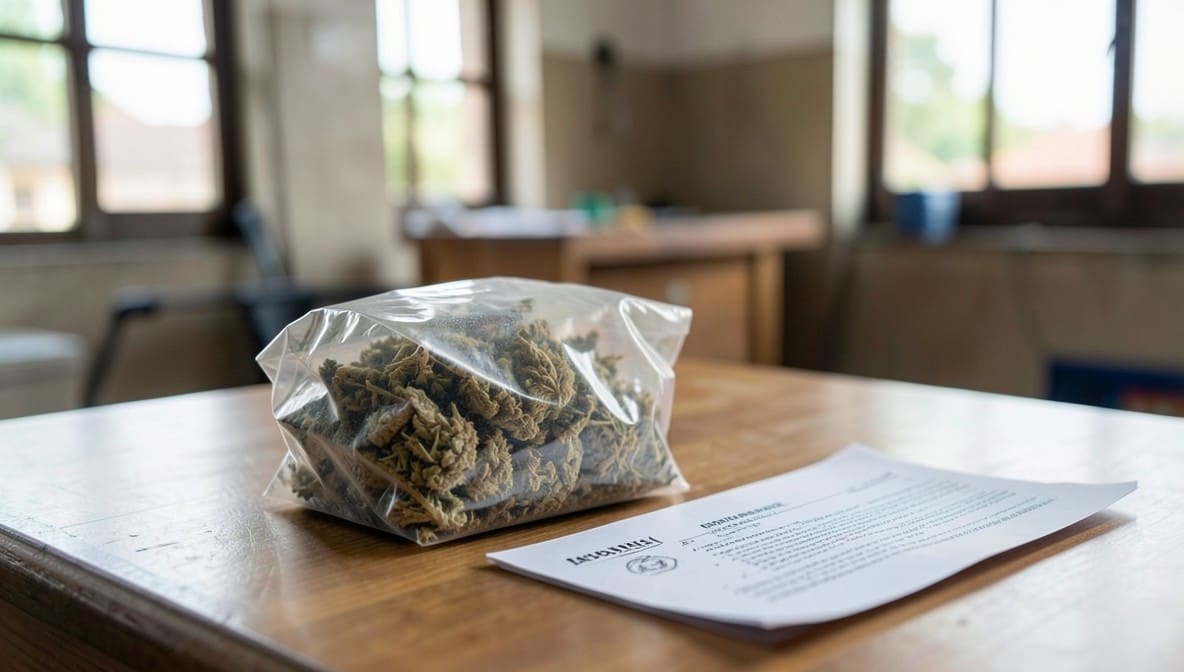
NDPS Act Bail | Chain of Custody Discrepancy in Contraband Description Voids Prosecution Case: Bombay HC Grants Bail Despite Commercial Quantity
Case Law Analysis
|Bombay High Court

NDPS Act Bail | Chain of Custody Discrepancy in Contraband Description Voids Prosecution Case: Bombay HC Grants Bail Despite Commercial Quantity

Bombay High Court ruled that material discrepancies in the description of seized contraband (wet vs. dry ganja) undermine the prosecution's chain of custody, justifying bail even for commercial quantities under the NDPS Act. The ruling sets a precedent for scrutinizing forensic documentation in narcotics cases.

Section 27 Evidence Act | CCTV Footage & Co-Accused Statements Insufficient for Bail Denial Without Direct Link to Crime: Bombay HC
Case Law Analysis
|Bombay High Court

Section 27 Evidence Act | CCTV Footage & Co-Accused Statements Insufficient for Bail Denial Without Direct Link to Crime: Bombay HC

Bombay High Court rules that CCTV footage showing the accused in a vehicle and co-accused statements under Section 27 of the Evidence Act do not establish prima facie complicity for bail denial. The court emphasizes that evidence must directly connect the accused to the crime, setting a threshold for bail jurisprudence in serious offenses like murder.

Section 52A NDPS Act | Mandatory Magistrate Sample Collection Failure Voids Prosecution; Bombay HC Grants Bail on Parity Grounds
Case Law Analysis
|Bombay High Court

Section 52A NDPS Act | Mandatory Magistrate Sample Collection Failure Voids Prosecution; Bombay HC Grants Bail on Parity Grounds

Bombay HC rules that non-compliance with Section 52A of the NDPS Act-failure to present contraband samples before a Magistrate-invalidates the prosecution's case, justifying bail. The court applied the parity principle, granting relief to the accused where co-accused were similarly released, reinforcing strict procedural compliance in NDPS cases.

Section 389 CrPC | Disability & Prolonged Appeal Delay Justify Suspension of Sentence Under PCA: Bombay HC Aurangabad Bench
Case Law Analysis
|Bombay High Court

Section 389 CrPC | Disability & Prolonged Appeal Delay Justify Suspension of Sentence Under PCA: Bombay HC Aurangabad Bench

Bombay High Court suspends sentence of a differently abled convict under the Prevention of Corruption Act, holding that prolonged appeal delays and absence of complainant testimony violate natural justice. The ruling sets a precedent for bail pending appeal where convicts face undue hardship due to disability or procedural lapses.