The Bombay High Court has reaffirmed that interim protection from arrest, once granted, must be confirmed if there is no incriminating evidence against the applicant and no risk of flight or obstruction of justice. This ruling underscores that cooperation with investigation, even without formal custody, suffices to justify continued bail protection under Section 438 CrPC.
Background & Facts
The Dispute
The applicant, Gajanan Baliram Wallad, seeks anticipatory bail in connection with Crime No. 345/2024 registered at Pathri Police Station, District Parbhani, for offences under Sections 353, 333, 332, 326, 379, 143, and 147 read with Section 149 of the Indian Penal Code. The case arises from an alleged illegal sand mining operation on the bank of a river at village Gunj on 11.06.2024.
Key Facts
- On 11.06.2024, the Tahsildar of Pathri received information about unauthorized sand extraction.
- Officers arrived at the spot and found two tractors loaded with sand being operated by unidentified persons.
- The Tahsildar and accompanying officials demanded production of permits; none were produced.
- Authorities sought to seize the tractors, leading to alleged resistance and assault by some individuals.
- The applicant is accused of taking away one of the tractors loaded with sand from the scene.
- No sand-laden tractor has been seized as of the date of the judgment.
- No forensic, documentary, or circumstantial evidence linking the applicant directly to the alleged theft or assault has been collected.
- The applicant has no prior criminal record.
Procedural History
- 11.06.2024: Incident occurred at village Gunj, District Parbhani.
- 12.06.2024: Crime No. 345/2024 registered at Pathri Police Station.
- 31.10.2024: Bombay High Court granted interim protection from arrest to the applicant.
- 08.06.2026: Present anticipatory bail application filed seeking confirmation of interim protection.
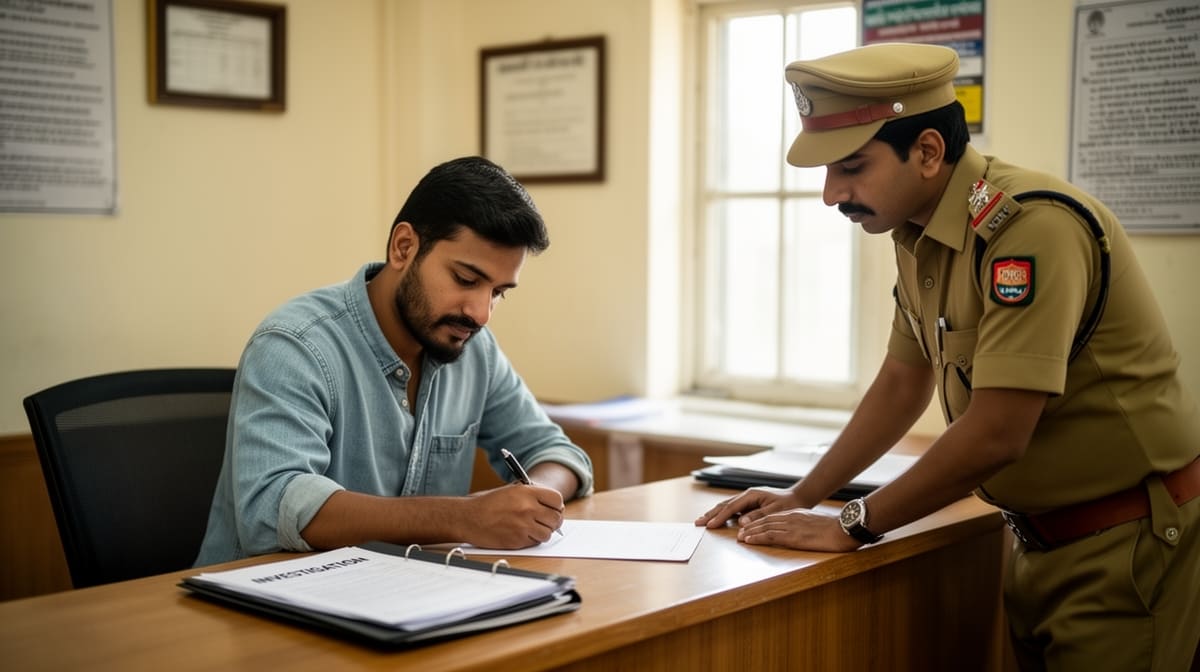
- Between 31.10.2024 and 08.06.2026, the applicant appeared before the Investigating Officer as and when required.
- The prosecution did not move for cancellation of the interim order despite the lapse of over seven months.
The Parties' Positions
For the Applicant
- The applicant has fully cooperated with the investigation, appearing before the Investigating Officer whenever summoned.
- No incriminating material has been collected against him.
- He has no criminal antecedents and is not a flight risk.
- The interim protection granted on 31.10.2024 was based on prima facie satisfaction and should now be confirmed.
- It is unreasonable to expect the applicant to perform the duties of the Investigating Officer, such as locating or producing seized property.
For the Respondent/State
- Witness statements indicate the applicant took away one of the tractors loaded with sand.
- The tractors have not yet been seized, suggesting possible tampering or concealment.
- Merely attending police station is insufficient to establish cooperation; active participation in investigation is required.
- The gravity of the offences, including rioting and theft, warrants denial of anticipatory bail.
Relief Sought
The applicant seeks confirmation of the interim protection granted on 31.10.2024 and grant of anticipatory bail under Section 438 CrPC, with conditions to ensure continued cooperation and non-interference with investigation.
The Legal Issue
The central question was whether interim protection from arrest under Section 438 CrPC, granted on prima facie grounds and followed by consistent cooperation, may be denied merely because the investigating agency has not yet seized incriminating property or completed its probe.
Arguments Presented
For the Applicant
The applicant relied on Arnesh Kumar v. State of Bihar and Sushil Ansal v. State (NCT of Delhi) to argue that anticipatory bail should not be denied on speculative grounds or due to incomplete investigation. He emphasized that cooperation with investigation, including voluntary appearance before police, is a strong indicator of good faith and absence of flight risk. He further cited Gurbaksh Singh Sibbia v. State of Punjab to assert that Section 438 CrPC is designed to prevent arbitrary arrest and that the absence of incriminating evidence must weigh heavily in favour of the applicant.
For the Respondent
The State contended that the nature of the offences - particularly those involving violence, theft, and unlawful assembly - demands strict scrutiny. It argued that the failure to seize the tractor indicates possible collusion or destruction of evidence. The State relied on State of Maharashtra v. Suresh Babu to assert that anticipatory bail cannot be granted if the accused is suspected of tampering with evidence or influencing witnesses. It further claimed that attendance at police station is a minimal obligation and does not equate to proactive cooperation.
The Court's Analysis
The Court examined the conduct of the applicant since the grant of interim protection on 31.10.2024. It noted that the applicant had appeared before the Investigating Officer as and when required, without any indication of evasion or non-cooperation. The Court observed that the prosecution had not sought cancellation of the interim order despite the lapse of over seven months, which indicated acquiescence to the applicant’s conduct.
"It is not expected that the applicant would do the job of the Investigating Officer."
The Court held that the absence of any incriminating material collected against the applicant, coupled with his clean record and consistent cooperation, negated any reasonable apprehension of flight or obstruction. The Court distinguished the present case from those where accused persons absconded, destroyed evidence, or refused to appear. It emphasized that Section 438 CrPC is a preventive provision, not a punitive one, and its purpose is to shield individuals from arbitrary arrest when the investigation has not yet established a prima facie case against them.
The Court further noted that the non-seizure of the tractor was a failure of the investigating agency, not the applicant’s non-cooperation. The burden to collect evidence lies with the State, not the accused. The Court rejected the State’s argument that attendance alone is insufficient, holding that in the absence of any adverse conduct, repeated appearance before police constitutes meaningful cooperation.
The Verdict
The application is allowed. The interim protection granted on 31.10.2024 is confirmed. The applicant shall not be arrested in connection with Crime No. 345/2024 unless he fails to cooperate with the investigation, tamper with evidence, or absconds. The applicant is directed to appear before the Investigating Officer whenever required and to surrender his passport, if held. The order shall remain in force until the conclusion of the trial or until further order of this Court.
What This Means For Similar Cases
Cooperation Trumps Incomplete Investigation
- Practitioners may now argue that consistent voluntary appearance before police, even without formal custody, satisfies the requirement of cooperation under Section 438 CrPC.
- The failure of the investigating agency to seize evidence cannot be used to deny anticipatory bail unless the accused is shown to have obstructed the process.
- Courts must distinguish between investigative delays and accused misconduct.
Interim Protection Is Not a Temporary Measure
- Interim protection granted under Section 438 CrPC is not merely a stopgap; it may be confirmed if the applicant’s conduct remains compliant.
- Prosecution must move promptly to cancel interim orders if they believe the accused is non-cooperative; silence for months constitutes waiver.
- Courts should not impose additional conditions (e.g., surrender of passport) unless there is a specific, documented risk.
No Criminal Record Is a Strong Factor
- A clean criminal history, when combined with cooperation and absence of incriminating evidence, creates a compelling case for anticipatory bail.
- Courts must avoid presuming guilt based on the nature of the offence alone, as held in Arnesh Kumar v. State of Bihar.