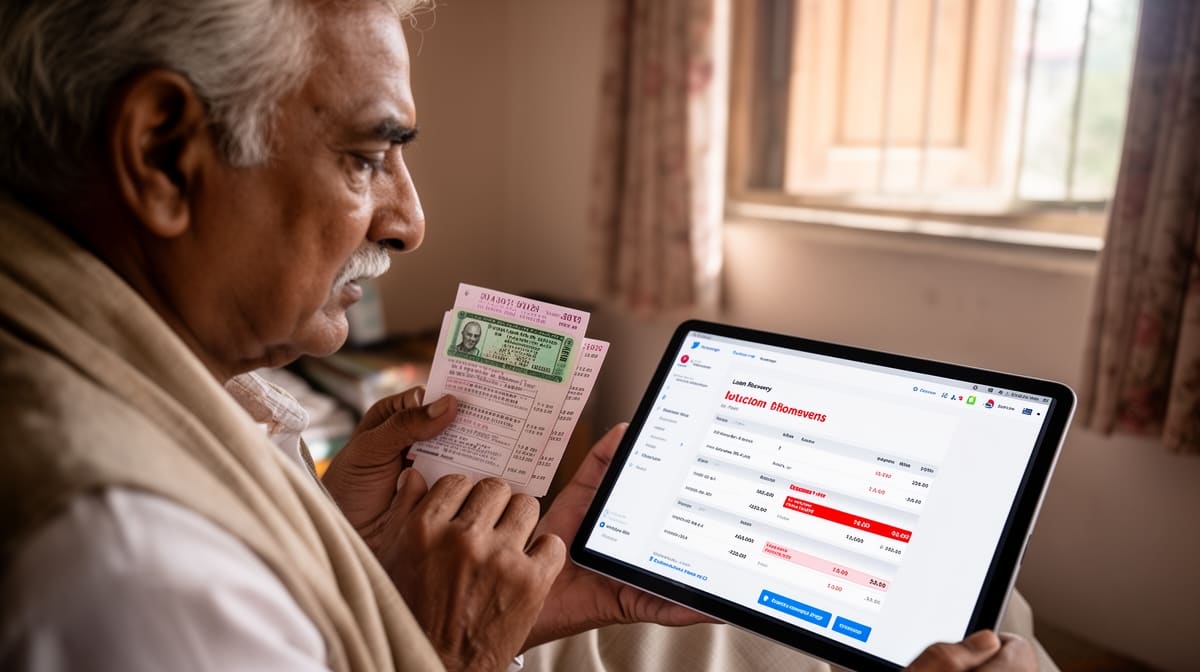
The Bombay High Court has clarified that once insurance proceeds are paid out upon maturity, they cease to be protected from attachment under Section 60(1)(kb) of the Code of Civil Procedure. The Court dismissed attempts by the judgment debtor to re-litigate a settled legal question, imposed costs for abuse of process, and permitted the decree holder to withdraw the deposited amount.
Background & Facts
The Dispute
The present execution application arises from a money decree passed in a Summary Suit on 03.05.2018 in favour of the applicant, Parasram H Bhojwani, against the respondent, Pravinchand Sehgal. The decree remained unsatisfied despite multiple enforcement attempts. The judgment debtor’s insurance policy, which matured in 2021, became the subject of attachment proceedings. The insurance company, upon maturity, paid the proceeds to the Prothonotary & Senior Master of the Bombay High Court, pending resolution of the legal question whether such proceeds were exempt from attachment.
Key Facts
- The insurance policy in question was taken out by the judgment debtor as a life insurance policy with a maturity value of Rs. 1,25,00,000
- The policy matured on 15.07.2021, and the insurer deposited the maturity proceeds with the Prothonotary & Senior Master on 20.07.2021
- The judgment debtor objected to the attachment, invoking Section 60(1)(kb) of the CPC, which exempts "the proceeds of any insurance policy on the life of a judgment debtor" from attachment
- The applicant contended that the exemption applies only while the proceeds remain with the insurer, not after disbursement
- The insurance company did not dispute the payment but sought judicial direction on the legal status of the funds
Procedural History
- 03.05.2018: Money decree passed in Summary Suit in favour of the applicant
- 15.07.2021: Insurance policy matures; insurer deposits proceeds with Prothonotary & Senior Master
- 24.08.2021: Single Judge of Bombay High Court holds that once proceeds are paid out, exemption under Section 60(1)(kb) ceases; directs deposit of funds
- 26.11.2024: Judgment debtor files Special Leave Petition (SLP No. 12345/2024) before Supreme Court challenging the order
- 26.11.2024: Supreme Court dismisses SLP as withdrawn, with the observation: "The question of law is kept open"
- 01.11.2024: Interim Application No. 3260/2025 filed by decree holder seeking withdrawal of deposited amount
- 17.06.2026: Present order passed by Rajesh S. Patil, J., disposing of the interim application
The Parties' Positions
For the Judgment Debtor
- Argued that Section 60(1)(kb) provides absolute protection to insurance proceeds, regardless of whether they are held by the insurer or have been paid out
- Contended that the Supreme Court’s observation that "the question of law is kept open" permits re-agitation of the issue before the High Court
- Sought referral of the question to a Larger Bench, asserting conflicting interpretations in other High Courts
For the Decree Holder
- Maintained that the exemption under Section 60(1)(kb) applies only to funds still in the custody of the insurer
- Relied on Explanation-I to Section 60(1) of the CPC, which lists exempted items but does not include clause (kb)
- Cited Cipla Limited v. Competent Authority and Hemal Ishwarbhai Patel v. Veer Narmad South Gujarat University to argue that "question kept open" by the Supreme Court refers only to future reconsideration by the Supreme Court, not re-litigation in subordinate forums
Relief Sought
The applicant sought:
- Permission to withdraw the maturity proceeds of Rs. 1,25,00,000 deposited with the Prothonotary & Senior Master
- Costs for unnecessary litigation and delay
- Rejection of any stay on execution of the order
The Legal Issue
The central question was whether Section 60(1)(kb) of the Code of Civil Procedure continues to protect insurance proceeds from attachment once the insurer has paid out the maturity value to the judgment debtor, or whether such protection lapses upon disbursement.
Arguments Presented
For the Appellant/Petitioner
The decree holder relied on the plain language of Section 60(1)(kb) and Explanation-I to Section 60(1) of the CPC. It was submitted that Explanation-I explicitly lists exempted items such as salaries, pensions, and gratuities, but omits insurance proceeds. The exemption under clause (kb) was argued to be procedural and conditional - applicable only while the funds remain under the insurer’s control. The applicant cited Cipla Limited v. Competent Authority and Hemal Ishwarbhai Patel v. Veer Narmad South Gujarat University to establish that when the Supreme Court dismisses an SLP and states that a question of law is "kept open," it does so for its own future consideration, not to reopen the issue in lower courts. The applicant emphasized that the judgment debtor had already had a full hearing before the Single Judge and chose to withdraw the SLP, thereby acquiescing to the order.
For the Respondent/State
The judgment debtor argued that the phrase "proceeds of any insurance policy on the life of a judgment debtor" in Section 60(1)(kb) is unqualified and must be interpreted to protect the funds regardless of their location. He contended that the Supreme Court’s observation that the question is "kept open" effectively nullifies the Single Judge’s order and permits fresh argument before the High Court. He further submitted that the issue involved a substantial question of law requiring reference to a Larger Bench, citing potential conflict with decisions from other High Courts. He did not dispute the factual disbursement but insisted the statutory protection remained intact.
The Court's Analysis
The Court undertook a rigorous analysis of the Supreme Court’s order dismissing the SLP as withdrawn and the phrase "the question of law is kept open." It held that such language, when used by the Supreme Court, is a procedural mechanism to avoid deciding a question on merits while preserving its future consideration. The Court relied on the binding precedent in Hemal Ishwarbhai Patel v. Veer Narmad South Gujarat University, which clarified that "the question of law is kept open" is not an invitation to subordinate courts to re-examine the issue.
"The question of law is not kept open for the High Court."
The Court emphasized that the judgment debtor had not challenged the Single Judge’s order on substantive grounds before the Supreme Court but chose to withdraw the SLP. This act constituted a voluntary abandonment of the challenge. The Court further noted that Section 60(1)(kb) does not appear in Explanation-I, which enumerates items exempt from attachment both before and after payment. This omission was decisive: if the legislature intended to extend protection beyond the insurer’s custody, it would have included clause (kb) in the Explanation.
The Court also rejected the argument that a Larger Bench should be convened. It held that the Single Judge’s order was not per incuriam, nor was there any binding precedent from a coordinate Bench of the Bombay High Court contradicting it. The withdrawal of the SLP confirmed the finality of the order for the purposes of execution.
The Court observed that the judgment debtor’s counsel, despite being fully aware of the legal position and the Supreme Court’s limited intent, persistently reargued the issue, consuming valuable judicial time. This conduct, the Court held, amounted to an abuse of process.
The Verdict
The applicant succeeded. The Court allowed Interim Application No. 3260/2025 and directed the Prothonotary & Senior Master to release the deposited amount of Rs. 1,25,00,000 to the decree holder within seven days. The Court imposed costs of Rs. 50,000 on the judgment debtor to be paid to the decree holder within four weeks. The request for a stay on execution was rejected. The Court clarified that the exemption under Section 60(1)(kb) ceases upon disbursement of insurance proceeds to the judgment debtor.
What This Means For Similar Cases
Insurance Proceeds Lose Exemption Upon Disbursement
- Practitioners must now treat insurance maturity proceeds as attachable assets once paid out by the insurer, even if the policy was originally exempt
- Execution applications should not be stayed merely on the basis of Section 60(1)(kb) after payout
- The burden shifts to the judgment debtor to prove the funds are still held by the insurer to claim exemption
Supreme Court’s "Question Kept Open" Does Not Reopen Lower Court Orders
- A dismissal of an SLP with the observation that a question of law is "kept open" does not invalidate or suspend the lower court’s order
- Such orders remain binding for execution purposes unless set aside by the Supreme Court
- Attempts to re-litigate the same issue in execution proceedings will attract costs for abuse of process
Costs Will Be Imposed for Re-litigation
- Courts will impose deterrent costs on advocates who reargue settled issues after Supreme Court dismissal
- The principle of res judicata applies even in execution proceedings when a challenge has been voluntarily abandoned
- Advocates must assess the finality of orders before filing repetitive applications