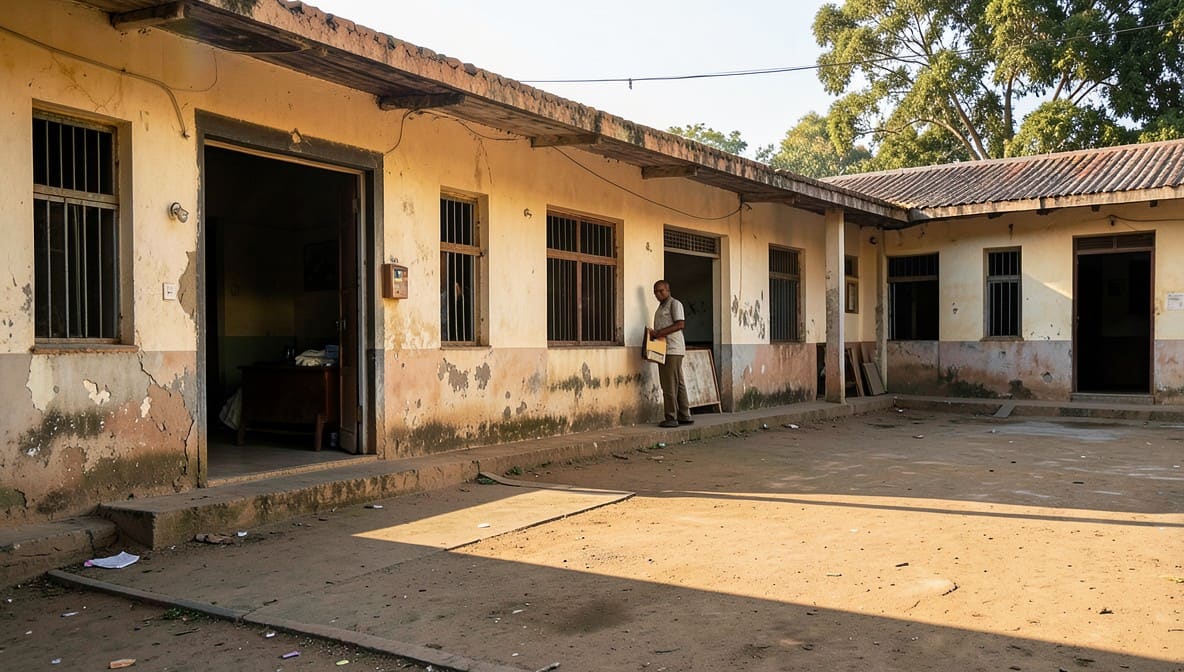
The Bombay High Court has affirmed that the state cannot delay reimbursement to private schools complying with the Right of Children to Free and Compulsory Education Act, 2009. When schools fulfill their statutory duty to admit children from economically weaker sections, the state’s obligation to reimburse costs is not discretionary - it is mandatory and time-bound. Failure to disburse funds undermines the very foundation of the RTE regime.
Background & Facts
The Dispute
The petitioners are private unaided schools in Maharashtra that have complied with the provisions of the Right of Children to Free and Compulsory Education Act, 2009 (RTE Act), by admitting children from economically weaker sections and disadvantaged groups as mandated under Section 12(1)(c). Despite fulfilling their statutory obligations, the schools have submitted claims for reimbursement of tuition fees and other related grants to the State Government and the Zilla Parishad, Satara, but these claims remain pending without any decision or disbursement.
Key Facts
- The petitioners admitted children under Section 12(1)(c) of the RTE Act during the academic years 2022-23 and 2023-24
- Reimbursement applications were submitted to the Education Officer, Zilla Parishad, Satara, in accordance with the State’s RTE Implementation Guidelines
- The claims include reimbursement for tuition fees, textbooks, uniforms, and transportation allowances as per the prescribed rates
- No formal order has been passed on any of the pending claims despite repeated follow-ups
- The schools have incurred significant financial strain, with some reporting deficits exceeding Rs. 15 lakh each due to unreimbursed expenditures
- The petitioners have not received any communication, notice of deficiency, or opportunity to be heard before the claims were left in abeyance
Procedural History
- 2022-2023 academic year: Petitioners admitted RTE-eligible children and submitted reimbursement claims by August 2022
- 2023-2024 academic year: New claims submitted by August 2023
- October 2023 to January 2024: Multiple reminders sent to the Education Officer, Zilla Parishad, Satara
- March 2024: Petitioners filed Writ Petition No. 713 of 2026 (Challenge Academy)
- April 2024: Writ Petition No. 312 of 2026 (Vivekananda Academy) and Writ Petition No. 714 of 2026 (Gurukul Primary School) filed
- May 2024: Respondents filed affidavits admitting receipt of claims but citing administrative backlog
- 17.06.2026: Hearing before the Division Bench of the Bombay High Court, Kolhapur Circuit
The Parties' Positions
For the Petitioners: The schools argued that they are not receiving any government aid and yet are bearing the entire cost of providing free education to RTE beneficiaries. Delay in reimbursement violates their fundamental right to carry on trade or business under Article 19(1)(g) and constitutes a breach of the state’s duty under Article 21A and Section 12(1)(c) of the RTE Act. They cited multiple precedents where courts have directed prompt reimbursement.
For the Respondents: The State and Zilla Parishad acknowledged receipt of claims but claimed procedural delays due to verification processes, lack of budgetary allocation, and administrative overload. No specific timeline or mechanism for disbursement was presented.
Relief Sought
The petitioners sought a direction to the Education Officer, Zilla Parishad, Satara, to:
- Decide all pending reimbursement claims within a stipulated time
- Release the due amounts immediately upon approval
- Compensate for financial hardship caused by delay
- Issue a binding compliance mechanism to prevent future delays
The Legal Issue
The central question was whether the State, having mandated private schools to admit RTE-eligible children, can indefinitely delay reimbursement of costs incurred in fulfilling this statutory obligation, thereby rendering the right to free education ineffective for both the children and the schools.
Arguments Presented
For the Petitioner
The petitioners relied on Society for Unaided Private Schools of Rajasthan v. Union of India (2012) to argue that the state cannot impose a statutory burden on private institutions without providing the corresponding financial support. They emphasized that the RTE Act is not merely a regulatory framework but a rights-based scheme where reimbursement is not a grant but a statutory entitlement. Delay, they contended, amounts to constructive denial of the right to education and violates the principle of fiscal responsibility under Article 275 of the Constitution.
For the Respondent
The State and Zilla Parishad argued that reimbursement is subject to availability of funds and internal verification procedures. They cited administrative difficulties in cross-checking admissions and fee structures across hundreds of schools. No legal authority was cited to justify indefinite delay.
The Court's Analysis
The Court observed that the RTE Act is not a mere policy initiative but a constitutional mandate under Article 21A. The state’s duty to provide free and compulsory education extends to ensuring that private schools are not financially crippled while discharging this public obligation. The Court noted that the state has repeatedly affirmed in policy documents and court filings that reimbursement is a statutory obligation, not a discretionary benefit.
"Once a school has complied with its statutory obligation under Section 12(1)(c) of the RTE Act, the State cannot withhold reimbursement on grounds of administrative delay or budgetary constraints. The right to education cannot be contingent on the state’s bureaucratic efficiency."
The Court rejected the argument that financial constraints excuse non-performance of a constitutional duty. It held that the state’s failure to disburse funds within a reasonable time undermines the entire architecture of the RTE Act and places an unfair burden on private institutions. The Court further emphasized that the absence of a decision on claims for over a year constitutes a violation of the principle of natural justice and the right to timely remedy.
The Verdict
The petitioners succeeded. The Court directed the Education Officer, Zilla Parishad, Satara, to decide all pending reimbursement claims within three weeks from 17.06.2026. If the claims are found admissible, the reimbursement amounts shall be paid within one week of the decision. The Education Officer shall be held personally liable for any delay or non-compliance. The Court further directed that a copy of this order be personally presented to the Education Officer on 19.06.2026 at 11:00 a.m. Petitioners are at liberty to return to court in case of non-compliance.
What This Means For Similar Cases
Reimbursement Is Not Discretionary
- Schools across Maharashtra and other states can now cite this judgment to demand timely reimbursement under the RTE Act
- Administrative delays or budgetary constraints cannot be invoked to justify non-payment
- Any delay beyond 30 days from claim submission may now be challenged as a violation of statutory duty
State Accountability Is Now Enforceable
- The Court’s imposition of personal liability on the Education Officer sets a precedent for holding officials accountable for implementation failures
- Future non-compliance may attract contempt proceedings
- Schools should maintain detailed records of claims, follow-ups, and correspondence to establish proof of delay
Procedural Fairness Required
- The state must provide written reasons for rejection of claims, not silence
- Schools are entitled to a hearing before rejection
- No claim may be left pending for more than 90 days without a decision