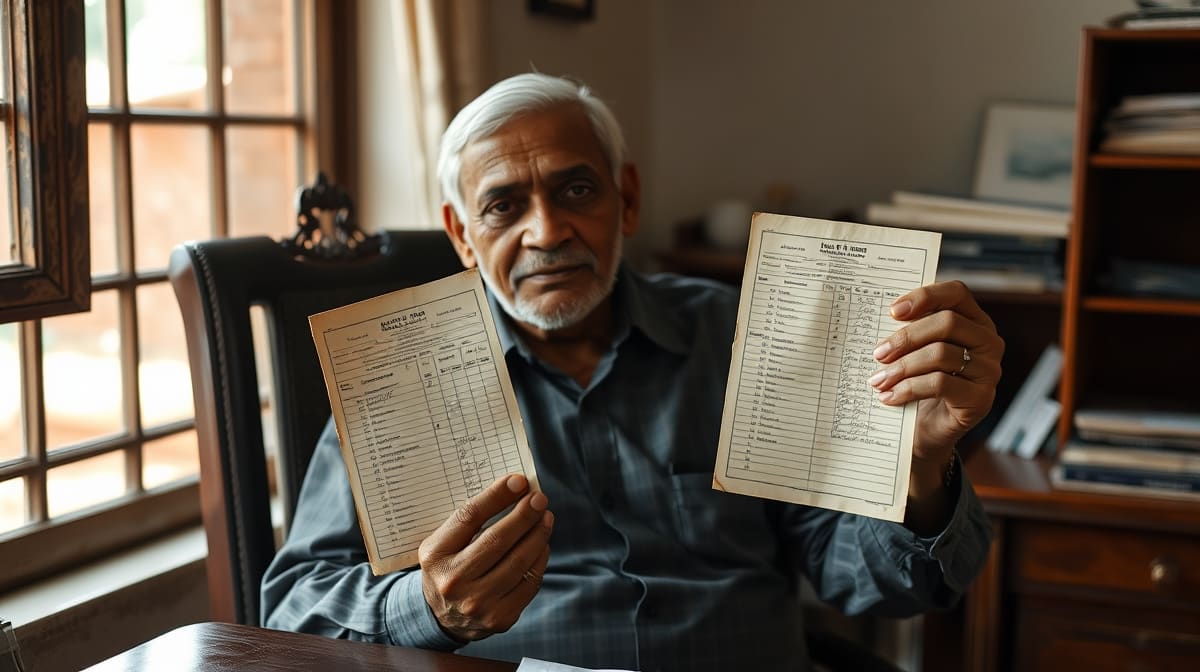
The Bombay High Court has reaffirmed that caste scrutiny committees cannot revisit or cancel previously issued validity certificates absent explicit statutory authority, and that pre-independence documentary evidence carries decisive probative value in establishing Scheduled Tribe status. This judgment delivers critical clarity on the limits of administrative review and the primacy of historical records in caste-based entitlement claims.
Background & Facts
The Dispute
The petitioners, brothers Baban s/o Bhagwan Jadhav and Gajanan s/o Bhagwan Jadhav, both belonging to the "Gond" community, challenged orders cancelling their Caste Validity Certificates issued under the Maharashtra Scheduled Caste, Scheduled Tribes, De-notified Tribes (Vimukta Jatis), Nomadic Tribes, Other Backward Classes And Special Backward Category (Regulation of Issuance and Verification of) Caste Certificate Act, 2000 ("Act of 2000"). The District Caste Certificate Verification Committee, Amravati, cancelled Gajanan’s certificate dated 03.09.2011 on 29.12.2023 and Baban’s claim on 15.04.2024, relying on a Police Vigilance Cell report that identified contradictory entries in pre-independence revenue records.
Key Facts
- Gajanan obtained a Caste Certificate from the Executive Magistrate, Balapur, on 09.12.1993, and a Validity Certificate from the Scrutiny Committee on 03.09.2011.
- Baban obtained his Caste Certificate from the Sub-Divisional Officer, Balapur, on 28.12.2019, and relied on his brother’s Validity Certificate for verification.
- Baban was appointed as a Chowkidar on 28.07.1994 against a ST-reserved vacancy and retired on superannuation after 25 years of service.
- The Scrutiny Committee received a Vigilance Cell report dated 26.07.2022, which noted conflicting caste entries in revenue records from 1935 and 1936, including one entry listing a cousin grandfather as "Koli".
- On 21.04.2023, the Committee issued a show cause notice to Gajanan, asking him to explain why his certificate should not be cancelled, referencing the 1935 entries but making no allegation of fraud.
- Gajanan appeared through his brother Baban on 26.07.2023 after seeking adjournment.
- The Committee cancelled Gajanan’s certificate on 29.12.2023 and Baban’s claim on 15.04.2024, without recording any finding of fraud.
Procedural History
- 03.09.2011: Caste Validity Certificate issued to Gajanan by the Scrutiny Committee, Amravati.
- 28.12.2019: Caste Certificate issued to Baban by Sub-Divisional Officer, Balapur.
- 26.07.2022: Police Vigilance Cell submits adverse report.
- 21.04.2023: Show cause notice issued to Gajanan.
- 26.12.2022: Show cause notice issued to Gajanan (reiterated).
- 19.07.2023: Gajanan applies for adjournment.
- 26.07.2023: Baban appears on behalf of Gajanan.
- 29.12.2023: Order cancelling Gajanan’s Validity Certificate.
- 15.04.2024: Order invalidating Baban’s caste claim.
- 2024: Writ Petitions No. 5701 and 5702 filed before Bombay High Court, Nagpur Bench.
- 08.06.2026: Judgment reserved.
- 17.06.2026: Judgment pronounced.
The Parties' Positions
Petitioners: Argued that the Scrutiny Committee lacked statutory power to review or cancel a previously issued Validity Certificate absent proof of fraud. They relied on pre-independence documents - birth extracts from 1930, Kotwal register entries from 1936, and a 1933 sale deed - all recording their ancestors as "Gond". They contended that isolated contradictory entries in old records, without proof of fabrication, cannot override consistent historical documentation.
Respondents: Contended that the Committee had jurisdiction to re-examine the certificates upon discovery of new adverse material (the 1935 revenue entries), and that the petitioners’ failure to disclose these entries amounted to suppression or fraud. They argued that the Vigilance report provided fresh grounds for cancellation.
Relief Sought
The petitioners sought quashing of the impugned orders dated 29.12.2023 and 15.04.2024, restoration of their Caste Validity Certificates, and a direction to the Scrutiny Committee to issue fresh certificates within a stipulated time.
The Legal Issue
Can a Caste Scrutiny Committee cancel a previously issued Validity Certificate on the basis of newly discovered pre-independence documents, without recording a finding that the certificate was obtained by fraud or without jurisdiction, under the Maharashtra Caste Certificate Act, 2000?
Arguments Presented
For the Petitioner
The petitioner’s counsel relied on Apoorva d/o Vinay Nichale v. Divisional Caste Certificate Scrutiny Committee (2010) and Bharat Nagu Garud v. State of Maharashtra (2023) to argue that the Act of 2000 and its Rules contain no provision for review or re-examination of a Validity Certificate once issued. He emphasized that the Committee’s power to cancel under Section 7(1) is strictly limited to cases of fraud or lack of jurisdiction. He cited Anand v. Committee for Scrutiny and Verification of Tribe Claims (2011) to assert that pre-independence documents carry superior probative value and that the affinity test cannot be a litmus test for rejection. He further argued that the Committee’s reliance on contradictory entries from 1935, without proving fabrication, was legally unsustainable.
For the Respondent
The State, through the AGP, contended that the Vigilance report constituted fresh material justifying re-examination. It argued that the petitioners’ failure to disclose the 1935 entries during the initial verification process amounted to suppression, thereby rendering the certificate vulnerable to cancellation. It relied on the Committee’s discretion under Rule 12(2) of the 2003 Rules to initiate vigilance inquiries and claimed that the cancellation followed due process.
The Court's Analysis
The Court undertook a rigorous analysis of the statutory framework under the Act of 2000 and relevant precedents. It held that the power to review or re-examine a Validity Certificate is not inherent and must be expressly conferred by statute. The Court observed:
"It is undisputed that there is no provision either in the Act of 2000 or the Rules framed thereunder to re-open/re-examine the matter of issuance of a Validity Certificate by it."
It affirmed the principle from Naresh Kumar v. Government (NCT of Delhi) that review powers are creatures of statute and cannot be inferred. The Court rejected the State’s argument that non-disclosure of old records equated to fraud, citing Shri Krishnan v. Kurukshetra University: "Where a person on whom fraud is committed is in a position to discover the truth by due diligence, fraud is not proved."
The Court further held that the Committee’s reliance on the Vigilance report’s contradictory entries - without proving that the petitioners or their ancestors had falsified documents - was legally invalid. It emphasized:
"The contention of the Scrutiny Committee that the petitioner failed to bring old revenue record is not sufficient to consider it as a playing fraud while seeking the Caste Validity Certificate."
The Court then turned to the evidentiary value of pre-independence documents, citing Anand v. Committee for Scrutiny and Verification of Tribe Claims to hold that such documents furnish a higher degree of probative value than post-independence records. It noted that the petitioners had produced multiple consistent entries - from 1910, 1930, 1933, and 1936 - all recording their ancestors as "Gond". The isolated "Koli" entries were deemed insufficient to override this consistent historical record.
Regarding the affinity test, the Court reiterated from Maharashtra Adiwasi Thakur Jamat Swarakshan Samiti v. State of Maharashtra (2023) that it cannot be a decisive or standalone criterion, especially in light of modernization and migration. The Committee’s rejection of the claim on grounds of alleged lack of cultural affinity was held to be legally impermissible.
Finally, the Court held that the validity certificate granted to Gajanan could not be disregarded when Baban relied on it, citing Apoorva: "A merely different view on the same facts would not entitle the committee dealing with the subsequent caste claim to reject it."
The Verdict
The petitioners succeeded. The Court quashed and set aside the impugned orders dated 29.12.2023 and 15.04.2024. It held that the petitioners belong to the "Gond" Scheduled Tribe and directed the Scrutiny Committee to issue fresh Caste Validity Certificates to both petitioners within six weeks from the date of judgment.
What This Means For Similar Cases
Review Powers Are Statutorily Constrained
- Practitioners must challenge any cancellation of a caste validity certificate that lacks a specific finding of fraud or lack of jurisdiction under Section 7(1) of the Act of 2000.
- Scrutiny Committees cannot use vigilance reports to reopen settled cases merely because new historical documents surface.
- Any order cancelling a certificate without invoking fraud or jurisdictional defect is void ab initio.
Pre-Independence Documents Are Conclusive
- In caste verification disputes, pre-independence records (birth registers, revenue records, sale deeds) must be accorded primacy over post-independence documents.
- Isolated contradictory entries in old records, absent proof of tampering, cannot override consistent historical documentation.
- The burden shifts to the State to prove fabrication, not to the applicant to disprove every anomaly.
Affinity Test Cannot Be a Litmus Test
- The affinity test may corroborate documentary evidence but cannot independently disqualify a claim.
- Modernization, migration, and assimilation into mainstream society cannot be grounds to deny Scheduled Tribe status.
- Failure to recite traditional rituals, marriage customs, or burial practices is not a valid basis for rejection.