In a significant ruling on administrative arbitrariness, the Karnataka High Court has underscored that police authorities cannot deny permission for cultural events based on a misinterpretation of court orders. The judgment reinforces that arbitrary administrative actions, even when grounded in purported legal reasoning, are unsustainable in law when they frustrate fundamental rights.
Background & Facts
The Dispute
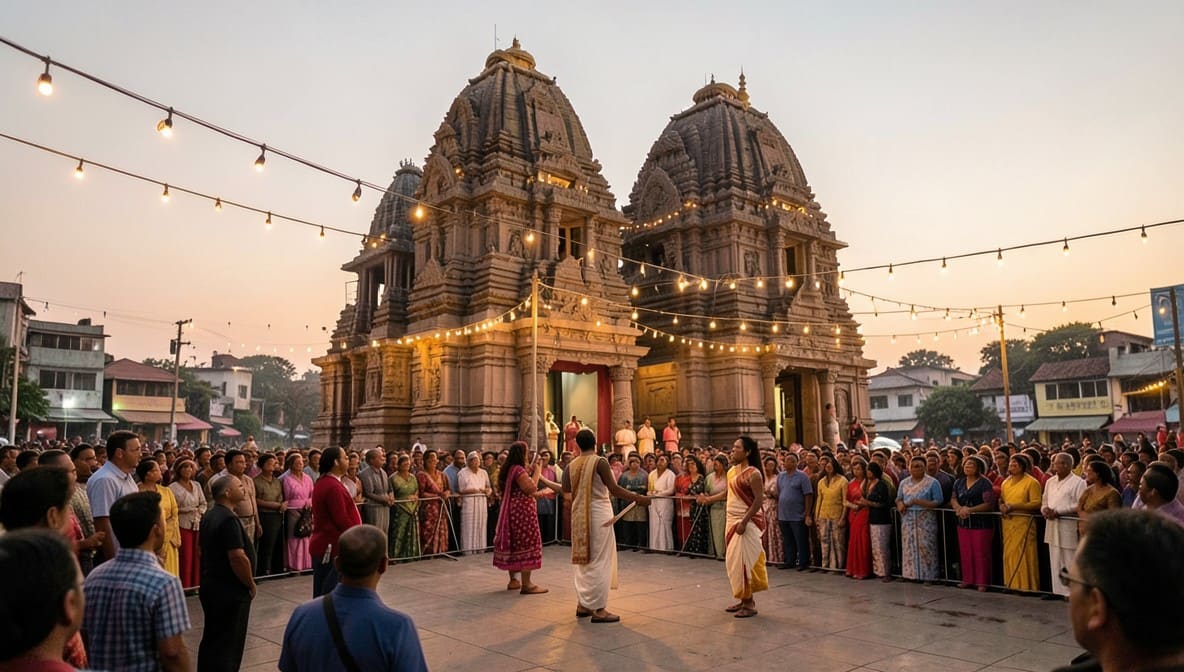
The petitioner, Sri H P Raviraj, President of the Udupi Taluka Kannada Sahithya Parishat, sought police permission to conduct a Sahitya Sammelana (literary conference) and a cultural procession on 03.05.2026. The Station House Officer (respondent No.1) and the Sub-Inspector of Police (respondent No.2) declined permission through an endorsement dated 28.04.2026 (Annexure-E), citing the pendency of W.P. No. 29917/2024 and an interim stay order operating therein.
Key Facts
- The petitioner is the President of Udupi Taluka Kannada Sahithya Parishat, a cultural organization.
- The event, scheduled for 03.05.2026, involved a literary conference and cultural procession.
- The respondents denied permission on the ground that the subject matter was sub judice in W.P. No. 29917/2024, which pertained to the petitioner’s removal from the post of President.
- The High Court had previously stayed the petitioner’s removal in W.P. No. 29917/2024, allowing him to continue in office pending adjudication.
Procedural History
- 28.04.2026: Respondent No.2 issued the impugned endorsement (Annexure-E) denying permission for the cultural event.
- 30.04.2026: The petitioner filed Writ Petition No. 14360 of 2026 under Article 226 of the Constitution of India, seeking to quash the endorsement and direct the respondents to grant permission and provide police protection for the event.
Relief Sought
The petitioner prayed for:
- Quashing of the endorsement dated 28.04.2026 (Annexure-E).
- A direction to the respondents to grant permission and provide adequate police protection for the Sahitya Sammelana and cultural procession scheduled on 03.05.2026.
The Legal Issue
The central question before the Court was whether police authorities can deny permission for a cultural event on the ground that the subject matter is sub judice, particularly when an interim court order operates in favour of the petitioner and does not restrict the conduct of the event.
Arguments Presented
For the Petitioner
The petitioner contended that:
- The respondents’ reliance on W.P. No. 29917/2024 was misplaced, as the interim order in that case merely stayed his removal from office and did not impose any restrictions on conducting cultural events.
- The denial of permission was arbitrary and violated his fundamental right to freedom of expression and cultural participation under Article 19(1)(a) and 19(1)(b) of the Constitution.
- The event was scheduled for 03.05.2026, leaving no time for prolonged litigation, necessitating urgent intervention.
For the Respondents
The respondents, represented by the Additional Government Advocate, argued that:
- The matter was sub judice in W.P. No. 29917/2024, and the pendency of the case justified the denial of permission.
- The interim order in W.P. No. 29917/2024 created a legal bar on the petitioner’s activities, including the conduct of cultural events.
- Granting permission without resolving the underlying dispute could lead to law and order issues.
The Court's Analysis
The Court critically examined the respondents’ reasoning and held that their reliance on the pendency of W.P. No. 29917/2024 was wholly misconceived. The Court observed:
"A perusal of the impugned endorsement would indicate that respondent No.2 has declined to grant permission to the petitioner on the premise that the subject matter is seized of by this Court in W.P.No.29917/2024 and that an interim order of stay is operating. In the considered view of this Court, the said reasoning is wholly misconceived and betrays a patent misreading of the interim order passed by this Court."
The Court further clarified that the interim order in W.P. No. 29917/2024 merely stayed the petitioner’s removal from office and did not impose any restrictions on his ability to conduct cultural events. The Court emphasized that the interim order operated in favour of the petitioner, not against him, and thus could not be used as a ground to deny permission.
The Court also noted the urgency of the matter, as the event was scheduled for 03.05.2026, and any delay would frustrate the petitioner’s rights. It held that the respondents’ action was not only arbitrary but also unsustainable in law, as it lacked a valid legal foundation.
The Verdict
The Court allowed the writ petition and passed the following directions:
- The impugned endorsement/communication dated 28.04.2026 (Annexure-E) was quashed.
- Respondent Nos.1 and 2 were directed to forthwith grant necessary permission and extend adequate police protection to the petitioner for conducting the Sahitya Sammelana and cultural procession on 03.05.2026.
- The Additional Government Advocate was directed to communicate the order to respondent No.2 immediately, including through telephonic/electronic means, to ensure compliance.
- The permission was made subject to reasonable regulatory conditions in the interest of public order and safety, without obstructing the event.
What This Means For Similar Cases
Arbitrary Administrative Actions Are Unlawful
This judgment reaffirms that administrative authorities cannot act arbitrarily under the guise of legal reasoning. Even if an action is purportedly based on a court order or legal provision, it must withstand judicial scrutiny. Practitioners should:
- Challenge arbitrary denials of permissions, licenses, or approvals by highlighting the lack of valid legal grounds.
- Argue that reliance on misinterpreted court orders or irrelevant legal provisions renders the action unsustainable.
Urgency and Fundamental Rights
The Court’s emphasis on the urgency of the matter and the frustration of fundamental rights sets a precedent for similar cases where time-sensitive events are at stake. Key takeaways:
- Courts are likely to intervene when administrative actions threaten to defeat the very purpose of fundamental rights, such as freedom of expression and cultural participation.
- Petitioners can argue for immediate relief in cases where delays would render the remedy infructuous.
Police Powers Must Be Exercised Reasonably
The judgment underscores that police powers to regulate public events must be exercised reasonably and in accordance with law. Authorities cannot:
- Deny permissions based on irrelevant or misinterpreted legal grounds.
- Impose restrictions that indirectly frustrate fundamental rights without a valid legal basis.
- Practitioners should ensure that police authorities provide clear, lawful justifications for denying permissions, failing which such actions can be challenged as arbitrary.