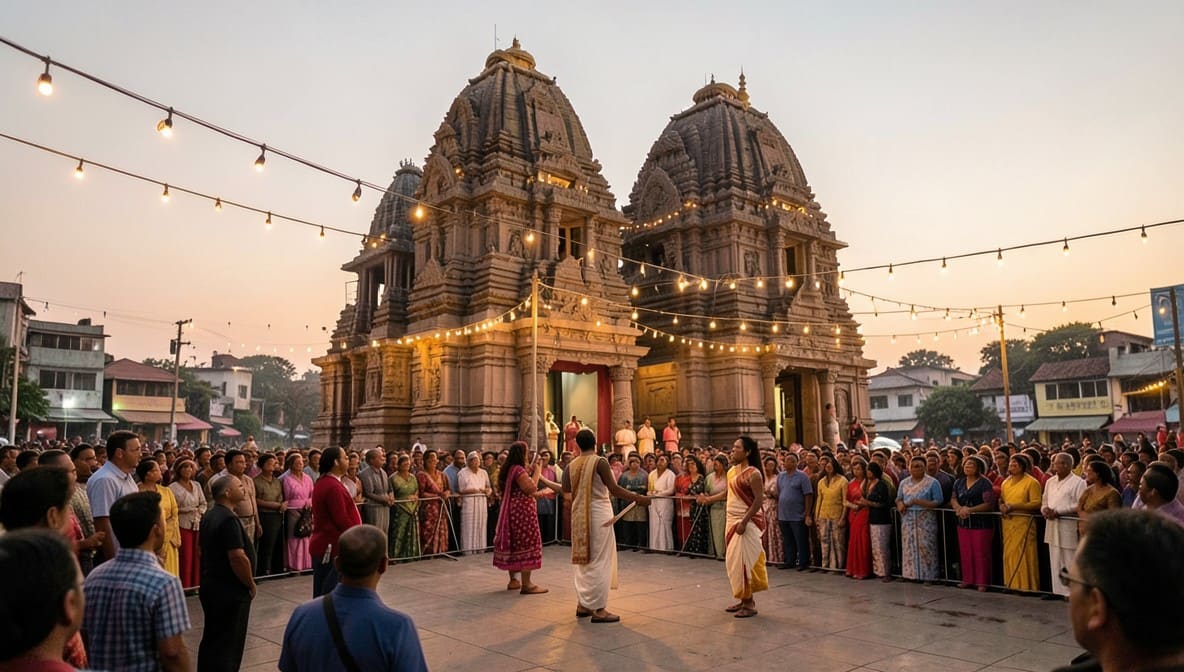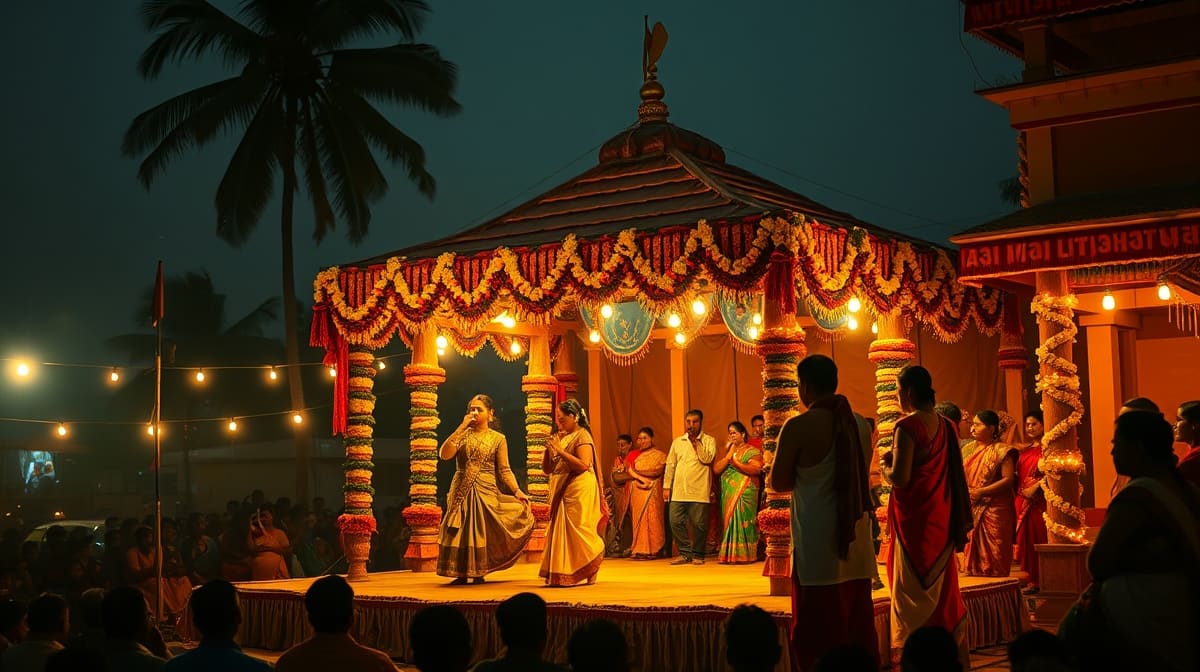
The Madras High Court has affirmed that the denial of permission for a traditional temple cultural program, absent concrete grounds of public disorder, violates the fundamental right to cultural expression under Article 19(1)(a). In quashing the police order, the Court emphasized that religious festivals and associated cultural performances are integral to community identity and cannot be suppressed on speculative grounds.
Background & Facts
The Dispute
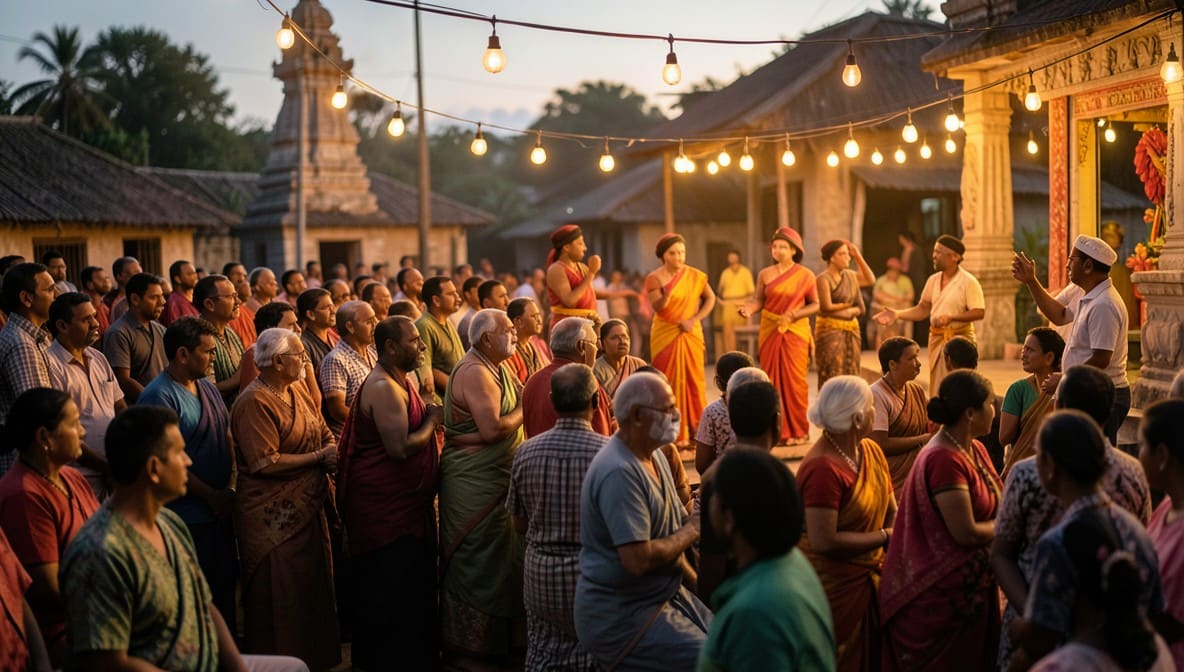
The petitioner, representing the festival committee of Arulmigu Sri Karuppasamy Temple in K.Karisalkulam Village, Tenkasi District, sought permission to conduct the annual "Adal Padal" cultural program and customary temple festival. The program was scheduled for 02.04.2026 to 04.04.2026, with the main event on 02.04.2026 from 06.00 p.m. to 11.00 p.m. The second respondent, Inspector of Police, Ayyapuram Police Station, rejected the application via order No. Na.Ka.No.02/FORECAST/S8PS/2026 dated 24.03.2026, without assigning specific reasons beyond general concerns about "public order and morality."
Key Facts
- The "Adal Padal" is a centuries-old traditional folk performance associated with the annual temple festival of Arulmigu Sri Karuppasamy Temple
- The festival committee submitted the application for permission on or before 15.03.2026
- The police rejected the application on 24.03.2026, citing no specific threat or past incident of disturbance
- The petitioner filed the writ petition on 25.03.2026, seeking urgent relief given the imminent date of the event (02.04.2026)
- The temple festival spans three days: 02.04.2026 to 04.04.2026, with the cultural program as its centerpiece
- The petitioner is not a political entity but a local religious trust committee
Procedural History
- 15.03.2026: Application for permission submitted to Ayyapuram Police Station
- 24.03.2026: Second Respondent issued rejection order No. Na.Ka.No.02/FORECAST/S8PS/2026
- 25.03.2026: Writ Petition (WP CRL.(MD). No.1762 of 2026) filed before Madurai Bench of Madras High Court
- 27.03.2026: Interim hearing conducted; Court noted urgency due to 02.04.2026 date
- 01.04.2026: Final hearing and judgment delivered
Relief Sought
The petitioner sought:
- Quashing of the rejection order dated 24.03.2026
- Direction to the respondents to grant permission for the "Adal Padal" program on 02.04.2026 from 06.00 p.m. to 11.00 p.m.
- Direction to provide necessary police protection for the three-day temple festival (02.04.2026 to 04.04.2026)
The Legal Issue
The central question was whether the police can deny permission for a traditional religious-cultural program solely on vague apprehensions of public disorder, without demonstrating a real and imminent threat, thereby infringing upon the right to freedom of expression under Article 19(1)(a) and the right to practice religion under Article 25.
Arguments Presented
For the Petitioner
The petitioner’s counsel, Mr. M. Balakrishnan, argued that:
- The "Adal Padal" is a centuries-old cultural tradition inseparable from the temple’s religious identity
- The rejection order was arbitrary, non-reasoned, and violated the principles of natural justice
- No prior incident of violence, obscenity, or communal tension had occurred during past editions
- The Director General of Police’s circulars dated 31.10.2018 and 09.04.2019 mandate that cultural programs be permitted unless there is specific, credible intelligence of threat
- Denial without reasons amounts to a prior restraint on expression, which is constitutionally suspect
For the Respondent
The Additional Public Prosecutor and Government Advocate contended that:
- The police have discretionary power under Section 144 CrPC and local police regulations to prevent public nuisance
- The event involves large crowds and nighttime activities, posing inherent risks
- The absence of prior incidents does not preclude future disturbances
- The rejection was precautionary and not final, leaving room for reconsideration
The Court's Analysis
The Court observed that the rejection order dated 24.03.2026 contained no reasoning, no reference to specific intelligence, and no application of the DGP’s own circulars. The Court emphasized that cultural expression rooted in religious tradition is protected under Article 19(1)(a) and cannot be suppressed on speculative grounds.
"The right to celebrate one’s cultural and religious heritage through traditional performances is not a privilege to be granted at the whim of the executive, but a fundamental right protected by the Constitution."
The Court distinguished this case from those involving political rallies or provocative content, noting that the "Adal Padal" is a devotional folk art form with no political or communal agenda. The Court also noted that the DGP’s circulars, which require a case-specific assessment of threat, were entirely ignored by the police.
The Court further held that while the State has a legitimate interest in maintaining public order, such interest must be balanced against the constitutional right to expression. Blanket denials without evidence violate the proportionality principle. The Court rejected the notion that nighttime events or large gatherings alone justify suppression.
The Verdict
The writ petition is allowed. The rejection order dated 24.03.2026 is quashed. The petitioner is permitted to conduct the "Adal Padal" program on 02.04.2026 from 07.00 p.m. to 10.00 p.m. at the temple premises, with the following conditions: (a) only culturally relevant performances permitted; (b) no obscene content or clothing; (c) no alcohol or intoxicants; (d) no political or religiously divisive content; (e) no digital banners on roads; (f) no discrimination; (g) police may terminate the program if conditions are violated; (h) organizers liable for any untoward incident; (i) all other statutory permissions to be obtained. The police are directed to provide adequate security. No costs awarded.
What This Means For Similar Cases
Cultural Tradition Cannot Be Suppressed on Speculation
- Practitioners must challenge blanket denials of religious-cultural events where no specific threat is documented
- Police must cite concrete intelligence or past incidents to justify denial under Section 144 CrPC or local regulations
- The burden shifts to the State to prove necessity, not to the petitioner to prove safety
DGP Circulars Are Binding Administrative Guidelines
- Circulars issued by the DGP on cultural programs are not advisory but operational directives
- Non-compliance by subordinate officers renders orders arbitrary and liable to be quashed
- Courts will enforce these circulars as part of the duty to act reasonably under Article 14
Nighttime Events Are Not Inherently Illegal
- The timing of a cultural program (even after 7 p.m.) cannot be a standalone ground for denial
- Courts will examine the nature of the event, not the hour, when assessing public order concerns
- Conditions on volume, content, and duration are permissible; blanket curfews are not