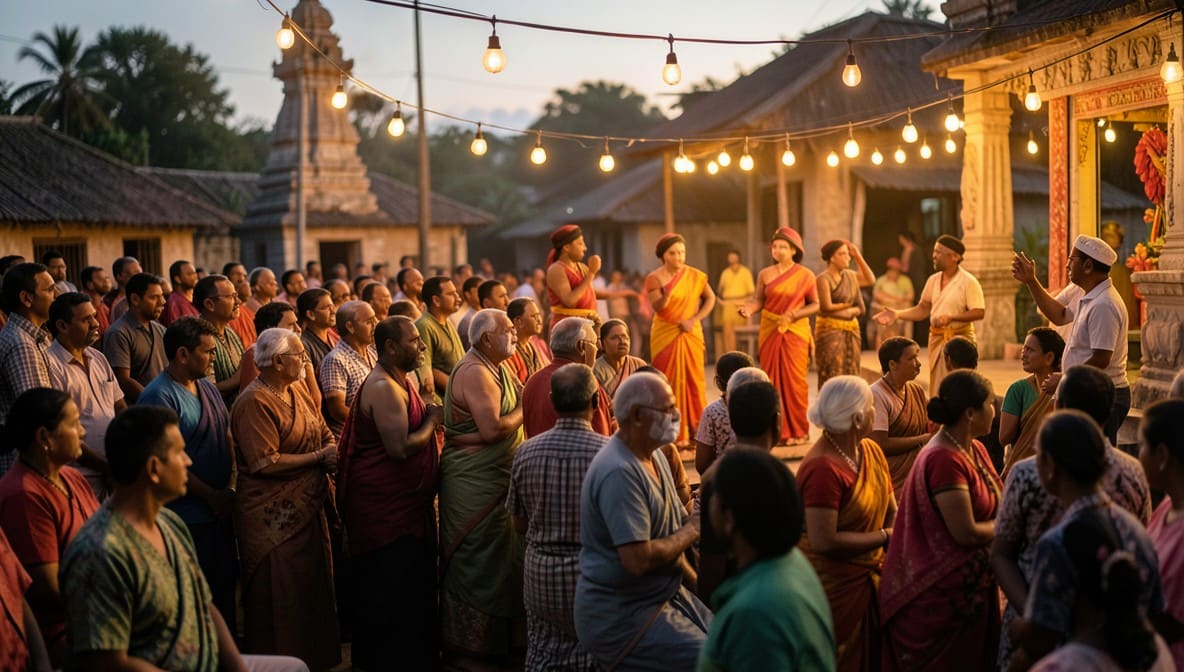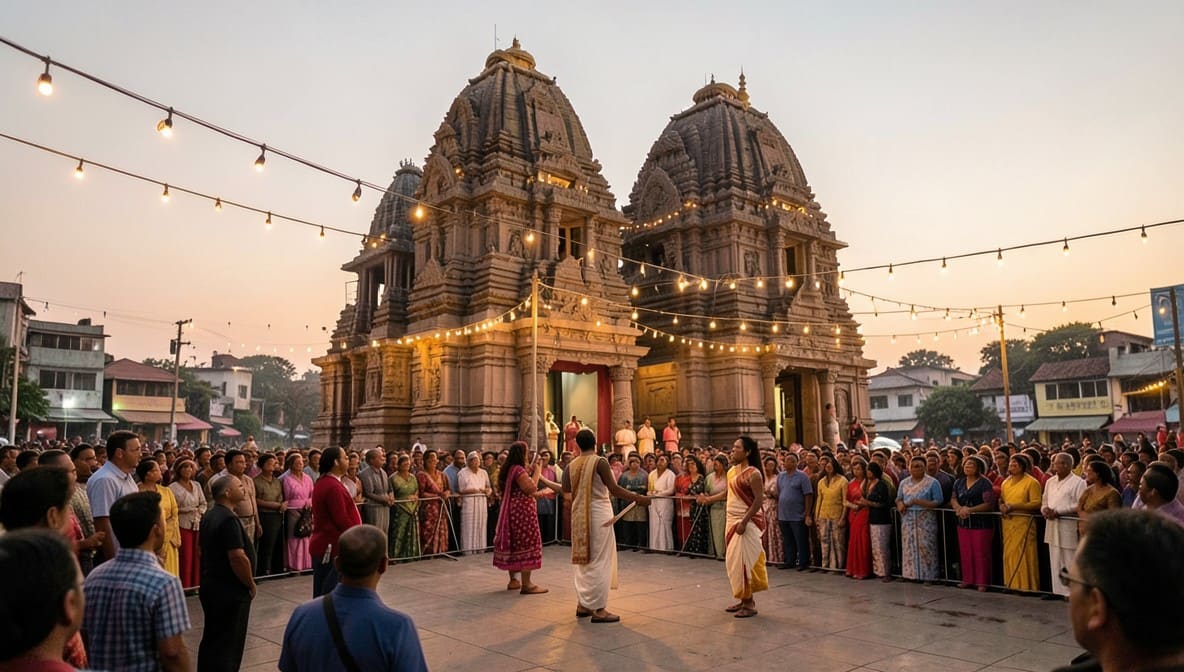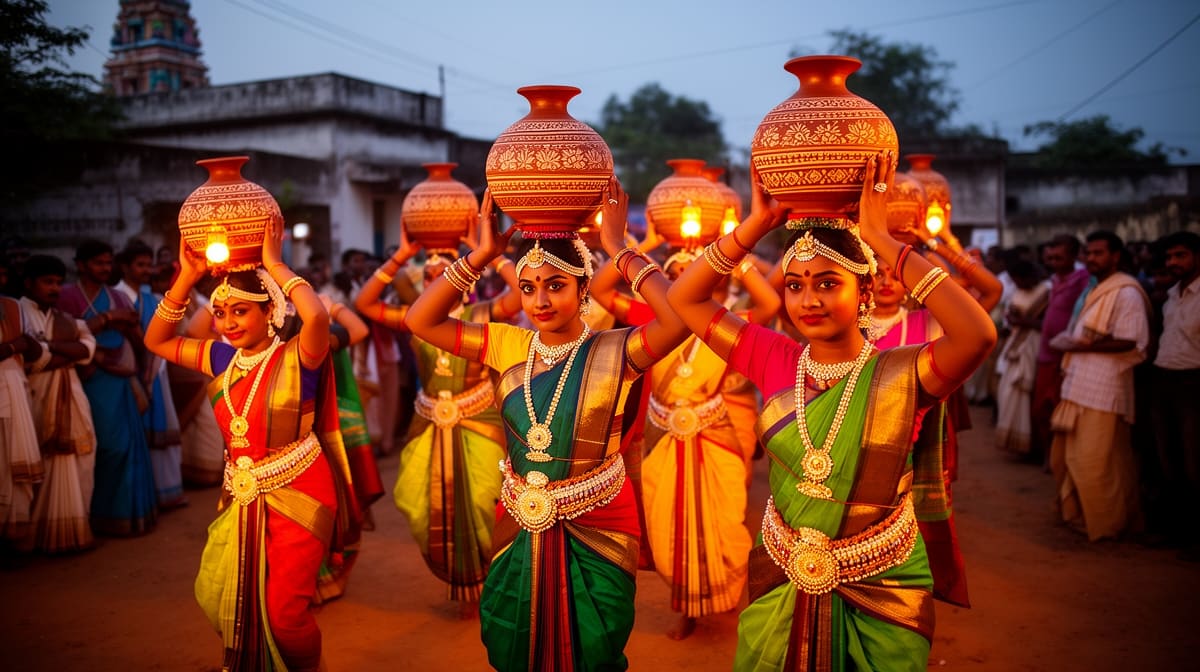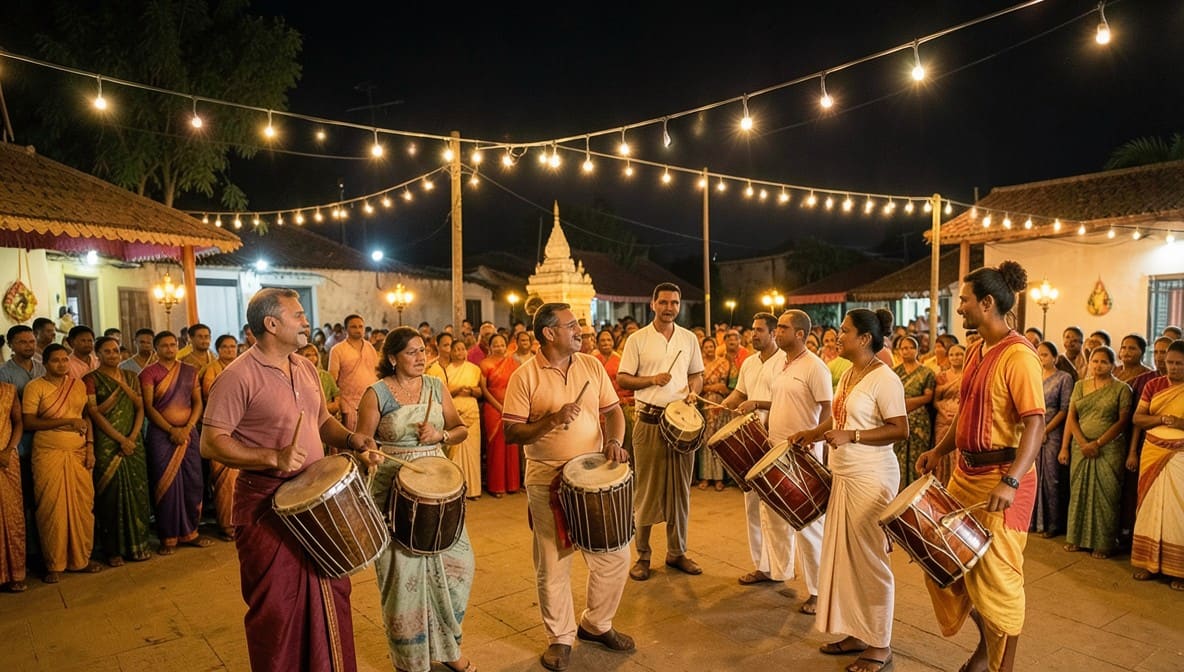
The Madras High Court has affirmed that the right to conduct culturally significant temple festivals, including traditional performances like Adal Padal, is protected under Article 19(1)(a) of the Constitution, provided such activities adhere to reasonable, narrowly tailored conditions aimed at preserving public order, decency, and communal harmony.
Background & Facts
The Dispute
The petitioner, Rajendran, sought permission from the 3rd respondent, the Revenue Divisional Officer / Election Officer, Uthamapalayam Division, Theni District, to conduct the cultural programme known as "Adal Padal" at Sri Manthaiamman Koil in Anumanthanpatti Village, Uthamapalayam Taluk, Theni District. The programme was proposed for 01.04.2026 from 06.00 p.m. to 10.00 p.m. The 3rd respondent rejected the application by order dated 18.03.2026 in Na.Ka.No.300/2026/A2-(1), without assigning any specific grounds beyond general administrative discretion.
Key Facts
- The Adal Padal is a traditional cultural performance associated with the annual temple festival at Sri Manthaiamman Koil.
- The petitioner submitted the application well in advance of the proposed date.
- No prior history of disorder, obscenity, or communal tension was alleged in connection with this event.
- The rejection order did not reference any specific violation of law, public nuisance, or security risk.
- The petitioner filed the writ petition on 27.03.2026, just days before the scheduled event.
Procedural History
- 18.03.2026: 3rd respondent issued order rejecting permission for Adal Padal.
- 27.03.2026: Writ Petition under Article 226 filed before the Madras High Court, Madurai Bench.
- 27.03.2026: Court heard the petition and delivered judgment on the same day.
The Parties' Positions
Petitioner: Argued that the refusal to grant permission was arbitrary, violative of Article 19(1)(a), and lacked any reasonable basis. He emphasized the cultural and religious significance of Adal Padal as an integral part of the temple festival tradition.
Respondents: Did not contest the cultural legitimacy of the event but relied on general administrative authority to deny permission without specifying grounds. The 1st and 2nd respondents (police officials) deferred to the 3rd respondent’s decision.
Relief Sought
The petitioner sought quashing of the order dated 18.03.2026 and a direction to grant permission for the Adal Padal programme on 01.04.2026, along with police protection.
The Legal Issue
The central question was whether the refusal to grant permission for a traditional cultural programme at a temple, without any specific evidence of public disorder or illegality, constitutes an unreasonable restriction on the fundamental right to freedom of expression under Article 19(1)(a).
Arguments Presented
For the Petitioner
The petitioner relied on Shreya Singhal v. Union of India and Bijoe Emmanuel v. State of Kerala to argue that cultural expression, especially when rooted in religious and community tradition, falls squarely within the ambit of Article 19(1)(a). He contended that administrative denial without reasons or evidence of harm is arbitrary and violates the principle of proportionality. He further cited the DGP circulars dated 31.10.2018 and 09.04.2019, which mandate a liberal approach to cultural event permissions, to show that the rejection was inconsistent with established policy.
For the Respondent
The respondents did not file a detailed counter-affidavit. The Government Advocate for the 3rd respondent merely submitted that the authority had the discretion to deny permission on grounds of public order, without specifying any concrete threat. No evidence of past disturbances, complaints, or security risks was presented.
The Court's Analysis
The Court observed that the rejection order dated 18.03.2026 was a non-speaking order, devoid of any reasoning or factual basis. It noted that the right to perform cultural programmes during temple festivals is not merely a matter of tradition but a protected form of expression under Article 19(1)(a). The Court emphasized that restrictions under Article 19(2) must be narrowly drawn, directly related to one of the specified grounds, and not used as a tool for arbitrary suppression.
"The refusal to permit a traditional cultural performance, without any specific threat to public order, decency or morality, amounts to an unreasonable restriction on the freedom of expression."
The Court further held that the DGP circulars, while not legally binding, reflect a policy of promoting cultural heritage and must inform administrative discretion. The absence of any material to justify denial rendered the order unsustainable.
However, recognizing the need to balance cultural rights with public interest, the Court imposed a series of specific, reasonable conditions to ensure the event remains dignified, non-obscene, non-political, and time-bound.
The Verdict
The writ petition was allowed. The order dated 18.03.2026 rejecting permission for the Adal Padal programme was quashed. The petitioner is permitted to conduct the programme on 01.04.2026 from 06.00 p.m. to 10.00 p.m. at Sri Manthaiamman Koil, subject to the 13 conditions laid down by the Court. The police are directed to provide necessary protection. Any violation of the conditions shall render the organisers liable for legal action.
What This Means For Similar Cases
Cultural Expression Cannot Be Suppressed Without Reason
- Practitioners must challenge blanket denials of cultural or religious events where no specific threat is documented.
- Administrative orders rejecting festival permissions must be reasoned and evidence-based.
- Courts will intervene where discretion is exercised arbitrarily under the guise of "public order."
Reasonable Conditions Are Permissible, But Must Be Specific
- The Court’s conditions are not a precedent for censorship but for proportionate regulation.
- Conditions must be: (a) directly tied to a legitimate state interest, (b) narrowly tailored, and (c) not vague or overbroad.
- Blanket bans on "obscenity" or "political content" without definition are invalid; clear, objective standards must be provided.
DGP Circulars as Policy Guides
- While not statutory, circulars issued by superior authorities (e.g., DGP) on cultural event permissions create a legitimate expectation of liberal treatment.
- Denial contrary to such policy, without justification, invites judicial review.
- Practitioners should cite such circulars to demonstrate administrative inconsistency.