Topic

Statutory Duty

Statutory duty in Indian law refers to obligations imposed by specific statutes that public officials or entities must perform without discretion, such as registering documents, correcting vital records, or paying compensation.

28 articlesLatest August 2026
Repealed Foreigners Act, 1946 & Section 239 BNS Cannot Ground Criminal Liability | Post-repeal offences : Karnataka HC
Case Law Analysis
|Karnataka High Court

Repealed Foreigners Act, 1946 & Section 239 BNS Cannot Ground Criminal Liability | Post-repeal offences : Karnataka HC

Karnataka High Court quashed the FIR and charge-sheet against the Devi Villa Homestay owner, ruling that offences alleged under the now-repealed Foreigners Act, 1946 and Section 239 of the BNSS are untenable because the conduct occurred after the statute’s repeal. The decision underscores that once a law is repealed, no statutory duty to report arises, shielding individuals from retroactive criminal liability.

RERA Section 59 | Regulatory Authority Must Decide on Registration Within Three Months of Notice: Allahabad HC
Case Law Analysis
|Allahabad High Court

RERA Section 59 | Regulatory Authority Must Decide on Registration Within Three Months of Notice: Allahabad HC

The Allahabad High Court has mandated that the Real Estate Regulatory Authority must conclude registration proceedings initiated via notice under Section 59 of RERA, 2016, within three months of its production. This enforces a strict statutory deadline, protecting homebuyers from indefinite delays and reinforcing RERA’s obligation to act with urgency, not discretion.

MOFA Section 14 | Competent Authority Must Grant Deemed Conveyance Despite Title Disputes or Overbroad Claims : Bombay HC
Case Law Analysis
|Bombay High Court

MOFA Section 14 | Competent Authority Must Grant Deemed Conveyance Despite Title Disputes or Overbroad Claims : Bombay HC

The Bombay High Court has ruled that under MOFA Section 14, the Competent Authority has a statutory duty to grant deemed conveyance to housing societies regardless of pending title disputes or exaggerated land claims by developers. This clarifies that procedural objections to title ownership cannot override the legislature’s intent to protect flat purchasers’ rights, reinforcing legal certainty for co-operative societies nationwide.

Section 27A, Kerala Conservation of Paddy Land and Wetland Act | Authorised Officer must decide pending Form 6 application within 2 months of judgment copy receipt : Kerala HC
Case Law Analysis
|Kerala High Court

Section 27A, Kerala Conservation of Paddy Land and Wetland Act | Authorised Officer must decide pending Form 6 application within 2 months of judgment copy receipt : Kerala HC

The Kerala High Court has directed the Authorised Officer to decide the petitioner’s pending Form 6 application under Section 27A of the Kerala Conservation of Paddy Land and Wetland Act within two months of receiving the certified copy of this judgment. This ruling enforces statutory timelines for administrative action in environmental land protection cases, holding public officials accountable for undue delay in processing applications that affect agricultural land rights.

Section 34 U.P. Revenue Code 2006 | Statutory Duty Mandates Expedited Disposal Within Six Months : Allahabad HC
Case Law Analysis
|Allahabad High Court

Section 34 U.P. Revenue Code 2006 | Statutory Duty Mandates Expedited Disposal Within Six Months : Allahabad HC

Allahabad HC reinforces that pending revenue cases under Section 34 of the U.P. Revenue Code 2006 must be decided within six months, emphasizing statutory compliance and timely justice. The ruling directs authorities to avoid unnecessary adjournments and ensure service of notice to all parties, setting a precedent for administrative efficiency in revenue disputes.

Section 22 Tamil Nadu HR & CE Act | Mandamus Issued for Six-Week Disposal of Temple Mismanagement Representations : Madras HC
Case Law Analysis
|Madras High Court

Section 22 Tamil Nadu HR & CE Act | Mandamus Issued for Six-Week Disposal of Temple Mismanagement Representations : Madras HC

The Madras High Court ruled that the Commissioner of Revenue Administration must dispose of representations alleging temple mismanagement within six weeks under Section 22 of the Tamil Nadu Hindu Religious and Charitable Endowments Act. Failure to act within this timeline violates statutory duty, empowering devotees and trustees to seek judicial redress for administrative delays.

Section 43 IE Supply Act & Bihar Supply Code | Occupier’s Statutory Right to Electricity Connection Even Without Ownership Proof : Patna HC
Case Law Analysis
|Patna High Court

Section 43 IE Supply Act & Bihar Supply Code | Occupier’s Statutory Right to Electricity Connection Even Without Ownership Proof : Patna HC

Patna High Court reinforces that electricity licensees must accept and process connection applications from occupiers within four weeks, even if they lack ownership documents, under Section 43 of the Indian Electricity Supply Act, 2003 and Clause 4.13(B) of the Bihar Electricity Supply Code. The ruling mandates compliance with statutory duty, protecting occupiers' rights to essential utilities.

Section 15 Births and Deaths Registration Act | Registrars Must Correct Substantive Birth Certificate Errors on Affidavit Evidence; No Mandate to Approach Court : Gujarat HC
Case Law Analysis
|Gujarat High Court

Section 15 Births and Deaths Registration Act | Registrars Must Correct Substantive Birth Certificate Errors on Affidavit Evidence; No Mandate to Approach Court : Gujarat HC

The Gujarat High Court has ruled that registrars under the Births and Deaths Registration Act, 1969, have a non-discretionary duty to correct substantive errors in birth certificates upon submission of affidavits from two credible persons. This clarifies that administrative authorities cannot evade their statutory obligations by directing applicants to file writ petitions - reinforcing accountability in civil registration systems.

Tamil Nadu Land Encroachments Act, 1905 | Block Development Officer Must Issue Notice Before Tahsildar Eviction : Madras HC
Case Law Analysis
|Madras High Court

Tamil Nadu Land Encroachments Act, 1905 | Block Development Officer Must Issue Notice Before Tahsildar Eviction : Madras HC

Madras High Court reinforces procedural safeguards under the Tamil Nadu Land Encroachments Act, 1905, mandating that the Block Development Officer must first issue notice to encroachers before the Tahsildar can initiate eviction. Failure to follow this sequence renders eviction proceedings illegal, ensuring statutory compliance and protecting panchayat land rights.

Section 331(1) Uttarakhand Municipal Corporation Act | Cosmetic Repairs Like Paint and Putty Cannot Override Structural Danger in Heritage Buildings : Uttarakhand HC
Case Law Analysis
|Uttarakhand High Court

Section 331(1) Uttarakhand Municipal Corporation Act | Cosmetic Repairs Like Paint and Putty Cannot Override Structural Danger in Heritage Buildings : Uttarakhand HC

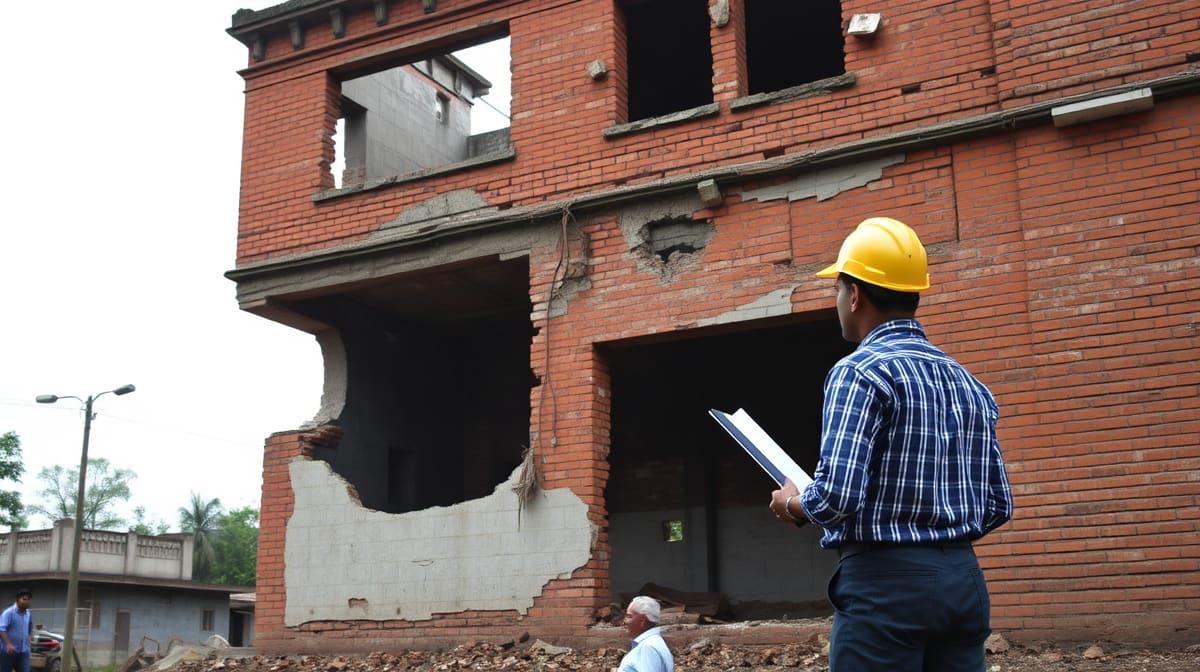
The Uttarakhand High Court has ruled that superficial fixes such as repainting or patching walls do not negate the statutory obligation to demolish a structurally unsound century-old building under Section 331(1) of the UMCA, 1959. This sets a critical precedent for municipal authorities and property owners: safety trumps aesthetics, and heritage status does not exempt dangerous structures from enforcement.

Section 129(5) M.P. Land Revenue Code | 3-Month Deadline Mandated for Disposal of Pending Applications & Action on Criminal Complaints : MP HC Indore
Case Law Analysis
|Madhya Pradesh High Court

Section 129(5) M.P. Land Revenue Code | 3-Month Deadline Mandated for Disposal of Pending Applications & Action on Criminal Complaints : MP HC Indore

The Madhya Pradesh High Court has imposed a strict three-month deadline on revenue authorities to decide pending applications under Section 129(5) of the M.P. Land Revenue Code and to act on criminal complaints filed by aggrieved landowners. This ruling enforces statutory duty and curbs chronic administrative delay, directly impacting rural land dispute resolution and citizen access to justice in land matters.