The Patna High Court has affirmed that electricity licensees under the Indian Electricity Supply Act, 2003 have a statutory duty to accept applications for electrical connections and decide them within a reasonable timeframe, regardless of ownership documentation. This ruling reinforces the principle that access to electricity is not contingent on formal title but on compliance with procedural requirements.
Background & Facts
The Dispute
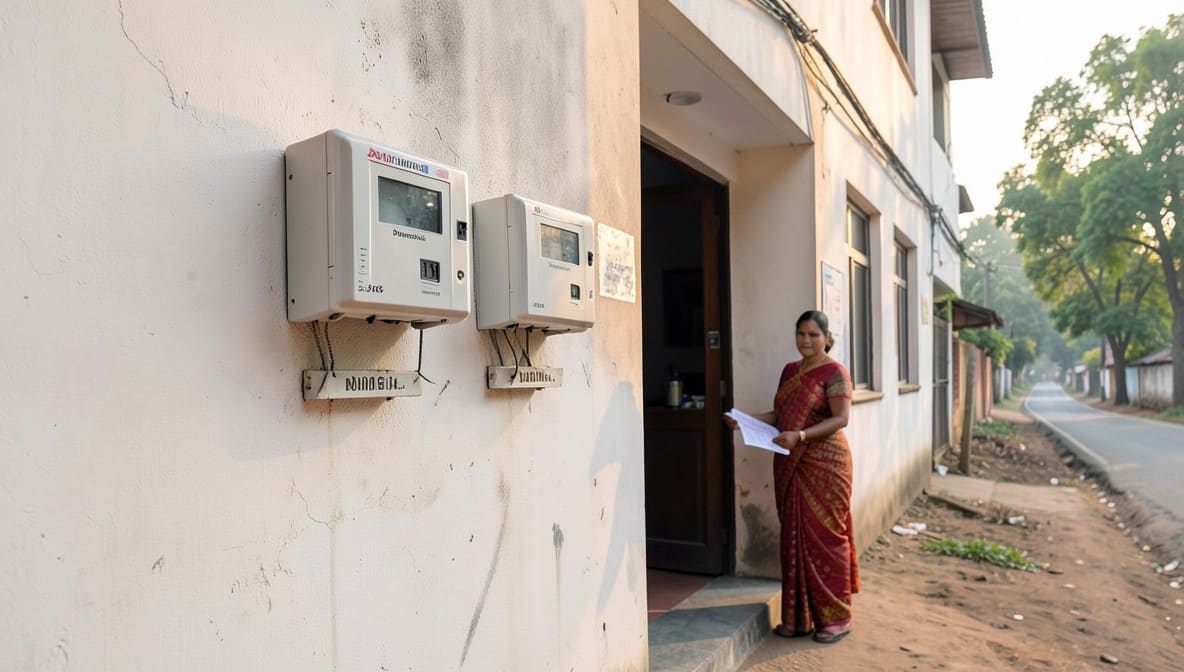
The petitioner, Sujeet Kumar Roy, sought an electrical connection for his premises at Tulsi Nagar (Nepalinagar), Plot No. 2572, under Rajiv Nagar Police Station, Patna. Despite submitting an application, the respondent authorities, particularly Respondent No. 5 (Assistant Electric Engineer), refused to accept the application on the ground that the petitioner could not produce proof of ownership of the premises.
Key Facts
- The petitioner resides at the premises and is the occupier
- He applied for an electrical connection but was denied on the basis of lack of ownership documents
- The petitioner invoked the Supreme Court’s decision in Sri Chandu Khamaru v. Smt. Nayan Malik and others (Civil Appeal No. 7572/2011)
- He also relied on Clause 4.13(B) of the Bihar Electricity Supply Code, 2007, which permits connection to non-owners upon submission of specified alternative documents
- The petitioner did not seek immediate connection but demanded acceptance of his application and adjudication in accordance with law
Procedural History
- Date of application: Not specified in judgment, but implied to have been submitted prior to filing of writ petition
- Date of refusal: Not specified, but occurred prior to filing of writ petition
- 23.04.2026: Writ Petition No. 6733 of 2026 filed before the Patna High Court
- 23.04.2026: Oral hearing conducted by Justice A. Abhishek Reddy
- 30.04.2026: Judgment delivered
The Parties' Positions
Petitioner’s Position:
- The Supreme Court in Sri Chandu Khamaru held that an occupier has a statutory right to electricity connection
- Clause 4.13(B) of the Bihar Electricity Supply Code, 2007 explicitly allows connection to non-owners upon submission of alternative documents such as rent agreement, identity proof, and affidavit
- Refusal to accept the application is a violation of statutory duty under Section 43 of the Indian Electricity Supply Act, 2003
Respondents’ Position:
- Did not contest the legal principles cited
- Did not argue against the applicability of Clause 4.13(B) or the Supreme Court precedent
- Offered to dispose of the matter by agreeing to accept the application and decide it in accordance with law
Relief Sought
The petitioner sought:
- A writ of mandamus directing Respondent No. 5 to accept the application
- A direction to provide electricity supply within one month of application
- A declaration that refusal based on lack of ownership documents is illegal
The Legal Issue
Does a licensee under the Indian Electricity Supply Act, 2003 have a statutory obligation to accept an application for electricity connection from an occupier who cannot produce proof of ownership, provided alternative documents under the Bihar Electricity Supply Code, 2007 are submitted?
Arguments Presented
For the Petitioner
The petitioner relied on two primary legal sources: (1) the Supreme Court’s ruling in Sri Chandu Khamaru v. Smt. Nayan Malik and others, which held that the right to electricity is a statutory entitlement of an occupier, not merely an owner; and (2) Clause 4.13(B) of the Bihar Electricity Supply Code, 2007, which explicitly permits electricity connection to persons who are not owners upon submission of documents such as rent agreement, identity proof, and an affidavit of possession. The petitioner argued that refusal to accept the application amounted to a failure to discharge a statutory duty under Section 43 of the Indian Electricity Supply Act, 2003.
For the Respondent
The respondents did not contest the legal propositions advanced by the petitioner. Their counsel conceded that the application should be accepted and adjudicated in accordance with law. No counter-legal arguments were presented to challenge the applicability of the Supreme Court precedent or the provisions of the Bihar Electricity Supply Code.
The Court's Analysis
The Court did not engage in an extended analysis of statutory provisions or precedents, as the respondents did not oppose the petitioner’s contentions. However, the Court explicitly recognized the binding nature of the Supreme Court’s decision in Sri Chandu Khamaru, which established that the right to electricity is not restricted to property owners. The Court also acknowledged the regulatory framework under Clause 4.13(B) of the Bihar Electricity Supply Code, 2007, which provides a clear pathway for non-owners to obtain connections.
"The owner/occupier of the premises has a statutory right for an electrical connection and it is the duty of every licensee under section 43 of the Indian Electricity Supply Act, 2003 to give supply of electricity to such premises within a month."
The Court noted that the respondents’ concession aligned with the statutory and regulatory obligations. It emphasized that procedural compliance by the licensee is non-negotiable and that mere refusal to accept an application - without adjudication - is unlawful.
The Court did not direct immediate connection but focused on ensuring due process: acceptance of the application and timely adjudication.
The Verdict
The writ petition was disposed of with a direction to Respondent No. 5 to accept the petitioner’s application for an electrical connection along with the requisite fees and consider it strictly in accordance with law. Respondent No. 5 was directed to decide the application within four weeks from the date of receipt of a copy of this order. No monetary compensation or interest was awarded, as the relief sought was procedural.
What This Means For Similar Cases
Acceptance of Application Is Mandatory
- Practitioners must now argue that refusal to accept an electricity application - even without ownership documents - is a per se violation of statutory duty
- Applications cannot be rejected on preliminary grounds; they must be accepted and adjudicated on merit
- The burden shifts to the licensee to prove non-compliance with Clause 4.13(B) documents, not the applicant to prove ownership
Regulatory Codes Override Administrative Discretion
- State electricity supply codes, such as the Bihar Electricity Supply Code, 2007, are binding on licensees and cannot be ignored
- Clause 4.13(B) provides a legally recognized alternative to ownership proof
- Licensees must train frontline staff to recognize and accept documents listed under Clause 4.13(B)
Timely Adjudication Is Enforceable
- Courts will enforce timelines for decision-making even in the absence of explicit statutory deadlines
- A four-week deadline set by the Patna HC sets a precedent for reasonable timeframes in similar cases
- Delay in adjudication beyond such timelines may attract contempt proceedings