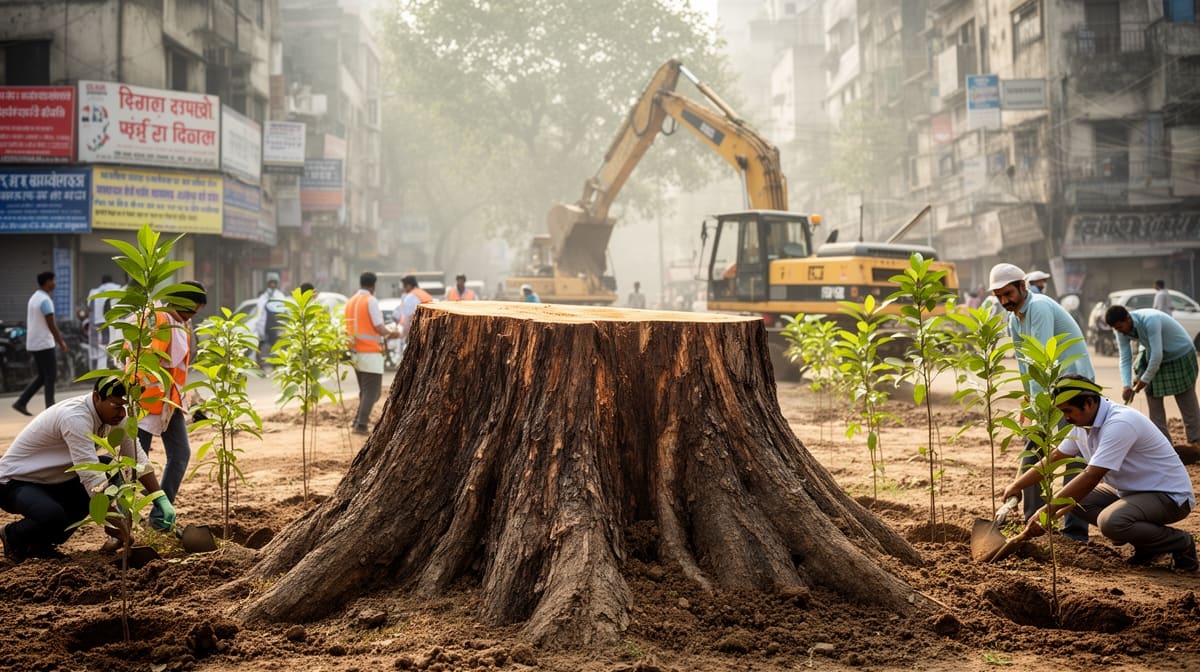
The Bombay High Court at Goa has affirmed that statutory authorities cannot remain passive when private owners fail to comply with orders to mitigate imminent threats posed by hazardous trees. The judgment compels forest and revenue officials to enforce their own directives under the Goa Preservation of Trees Act, 2008, where public safety is at stake.
Background & Facts
The Dispute
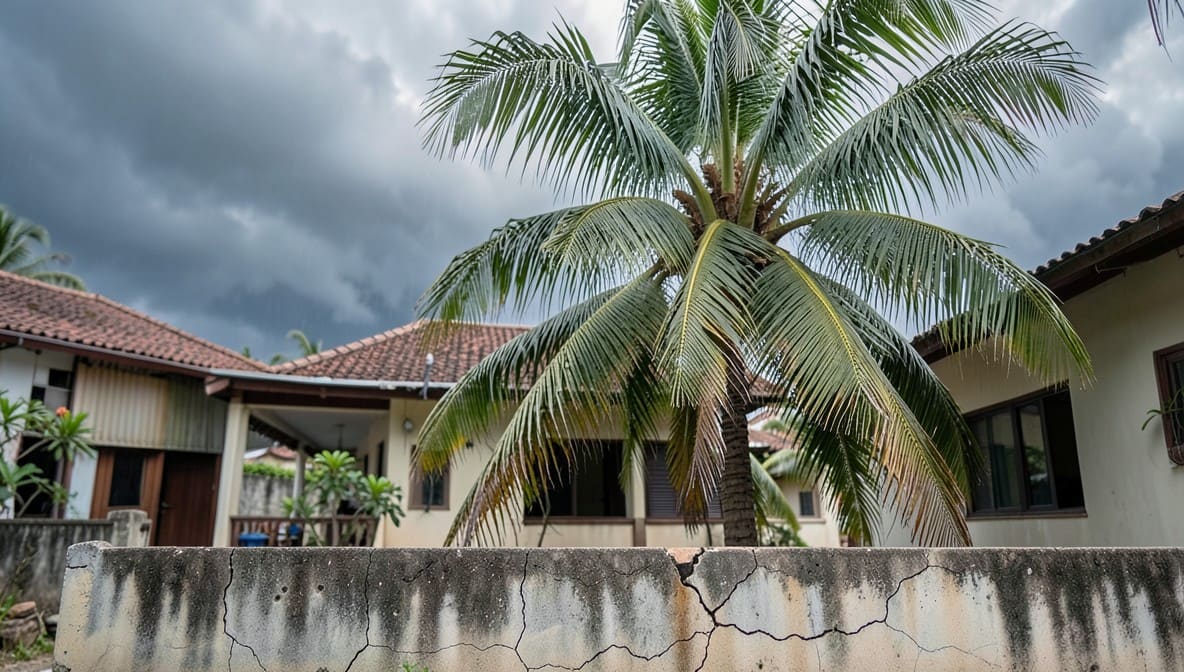
The petitioner, Cliford F D'Mello, is the owner of property bearing Survey No. 177/14 in Sonarbhat, Saligao, Goa. The respondent, Apollo D'Souza, is the owner of the adjacent property on which two trees - a mango tree and a coconut tree - are located. The petitioner alleges that these trees have grown in a manner that directly endangers his house and family. Overhanging branches have already fallen on his roof, causing structural damage. The coconut tree, infested by Rhinoceros beetle and leaning precariously toward his home, poses a risk of falling fronds and coconuts during monsoons. The mango tree’s roots, only 20 centimeters from the petitioner’s compound wall, have caused visible cracks in the wall and threaten structural collapse during storms.
Key Facts
- The petitioner lodged a formal complaint on 29.05.2020 with the Deputy Collector/SDO and Tree Officer, Mapusa, seeking intervention.
- On 08.06.2020, the Deputy Collector directed the Zonal Agricultural Officer and Range Forest Officer to inspect the trees and submit a report by 23.06.2020.
- The Zonal Agricultural Officer submitted a report on 19.06.2020, confirming:
- The coconut tree is infested with Rhinoceros beetle
- The tree is leaning toward the petitioner’s house
- Falling fronds and nuts pose imminent danger to life and property
- The mango tree’s roots are causing structural damage to the compound wall
- Both trees may collapse during high winds or heavy rain
- On 04.08.2021, the Deputy Collector rejected the complaint but directed the owner to trim branches and harvest fruits every three months.
- The petitioner appealed to the Conservator of Forests, the First Appellate Authority.
- On 24.08.2022, the Zonal Agricultural Officer reiterated the same findings.
- On 06.02.2023, the Conservator dismissed the appeal but directed:
- Cutting of mango tree branches within 15 days
- Regular plucking and cleaning of coconut tree
- Installation of protective netting to prevent falling fronds
- Warning that non-compliance would trigger cost recovery under Section 12-A
- Respondent No. 1 has not complied with any of these directions.
Procedural History
- 29.05.2020: Petitioner files complaint with Deputy Collector/Tree Officer
- 08.06.2020: Deputy Collector issues inspection order
- 19.06.2020: Zonal Agricultural Officer submits inspection report
- 04.08.2021: Deputy Collector issues order directing maintenance but rejects complaint
- 24.08.2022: Updated inspection report submitted to Appellate Authority
- 06.02.2023: Conservator of Forests dismisses appeal but reiterates directions
- 2023: Petitioner files Writ Petition No. 292 of 2023 before Bombay High Court at Goa
- 12.07.2024: Notice issued to respondents
- 06.05.2026: Bailiff confirms service on all respondents
- 07.05.2026: Judgment delivered
Relief Sought
The petitioner seeks:
- Quashing of the orders dated 04.08.2021 and 06.02.2023
- Direction to Respondents Nos. 2 and 3 (Conservator of Forests and Deputy Collector) to enforce compliance with their own orders
- Immediate action to remove or trim the hazardous trees to prevent loss of life or property
The Parties' Positions
The petitioner argues that the authorities have discharged their duties in form but not in substance. He contends that Section 12-A of the Goa Preservation of Trees (Amendment) Act, 2008, empowers the authorities to act directly when the owner fails to comply, and that their inaction amounts to a dereliction of statutory duty.
The Respondents Nos. 2 and 3, through the Additional Government Advocate, did not contest the factual allegations but argued that the Court should not interfere in administrative enforcement unless there is clear mala fide or delay beyond reasonable time.
Relief Sought
The petitioner seeks quashing of the impugned orders and a direction to Respondents Nos. 2 and 3 to immediately take action under Section 12-A to trim, cut, or remove the trees and recover costs from Respondent No. 1.
The Legal Issue
The central question was whether Section 12-A of the Goa Preservation of Trees (Amendment) Act, 2008 obligates forest and revenue authorities to take direct action to remove hazardous trees when the owner fails to comply with their own legally issued directions, particularly where there is an imminent threat to life and property.
Arguments Presented
For the Petitioner
The petitioner’s counsel argued that Section 12-A explicitly vests the authorities with the power to enter upon any land, cut, trim, or remove any tree if the owner fails to comply with directions issued under the Act. He cited the inspection reports as conclusive evidence of imminent danger and contended that the authorities’ reliance on passive directions - without enforcement - constitutes a failure to discharge their statutory duty. He relied on the principle that statutory powers must be exercised to achieve their intended purpose: public safety.
For the Respondent
The Additional Government Advocate acknowledged the factual gravity but argued that the authorities had already issued directions and that enforcement is a matter of administrative discretion. He contended that judicial intervention under Article 227 should be limited to cases of arbitrariness or malafide, and that the Court should not become an enforcement agency.
The Court's Analysis
The Court examined the language of Section 12-A of the Goa Preservation of Trees (Amendment) Act, 2008, which empowers the authorities to:
"enter upon any land, cut, trim or remove any tree, if the owner or person in charge of the tree fails to comply with the directions issued under this section, and recover the cost of such cutting, trimming or removal from the owner or person in charge of the tree."
The Court noted that the inspection reports from the Zonal Agricultural Officer, submitted twice - in 2020 and 2022 - were consistent, detailed, and unchallenged. They established not merely a nuisance but an imminent threat to life and property. The Court observed:
"The authorities are not merely administrative bodies administering a tree preservation law; they are statutory guardians of public safety. When their own orders are ignored and danger persists, their duty to act under Section 12-A is not discretionary - it is mandatory."
The Court rejected the notion that issuing directions absolves the authorities of further responsibility. It held that the purpose of Section 12-A is to ensure that the state does not remain a bystander when private inaction creates public peril. The Court emphasized that the Act’s legislative intent is preventive, not punitive, and that delay in enforcement defeats its very purpose.
The Court further noted that the petitioner had waited over three years for compliance, during which the danger had only intensified. The authorities’ inaction, despite clear statutory powers, amounted to a failure to protect fundamental rights under Article 21 of the Constitution.
The Verdict
The writ petition is allowed. The orders dated 04.08.2021 and 06.02.2023 are set aside to the extent they rely solely on directions to the owner. Respondents Nos. 2 and 3 are directed to take immediate action under Section 12-A of the Goa Preservation of Trees (Amendment) Act, 2008 to cut, trim, and install protective netting on the mango and coconut trees within 15 days from the date of upload of this order. All expenses incurred shall be recovered from Respondent No. 1. The Court further directs that the authorities shall submit a compliance report to the Registry within 20 days of execution.
What This Means For Similar Cases
Statutory Enforcement Is Not Optional
- Practitioners must now argue that authorities cannot rely on passive directions under tree preservation laws when danger is imminent
- Failure to act under enabling provisions like Section 12-A may constitute a violation of Article 21 rights
- Inspection reports, if unchallenged and consistent, constitute conclusive evidence of statutory trigger conditions
Authorities Must Act, Not Just Advise
- Forest and revenue departments must treat Section 12-A as a self-executing enforcement mechanism
- The burden shifts to the state to prove why it did not act, not to the citizen to prove why it should
- Courts will not tolerate administrative delay where life and property are at stake, even if the owner is a private party
Procedural Compliance Is Not Substantive Compliance
- Issuing a direction is not the end of the process - it is the beginning
- Authorities must document non-compliance, issue warnings, and then execute enforcement within a reasonable time
- Courts will intervene if enforcement is delayed beyond the period necessary to mitigate an objectively verifiable threat