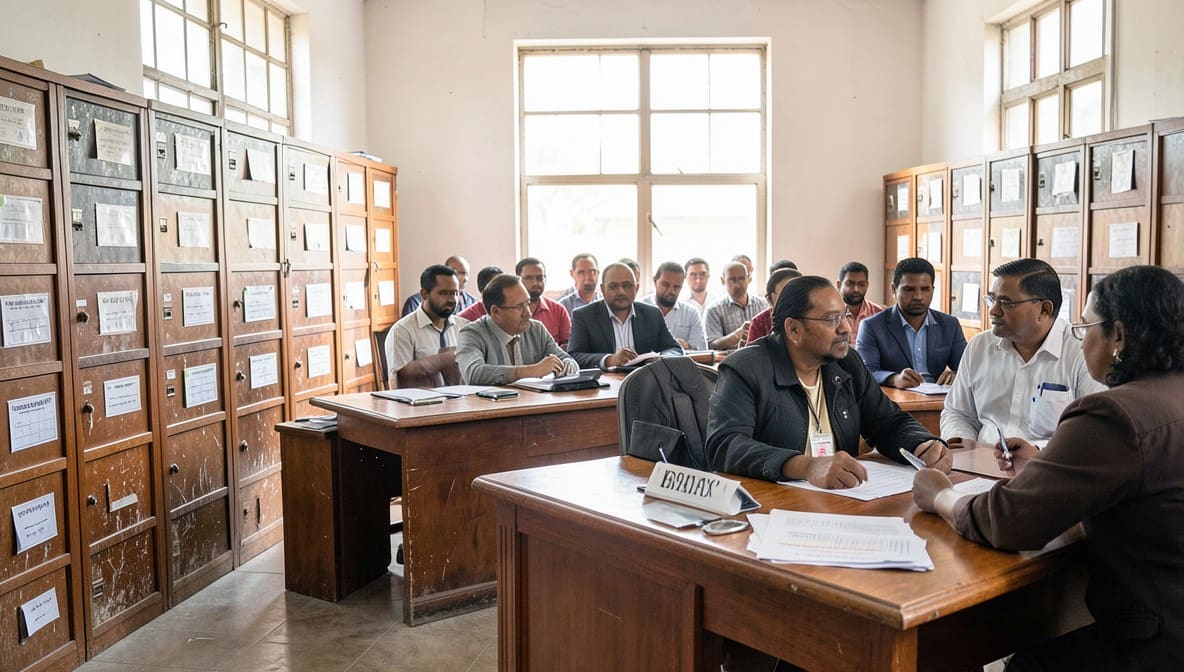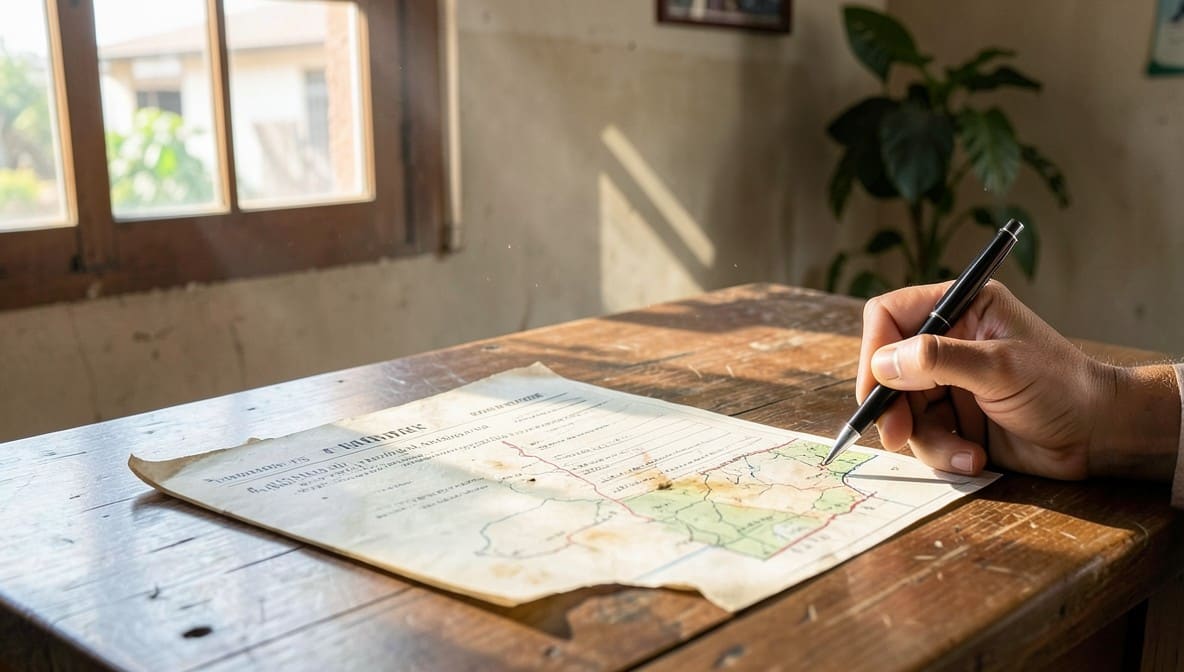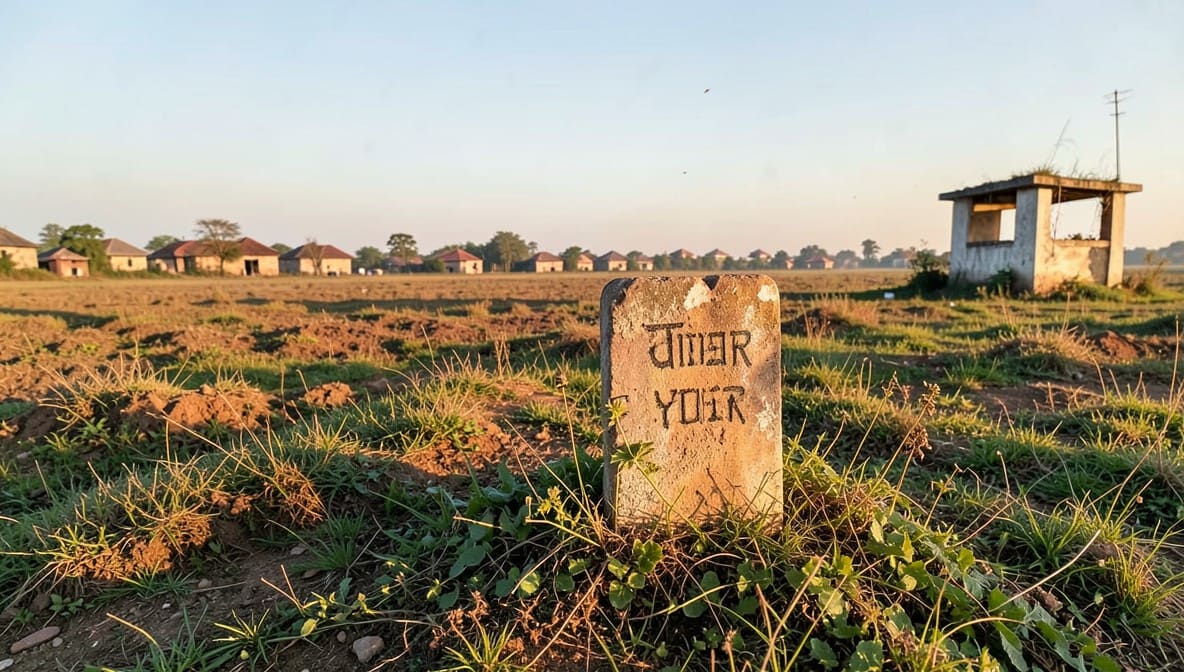
The Allahabad High Court has reinforced the principle that undue delay in adjudicating revenue disputes undermines the rule of law. In a decisive order, the Court directed the Deputy Tehsildar to decide a long-pending property dispute within six months, affirming that administrative inaction cannot be permitted to frustrate the right to timely justice.
Background & Facts
The Dispute
The petitioner, Priyambada, is engaged in a property dispute with Ramnarayan over land situated in mouja Bahuripar, Bujurg, tapa Mahsin, Pargana Unwal, Tehsil Khajani, District Gorakhpur. The matter was formally initiated under Section 34 of the U.P. Revenue Code, 2006, which empowers revenue officers to determine disputes relating to land possession, boundaries, and rights of occupancy.
Key Facts
- The case was registered as Case No. 5751 of 2023, with computerized reference T202305310205751
- The dispute concerns possession and title over agricultural land
- The petitioner has repeatedly sought adjudication but no final order has been passed
- No hearing has resulted in a decision despite multiple dates being fixed
- The petitioner has not been granted any substantive relief despite the case being pending for over three years
Procedural History
- 2023: Original case filed before Deputy Tehsildar, Tehsil Khajani
- 2023 - 2025: Multiple hearing dates fixed but adjourned without progress
- 2026: Writ Petition No. 19853 of 2026 filed before the Allahabad High Court
- 20 May 2026: Hearing before Hon’ble Manish Kumar Nigam, J.
The Parties' Positions
The petitioner contended that the delay in deciding the case violates her right to timely justice under Article 21 of the Constitution and amounts to denial of effective remedy. She emphasized that the matter has been pending without any legitimate reason and that the revenue officer has failed to discharge his statutory duty under Section 34.
The State, through the Standing Counsel, did not contest the factual assertion of delay but sought to avoid any binding direction, arguing that the matter was sub judice and subject to internal administrative processes.
Relief Sought
The petitioner sought a writ of interim mandamus directing the Deputy Tehsildar to decide Case No. 5751 of 2023 within a stipulated period, or as the Court deemed fit, to ensure justice is not delayed or denied.
The Legal Issue
The central question was whether a writ court may issue a direction to a revenue officer to decide a pending case under Section 34 of the U.P. Revenue Code, 2006, when there is inordinate and unjustified delay without any legal justification.
Arguments Presented
For the Petitioner
The petitioner’s counsel relied on the constitutional obligation under Article 21 to ensure access to timely justice and cited Hussainara Khatoon v. Home Secretary, State of Bihar to underscore that prolonged pendency of cases violates the right to life and personal liberty. He argued that Section 34 imposes a statutory duty on the Deputy Tehsildar to adjudicate land disputes expeditiously, and failure to do so amounts to administrative negligence warranting judicial intervention.
For the Respondent
The State did not dispute the factual delay but contended that the Court should not interfere in the administrative functioning of revenue officers unless there is clear mala fide or arbitrariness. It submitted that internal case management issues and procedural complexities accounted for the delay, and that a direction from the Court might disrupt established workflow.
The Court's Analysis
The Court observed that while it generally refrains from interfering in the administrative functioning of revenue authorities, the prolonged and unexplained delay in this case crossed the threshold of reasonableness. The Court noted that the case had been pending since 2023 with no final order, despite multiple hearing dates being fixed. Such delay, the Court held, is not merely procedural but substantive, as it deprives the petitioner of a legally recognized remedy under Section 34.
"The right to justice is not a theoretical concept but a practical reality that must be delivered within a reasonable time. When a statutory authority fails to act for over three years without cause, the Court cannot remain a silent spectator."
The Court emphasized that Section 34 of the U.P. Revenue Code, 2006, is a remedial provision designed to provide swift resolution of land disputes. The absence of any recorded reason for delay, coupled with the absence of any legal impediment, rendered the inaction indefensible. The Court further held that the petitioner had exhausted all available administrative remedies and that judicial intervention was the only remaining avenue to prevent irreparable prejudice.
The Verdict
The writ petition was disposed of with a direction to the Deputy Tehsildar, Tehsil Khajani, to decide Case No. 5751 of 2023 (computerized case T202305310205751) within six months from the date of production of a certified copy of this order after ensuring service upon all parties and granting a fair opportunity of hearing. The Court directed that no unnecessary adjournments be granted and that the matter be decided expeditiously in accordance with law, provided no legal impediment arises.
What This Means For Similar Cases
Delay in Revenue Proceedings Is Not Tolerated
- Practitioners must now cite this judgment when seeking directions for timely disposal of pending revenue cases under Section 34
- Courts will treat delays exceeding two years in revenue adjudication as prima facie unreasonable
- Failure to decide within the stipulated period may invite contempt proceedings
Statutory Duty Overrides Administrative Convenience
- Revenue officers cannot invoke internal backlog or workload as justification for inaction
- The statutory obligation under Section 34 is non-negotiable and enforceable by writ
- Petitioners in similar cases may now seek specific timelines, not just generic directions
Writ Jurisdiction as Last Resort
- This judgment confirms that writ courts will intervene when statutory authorities fail to act, even without proof of malafide
- The absence of a final order after multiple hearings constitutes sufficient ground for mandamus
- Legal aid clinics and NGOs can use this precedent to file public interest writs on behalf of rural litigants facing revenue delays