The Madhya Pradesh High Court has reinforced the obligation of administrative authorities to act expeditiously on statutory applications under the M.P. Land Revenue Code, 1959, particularly where land use violations and unauthorized construction are alleged. The judgment underscores that procedural inaction cannot be tolerated when citizens seek redressal through legally prescribed channels.
Background & Facts
The Dispute
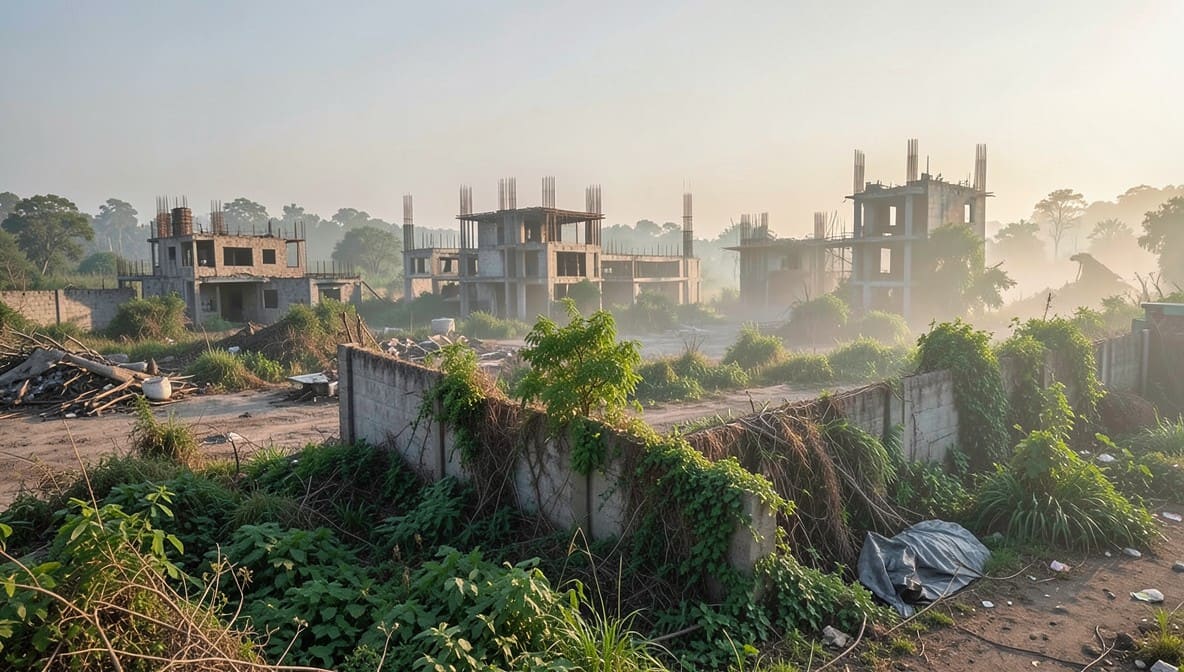
The petitioner, Kundanlal, alleges that unauthorized construction activity is ongoing within a layout area in Indore, Madhya Pradesh, in violation of land use regulations. He contends that these activities are being carried out without proper approvals and are causing irreversible damage to the land’s integrity and surrounding environment. The petitioner has sought judicial intervention to halt further development and preserve the status quo of the disputed land.
Key Facts
- The petitioner filed an application under Section 129(5) of the M.P. Land Revenue Code, 1959 in October 2025 before respondent No. 2 (the concerned revenue authority)
- The application requested inspection of the disputed layout area and action against illegal construction
- Despite the application being filed, no inspection or substantive response has been issued as of the date of the writ petition
- The petitioner has also lodged multiple criminal complaints with local police and other authorities regarding illegal land use by private individuals
- No action has been taken on any of these complaints to date
- The petitioner has not initiated any civil suit but seeks administrative and criminal remedies first
Procedural History
- October 2025: Petitioner files application under Section 129(5) of the M.P. Land Revenue Code, 1959
- No inspection or order issued by the revenue authority as of April 2026
- March 2026: Petitioner files Writ Petition No. 6133 of 2026 before the High Court of Madhya Pradesh at Indore
- 16 April 2026: Hearing conducted before Justice Pranay Verma
The Parties' Positions
Petitioner’s Position: The delay in acting on the Section 129(5) application and the inaction on criminal complaints amount to a failure of statutory duty. The petitioner seeks immediate inspection, cessation of construction, and a directive to prevent further permissions. He argues that the lack of response violates his right to effective remedy under Article 226.
Respondent’s Position: The State, through the Government Advocate, concedes that action will be taken expeditiously but does not dispute the petitioner’s allegations. No formal opposition to the prayer was advanced.
Relief Sought
The petitioner sought:
- Immediate cessation of construction activity in the disputed layout
- Prohibition on granting any further building permissions for the area
- Maintenance of the current physical condition of the land to prevent irreparable harm and third-party complications
- Direction to decide the pending Section 129(5) application expeditiously
- Direction to act on the criminal complaints filed by the petitioner
The Legal Issue
The central question was whether the failure of a revenue authority to decide a statutory application under Section 129(5) of the M.P. Land Revenue Code, 1959 within a reasonable time, despite a clear mandate for inspection and action, constitutes a violation of the petitioner’s right to effective remedy under Article 226 of the Constitution.
Arguments Presented
For the Petitioner
The petitioner’s counsel argued that Section 129(5) imposes a mandatory duty on revenue authorities to inspect land and take action against unauthorized use. The prolonged inaction - over six months without even an inspection - amounts to administrative apathy. He cited State of M.P. v. Rameshwar and S.P. Gupta v. Union of India to emphasize that the right to remedy under Article 226 includes the right to timely adjudication. He further contended that the failure to act on criminal complaints compounds the violation, leaving the petitioner without recourse.
For the Respondent
The Government Advocate acknowledged the delay but offered no legal justification. He submitted that the concerned authorities would act expeditiously, without disputing the petitioner’s factual assertions. No counter-affidavit or opposing evidence was filed.
The Court's Analysis
The Court observed that the petitioner’s application under Section 129(5) was not merely a procedural formality but a statutory mechanism designed to address land misuse at the earliest stage. The absence of any action for over six months, despite the clear mandate to inspect and decide, amounted to a failure of public duty.
"The statutory machinery under Section 129(5) is not meant to be dormant. When a citizen invokes it to prevent illegal land use, the authority must act with dispatch, not delay."
The Court noted that the petitioner had also exhausted alternative remedies by filing criminal complaints, yet no action had been initiated. The Court emphasized that while it could not adjudicate the merits of the land dispute, it could and must ensure that statutory and criminal processes are not rendered meaningless by inaction.
The Court rejected the notion that "expeditious action" is a vague assurance. It held that in matters involving potential environmental degradation and illegal construction, timelines must be fixed to prevent abuse of process and protect public interest.
The Verdict
The petition was disposed of with the following directions:
- The application under Section 129(5) of the M.P. Land Revenue Code, 1959 must be decided by respondent No. 4 within three months from the date of receipt of the certified copy of this order, after affording due opportunity of hearing to all concerned parties
- The respondent authorities shall examine the criminal complaints filed by the petitioner and take appropriate action as may be warranted under law, as expeditiously as possible
- The petitioner is at liberty to approach the competent civil court for any civil grievances
- No opinion was expressed on the merits of the underlying land dispute
What This Means For Similar Cases
Statutory Deadlines Are Not Suggestive - They Are Mandatory
- Practitioners must cite this judgment when opposing delays in statutory adjudication under land revenue codes
- Applications under Section 129(5) or similar provisions must be treated as time-bound; delays beyond three months without justification are now legally untenable
- A failure to decide within the mandated period may warrant a writ petition under Article 226
Criminal Complaints Cannot Be Ignored as "Non-Justiciable"
- Authorities cannot dismiss criminal complaints alleging land encroachment or illegal construction as "civil disputes"
- Where allegations involve violation of land use rules, criminal provisions under IPC or local municipal laws may apply
- Petitioners should document and re-file complaints with acknowledgment receipts to establish a trail of inaction
Writ Jurisdiction Is a Tool Against Administrative Apathy
- Courts will intervene even without a final order if statutory duties are unreasonably delayed
- The absence of a final order does not preclude judicial intervention where the delay itself causes irreparable harm
- This judgment empowers litigants to seek timelines, not just outcomes, in administrative proceedings