The Allahabad High Court has clarified that the pendency of criminal proceedings against encroachers does not excuse revenue authorities from their statutory duty to evict illegal occupants from public land. This judgment reinforces the obligation of Tehsildars to act decisively under the U.P. Revenue Code Rules, 2016, irrespective of parallel criminal litigation.
Background & Facts
The Dispute
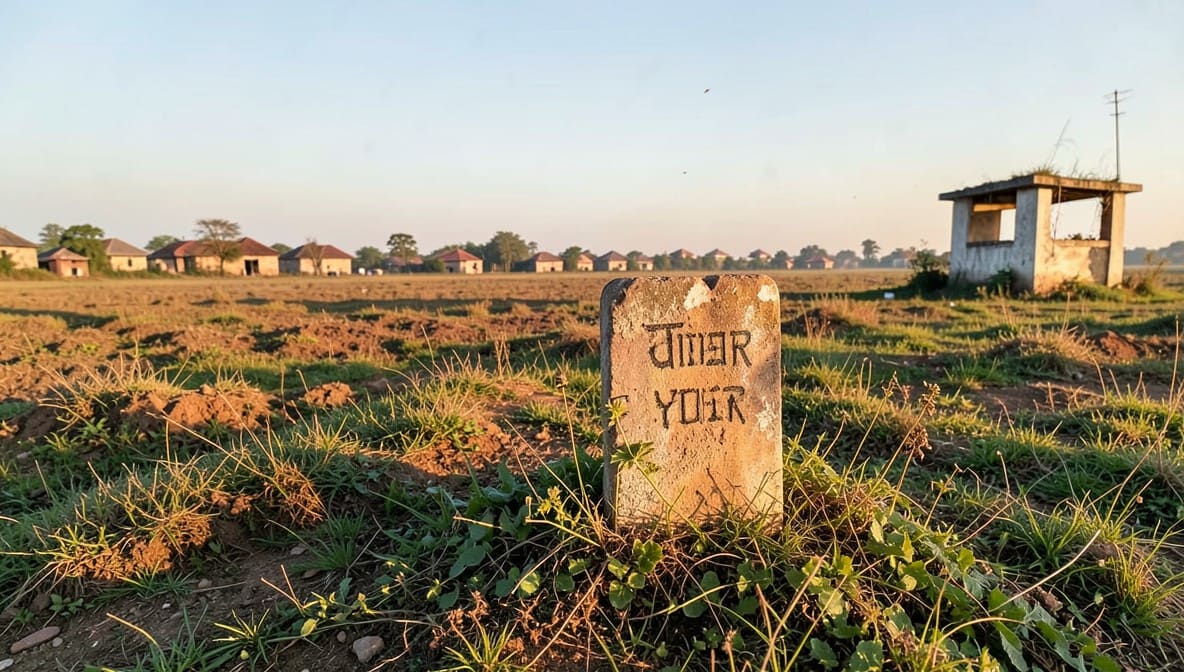
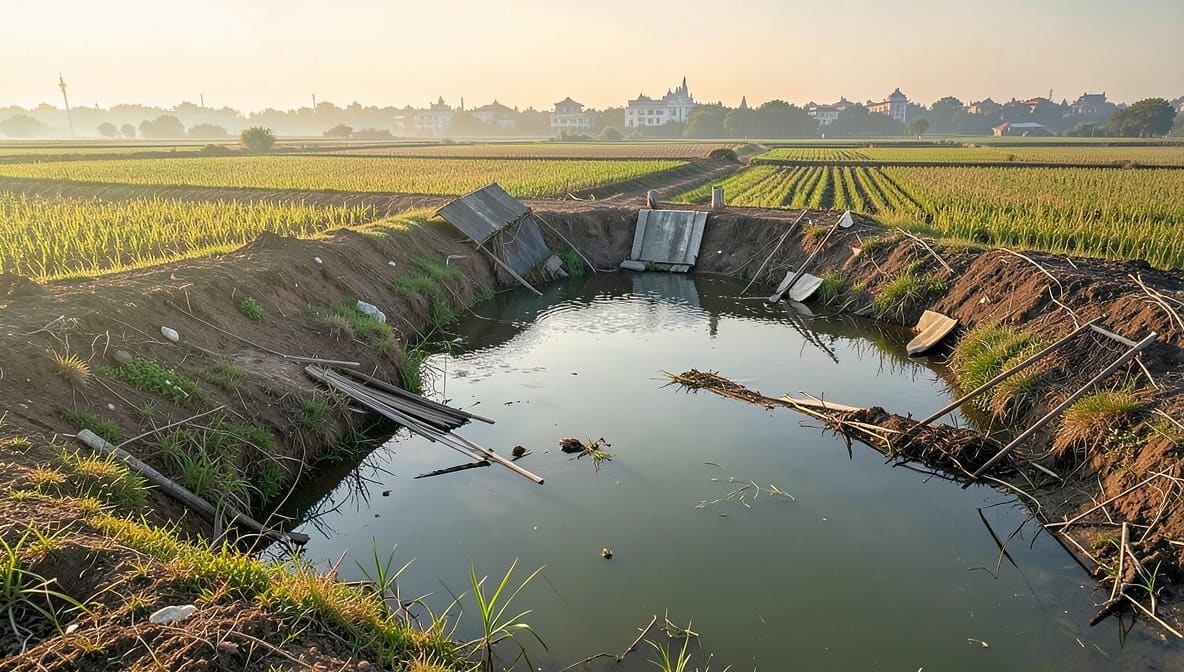
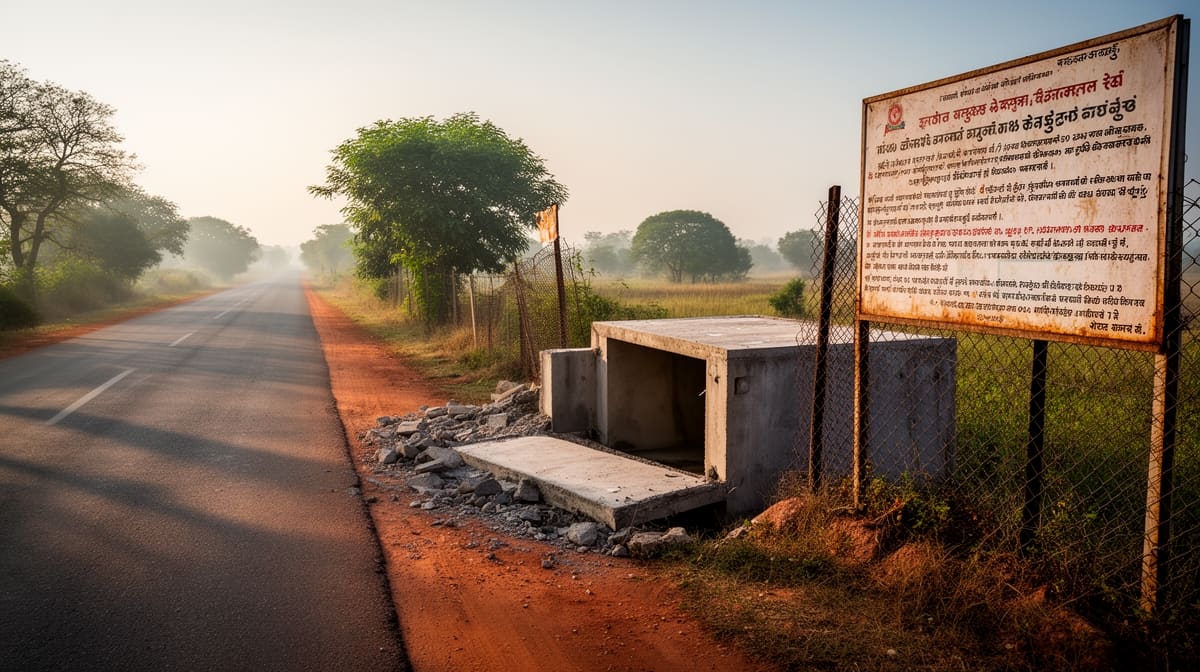
The petitioner, Om Prakash Singh, filed a Public Interest Litigation seeking eviction of respondents 6 to 10 from two plots - Plot No. 182 recorded as Pond and Plot No. 66 recorded as Bheeta - in Village Mirza Adampur, Tehsil Lalganj, District Azamgarh. These plots are part of public utility land under the control of the Land Management Committee. Despite prior removal of encroachment, the respondents re-encroached upon the same land, prompting the petitioner to approach the Court.
Key Facts
- Plot No. 182 is recorded in revenue records as "Pond" and Plot No. 66 as "Bheeta", both classified as public utility land
- Encroachment by respondents 6 to 10 was initially removed pursuant to an order under Section 67 of the U.P. Revenue Code, 2006
- The respondents re-encroached upon the plots after removal
- A First Information Report (FIR) was lodged against respondents 6 to 10 in connection with the re-encroachment
- The State authorities acknowledged the re-encroachment but cited pendency of criminal proceedings as a reason for inaction
- The Land Management Committee, as the custodian of public land, has been denied possession despite clear revenue records
Procedural History
- 24.08.2023: Court heard arguments and directed the State to produce Instruction dated 03.07.2003, which confirmed prior removal and subsequent re-encroachment
- 24.08.2023: Court directed the State to serve a copy of the instruction on the petitioner’s counsel on the same day
- 24.08.2023: Petitioner was given three weeks to file a reply to the State’s averments
- 14.09.2023: Petitioner filed reply, asserting that despite FIR being registered, no eviction had taken place
- 18.05.2026: Court heard final arguments from both sides
- 18.05.2026: Judgment delivered
The Parties' Positions
For the Petitioner
The petitioner contended that the State’s reliance on pending criminal proceedings was an evasion of statutory duty. He argued that criminal prosecution and civil revenue action are distinct remedies and that the Tehsildar’s obligation under Rule 67 of the U.P. Revenue Code Rules, 2016, is independent of criminal proceedings. He emphasized that public land remains unlawfully occupied, causing deprivation to the community and the Land Management Committee.
For the Respondents
The State, through its Standing Counsel, relied on Instruction dated 03.07.2003, which confirmed the re-encroachment and initiation of criminal proceedings. The State argued that eviction could not be ordered until the criminal case concluded, as forcible removal might prejudice the prosecution. The counsel for the Land Management Committee supported the petitioner’s stance.
Relief Sought
The petitioner sought a direction to the Tehsildar, Lalganj, to immediately evict respondents 6 to 10 from Plot Nos. 182 and 66, restore possession to the Land Management Committee, and ensure no further re-encroachment.
The Legal Issue
Can revenue authorities defer eviction of re-encroachers on public land merely because criminal proceedings are pending, or is their duty under Rule 67 of the U.P. Revenue Code Rules, 2016, mandatory and independent of criminal litigation?
Arguments Presented
For the Petitioner
The petitioner relied on the principle that public land cannot remain unlawfully occupied due to procedural delays in criminal cases. He cited sub-rule (5) and sub-rule (7) of Rule 67 of the U.P. Revenue Code Rules, 2016, which empower the Tehsildar to take immediate possession and remove encroachments. He argued that criminal proceedings address punishment, while revenue proceedings address restoration of possession - two distinct objectives. He further contended that delay in eviction perpetuates injustice to the public and undermines the authority of revenue records.
For the Respondent
The State contended that eviction without concluding criminal proceedings might lead to destruction of evidence or intimidation of witnesses. It argued that the Tehsildar’s action must be coordinated with the police to avoid conflict. The State relied on the 2003 instruction as evidence of due diligence, asserting that criminal action was sufficient.
The Court's Analysis
The Court rejected the State’s argument that criminal proceedings could justify inaction under revenue law. It held that the duty to evict encroachers under Rule 67 is statutory, non-discretionary, and independent of criminal proceedings. The Court emphasized that the purpose of revenue law is to protect public land and ensure its use for public purposes, which cannot be deferred indefinitely.
"The pendency of a criminal case cannot be a shield for continued unlawful occupation of public land. The Tehsildar is under a statutory obligation to act under Rule 67(5) and (7) of the U.P. Revenue Code Rules, 2016, irrespective of the status of criminal proceedings."
The Court distinguished between the object of criminal law - punishment of offenders - and the object of revenue law - restoration of possession and protection of public property. It noted that the State had already acknowledged the re-encroachment in its own instruction dated 03.07.2003, thereby admitting the factual basis for eviction. The Court further observed that the Land Management Committee, as the statutory custodian, had been deprived of possession for years, causing public harm.
The Court also rejected the notion that eviction would prejudice criminal proceedings, noting that lawful removal of encroachment does not constitute destruction of evidence. The Court held that the Tehsildar may coordinate with police for orderly execution, but cannot use the existence of an FIR as an excuse for inaction.
The Verdict
The petition was allowed. The Court directed the Tehsildar, Lalganj, Azamgarh, to immediately take action under sub-rule (5) of Rule 67 of the U.P. Revenue Code Rules, 2016, to evict respondents 6 to 10 from Plot Nos. 182 and 66, remove all structures, and restore possession to the Land Management Committee. The exercise must be completed within one month from the date of presentation of a certified copy of this order, subject to no other legal impediment.
What This Means For Similar Cases
Statutory Duty Trumps Procedural Delays
- Revenue authorities cannot delay eviction of encroachers on public land merely because criminal proceedings are pending
- FIRs or charge sheets do not suspend the Tehsildar’s obligation under Rule 67(5) and (7)
- Practitioners must argue that revenue remedies are independent and must be pursued without waiting for criminal outcomes
Public Land Protection Is Non-Negotiable
- Public utility land recorded as "Pond", "Bheeta", or "Common Land" in revenue records is protected by statute
- Land Management Committees have standing to seek enforcement of possession rights
- Delay in eviction constitutes a continuing violation of public interest and may be challenged via PIL
Enforcement Must Be Timely and Documented
- Tehsildars must record actions taken under Rule 67 in writing and maintain execution reports
- Coordination with police is permissible but not mandatory for eviction
- Failure to act within court-mandated timelines may invite contempt proceedings