Topic

Right to Fair Compensation Act 2013

The Right to Fair Compensation Act, 2013 governs land acquisition in India, ensuring just and timely compensation to landowners while mandating transparency and social impact assessments.

13 articlesLatest September 2026
Section 26(b) Requires Nearest Village Sale Deeds for Compensation When No Local Sales | Land Acquisition Compensation : Jharkhand HC
Case Law Analysis
|Jharkhand High Court

Section 26(b) Requires Nearest Village Sale Deeds for Compensation When No Local Sales | Land Acquisition Compensation : Jharkhand HC

The Jharkhand High Court ruled that, absent local sale transactions, compensation under Section 26(b) of the 2013 Act must be based on sale deeds from the nearest adjoining village. It affirmed Rs. 99,300 per decimal compensation using a verified deed from Kankebar village, guiding future land acquisition assessments.


MP HC Upholds Reference Court's Valuation Methodology Under RFCTLARR Act 2013 | Land Acquisition Compensation Appeals Dismissed : MP HC
Case Law Analysis
|Madhya Pradesh High Court

MP HC Upholds Reference Court's Valuation Methodology Under RFCTLARR Act 2013 | Land Acquisition Compensation Appeals Dismissed : MP HC

Madhya Pradesh High Court dismissed multiple appeals challenging enhanced compensation awards under the Right to Fair Compensation and Transparency in Land Acquisition, Rehabilitation and Resettlement Act, 2013. The court upheld the reference court's valuation methodology, emphasizing the use of market value, exemplar sale deeds, and urban potential factors in determining fair compensation.

Section 24 Right to Fair Compensation Act | Land Acquisition Proceedings Lapse If Possession Not Taken Nor Compensation Paid Before 01.01.2014 : Bombay HC
Case Law Analysis
|Bombay High Court

Section 24 Right to Fair Compensation Act | Land Acquisition Proceedings Lapse If Possession Not Taken Nor Compensation Paid Before 01.01.2014 : Bombay HC

Bombay High Court rules that land acquisition proceedings under the Right to Fair Compensation Act 2013 lapse if neither possession is taken nor compensation paid by the cut-off date of 01.01.2014, entitling landowners to compensation under the new Act. This judgment reinforces landowners' rights and sets a critical precedent for pending compensation claims under Section 24.

Section 24(2) Right to Fair Compensation Act | Land Acquisition Notifications Published Post-01.01.2014 Void : Allahabad HC
Case Law Analysis
|Allahabad High Court

Section 24(2) Right to Fair Compensation Act | Land Acquisition Notifications Published Post-01.01.2014 Void : Allahabad HC

Allahabad High Court rules that land acquisition proceedings under the repealed Land Acquisition Act, 1894 are invalid if Section 4 notifications were published after 01.01.2014, regardless of the notification date. The court directed recalculation of compensation under the Right to Fair Compensation Act, 2013, reinforcing the publication date as the decisive factor for initiation of proceedings.

Section 24(2) Proviso LAA 2013 | Non-Deposit of Award Amount Triggers Compensation Under New Act: Karnataka HC
Case Law Analysis
|Karnataka High Court

Section 24(2) Proviso LAA 2013 | Non-Deposit of Award Amount Triggers Compensation Under New Act: Karnataka HC

Karnataka High Court reinforces that landowners excluded from partial awards under the Land Acquisition Act, 1894, are entitled to compensation under the Right to Fair Compensation Act, 2013 if the award amount was not deposited. The ruling clarifies that the proviso to Section 24(2) of the 2013 Act operates as a safeguard, ensuring fair compensation even in cases of procedural lapses by authorities.

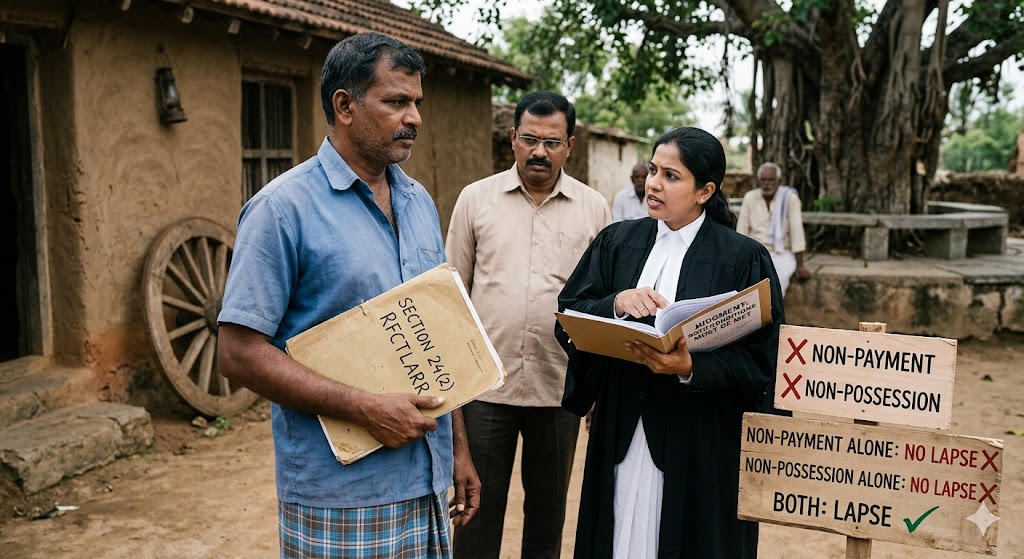
Section 24(2) RFCTLARR Act | Lapse of Acquisition Requires BOTH Non-Payment AND Non-Possession : Karnataka HC
Case Law Analysis
|Karnataka High Court

Section 24(2) RFCTLARR Act | Lapse of Acquisition Requires BOTH Non-Payment AND Non-Possession : Karnataka HC

Karnataka High Court clarifies that land acquisition under Section 24(2) of the Right to Fair Compensation Act 2013 lapses only if compensation remains unpaid AND lawful possession is not taken. Mere treasury deposit does not suffice, and once possession is taken, land vests absolutely in the State under Section 16, barring divesting even if earlier proceedings lapse. This ruling impacts landowners and authorities in ongoing acquisition disputes.

Section 11A Land Acquisition Act | Delay Beyond Two Years Without Award Lapses Acquisition; Owner Entitled to 2013 Act Compensation : Bombay HC
|Bombay High Court

Section 11A Land Acquisition Act | Delay Beyond Two Years Without Award Lapses Acquisition; Owner Entitled to 2013 Act Compensation : Bombay HC

Bombay HC rules that land acquisition proceedings automatically lapse under Section 11A of the 1894 Act if no award is declared within two years, even if the land is later developed. The owner retains rights under the Right to Fair Compensation Act 2013, reinforcing constitutional protections under Article 300-A against procedural delays.

Section 24(2) Lapse in Land Acquisition | Mandatory Reference Under Section 64 for Fair Compensation : Telangana HC
Case Law Analysis
|Telangana High Court

Section 24(2) Lapse in Land Acquisition | Mandatory Reference Under Section 64 for Fair Compensation : Telangana HC

Telangana High Court rules that lapsed land acquisition proceedings under Section 24(2) of the Right to Fair Compensation Act, 2013 must be referred to a civil court under Section 64 for adjudication of compensation. The judgment reinforces natural justice principles, ensuring landowners receive fair compensation even in delayed acquisitions.

Alternative Remedy Doctrine | Disputed Factual Issues in Land Acquisition Compensation Bar Writ Jurisdiction : Uttarakhand HC
Case Law Analysis
|Uttarakhand High Court

Alternative Remedy Doctrine | Disputed Factual Issues in Land Acquisition Compensation Bar Writ Jurisdiction : Uttarakhand HC

Uttarakhand High Court rules that writ petitions under Article 226 are inadmissible for land acquisition compensation disputes involving contested facts, mandating statutory remedy under Section 64 of the Right to Fair Compensation Act, 2013. The decision reinforces the Alternative Remedy Doctrine, impacting landowners challenging compensation awards.