The Bombay High Court has delivered a stern rebuke to the State of Maharashtra for a three-decade-long failure to pay compensation to landowners whose property was taken for a public irrigation project. The judgment underscores that constitutional rights to property are not contingent on bureaucratic efficiency, and that administrative negligence cannot justify deprivation without lawful compensation.
Background & Facts
The Dispute
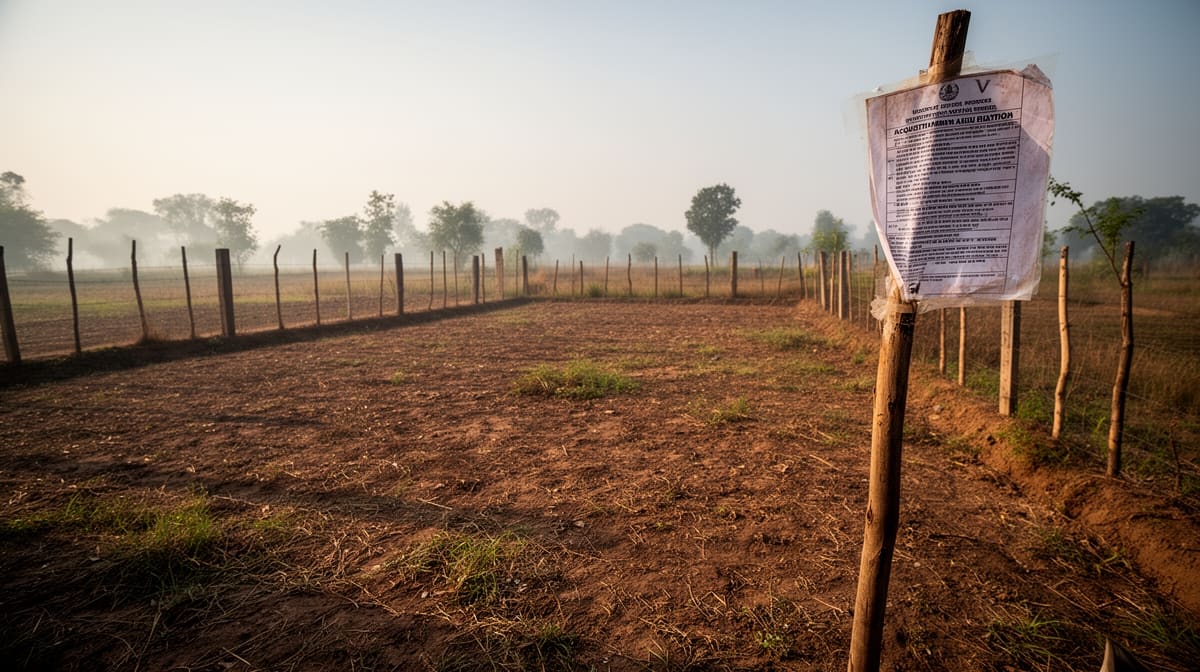
The petitioners, five agriculturists from Beed district, lost possession of their agricultural lands on 2 February 1996 for the construction of Village Tank No.1 at Pimpalgaon Dani. Possession was taken through private negotiation, without any advance payment as required under the Land Acquisition Act, 1894. The project was completed in the same year, and the land has remained in public use ever since.
Procedural History
- 1996: Possession taken without statutory compliance
- 1996 - 2018: No award passed; no compensation paid or deposited
- 2018: After petitioners filed Writ Petition No.1556 of 2018, authorities initiated proceedings under the Right to Fair Compensation and Transparency in Land Acquisition, Rehabilitation and Resettlement Act, 2013 (Act of 2013)
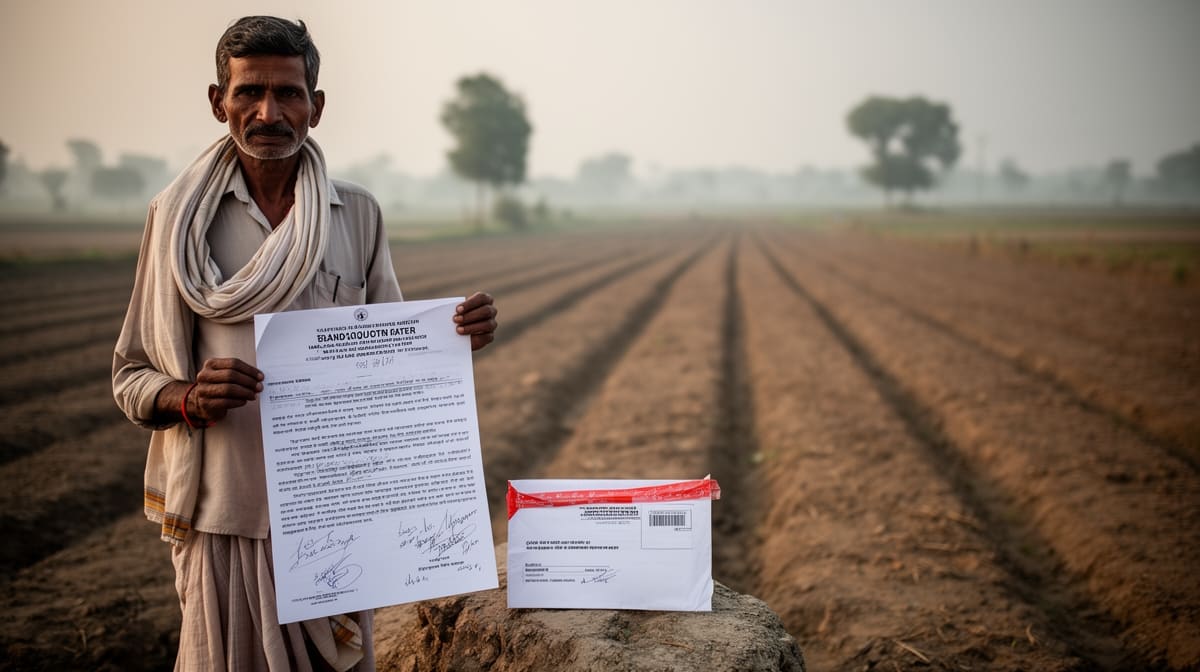
- 2020: Award declared on 23 November 2020, but petitioners were never served notice
- 2025: Petitioners obtained certified copy of award only after written representation; no payment made
Relief Sought
The petitioners sought directions to complete acquisition proceedings, pay compensation as per the 2020 award, and grant statutory interest under Section 80 of the Act of 2013, along with accountability for systemic delay.
The Legal Issue
The central question was whether the State’s prolonged failure to pay compensation after taking possession and passing an award constitutes a continuing violation of Article 300A of the Constitution, and whether statutory obligations under the Right to Fair Compensation and Transparency in Land Acquisition, Rehabilitation and Resettlement Act, 2013 can be deferred due to administrative inefficiency.
Arguments Presented
For the Petitioner
The petitioners relied on State of Haryana v. Shiv Lal and Union of India v. Rameshwar Prasad to argue that possession without payment of compensation is a constitutional wrong. They emphasized that Section 77(1) of the Act of 2013 mandates immediate payment upon award declaration, and Section 80 entitles them to interest from the date of possession. They contended that the State’s inaction amounted to a continuing breach of constitutional duty.
For the Respondent
The State did not dispute entitlement but claimed that compensation funds had not been released by the proposing department (Irrigation Department). It argued that internal budgetary delays should not be attributed to malafide intent. However, it offered no legal justification for the 24-year delay in passing an award or the five-year delay in payment after award.
The Court's Analysis
The Court rejected the State’s excuse of internal funding delays as legally untenable. It held that once possession is taken, the obligation to pay compensation becomes absolute and non-negotiable. The Court emphasized that Article 300A does not permit deprivation of property without authority of law, and authority of law includes not just acquisition but also determination and payment of compensation.
"There is no concept in constitutional or statutory law of 'acquisition without compensation due to administrative lapse.'"
The Court distinguished between procedural delays and substantive violations. While delays in administrative processes are common, the failure to act for nearly three decades - after the project was completed - amounted to a continuing illegality. The Court cited K.S. Puttaswamy v. Union of India to affirm that property rights are not illusory and must be enforceable against the State, especially for vulnerable rural landowners.
The Court further held that Section 77(1) of the Act of 2013 leaves no discretion: compensation must be paid immediately upon award. The failure to deposit the amount with the competent authority, as permitted under Section 77(2), was also a violation. The Court noted that even if funds were not released by the proposing department, the State’s treasury must advance the amount to prevent injustice to citizens.
The Court also rejected the notion that petitioners’ lack of awareness or legal access could excuse the State’s inaction. It held that the State, as a welfare entity, bears the burden of proactive outreach and transparency.
The Verdict
The petitioners won. The Court held that payment of compensation must be made immediately upon award declaration, and delay cannot be a defense to constitutional obligations under Article 300A. The State was directed to pay compensation of Rs.31,91,395/- along with statutory interest under Section 80 of the Act of 2013 within eight weeks, and to deposit Rs.35 lakh as security with the Court.
What This Means For Similar Cases
Compensation Payment Is Not Discretionary
- Practitioners must now treat Section 77(1) of the Act of 2013 as mandatory and non-negotiable
- Any delay beyond award declaration triggers automatic liability for interest under Section 80
- Petitioners in pending cases can now seek writs of mandamus for immediate payment, irrespective of funding status of the acquiring agency
State Cannot Shift Burden to Landowners
- The burden of proving title, traceability, or apportionment lies with the State, not the landowner
- Public notices and outreach must be documented and verified; silence from landowners cannot be construed as waiver
- Legal aid services must be proactively engaged for illiterate or rural claimants
Accountability Is Now Judicially Enforceable
- District Collectors and Chief Secretaries are now personally accountable for systemic delays
- Internal audits to identify negligent officers and recover losses are mandatory
- Failure to comply with court directions may result in contempt proceedings and financial penalties against the State