Topic

FIR registration

FIR registration in India refers to the legal process of recording a First Information Report by police for cognizable offences under the BNSS and CrPC, ensuring initiation of criminal investigation.

40 articlesLatest 1 week ago
Judicial Mind Required Under BNSS 175(3)-(4) Before Ordering FIR Against Public Servants : Allahabad HC
Case Law Analysis
|Allahabad High Court

Judicial Mind Required Under BNSS 175(3)-(4) Before Ordering FIR Against Public Servants : Allahabad HC

The Allahabad High Court quashed an FIR against police officers, holding that magistrates must apply judicial mind under BNSS 175(3)-(4) and consider the superior officer's report and the public servant's explanations before directing registration of an FIR arising from official duties. The ruling safeguards public servants from mala fide prosecutions while ensuring accountability.

Magistrate Lacks Power to Direct FIR for Non-Cognizable Offence | Section 156(3) CrPC : J&K HC
Case Law Analysis
|Jammu & Kashmir and Ladakh High Court

Magistrate Lacks Power to Direct FIR for Non-Cognizable Offence | Section 156(3) CrPC : J&K HC

The Jammu & Kashmir High Court ruled that a judicial magistrate cannot compel the police to register an FIR under Section 156(3) when the complaint concerns only a non-cognizable offence such as an IPC 323 assault. The magistrate must instead proceed under Section 155(2) or treat the matter as a private complaint, curbing undue investigative authority.

Successive FIRs Quashed - Test of Sameness (Unity, Proximity, Continuity) Applies to Transaction | Independence Day Procession : Delhi HC
Case Law Analysis
|Delhi High Court

Successive FIRs Quashed - Test of Sameness (Unity, Proximity, Continuity) Applies to Transaction | Independence Day Procession : Delhi HC

The Delhi High Court set aside two FIRs lodged for the same Independence Day procession, holding that successive FIRs for a single continuous transaction breach the test of sameness and double-jeopardy safeguards. The ruling prevents duplicate FIR filings on identical facts, protecting accused persons from multiple prosecutions.

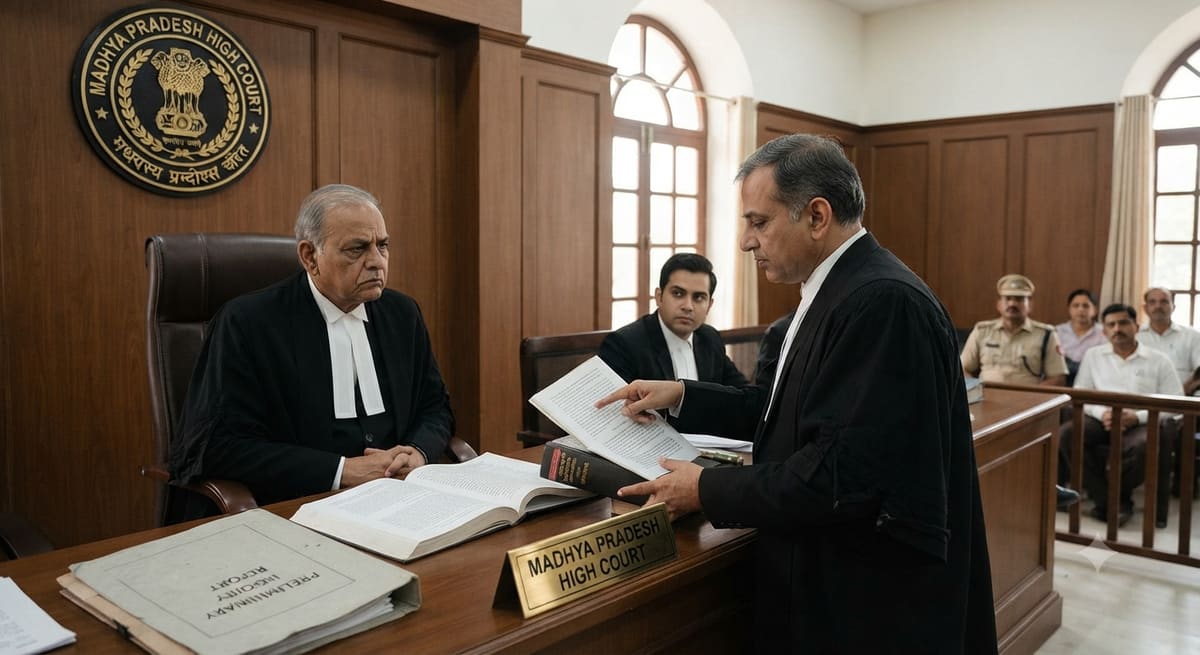
Lalita Kumari Mandate Under BNSS | Preliminary Inquiry Justified When Cognizable Offence Not Disclosed : MP HC
Case Law Analysis
|Madhya Pradesh High Court

Lalita Kumari Mandate Under BNSS | Preliminary Inquiry Justified When Cognizable Offence Not Disclosed : MP HC

Madhya Pradesh High Court upholds the Lalita Kumari principle under Bharatiya Nagarik Suraksha Sanhita, 2023, permitting police to conduct a preliminary inquiry before FIR registration where no cognizable offence is prima facie disclosed. The ruling clarifies the scope of judicial review over police compliance reports in criminal investigations.

Section 154 CrPC | Cross-Complaints and Premature Trial Stage Bar Writ for Compensation Against Police : Bombay HC
Case Law Analysis
|Bombay High Court

Section 154 CrPC | Cross-Complaints and Premature Trial Stage Bar Writ for Compensation Against Police : Bombay HC

Bombay High Court rules that compensation and disciplinary action against police for delayed FIR registration under Section 154 CrPC cannot be granted via writ when cross-complaints exist and the trial is premature. The judgment underscores that judicial relief for police inaction is unsustainable without final adjudication of competing complaints.

Section 173 BNSS | Police Must Decide on FIR Registration Within 90 Days of Cognizable Offence Complaint: MP HC
Case Law Analysis
|Madhya Pradesh High Court

Section 173 BNSS | Police Must Decide on FIR Registration Within 90 Days of Cognizable Offence Complaint: MP HC

Madhya Pradesh High Court mandates that police must conclude preliminary inquiry and decide on FIR registration within 90 days of receiving a complaint for cognizable offences under Bhartiya Nagrik Suraksha Sanhita, 2023. Failure to act within the stipulated period empowers complainants to seek judicial intervention under Article 226, reinforcing accountability in criminal investigations.

BNSS Section 173(3) | Mandatory Preliminary Inquiry Before FIR for Offences Under 7 Years: Rajasthan HC Reinforces Arnesh Kumar Guidelines
Case Law Analysis
|Rajasthan High Court

BNSS Section 173(3) | Mandatory Preliminary Inquiry Before FIR for Offences Under 7 Years: Rajasthan HC Reinforces Arnesh Kumar Guidelines

The Rajasthan High Court ruled that Section 173(3) of the Bharatiya Nagarik Suraksha Sanhita (BNSS) mandates a preliminary inquiry before registering an FIR for offences punishable by less than seven years. The court emphasized compliance with the Arnesh Kumar guidelines, holding that failure to conduct such an inquiry renders the FIR unsustainable. This decision impacts procedural safeguards in criminal investigations, ensuring due process for accused persons.

Section 154 CrPC | FIR Mandatory Upon Discovery of Cognizable Offence Post-Preliminary Inquiry Closure : J&K HC
Case Law Analysis
|Jammu & Kashmir and Ladakh High Court

Section 154 CrPC | FIR Mandatory Upon Discovery of Cognizable Offence Post-Preliminary Inquiry Closure : J&K HC

The J&K High Court has ruled that closure of a preliminary inquiry does not extinguish the duty to register an FIR if subsequent evidence reveals a cognizable offence. This clarifies that administrative closure cannot override statutory obligations under Section 154 CrPC, reinforcing that criminal proceedings remain viable even after disciplinary acquittals.

CrPC Section 156(3) | Magistrate’s Judicial Discretion Allows FIR Rejection Even for Prima Facie Cognizable Offences : Allahabad HC
Case Law Analysis
|Allahabad High Court

CrPC Section 156(3) | Magistrate’s Judicial Discretion Allows FIR Rejection Even for Prima Facie Cognizable Offences : Allahabad HC

Allahabad High Court reaffirms that magistrates are not bound to direct FIR registration under Section 156(3) CrPC merely because allegations disclose a cognizable offence. The ruling underscores that judicial discretion must evaluate whether police investigation is necessary, particularly when the complainant knows the accused and witnesses, preventing mechanical orders and potential misuse of criminal process.