
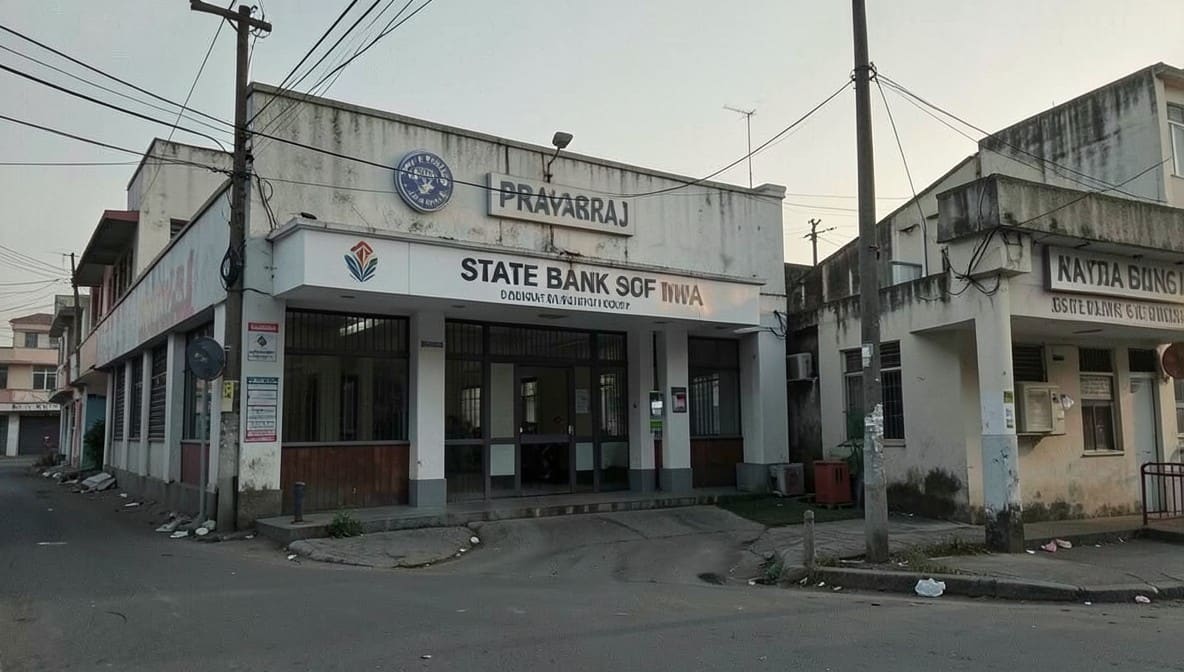
The Supreme Court dismissed a criminal appeal challenging the High Court’s order refusing to quash an FIR, holding that a magistrate’s rejection of an application under Section 156(3) of the Criminal Procedure Code does not amount to a final adjudication and therefore cannot invoke the doctrine of res judicata to bar subsequent FIR registration.
Background & Facts
The Dispute
The appellant, Pramod Kumar Shukla, was accused of securing public appointments for the complainant’s son and grandson in exchange for money. The complainant alleged that Shukla promised appointments for a sum of ₹20,00,000 and received partial payments through his State Bank of India account.
Key Facts
- 24.12.2024: Complaint filed by respondent No.4 alleging Shukla’s false representation for public appointments.
- 12.01.2023, 13.01.2023, 16.01.2023, 17.01.2023: Payments of ₹50,000, ₹25,000, ₹50,000 and ₹50,000 respectively transferred to Shukla’s bank account.
- 19.05.2024: Confrontation at Shukla’s residence; alleged threats and abuse by Shukla.
- Same day (19.05.2024): Complaint lodged with Station House Officer, Phaphamau Police Station, Prayagraj, along with bank statements and a purported Directorate of Education result.
- 05.06.2025: FIR No.405/2024 registered under Sections 406, 419, 420, 467, 468, 471, 504 and 506 IPC.
- 11.09.2024: Additional Chief Judicial Magistrate rejected an application under Section 156(3) CrPC, noting the dispute related to a land transaction.
- Subsequent revision: Dismissed by the Sessions Court.
- High Court Order (date not specified): Dismissed writ petition under Article 226, holding that the FIR disclosed cognizable offences.
- 27.04.2026: Supreme Court delivered judgment dismissing the appeal.
Procedural History
- 11.09.2024: Application under Section 156(3) CrPC rejected by Additional Chief Judicial Magistrate, Prayagraj.
- Date unspecified: Revision of the magistrate’s order dismissed by the Sessions Court.
- Writ Petition No.11886/2025: Filed in Allahabad High Court under Article 226 seeking quashment of FIR No.405/2024.
- High Court Order (date not specified): Dismissed the writ petition, allowing the FIR to stand.
- Criminal Appeal No.3931 of 2026: Prefixed before the Supreme Court challenging the High Court order.
Relief Sought
The appellant sought quashment of FIR No.405/2024 and all consequential criminal proceedings, contending that the earlier rejection of the Section 156(3) application barred the FIR.
The Legal Issue
The central question was whether the rejection of an application under Section 156(3) of the Criminal Procedure Code constitutes a final adjudication that invokes the doctrine of res judicata, thereby precluding the registration of a subsequent FIR on the same or substantially similar allegations.
Arguments Presented
For the Appellant
- Asserted that the magistrate’s order under Section 156(3) was a final determination on the merits, invoking res judicata to bar the FIR.
- Contended that the alleged transaction was a civil land dispute, not a cognizable offence, and that the FIR amounted to an impermissible second prosecution.
- Relied on Mohan Karthik v. State of Tamil Nadu and Sakiri Vasu v. State of Uttar Pradesh to argue that once Section 156(3) is rejected, the complainant’s remedy lies only under Section 200 CrPC.
- Cited State of Haryana v. Bhajan Lal and Neeharika Infrastructure Pvt. Ltd. v. State of Maharashtra to argue that essential ingredients of Sections 420, 406, 467 and 471 IPC were absent.
For the Respondent
- Submitted that fresh material (audio recordings, forged documents, additional bank transactions) justified registration of the FIR despite the earlier magistrate’s order.
- Emphasised that the magistrate’s power under Section 156(3) is limited to directing investigation and does not adjudicate the merits; therefore, the order cannot bar a later FIR.
- Relied on V. Ravi Kumar v. State, Shivshankar Singh v. State of Bihar, and Anju Chaudhary v. State of Uttar Pradesh to support the view that subsequent complaints are permissible when based on new evidence.
- Cited Lalita Kumari v. Government of Uttar Pradesh to affirm the police’s statutory duty under Section 154 CrPC to register an FIR when cognizable offence is disclosed.
The Court's Analysis
The Court began by outlining the statutory architecture of Sections 154, 156(3) and 190 CrPC, emphasizing that Section 156(3) is a pre-cognizance check on police inaction and does not amount to a trial-stage adjudication. It reiterated the distinction between the investigative jurisdiction of a magistrate under Section 156(3) and the post-cognizance powers under Section 202.
"The rejection of an application under Section 156(3) of the Cr.PC, being an order rendered at the threshold without any adjudication on the merits after trial, cannot be accorded such finality as would attract the doctrine of res judicata so as to bar the subsequent registration of an FIR or the continuation of criminal proceedings founded upon the same or substantially similar allegations."
The Court examined precedent, noting that earlier decisions (Pritam Singh, Bhagat Ram, Tarachand Jain) applied res judicata where a final judgment on the merits existed, whereas later cases (Devendra, Muskan Enterprises) involved procedural petitions without such finality. It held that the magistrate’s order under Section 156(3) merely directed or declined to direct investigation and therefore did not determine any right or liability of the accused.
Further, the Court affirmed that the police’s duty under Section 154 CrPC to register an FIR when cognizable offence is disclosed is independent of any magistrate’s direction. The presence of fresh material justified the FIR, and the High Court’s assessment that the FIR disclosed cognizable offences prima facie was correct.
Consequently, the appeal was dismissed as being without merit.
The Verdict
The Supreme Court dismissed the appeal, upholding the FIR dated 05.06.2025 and the continuation of criminal proceedings. No order was made to quash the FIR. The Court held that the rejection of an application under Section 156(3) CrPC does not constitute a final adjudication and therefore does not invoke the doctrine of res judicata to bar a subsequent FIR.
What This Means For Similar Cases
Rejection Under Section 156(3) Is Not Final
- A magistrate’s refusal to order investigation does not pre-empt the police’s statutory duty to register an FIR when cognizable offence is disclosed.
- Practitioners must treat Section 156(3) orders as procedural directions, not as dispositive judgments on the merits.
Res Judicata Applies Only After Final Merits Determination
- The doctrine of res judicata will bar a later FIR only where the earlier proceeding resulted in a conclusive adjudication on the merits (e.g., acquittal or conviction).
- In procedural petitions such as Section 156(3) applications, the doctrine does not apply.
Fresh Material Can Revive Investigation
- Even after a Section 156(3) application is rejected, the police may register an FIR if new evidence emerges, as the statutory duty under Section 154 remains unaffected.
- Counsel should be prepared to present any fresh material to justify FIR registration.





