The Rajasthan High Court, in a landmark writ petition, affirmed that the State bears constitutional liability for a death that occurs in judicial custody, ordered monetary compensation to the victim’s family and imposed sweeping directives to remedy systemic failures in prison administration.
Background & Facts
The Dispute
The petitioner, Lila, wife of the deceased Rooparam, filed a writ petition under Article 226 of the Constitution seeking (i) an independent investigation into the circumstances of her husband’s death while in Central Jail, Jodhpur, (ii) registration of a First Information Report (FIR) against the responsible officials, and (iii) monetary compensation for the loss of life.
Key Facts
- 20.08.2023 - Rooparam, an under-trial prisoner, was transferred from District Jail, Pali to Central Jail, Jodhpur.
- 02.07.2025 - Rooparam collapsed in his barrack at approximately 08:37 AM, was administered CPR by fellow inmates, and was shifted to the jail dispensary and subsequently to Mahatma Gandhi Hospital, Jodhpur, where he was declared dead at about 09:20 AM.
- 03.07.2025 - The petitioner lodged a written report (Annexure-1) at Police Station Ratanada, Jodhpur, demanding action.
- 04.07.2025 - Post-mortem report (PMR) recorded six injuries (four on the head, one on the hand) - two incised wounds caused by a sharp weapon and four injuries caused by blunt force.
- 05.07.2025 - Application filed seeking preservation of CCTV footage and related documents.
- 25.07.2025 - Representation filed under the Right to Information Act, 2005 requesting records concerning the death.
- 15.07.2025 - Order dated in Criminal Appeal No. 457/2025 directed an expeditious judicial inquiry.
- 20.12.2025 - Report forwarded by ACJM Anubhav Tiwari indicating the inquiry had not been conducted with required seriousness.
- 16.01.2026 - Morgue report dated.
- 08.01.2026 - Court directed the Jailor and Superintendent to file detailed affidavits explaining the injuries.
- 30.04.2026 - Court examined CCTV footage, noted inadequate surveillance and medical response, and issued further directions.
- 23.01.2026 - Matter listed in the part-heard category for consideration of affidavits.
- 14.05.2026 - Matter listed again in the part-heard category.
- 08.07.2026 - Date of conclusion of arguments and reservation of order.
- 20.08.2026 - Date of pronouncement of the full order.
Procedural History
- 02.07.2025 - Death of Rooparam while in judicial custody.
- 03.07.2025 - Petitioner's report to police.
- 05.07.2025 - Application for preservation of CCTV.
- 15.07.2025 - Criminal Appeal No. 457/2025 ordered inquiry.
- 08.01.2026 - First order directing affidavits from jail officials.
- 30.04.2026 - Second order after CCTV review.
- 23.01.2026 - Part-heard listing for affidavit consideration.
- 14.05.2026 - Further part-heard listing.
- 08.07.2026 - Arguments concluded; order reserved.
- 20.08.2026 - Full judgment delivered.
Parties' Positions
- Petitioner - Argues that the multiple ante-mortem injuries, delay in medical assistance, and failure to register an FIR constitute a violation of Article 21 of the Constitution and invoke the doctrine of vicarious liability. Relies on Nilabati Behera v. State of Orissa and D.K. Basu v. State of West Bengal.
- Respondents (State) - Contend that the death could be explained by a natural cardiac event, that no criminal culpability has been established, and that the State should not be held liable absent a conclusive criminal finding.
Relief Sought
The petitioner seeks:
- Direction to register an FIR and conduct an independent investigation by an officer not below the rank of an RPS officer.
- Monetary compensation for the loss of life under the constitutional remedy of Article 21.
- Immediate remedial measures to improve medical facilities, CCTV coverage, lavatory and drinking-water provisions in Central Jail, Jodhpur.
The Legal Issue
What is the extent of the State’s constitutional liability for a death that occurs in judicial custody, and can the High Court award monetary compensation under Article 21 of the Constitution and Section 196(2) of the Bharatiya Nagarik Suraksha Sanhita, 2023 without a final criminal determination? Additionally, does the failure to register an FIR in such circumstances constitute a breach of statutory duty?
Arguments Presented
For the Petitioner
- The petitioner relied on Nilabati Behera to argue that a violation of the right to life warrants constitutional compensation.
- Cited D.K. Basu for the principle of vicarious liability of the State for acts or omissions of its officials.
- Emphasised that the post-mortem report unequivocally identified ante-mortem injuries, contradicting the claim of a natural death.
- Asserted that the police’s failure to register an FIR violates the directive in Lalita Kumari v. State of U.P. that registration of an FIR is mandatory where a cognizable offence is disclosed.
For the Respondent
- The respondents argued that the medical evidence was inconclusive regarding the exact cause of death and that the injuries could have been sustained post-mortem.
- Maintained that criminal liability could only be determined by a proper investigation, not by the Court in a writ proceeding.
- Submitted that the State should not be penalised for administrative lapses absent proof of intentional wrongdoing.
The Court's Analysis
The Court began by delineating the meaning and scope of custodial death. It held that custodial death is not limited to a mere occurrence of death within a detention facility; it encompasses any death that occurs while the State exercises exclusive control over the person’s liberty, thereby invoking a heightened constitutional duty under Article 21.
"The State, having assumed control over the liberty of the person, must also assume the corresponding burden of responsibility for the preservation of life and dignity of that person."
The Court noted that the post-mortem report and the Medical Board’s opinion established the presence of multiple ante-mortem injuries sustained within six hours of death, rendering the theory of a natural cardiac event untenable. The Court distinguished the present facts from Nilabati Behera, emphasizing that the present case involved systemic failures - inadequate medical staffing, deficient CCTV surveillance, and delayed emergency response - all of which constitute a breach of the State’s constitutional obligation.
On the issue of FIR registration, the Court referred to Lalita Kumari and held that the police’s refusal to register an FIR where the facts disclose a cognizable offence is a statutory violation that cannot be treated as discretionary. Consequently, the Court directed immediate registration of an FIR.
Regarding state liability, the Court applied the doctrine of vicarious liability as articulated in D.K. Basu, stating that the State is liable for the acts and omissions of its officials irrespective of whether a particular officer is identified as the direct perpetrator. The Court clarified that constitutional compensation under Article 21 is a public-law remedy distinct from civil damages and may be awarded without awaiting the outcome of a criminal trial.
The Court then turned to the quantum of compensation. Drawing on the principles laid down in Nilabati Behera and subsequent Supreme Court jurisprudence, it considered the age of the deceased, the loss suffered by the family, the gravity of the constitutional breach, and the systemic negligence evident in the jail. The Court concluded that a sum of Rs. 25,00,000 was appropriate as a constitutional redress.
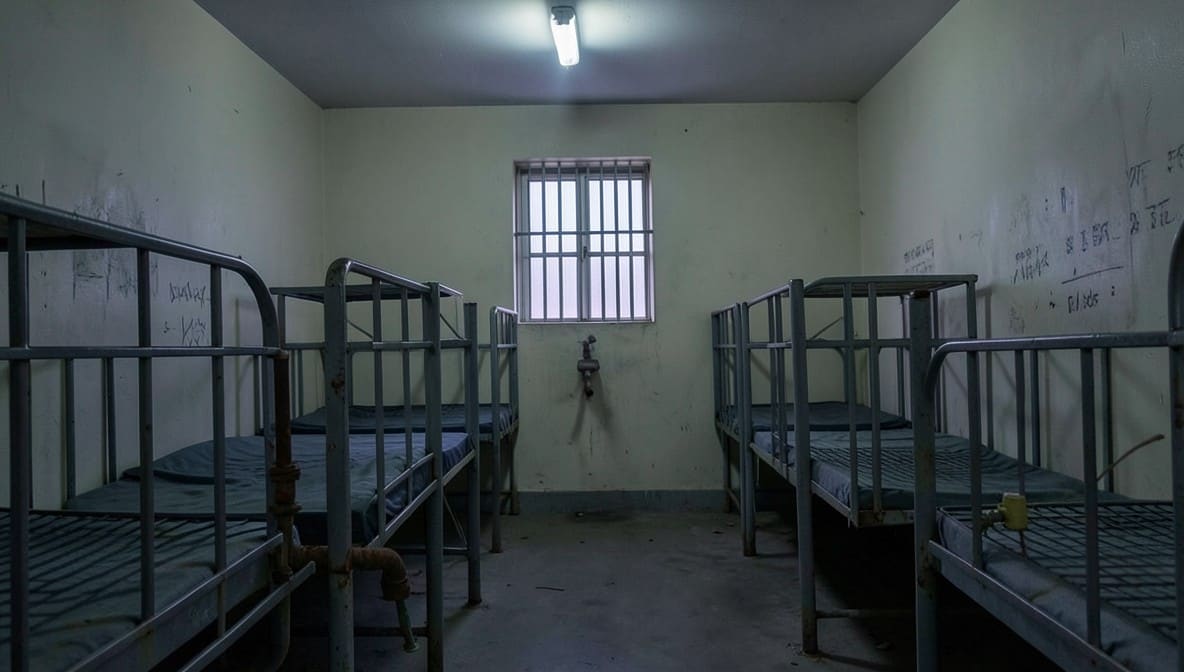
Finally, the Court issued comprehensive institution-level directions to remedy the identified deficiencies: round-the-clock medical staff, augmentation of CCTV coverage, construction of additional lavatories, provision of adequate drinking-water points, and procurement of essential medical equipment. The Court emphasized that non-compliance would attract contempt proceedings.
The Verdict
The Rajasthan High Court allowed the writ petition in part. It ordered the State to pay Rs. 25,00,000 as compensation to the widow-petitioner and other family members within 60 days. It directed the Director General of Police to ensure that an FIR is registered within 48 hours and that an independent investigation be conducted by an officer not below the rank of an RPS officer. The Court mandated immediate improvements in medical staffing, CCTV surveillance, lavatory and drinking-water facilities in Central Jail, Jodhpur, and set a compliance deadline of 60 days, after which the matter will be listed for further review.
What This Means For Similar Cases
Constitutional Liability for Custodial Death
- Courts will treat any death in judicial custody as a potential violation of Article 21, triggering state liability even where criminal culpability is not yet established.
- Vicarious liability attaches to the State for omissions of its officials; the burden of proof shifts to the State to demonstrate compliance with constitutional standards.
Mandatory FIR Registration
- Police must register an FIR whenever facts disclose a cognizable offence, especially in custodial-death scenarios; failure constitutes a statutory breach and will invite judicial intervention.
- Practitioners should advise clients to file immediate RTI or written complaints if police inaction is observed, to pre-empt procedural defaults.
Institutional Reforms as a Condition for Compensation
- Compensation awards are increasingly tied to concrete remedial orders (medical staffing, CCTV, sanitation). Lawyers should document systemic deficiencies to strengthen claims for higher quantum.
- Compliance reports must be filed within stipulated periods; non-compliance can lead to contempt proceedings, providing leverage for enforcement.
Actionable Takeaways for Practitioners
- When representing families of custodial deaths, compile medical, forensic, and CCTV evidence to establish ante-mortem injuries.
- File a petition under Article 226 promptly and demand FIR registration under Lalita Kumari.
- Cite Nilabati Behera and D.K. Basu to argue for constitutional compensation and vicarious liability.
- Request specific institutional directives (medical staff, CCTV) to ensure that any compensation is accompanied by systemic change.