Topic

Evidentiary Standards

Evidentiary standards in Indian law determine the quality and sufficiency of proof required to establish facts in civil, criminal, and statutory proceedings.

27 articlesLatest September 2026
Section 389 BNSS | Suspension of Sentence Granted Due to Hostile Witnesses & Lack of Medical Evidence : Rajasthan HC
Case Law Analysis
|Rajasthan High Court

Section 389 BNSS | Suspension of Sentence Granted Due to Hostile Witnesses & Lack of Medical Evidence : Rajasthan HC

Rajasthan High Court suspends conviction in a sexual assault case, emphasizing that hostile witnesses and absence of forensic corroboration undermine prosecution credibility. The ruling underscores that prolonged incarceration without appeal hearing warrants interim relief under Section 389 BNSS, particularly when DNA/FSL reports fail to support allegations.

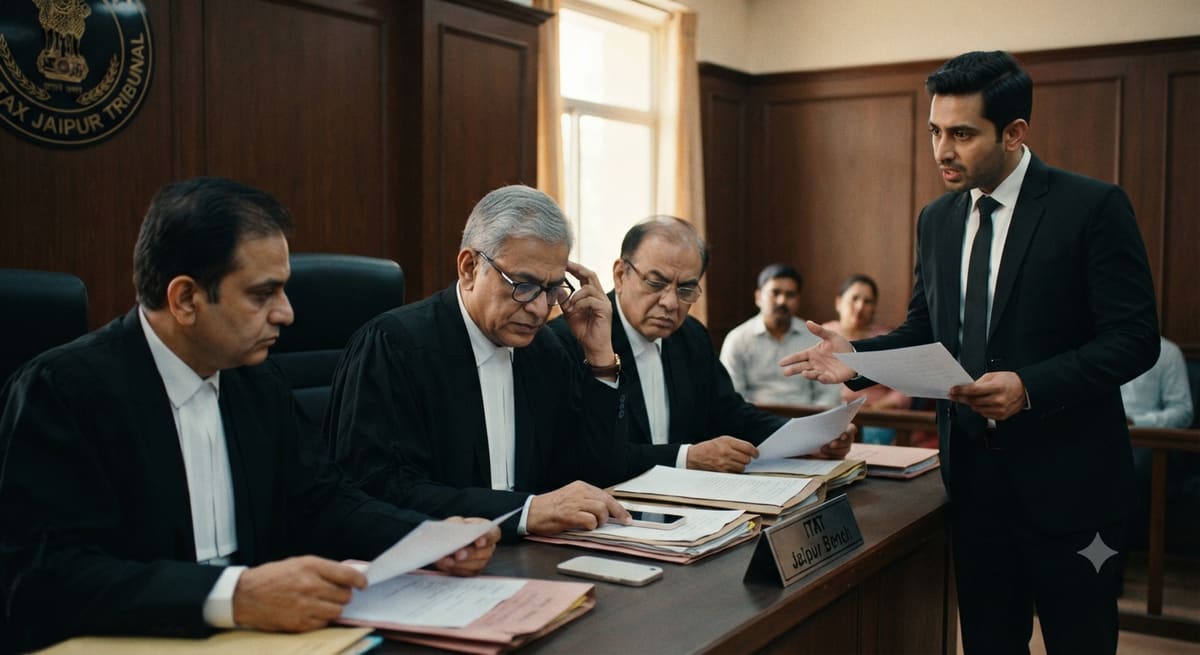
Section 69A IT Act | Mere Mobile Phone Estimates Without Corroborative Evidence Insufficient for Unexplained Investment Addition : ITAT Jaipur
Case Law Analysis
|Income Tax Appellate Tribunal

Section 69A IT Act | Mere Mobile Phone Estimates Without Corroborative Evidence Insufficient for Unexplained Investment Addition : ITAT Jaipur

ITAT Jaipur holds that rough estimates of jewellery purchases found on a mobile phone, without proof of actual transactions or physical possession, cannot justify additions under Section 69A of the Income Tax Act. The ruling reinforces strict evidentiary standards for unexplained investments, protecting assessees from double taxation based on loose notings.

Section 37 Arbitration Act | Unsubstantiated Loss of Profit Claims Cannot Sustain Arbitral Award: Karnataka HC
Case Law Analysis
|Karnataka High Court

Section 37 Arbitration Act | Unsubstantiated Loss of Profit Claims Cannot Sustain Arbitral Award: Karnataka HC

The Karnataka High Court ruled that arbitral tribunals cannot award loss of profits without concrete evidence, even if contract foreclosure was unlawful. The decision underscores that findings of fact in arbitration are binding unless perverse, rejecting a Rs. 4.38 crore claim for lack of proof. Contractors and businesses must now ensure robust documentation to sustain damages claims in arbitration.

Section 304B IPC | Socio-Economic Factors Must Guide Sentencing in Dowry Death Cases: Allahabad HC Acquits Father-in-Law, Reduces Husband's Sentence
Case Law Analysis
|Allahabad High Court

Section 304B IPC | Socio-Economic Factors Must Guide Sentencing in Dowry Death Cases: Allahabad HC Acquits Father-in-Law, Reduces Husband's Sentence

Allahabad High Court underscores that dowry death convictions require cogent evidence and sentencing must account for socio-economic realities. The court acquitted the father-in-law and reduced the husband's life imprisonment to 10 years, signaling a shift toward proportionality in punishment for marginalized families.

Section 118 NI Act | Plaintiff Must Prove Consideration Once Defendant Challenges Genuineness of Promissory Note: AP HC
Case Law Analysis
|Andhra Pradesh High Court

Section 118 NI Act | Plaintiff Must Prove Consideration Once Defendant Challenges Genuineness of Promissory Note: AP HC

The Andhra Pradesh High Court has ruled that when a defendant raises plausible doubt about the authenticity of a promissory note, the burden shifts entirely to the plaintiff to establish actual consideration under Section 118 of the Negotiable Instruments Act. Failure to do so renders the suit unsustainable, reinforcing that a mere document is not enough-proof of value exchanged is mandatory for recovery.

Foreigners Act 1946 | Inconsistent Testimony & Documentary Discrepancies on Ancestral Linkage Fatal to Citizenship Claims : Gauhati HC
Case Law Analysis
|Gauhati High Court

Foreigners Act 1946 | Inconsistent Testimony & Documentary Discrepancies on Ancestral Linkage Fatal to Citizenship Claims : Gauhati HC

Gauhati High Court upholds Foreigners Tribunal's order rejecting citizenship claims where the petitioner failed to establish consistent ancestral linkage through reliable documentary evidence. The ruling reinforces that oral testimony alone, without corroborating documents, is insufficient to prove citizenship under the Foreigners Act, impacting citizenship verification processes in Assam.

Cenvat Credit Denial Invalid Without Assessee's Knowledge Proof or Corroborative Evidence : CESTAT
|Custom, Excise & Service Tax Tribunal

Cenvat Credit Denial Invalid Without Assessee's Knowledge Proof or Corroborative Evidence : CESTAT

CESTAT rules that Cenvat credit cannot be denied based solely on third-party statements or fake invoices unless the Revenue proves the assessee's knowledge of fraud or provides corroborative evidence. The ruling reinforces natural justice principles, requiring direct evidence linking the assessee to fraudulent transactions to disallow credit claims.

Land Acquisition Act 1894 | Registered Sale Deeds Misclassified as Agreements to Sell Vitiates Compensation Award: Bombay HC Nagpur Bench
|Bombay High Court

Land Acquisition Act 1894 | Registered Sale Deeds Misclassified as Agreements to Sell Vitiates Compensation Award: Bombay HC Nagpur Bench

The Bombay High Court set aside a land acquisition award after the Reference Court wrongly dismissed valid sale deeds as mere agreements to sell, undermining the claimant’s evidence of market value. This ruling reinforces that registered sale deeds must be treated as conclusive proof of market rate unless proven fraudulent, directly impacting how compensation is calculated across Maharashtra’s acquisition cases.

Central Excise Act | Panchnama & Section 9D Compliance Mandatory for Admissibility: CESTAT Sets Aside Demand for Procedural Lapses
Case Law Analysis
|Custom, Excise & Service Tax Tribunal

Central Excise Act | Panchnama & Section 9D Compliance Mandatory for Admissibility: CESTAT Sets Aside Demand for Procedural Lapses

CESTAT ruled that excise demands are unsustainable if Panchnamas are unverified or Section 14 statements remain unexamined, reinforcing strict adherence to procedural standards under the Central Excise Act. The judgment underscores that evidentiary compliance is non-negotiable for adjudication, impacting manufacturers and revenue authorities alike.

RPWD Act | Disability Certificate Presumptively Valid Without Issuing Doctor's Examination Unless Genuineness Challenged : MP HC Gwalior
Case Law Analysis
|Madhya Pradesh High Court

RPWD Act | Disability Certificate Presumptively Valid Without Issuing Doctor's Examination Unless Genuineness Challenged : MP HC Gwalior

The Madhya Pradesh High Court ruled that disability certificates issued under the Rights of Persons with Disabilities Act, 2016 carry statutory validity and need not be proved by examining the issuing doctor unless their genuineness is specifically disputed. This streamlines compensation claims in motor accident cases by reducing evidentiary burdens on claimants.

Smell of Alcohol Alone Insufficient to Invoke Insurance Exclusion Clause | Delhi State Consumer Commission Mandates Proof of Intoxication
Case Law Analysis
|Delhi High Court

Smell of Alcohol Alone Insufficient to Invoke Insurance Exclusion Clause | Delhi State Consumer Commission Mandates Proof of Intoxication

Delhi State Consumer Commission rules that mere allegation of alcohol smell in an FIR does not justify repudiation of an insurance claim under exclusion clauses. The Commission held that a closure report and established precedent require concrete proof of intoxication, setting a higher evidentiary standard for insurers.

Section 38 Consumer Protection Act | Insurer Must Back Claim Repudiation with Affidavit-Backed Evidence : MP State Consumer Commission
Case Law Analysis
|Madhya Pradesh High Court

Section 38 Consumer Protection Act | Insurer Must Back Claim Repudiation with Affidavit-Backed Evidence : MP State Consumer Commission

The MP State Consumer Commission ruled that insurers cannot deny claims based on unverified investigation reports lacking affidavit support, reinforcing the burden of proof under the Consumer Protection Act. This decision strengthens consumer rights by mandating sworn evidence for claim rejection, impacting insurers' repudiation practices.