The Allahabad High Court recently delivered a nuanced judgment in a dowry death case, emphasizing the importance of socio-economic factors in sentencing. While upholding the conviction of the husband under Section 304B of the Indian Penal Code (IPC), the Court reduced his life imprisonment to ten years, considering the period already served. Notably, the Court acquitted the father-in-law, citing insufficient evidence and the family's economic vulnerability. This judgment underscores that convictions under dowry death provisions must be supported by cogent evidence, and sentencing must account for the accused's socio-economic background.
Background & Facts
The Dispute
The case revolves around the death of Savita, who was married to accused-appellant Deshraj on 11.06.2014. Savita’s mother, Sitapati Devi (PW-1), lodged a written report on 01.05.2016, alleging that Savita’s in-laws, including her husband Deshraj, father-in-law Ram Sajeevan, brother-in-law Pappu, and sister-in-law Lalita, had subjected her to cruelty and dowry demands. Specifically, the in-laws allegedly demanded Rs. 5,00,000 as additional dowry, beat Savita, and even attempted to kill her by pouring kerosene. On 28.04.2016, Savita was found dead, with the informant alleging strangulation as the cause of death.
Key Facts
- Marriage Date: 11.06.2014
- Dowry Given: Passion Pro motorcycle, gold ring, almirah, bed, utensils, charpai, and Rs. 20,000 in cash
- Alleged Demand: Rs. 5,00,000 as additional dowry
- Incident Date: 28.04.2016 at approximately 1:00 PM
- Death: Savita was found dead, allegedly strangulated
- Postmortem Findings: Dr. Sumit Kumar Mishra (PW-5) noted ante-mortem injuries, including:
- Abraded contusion on the neck (7 cm × 2 cm)
- Contusions on the left eye, face, and occipital area
- Cause of death: Asphyxia due to throttling
- Child: Savita had an eight-month-old daughter, Kritika, who was living with Deshraj in jail post-incident
Procedural History
- 01.05.2016: First Information Report (FIR) registered as Crime No. 314 of 2016 under Sections 498A, 304B, 302 IPC, and Sections 3/4 of the Dowry Prohibition Act at Police Station Naubasta
- Investigation: Conducted by Vishal Pandey (PW-8) and later by Gyanendra Kumar Singh (PW-7)
- Charge-Sheet: Filed against Deshraj, Ram Sajeevan, Pappu, and Lalita
- 30.09.2016: Charges framed under Sections 498A, 304B, 302 IPC, and Sections 3/4 of the Dowry Prohibition Act
- Trial: Prosecution examined eight witnesses, including the informant, doctors, and investigating officers
- Defence Evidence: Accused-appellants examined six defence witnesses (DW-1 to DW-6)
- 25.08.2021: Trial Court convicted Deshraj and Ram Sajeevan under Sections 304B, 498A IPC, and Section 4 of the Dowry Prohibition Act, sentencing them to life imprisonment under Section 304B IPC and additional imprisonment for other offences. Pappu and Lalita were acquitted
- Appeal: Accused-appellants Deshraj and Ram Sajeevan filed Criminal Appeal No. 4008 of 2021 before the Allahabad High Court
Relief Sought
The appellants sought:
- Acquittal from all charges, or alternatively
- Reduction of the sentence awarded by the trial Court, arguing that it was disproportionate and unsupported by evidence
The Legal Issue
The central questions before the High Court were:
- Whether the conviction of the accused-appellants under Section 304B IPC was sustainable given the evidence on record
- Whether the sentence of life imprisonment was proportionate, considering the socio-economic background of the accused and the nature of the offence
- Whether the father-in-law, Ram Sajeevan, could be held guilty based on general allegations without specific evidence of his involvement in the cruelty or dowry demands
Arguments Presented
For the Appellants
- The sentence of life imprisonment was excessive and not supported by evidence
- The trial Court failed to consider the socio-economic background of the accused, who were daily wage earners and belonged to the weaker sections of society
- The father-in-law, Ram Sajeevan, was falsely implicated based on general allegations without specific evidence of his involvement in the dowry demands or cruelty
- The FIR was lodged with a delay (from 28.04.2016 to 01.05.2016), and the father of the deceased had initially reported the death as a suicide
- The trial Court awarded the maximum punishment without considering mitigating circumstances, such as the accused’s poverty and the lack of direct evidence linking Ram Sajeevan to the crime
For the Respondent (State)
- The trial Court’s judgment was well-reasoned and supported by evidence, including the postmortem report indicating death by strangulation
- The deceased was subjected to cruelty and dowry demands, as evidenced by the statements of prosecution witnesses
- The conviction under Section 304B IPC was justified, as the death occurred within seven years of marriage and was connected to dowry demands
- The sentence of life imprisonment was appropriate to deter similar offences in society
The Court's Analysis
The High Court conducted a detailed examination of the evidence and the trial Court’s reasoning:
-
Evidentiary Standards: The Court noted that the prosecution’s case relied on general allegations against the accused-appellants, particularly Ram Sajeevan. The informant (PW-1) and other witnesses failed to provide specific evidence of how Ram Sajeevan, the father-in-law, had subjected the deceased to cruelty or demanded dowry. The Court emphasized that convictions cannot be based on general allegations alone and must be supported by cogent evidence.
"It is settled principles of law that no accused person can be held guilty for heinous crime only on general allegations without supported by any cogent and reliable evidence."
-
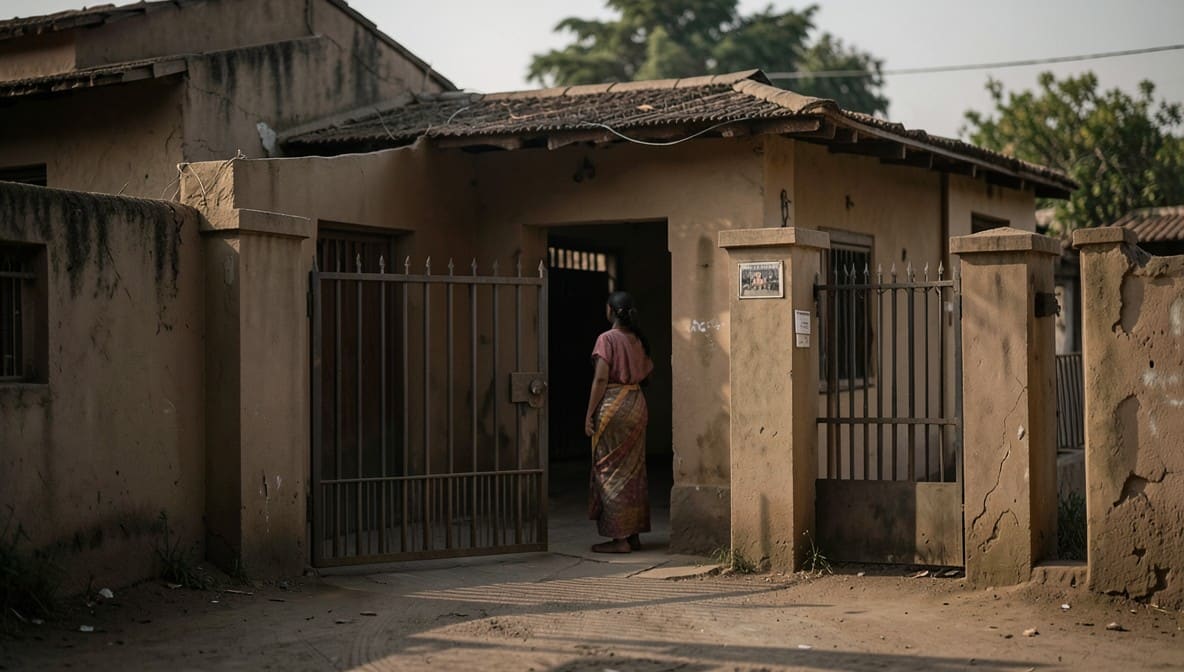
Socio-Economic Considerations: The Court observed that both the accused-appellants and the prosecution witnesses belonged to the weaker sections of society, earning their livelihood through daily wage labour. The accused-appellants lived in a hut made of mud, and Ram Sajeevan earned his living by pulling a rickshaw trolley. The Court held that sentencing must account for the socio-economic background of the accused to ensure that punishment is proportionate and just.
-
Role of Ram Sajeevan: The Court found that Ram Sajeevan’s involvement in the alleged crime was doubtful. As a rickshaw puller, he would typically leave home in the morning and return in the evening, making it unlikely that he was present during the incident. The Court concluded that Ram Sajeevan was falsely implicated to harass the entire family.
-
Mitigating Circumstances: The Court relied on the Supreme Court’s judgment in Hem Chand v. State of Haryana, which held that life imprisonment under Section 304B IPC should be awarded only in the rarest of rare cases, where the bride was killed in a brutal manner and no mitigating circumstances exist. The Court found that the trial Court had failed to consider these principles and awarded the maximum punishment without justification.
-
Delay in FIR and Initial Report: The Court noted that the father of the deceased, Harilal (CW-1), had initially reported the death as a suicide in GD No. 48 dated 28.04.2016. The FIR was lodged only on 01.05.2016, raising questions about the prosecution’s version of events.
The Verdict
The High Court partly allowed the appeal:
-
Acquittal of Ram Sajeevan: The Court set aside the conviction and sentence awarded to Ram Sajeevan under Sections 304B, 498A IPC, and Section 4 of the Dowry Prohibition Act. It directed his release forthwith, subject to compliance with Section 437A CrPC, if not wanted in any other case.
-
Reduction of Sentence for Deshraj: The Court upheld the conviction of Deshraj under Sections 304B, 498A IPC, and Section 4 of the Dowry Prohibition Act but reduced his sentence of life imprisonment to ten years imprisonment. Since Deshraj had already served more than nine years in jail, the Court directed his release after completing the ten-year sentence.
-
Fine and Additional Imprisonment: The Court maintained the fine of Rs. 5,000 each under Section 498A IPC and Section 4 of the Dowry Prohibition Act, along with the default imprisonment of one month for non-payment of the fine.
What This Means For Similar Cases
Convictions Require Cogent Evidence
- Courts must ensure that convictions under Section 304B IPC are based on specific and reliable evidence, not general allegations. General allegations against family members, particularly in-laws, are insufficient to establish guilt
- Prosecution must adduce clear evidence of the accused’s involvement in dowry demands or cruelty. Mere proximity to the deceased or relationship with the accused is not enough to sustain a conviction
Sentencing Must Account for Socio-Economic Factors
- Section 304B IPC prescribes a minimum sentence of seven years imprisonment, extendable to life imprisonment. However, courts must consider the socio-economic background of the accused while determining the quantum of punishment
- Life imprisonment should be reserved for rarest of rare cases, where the crime is brutal and no mitigating circumstances exist. In cases involving weaker sections of society, courts should avoid awarding disproportionately harsh sentences
Delay in FIR and Initial Reports Raise Doubts
- Delays in lodging FIRs and contradictory initial reports (e.g., suicide vs. murder) can weaken the prosecution’s case. Courts must scrutinize such delays and inconsistencies while evaluating evidence
- Where the father of the deceased initially reports the death as a suicide but later alleges murder, courts should examine the motives behind such contradictions
Mitigating Circumstances Matter
- Courts must consider mitigating circumstances, such as the accused’s poverty, lack of criminal history, and the absence of direct involvement in the crime, while sentencing
- The Supreme Court’s judgment in Hem Chand v. State of Haryana serves as a guiding precedent for sentencing in dowry death cases, emphasizing that life imprisonment should not be awarded lightly