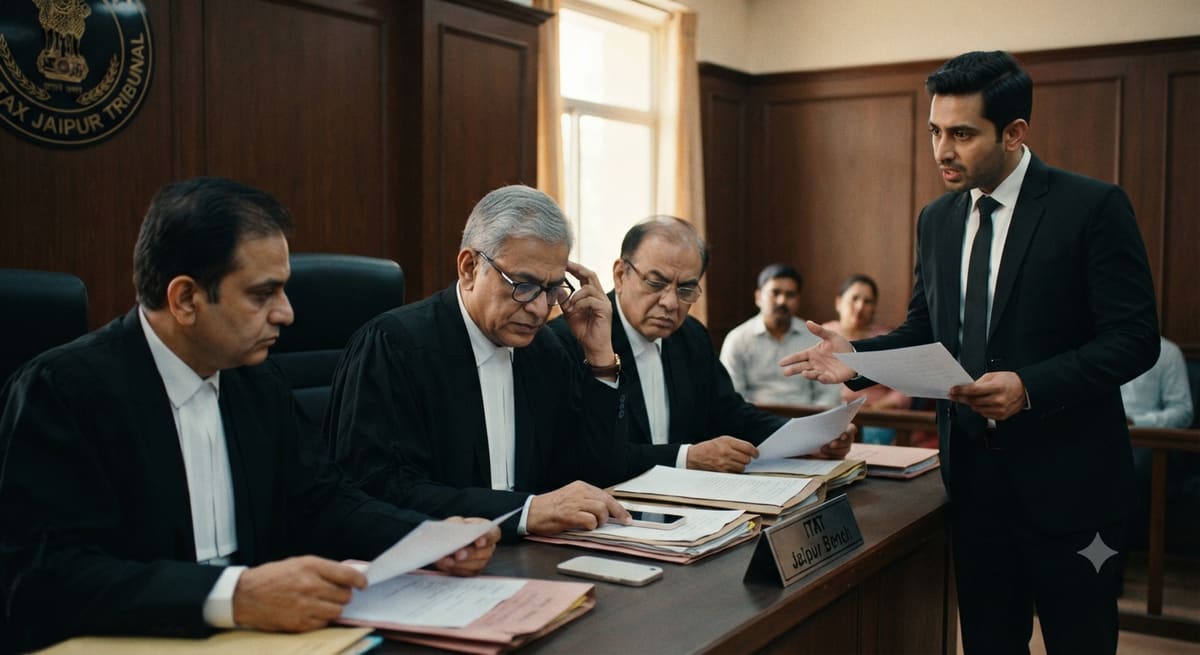
The Income Tax Appellate Tribunal (ITAT), Jaipur, has delivered a significant ruling on the evidentiary standards required for additions under Section 69A of the Income Tax Act, 1961. The Tribunal held that mere rough estimates or notings of jewellery purchases found on a mobile phone, without corroborative evidence of actual payment or possession, are insufficient to sustain an addition for unexplained investments. This judgment underscores the necessity of substantive proof in tax assessments and limits the scope of additions based solely on preliminary documents.
Background & Facts
The Dispute
The appeals in ITA No. 1310/JPR/2025 (Assessment Year 2019-20) and ITA No. 1296/JPR/2025 (Assessment Year 2023-24) arose from orders passed by the Commissioner of Income Tax (Appeals) [CIT(A)], Jaipur, under Section 250 of the Income Tax Act, 1961. The appeals pertained to additions made under Section 69A for alleged unexplained investments in jewellery, based on images found on the mobile phone of the assessee’s husband during a search and seizure operation.
Key Facts
A search and seizure action under Section 132 of the Income Tax Act was conducted on 20.07.2022 in the case of the Mama Group, of which the assessees, Shweta Jhiriwal and Madhu Devi Jhiriwal, were key members.
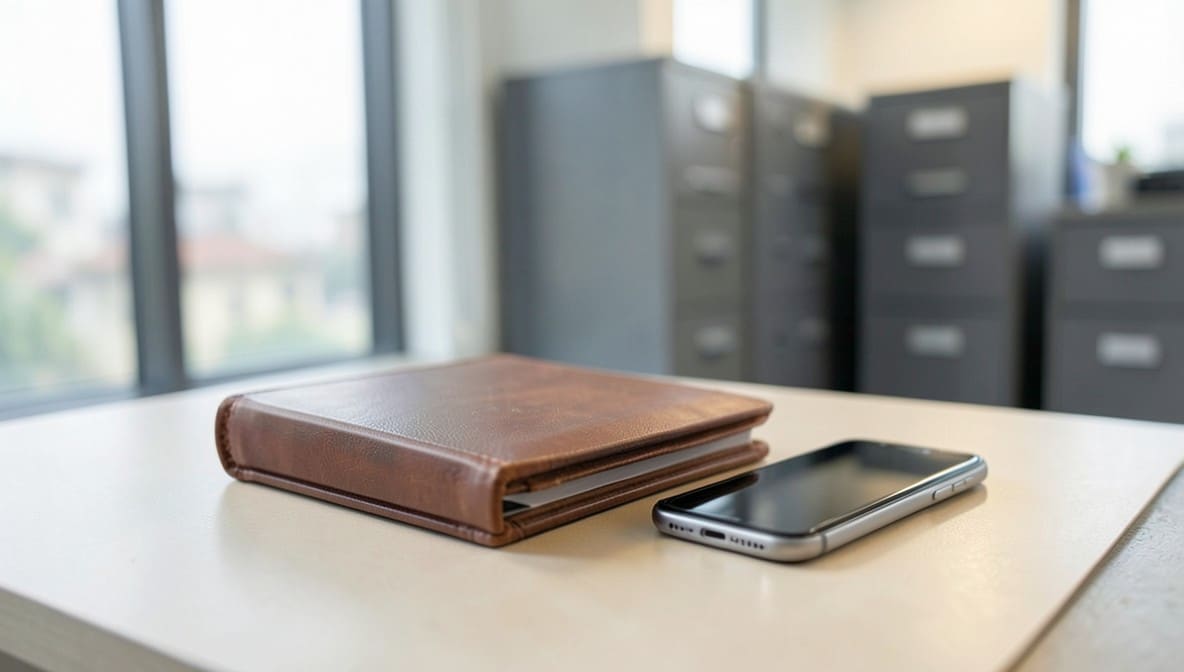
During the search at the residential premises of Sh. Rajan Jhiriwal (husband of Shweta Jhiriwal), his mobile phone was cloned, and images of three documents relating to jewellery purchases were found (Annexure AS, Exhibit-3).
The documents indicated purchases of gold and diamond jewellery totalling Rs. 17,87,451 (broken down as Rs. 2,41,546, Rs. 7,02,576, and Rs. 8,43,329).
The assessees denied that these documents represented actual purchases, contending that they were mere rough estimates for price discussions.
The assessees further argued that:
The documents lacked details of payment mode (cash, cheque, bank transfer, etc.).
There was no invoice number, jeweller’s name, GSTIN, or signature on the documents.
The jewellery mentioned in the documents was not physically found during the search.
All jewellery found during the search had already been accounted for and accepted by the Revenue.
Procedural History
15.07.2025 and 16.07.2025: The CIT(A) confirmed the addition of Rs. 17,87,451 under Section 69A for unexplained jewellery investments.
ITA No. 1310/JPR/2025 and ITA No. 1296/JPR/2025: Appeals filed before the ITAT, Jaipur, challenging the CIT(A)’s orders.
26.05.2026: Hearing conducted before the ITAT.
06.07.2026: Pronouncement of the common consolidated order.
Relief Sought
The assessees sought deletion of the addition of Rs. 17,87,451, arguing that:
The documents were mere estimates and not evidence of actual purchases.
The jewellery mentioned in the documents was not found during the search.
The addition amounted to double taxation, as the jewellery found during the search had already been accounted for.
The Legal Issue
The central question before the ITAT was whether Section 69A of the Income Tax Act permits the addition of unexplained investments based solely on rough estimates or notings found on a mobile phone, in the absence of corroborative evidence such as actual possession, payment details, or formal invoices.
Arguments Presented
For the Appellant (Assessee)
The documents found on the mobile phone were mere rough estimates and lacked essential details of a completed transaction, such as payment mode, invoice number, jeweller’s name, or signature.
No jewellery corresponding to the amounts mentioned in the documents was found during the search.
All jewellery physically found during the search had been duly explained and accepted by the Revenue, making the addition a case of double taxation.
The Revenue’s reliance on the documents alone was speculative and unsupported by substantive evidence.
For the Respondent (Revenue)
The documents found on the mobile phone constituted sufficient evidence of unexplained investments under Section 69A, as they indicated purchases of jewellery.
The assessee’s failure to provide a satisfactory explanation for the source of the investments justified the addition.
The documents, though rough, were prima facie evidence of transactions that warranted taxation.
The Court's Analysis
The ITAT critically examined the evidentiary value of the documents found on the assessee’s husband’s mobile phone. The Tribunal observed:
"The basis with the Revenue for treating the assessee to have made purchase of jewellery is the image of three documents relating to jewellery found in the mobile phone of the assessee’s husband. The assessee, we have noted, has repeatedly stated the said documents to be mere rough documents/rough estimates for quotation/price discussion for purchase. She repeatedly pointed out that the documents lacked any indication of how or whether any payment was actually made for the said purchases. She pointed out that there was no mention of cash, cheque, bank transfer or any other mode of payment on the said documents. She also pointed out that the image did not contain any supporting details typically associated with a completed transaction, such as invoice number, name of jeweler, payment confirmation, date of transaction or any signature or acknowledgment."
The Tribunal further noted that the assessee’s contention that the jewellery mentioned in the documents was not found during the search remained uncontroverted. The jewellery that was found had been duly explained and accepted by the Revenue, negating the possibility of double taxation.
The ITAT held that the documents alone, without evidence of actual payment or possession, could not establish the fact of purchase. The Tribunal emphasized that the Revenue’s case rested entirely on these documents, which were insufficient to justify the addition under Section 69A. The addition was thus based on surmises and conjectures, rather than substantive evidence.
The Verdict
The ITAT allowed the appeals of both assessees and directed the deletion of the addition of Rs. 17,87,451 made under Section 69A. The Tribunal held that the addition confirmed by the Assessing Officer and the CIT(A) lacked evidentiary support and was therefore unsustainable.
What This Means For Similar Cases
Evidentiary Standards Under Section 69A
The judgment reinforces that additions under Section 69A cannot be sustained based solely on preliminary documents or rough estimates. The Revenue must establish substantive evidence of actual transactions, such as payment details, invoices, or physical possession of the assets in question.
Practitioners should argue that mere notings or estimates, without corroborative evidence, do not meet the threshold for additions under Section 69A.
Burden of Proof in Tax Assessments
The onus is on the Revenue to prove that unexplained investments exist. The judgment clarifies that the burden cannot be discharged by relying on documents that lack essential transactional details.
Assessees can challenge additions where the Revenue’s case rests on speculative or incomplete evidence.
Avoiding Double Taxation
The judgment underscores the principle that the same asset cannot be taxed twice. If an asset found during a search has already been explained and accepted by the Revenue, additions based on the same asset cannot be justified.
Practitioners should ensure that assessments do not result in double taxation, particularly in cases involving search and seizure operations.