The Delhi State Consumer Disputes Redressal Commission has clarified that an insurer cannot repudiate a mediclaim claim solely on the basis of an FIR mentioning an alcohol smell, without concrete evidence of intoxication at the time of accident. This ruling reinforces the principle that exclusion clauses in insurance policies must be strictly construed and supported by objective, adjudicated evidence.
Background & Facts
The Dispute
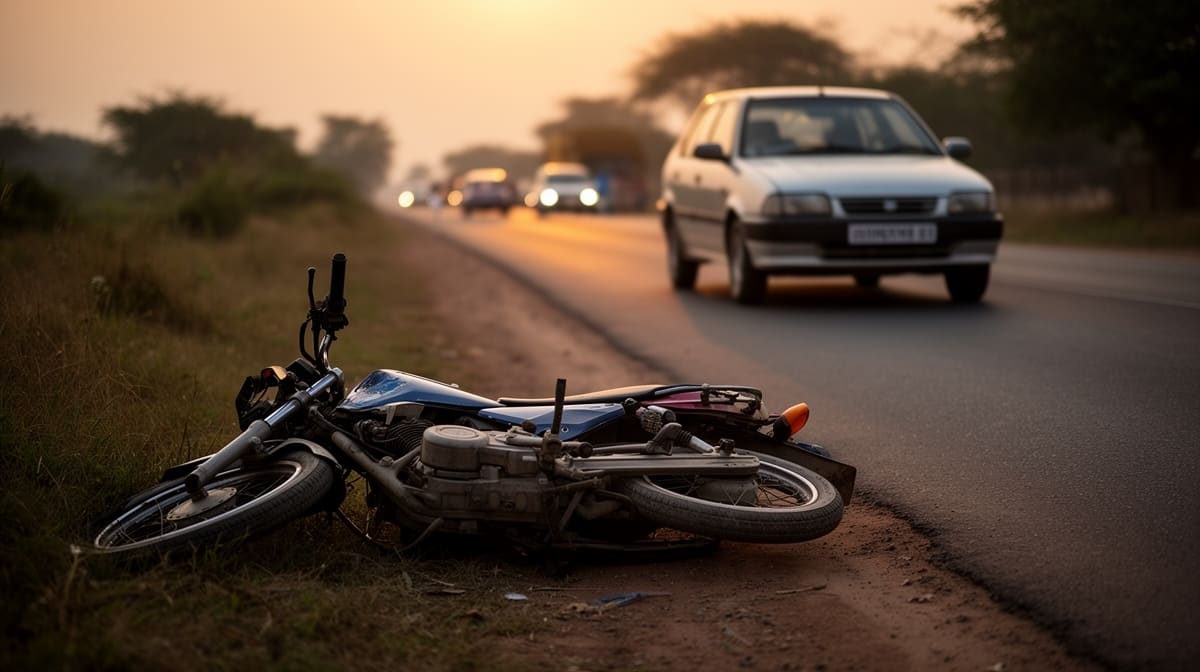
The dispute arose from the repudiation of a mediclaim claim under the PNB-Oriental Royal Mediclaim Insurance Policy No. 272900/48/2016/28409, issued to the respondents for the period 30.03.2016 to 29.03.2017. On 16.07.2016, Complainant No. 1, Mr. Abhishek Chauhan, was involved in a road accident and sustained injuries. He was initially admitted to Babu Jagjiwan Ram Memorial Hospital, Delhi, under MLC No. 118511, and later shifted to Fortis Hospital, Shalimar Bagh, where he underwent surgery. The total medical expenses amounted to Rs. 1,50,988, paid by Complainant No. 2, Mr. Pradeep Chauhan, his father.
Key Facts
- The insurance policy contained Exclusion Clause 4.7: "All psychiatric and psychosomatic disorders and diseases/accident due to and use, misuse or abuse of drugs/alcohol or intoxicating substances or such abuse or addiction etc."
- The insurer, Oriental Insurance Co. Ltd., repudiated the claim on 12.12.2016, citing an FIR that noted the presence of an alcohol smell on the patient’s breath
- The complainants submitted the hospital discharge summary and medical bills as Exhibit CW-1/2
- The insurer did not conduct an independent toxicology test or obtain blood alcohol content (BAC) reports
- The complainants filed a Closure Report dated 16.12.2019 from the Court of MM-09, Tis Hazari, Central, Delhi, which recorded under Part-VIII (Apparent Contributing Circumstances): "Under influence of liquor or drugs" as "N/A"
- The closure report was accepted by the court on 16.12.2019, indicating no finding of intoxication
Procedural History
- 16.07.2016: Road accident involving Complainant No. 1
- 20.07.2016: Admission to Fortis Hospital, Delhi
- 12.12.2016: Insurance claim repudiated by Oriental Insurance Co. Ltd.
- 06.10.2023: Complaint filed before District Consumer Disputes Redressal Commission, North-District, Delhi
- 23.08.2023: District Commission ordered reimbursement of Rs. 1,50,988 with 9% interest from 12.12.2016 and Rs. 25,000 as compensation
- 06.10.2023: First Appeal filed by Oriental Insurance Co. Ltd. before Delhi State Commission (FA/528/2023)
- 04.02.2026: Final hearing before the State Commission
- 24.03.2026: Judgment delivered dismissing the appeal
Relief Sought
The complainants sought: (1) reimbursement of Rs. 1,50,988 for medical expenses, (2) Rs. 50,000 as compensation for mental agony, and (3) Rs. 11,000 as legal notice costs. The District Commission awarded Rs. 1,50,988 with 9% interest from 12.12.2016 and Rs. 25,000 as compensation. The appellant sought to set aside this order, arguing the claim was rightly repudiated under Clause 4.7.
The Legal Issue
The central question was whether the mere mention of an alcohol smell in an FIR, without corroborating evidence of intoxication or blood alcohol content, is sufficient to invoke an exclusion clause in a mediclaim policy under the Consumer Protection Act, 1986.
Arguments Presented
For the Appellant
The appellant contended that the repudiation was justified under Clause 4.7 of the policy, as the FIR recorded the presence of alcohol smell on the insured’s breath at the time of the accident. It argued that the District Commission erred in relying on the Closure Report, which was issued years after the incident and was not part of the original claim evaluation. The appellant further submitted that the insurer is entitled to rely on police records for initial claim assessment and that the burden of proving non-intoxication lay with the insured.
For the Respondent
The respondents argued that the FIR was a preliminary document subject to investigation and could not override the final Closure Report accepted by the court. They emphasized that the Closure Report explicitly recorded "N/A" for alcohol influence, indicating no evidence of intoxication. They relied on the New India Assurance Co. Ltd. v. Ashminder Pal Singh precedent, which held that mere consumption or smell of alcohol is insufficient to trigger exclusion clauses without proof of actual intoxication.
The Court's Analysis
The Commission undertook a rigorous analysis of the evidentiary hierarchy between an FIR and a court-accepted Closure Report. It held that an FIR is a preliminary, unverified statement, while a Closure Report, especially one accepted by a judicial magistrate, constitutes a conclusive finding of fact. The Commission noted that the insurer’s reliance on the FIR alone was mechanical and lacked due diligence.
"Both the post-mortem report and the investigators report merely state that the deceased had consumed alcohol without giving any details about the actual amount of alcohol consumed or the type of intoxicants consumed. Even if the post-mortem report stating that the deceased had consumed alcohol is accepted, this is not adequate proof that he was intoxicated, in the absence of any evidence regarding the quantity of alcohol consumed."
The Commission applied this principle from New India Assurance Co. Ltd. v. Ashminder Pal Singh to the present case, observing that the insurer failed to produce any toxicology report, breathalyzer result, or medical opinion confirming intoxication. The phrase "alcohol smell" in the FIR was deemed insufficient to establish the condition contemplated under Clause 4.7, which requires proof of use, misuse, or abuse leading to intoxication - not mere presence of odor.
The Commission further held that the insurer’s failure to investigate beyond the FIR constituted a deficiency in service under Section 2(1)(g) of the Consumer Protection Act, 1986, which includes negligence or omission causing loss to the consumer. The insurer’s refusal to pay without substantiated grounds caused mental agony and financial hardship, justifying compensation.
The Verdict
The appeal was dismissed. The Delhi State Consumer Disputes Redressal Commission upheld the District Commission’s order dated 23.08.2023. The insurer is directed to pay Rs. 1,50,988 as reimbursement, with interest at 9% per annum from 12.12.2016 until payment, and Rs. 25,000 as compensation for mental agony. If payment is delayed beyond 30 days from the order date, interest shall accrue at 12% per annum from the expiry of that period. No costs were awarded.
What This Means For Similar Cases
Alcohol Smell Is Not Proof of Intoxication
- Practitioners must now argue that insurers cannot rely on preliminary police reports like FIRs to invoke exclusions based on alcohol use
- The burden shifts to the insurer to produce objective, scientific evidence (e.g., BAC reports, medical toxicology) to prove intoxication
- Mere odor, breath test without quantification, or unverified witness statements are legally insufficient
Closure Reports Trump Preliminary FIRs in Insurance Disputes
- A court-accepted Closure Report carries greater evidentiary weight than an FIR in consumer claims
- Insurers must await final investigative outcomes before denying claims based on criminal allegations
- Delayed closure reports do not invalidate their evidentiary value if accepted by a competent court
Deficiency in Service Includes Mechanical Claim Repudiation
- Insurers must conduct reasonable investigations before denying claims
- Failure to verify facts beyond the FIR constitutes negligence under the Consumer Protection Act
- Compensation for mental agony is justified when repudiation is arbitrary and causes undue hardship