Topic

Civil Court Jurisdiction

Civil court jurisdiction in India refers to the authority of ordinary civil courts to hear disputes over property, land rights, and contractual matters, even when other authorities like revenue officers or arbitrators are involved.

47 articlesLatest September 2026
Revenue Authorities Lack Jurisdiction to Adjudicate Succession Disputes | Patta Cancellation Order Quashed : Madras HC
Case Law Analysis
|Madras High Court

Revenue Authorities Lack Jurisdiction to Adjudicate Succession Disputes | Patta Cancellation Order Quashed : Madras HC

The Madras High Court ruled that revenue authorities cannot cancel patta based on succession claims and must refer such disputes to civil court, quashing the cancellation order. The decision protects patta holders from administrative overreach and clarifies that only civil courts can decide title disputes over government-assigned land.

Section 32G Maharashtra Tenancy Act | Civil Courts Retain Exclusive Jurisdiction Over Joint Family Property Disputes : Bombay HC
Case Law Analysis
|Bombay High Court

Section 32G Maharashtra Tenancy Act | Civil Courts Retain Exclusive Jurisdiction Over Joint Family Property Disputes : Bombay HC

Bombay High Court rules that tenancy authorities under the Maharashtra Tenancy Act cannot adjudicate disputes involving joint family property, reinforcing civil courts' exclusive jurisdiction. The judgment clarifies that Section 32G orders do not override the civil court's authority in partition suits or ownership disputes under Hindu Law.

Section 32G Maharashtra Tenancy Act | Tenancy Rights Do Not Automatically Vest in Karta; Civil Courts Retain Jurisdiction to Determine Joint Family Status : Bombay HC
Case Law Analysis
|Bombay High Court

Section 32G Maharashtra Tenancy Act | Tenancy Rights Do Not Automatically Vest in Karta; Civil Courts Retain Jurisdiction to Determine Joint Family Status : Bombay HC

The Bombay High Court has ruled that even when tenancy rights are claimed under Section 32G of the Maharashtra Tenancy Act, civil courts retain the authority to determine whether those rights vest in an individual or as Karta of a Hindu joint family. This clarifies that statutory tenancy protections do not override fundamental property rights under Hindu law, impacting partition suits and inheritance claims in rural Maharashtra.

Watan Abolition Act 1950 | Cessation of Watan Land Character Upon Full Assessment & Dispensing Hereditary Services : Bombay HC
Case Law Analysis
|Bombay High Court

Watan Abolition Act 1950 | Cessation of Watan Land Character Upon Full Assessment & Dispensing Hereditary Services : Bombay HC

Bombay High Court rules that watan land loses its statutory character under the Watan Abolition Act 1950 once hereditary services are discontinued and full assessment is levied, even without an express settlement. The judgment reinforces Civil Court jurisdiction over revenue disputes and upholds private title against State claims, setting a precedent for similar land disputes in Maharashtra.

Writ of Mandamus Cannot Displace Civil Court's Exclusive Jurisdiction Over Property Possession | Disconnection of Utilities Requires Prior Declaration of Unlawful Occupation: Patna HC
Case Law Analysis
|Patna High Court

Writ of Mandamus Cannot Displace Civil Court's Exclusive Jurisdiction Over Property Possession | Disconnection of Utilities Requires Prior Declaration of Unlawful Occupation: Patna HC

The Patna High Court has ruled that no administrative or writ court authority can order disconnection of essential utilities like electricity and water based solely on disputed possession. Only a civil court, after adjudicating title and possession, may declare occupancy unlawful - safeguarding fundamental rights under Article 21 and reinforcing the separation between civil remedies and writ jurisdiction.

Section 8(1)(b) Karnataka Lokayukta Act | Grievances Involving Private Disputes Barred from Re-Investigation: Karnataka HC
Case Law Analysis
|Karnataka High Court

Section 8(1)(b) Karnataka Lokayukta Act | Grievances Involving Private Disputes Barred from Re-Investigation: Karnataka HC

Karnataka High Court clarifies that Section 8(1)(b) of the Karnataka Lokayukta Act, 1984, bars re-investigation of grievances rooted in private disputes, reinforcing that revenue entries are presumptive and not conclusive of title. The ruling underscores the limited jurisdiction of the Lokayukta in adjudicating civil disputes, directing aggrieved parties to civil courts instead.

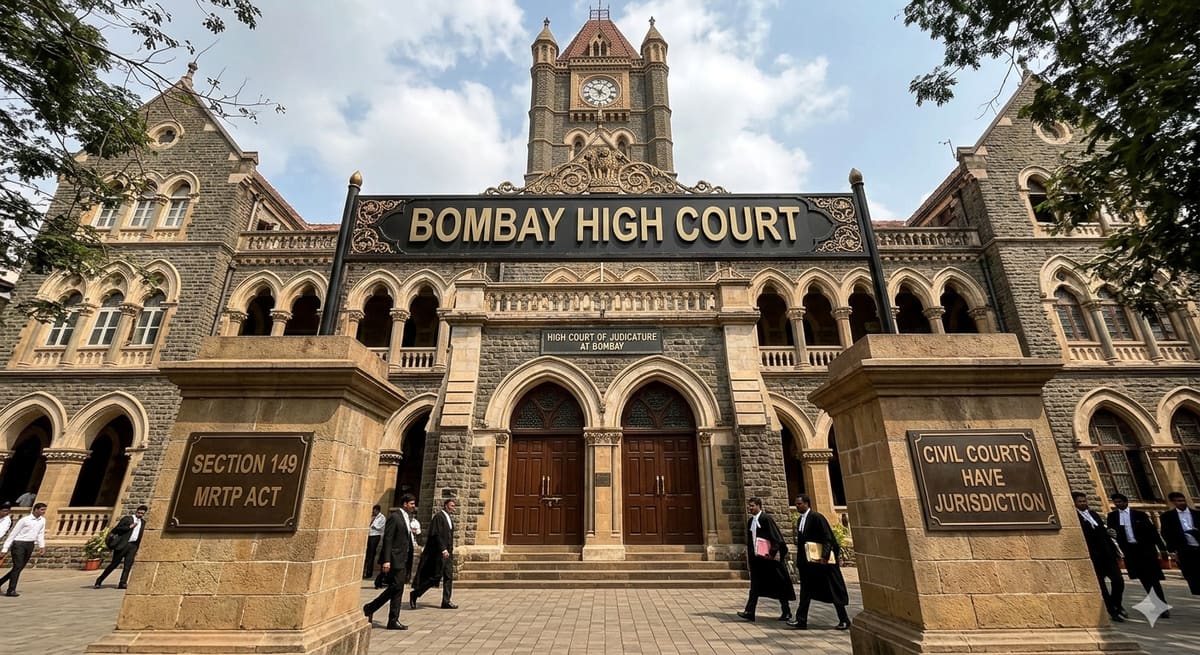
Section 149 MRTP Act | Civil Courts Can Examine Nullity of Planning Authority Notices Despite Finality Clause: Bombay HC
Case Law Analysis
|Bombay High Court

Section 149 MRTP Act | Civil Courts Can Examine Nullity of Planning Authority Notices Despite Finality Clause: Bombay HC

Bombay High Court holds that civil courts retain jurisdiction to scrutinize notices under Section 149 of the MRTP Act if they are prima facie nullities, even where the provision bars further appeals. Plaintiffs must prove jurisdictional errors or arbitrariness-not mere illegality-to challenge such notices. This ruling clarifies the scope of judicial review over planning authority orders.

Civil Courts Cannot Nullify Revenue Court Orders Under U.P. Revenue Code 2006 | Allahabad HC Upholds Exclusive Jurisdiction of Revenue Tribunals in Land Title Disputes : Allahabad HC
Case Law Analysis
|Allahabad High Court

Civil Courts Cannot Nullify Revenue Court Orders Under U.P. Revenue Code 2006 | Allahabad HC Upholds Exclusive Jurisdiction of Revenue Tribunals in Land Title Disputes : Allahabad HC

The Allahabad High Court has ruled that civil courts lack jurisdiction to interfere with final orders passed by Revenue Courts under the U.P. Revenue Code 2006, even when possession is contested. This reaffirms the statutory exclusivity of revenue tribunals in land title matters, preventing forum shopping and ensuring consistency in land record adjudication across Uttar Pradesh.

Section 38(1) U.P. Tenancy Act 2021 | Civil Courts Barred from Rent Disputes; Exclusive Jurisdiction Lies with Rent Authority : Allahabad HC
Case Law Analysis
|Allahabad High Court

Section 38(1) U.P. Tenancy Act 2021 | Civil Courts Barred from Rent Disputes; Exclusive Jurisdiction Lies with Rent Authority : Allahabad HC

Allahabad High Court reinforces that landlord-tenant disputes under the U.P. Regulation of Urban Premises Tenancy Act 2021 must be adjudicated exclusively by the Rent Authority, stripping civil courts of jurisdiction. The ruling mandates dismissal of suits under Order VII Rule 11 CPC if they fall within the Act’s ambit, impacting all pending rent-related litigation in Uttar Pradesh.

Mutation Authorities Cannot Decide Title Disputes | Registered Sale Deed Suffices for Record-of-Rights; Revenue Records Lack Presumptive Value : Orissa HC
Case Law Analysis
|Orissa High Court

Mutation Authorities Cannot Decide Title Disputes | Registered Sale Deed Suffices for Record-of-Rights; Revenue Records Lack Presumptive Value : Orissa HC

The Orissa High Court has ruled that revenue authorities handling mutation proceedings lack jurisdiction to adjudicate ownership disputes - even when conflicting sale deeds are presented. Only civil courts can determine title, and a registered sale deed is sufficient for mutation, rendering revenue records non-conclusive on ownership. This clarifies the limits of administrative power in land record updates and protects buyers relying on documented transfers.

Section 14 Land Encroachment Act | Civil Courts Barred from Adjudicating Disputes During Pending Statutory Proceedings : Madras HC
Case Law Analysis
|Madras High Court

Section 14 Land Encroachment Act | Civil Courts Barred from Adjudicating Disputes During Pending Statutory Proceedings : Madras HC

Madras High Court holds that civil courts lack jurisdiction to entertain suits for injunction where statutory notices under Sections 6 and 7 of the Land Encroachment Act, 1905, are pending. Suppression of such notices by the plaintiff constitutes abuse of process, invoking the doctrine of unclean hands and barring civil court intervention.

Section 63 RFCTLARR Act | Civil Courts Retain Jurisdiction Over Ancillary Disputes Like Partition Deeds : Gauhati HC
Case Law Analysis
|Gauhati High Court

Section 63 RFCTLARR Act | Civil Courts Retain Jurisdiction Over Ancillary Disputes Like Partition Deeds : Gauhati HC

The Gauhati High Court ruled that while Section 63 of the RFCTLARR Act bars civil courts from adjudicating direct land acquisition disputes, they retain jurisdiction over related disputes such as the validity of partition deeds. The Court directed expedited disposal of the title suit to prevent prejudice to landless petitioners, clarifying the scope of judicial intervention in compensation matters.

Section 66 Karnataka Slum Areas Act | Civil Courts Barred from Adjudicating Slum Land Disputes : Karnataka HC Upholds Statutory Exclusion
Case Law Analysis
|Karnataka High Court

Section 66 Karnataka Slum Areas Act | Civil Courts Barred from Adjudicating Slum Land Disputes : Karnataka HC Upholds Statutory Exclusion

The Karnataka High Court reaffirmed that Section 66 of the Karnataka Slum Areas Act ousts civil court jurisdiction over disputes involving slum land development, including challenges to construction resolutions. The ruling underscores that plaintiffs cannot bypass statutory bars even if estoppel or prior declarations under other laws (e.g., Urban Land Ceiling Act) are invoked, reinforcing the exclusivity of statutory mechanisms for slum-related disputes.