The Orissa High Court has reaffirmed a foundational principle in revenue law: mutation proceedings are strictly fiscal in nature and cannot be used to resolve competing claims of title. This judgment clarifies the limited jurisdiction of revenue authorities and reinforces the exclusive domain of civil courts in adjudicating ownership disputes, offering critical guidance to practitioners handling land title conflicts.
Background & Facts
The Dispute
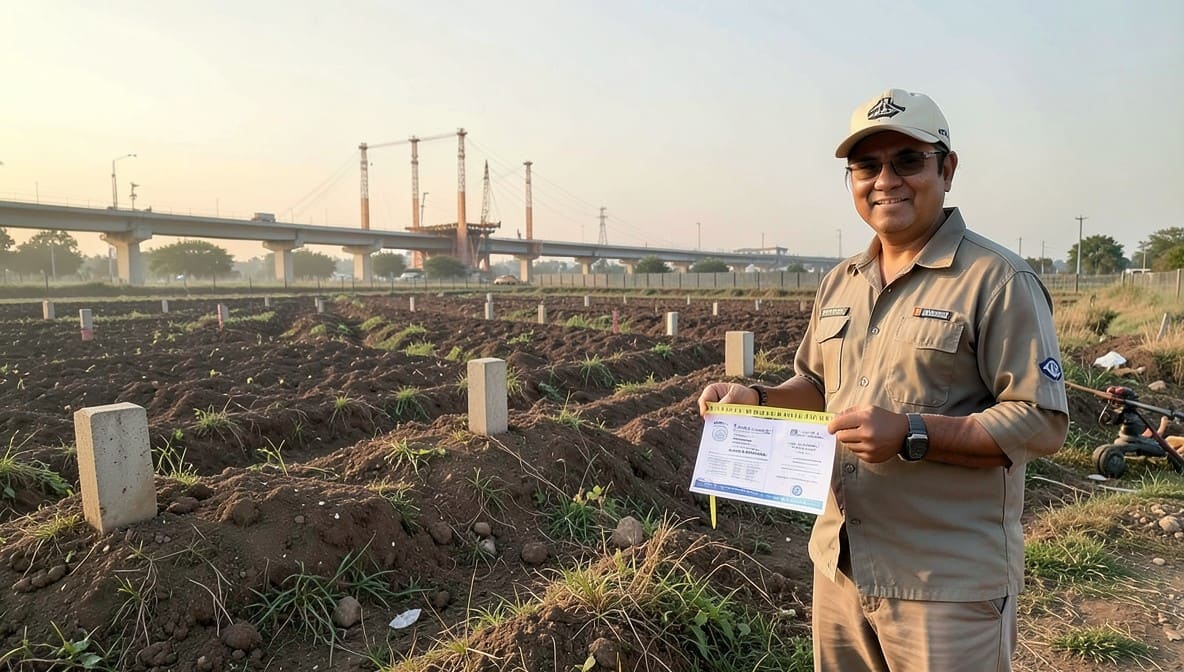
The dispute centers on a parcel of land measuring Ac.0.015 decimals in Mouza-Phulbanisahi, Kandhamal, originally recorded in the name of Kishore Chandra Padhi. Opposite Party No.5 purchased Ac.0.013 decimals of this land via a registered sale deed dated 06.12.2004 and took possession. Subsequently, the petitioner purchased the remaining Ac.0.002 decimals from the same vendor through a registered sale deed dated 26.03.2021 and claimed possession. The Tahasildar, upon application, granted mutation in favor of the petitioner in Mutation Case No.160 of 2021. Opposite Party No.5 challenged this in Mutation Appeal No.22 of 2021, asserting that the vendor had no remaining interest to transfer and that the recorded extent of Ac.0.015 decimals was an error - actual land held was only Ac.0.013 decimals.
Key Facts
- Original landholding by Kishore Chandra Padhi: Ac.0.015 decimals (recorded), but actual extent acquired in 1979: Ac.0.013 decimals (66 ft. × 21 ft.)
- First sale deed: 06.12.2004, transferring Ac.0.013 decimals to Opposite Party No.5
- Second sale deed: 26.03.2021, transferring Ac.0.002 decimals to petitioner
- Mutation application filed by petitioner: March 2021
- Tahasildar’s order: 05.04.2021, granting mutation in petitioner’s favor
- Mutation appeal filed by Opposite Party No.5: 2021
- Sub-Collector’s order: 03.03.2022, setting aside mutation on grounds of no subsisting title
- Petitioner’s writ petition filed: 2022
Procedural History
- 06.12.2004: Opposite Party No.5 purchases Ac.0.013 decimals from Kishore Chandra Padhi via registered sale deed
- 1979: Kishore Chandra Padhi acquires land measuring Ac.0.013 decimals (actual extent)
- 2021 (before March): Settlement records erroneously record land as Ac.0.015 decimals
- 26.03.2021: Petitioner purchases Ac.0.002 decimals via registered sale deed
- 05.04.2021: Tahasildar grants mutation in favor of petitioner in Mutation Case No.160 of 2021
- 03.03.2022: Sub-Collector allows appeal and sets aside mutation
- 2022: Writ Petition No.33321 of 2022 filed before Orissa High Court
- 05.05.2026: Judgment delivered by Justice Sashikanta Mishra
The Parties' Positions
Petitioner: Argued that mutation is a summary proceeding to record possession based on prima facie documents; the Tahasildar acted lawfully by relying on the registered sale deed. The appellate authority exceeded jurisdiction by adjudicating title.
Opposite Party No.5: Contended that the vendor had no land left to sell after the 2004 transfer; the Ac.0.002 decimals were non-existent; the sale deed to petitioner is void ab initio; the erroneous recording of Ac.0.015 decimals cannot confer rights.
State (Opposite Parties 3 & 4): Supported Opposite Party No.5, acknowledging that the Tahasildar acted mechanically under government instructions without verifying title, and that the Sub-Collector correctly intervened.
Relief Sought
The petitioner seeks quashing of the Sub-Collector’s order dated 03.03.2022, restoration of the Tahasildar’s mutation order dated 05.04.2021, and a declaration that mutation proceedings cannot determine title.
The Legal Issue
Can a mutation authority, including its appellate forum, adjudicate disputed questions of title when the validity of a sale deed is challenged, or is such adjudication exclusively within the domain of a civil court?
Arguments Presented
For the Petitioner
The petitioner’s counsel relied on the settled doctrine that mutation proceedings are summary, fiscal, and non-adjudicatory. Citing Balwant Singh v. Daulat Singh and Jitendra Singh v. State of M.P., she argued that revenue authorities are confined to recording possession based on documents like registered sale deeds. She emphasized that the Sub-Collector’s order went beyond Rule 34 of the OSS Rules by examining the validity of prior transactions, which constitutes an impermissible adjudication of title. She further contended that the appeal was decided on the same day it was filed, violating natural justice.
For the Respondent
Opposite Party No.5 and the State argued that the vendor had no subsisting interest after the 2004 sale, and the subsequent sale deed was therefore void. They contended that the Sub-Collector was duty-bound to correct an erroneous record-of-rights when evidence showed the land was already fully alienated. They asserted that the mutation authority has an inherent duty to prevent fraudulent or impossible transfers, especially when the discrepancy between recorded and actual extent is evident.
The Court's Analysis
The Court began by affirming the well-established principle that entries in the record-of-rights serve only fiscal purposes and do not confer, create, or extinguish title. It cited Balwant Singh v. Daulat Singh and the Supreme Court’s recent reaffirmation in Jitendra Singh v. State of M.P., emphasizing that revenue records are not title deeds.
"Mutation of property in revenue records neither creates nor extinguishes title to the property nor has it any presumptive value on title. Such entries are relevant only for the purpose of collecting land revenue."
The Court then examined Rule 34 of the Orissa Settlement and Survey Rules, which enumerates the only permissible grounds for altering the record-of-rights. None of the grounds - such as a civil court decree, correction of clerical error, or inconsistency with survey records - permit an inquiry into the validity of a sale deed or the vendor’s title. Rule 41 further mandates that mutation proceedings be heard summarily.
The Court held that the appellate authority’s role is not to act as a civil court. By determining that the vendor had no land left to sell and that the sale deed to the petitioner was void, the Sub-Collector effectively decided a question of title - a function reserved exclusively for civil courts under Section 9 of the Code of Civil Procedure. The Court observed:
"The question as to whether the vendor had already transferred the entire land... are actually disputed questions and cannot therefore, be decided in mutation proceeding or appeal arising therefrom. These can only be adjudicated by a competent Civil Court upon appreciation of evidence."
The Court rejected the argument that the Sub-Collector was merely correcting an error, noting that the discrepancy between recorded and actual extent did not justify adjudicating the validity of a registered transaction. The remedy for Opposite Party No.5 lay in a civil suit for declaration of title and injunction.
The Verdict
The writ petition is allowed. The order dated 03.03.2022 passed by the Sub-Collector, Kandhamal, in Mutation Appeal No.22 of 2021 is set aside. The mutation order dated 05.04.2021 issued by the Tahasildar is restored. The Court explicitly clarified that no opinion is expressed on the merits of the title dispute. The parties are at liberty to approach a competent civil court for adjudication of their respective claims.
What This Means For Similar Cases
Mutation Authorities Cannot Act as Title Adjudicators
- Practitioners must not rely on mutation orders as proof of ownership; they are merely fiscal records
- Any challenge to the validity of a sale deed must be raised in a civil suit, not in mutation appeals
- Revenue officers who attempt to decide title issues risk having their orders quashed on writ jurisdiction
Registered Sale Deeds Are Sufficient for Mutation
- A registered sale deed constitutes prima facie evidence of possession for mutation purposes
- Tahasildars are not required to investigate prior transactions, verify vendor’s title, or cross-check survey records beyond the document presented
- Failure to verify title does not invalidate a mutation order if the document is registered and possession is established
Correction of Revenue Records Requires Judicial Intervention
- Erroneous entries in revenue records cannot be corrected by revenue authorities if they involve disputed title
- Only a civil court can declare a sale deed void or determine the true extent of land held
- Revenue authorities may only act on court decrees or official survey corrections under Rule 34