Topic

Andhra Pradesh High Court

The Andhra Pradesh High Court is the principal judicial body overseeing civil and criminal matters within the state, interpreting statutes and constitutional provisions through its judgments.

43 articlesLatest July 2026
Writ of Mandamus | AP HC Directs State to Release MGNREGS Payments Within 8 Weeks : AP HC
Case Law Analysis
|Andhra Pradesh High Court

Writ of Mandamus | AP HC Directs State to Release MGNREGS Payments Within 8 Weeks : AP HC

The Andhra Pradesh High Court directed state authorities to release Rs. 30,16,338 to a contractor within eight weeks for MGNREGS works, emphasizing the state's obligation to honor contractual commitments and prevent arbitrary withholding of payments. The ruling underscores the enforceability of writ jurisdiction under Article 226 against state inaction in public contracts.


Article 226 | State Must Consider Religious Festival Representation Without Arbitrary Delay : AP HC Directs Mandamus for Timely Permission
Case Law Analysis
|Andhra Pradesh High Court

Article 226 | State Must Consider Religious Festival Representation Without Arbitrary Delay : AP HC Directs Mandamus for Timely Permission

Andhra Pradesh High Court rules that state authorities must consider representations for religious festival permissions without undue delay, balancing public order with constitutional rights under Articles 14, 21, and 25. The court directed police to grant permission with necessary safeguards, reinforcing the duty to avoid arbitrary denial of religious freedoms.

Article 14 & 16 | 19-Year Temporary Employee Entitled to Regularization Under Supreme Court Precedents : AP HC Issues Mandamus
Case Law Analysis
|Andhra Pradesh High Court

Article 14 & 16 | 19-Year Temporary Employee Entitled to Regularization Under Supreme Court Precedents : AP HC Issues Mandamus

The Andhra Pradesh High Court directed state authorities to consider regularization of a watchman with 19 years of continuous service, reinforcing that long-term temporary employees cannot be denied constitutional rights under Articles 14 and 16. The ruling mandates compliance with Supreme Court precedents, ensuring fair treatment in public employment and setting a precedent for similar cases across government departments.

Article 226 & Service Law | Disciplinary Proceedings Against Retired Employees Must Conclude Within 4 Months or Pension Restored : AP HC
Case Law Analysis
|Andhra Pradesh High Court

Article 226 & Service Law | Disciplinary Proceedings Against Retired Employees Must Conclude Within 4 Months or Pension Restored : AP HC

Andhra Pradesh High Court mandates that disciplinary proceedings against retired government employees must be concluded within four months, failing which full pension must be restored. The ruling reinforces natural justice and timely adjudication under Article 226, impacting service law and pension rights of retired public servants.

AICTE Approval Prevails Over Nomenclature Discrepancies | Course Inclusion Mandated Despite Name Variations : AP HC
Case Law Analysis
|Andhra Pradesh High Court

AICTE Approval Prevails Over Nomenclature Discrepancies | Course Inclusion Mandated Despite Name Variations : AP HC

The Andhra Pradesh High Court ruled that AICTE-approved courses cannot be excluded from counselling due to minor nomenclature discrepancies, directing the inclusion of 'Computer Science and Engineering (Artificial Intelligence)' with 120 seats. The judgment reinforces that substantive approval outweighs procedural labeling errors, impacting technical education admissions statewide.

Displacement Quota Employment | Cut-off Date Relaxation Mandatory Under G.O.Ms.No.98 for Constitutional Compliance : AP HC
Case Law Analysis
|Andhra Pradesh High Court

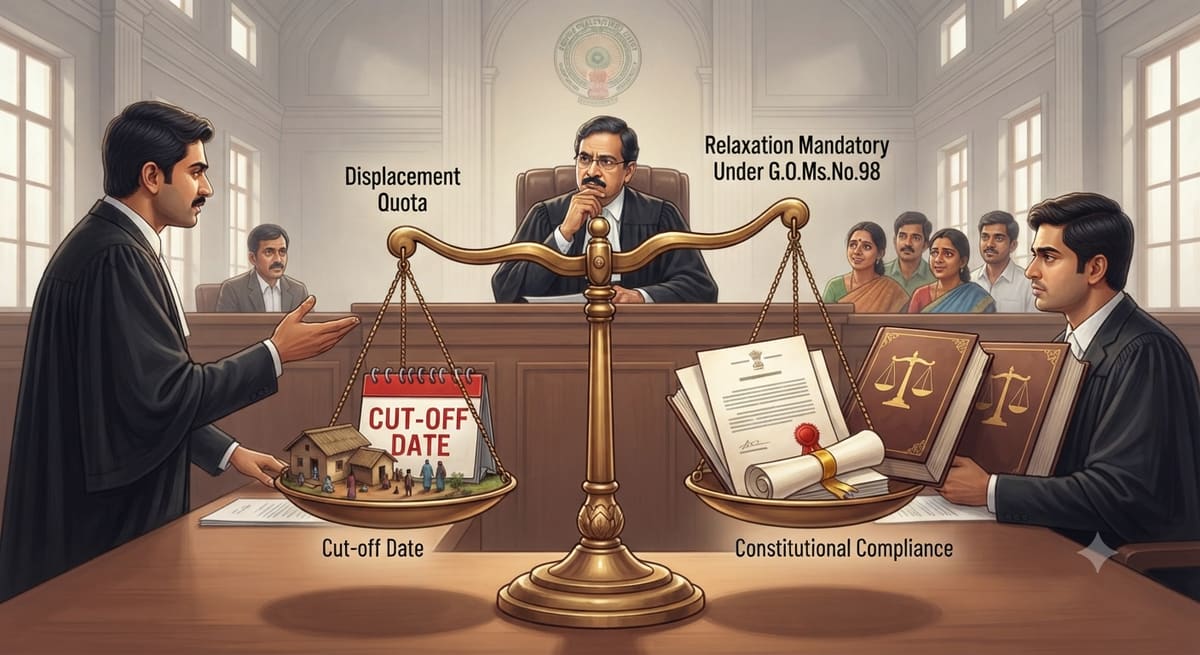
Displacement Quota Employment | Cut-off Date Relaxation Mandatory Under G.O.Ms.No.98 for Constitutional Compliance : AP HC

Andhra Pradesh High Court rules that displaced persons must be considered for employment under G.O.Ms.No.98, even if they missed the cut-off date, as rigid adherence violates Articles 14, 16, and 21. The judgment mandates administrative flexibility to uphold constitutional rights, setting a precedent for similar quota-based employment disputes.

Section 62(2) CGST Act | Best Judgment Assessment Automatically Withdrawn Upon Filing Returns, Irrespective of Delay: AP HC
Case Law Analysis
|Andhra Pradesh High Court

Section 62(2) CGST Act | Best Judgment Assessment Automatically Withdrawn Upon Filing Returns, Irrespective of Delay: AP HC

Andhra Pradesh High Court rules that GST best judgment assessments under Section 62(2) are deemed withdrawn the moment a taxpayer files returns with late fees and interest, even beyond the 60-day period. The judgment nullifies demand notices issued under such assessments, reinforcing taxpayer rights against procedural rigidity.

Section 89(3) APMR & UDA Act | Only Metropolitan Commissioner Can Issue Unauthorized Construction Orders : Andhra Pradesh HC
Case Law Analysis
|Andhra Pradesh High Court

Section 89(3) APMR & UDA Act | Only Metropolitan Commissioner Can Issue Unauthorized Construction Orders : Andhra Pradesh HC

The Andhra Pradesh High Court ruled that under Section 89(3) of the APMR & UDA Act, the power to issue provisional orders for unauthorized constructions rests exclusively with the Metropolitan Commissioner or Vice-Chairperson. Orders issued by subordinate authorities are without jurisdiction and liable to be set aside, reinforcing strict adherence to statutory delegation in urban development enforcement.

Res Judicata Bars Prohibition Under Section 22A(1)(c) Registration Act | AP HC Quashes Arbitrary Property Blacklisting
Case Law Analysis
|Andhra Pradesh High Court

Res Judicata Bars Prohibition Under Section 22A(1)(c) Registration Act | AP HC Quashes Arbitrary Property Blacklisting

Andhra Pradesh High Court rules that once a court conclusively settles a title dispute, administrative authorities cannot prohibit property registration under Section 22A(1)(c) of the Registration Act. The judgment directs removal of the petitioner’s property from the prohibited list, reinforcing that res judicata prevails over administrative overreach in property registration matters.

Section 302 IPC | Psychological Distress No Defence for Infanticide: Andhra Pradesh HC Upholds Life Imprisonment
Case Law Analysis
|Andhra Pradesh High Court

Section 302 IPC | Psychological Distress No Defence for Infanticide: Andhra Pradesh HC Upholds Life Imprisonment

The Andhra Pradesh High Court affirmed a mother’s conviction under Section 302 IPC for killing her two children, rejecting unsound mind claims. The court relied on extra-judicial confessions and medical evidence, emphasizing that psychological distress does not negate mens rea in heinous crimes. The ruling reinforces strict liability for infanticide under criminal law, impacting future cases involving mental health defences.

Article 14, 21 & 300-A | Municipal Survey Without Title Document Verification Violates Property Rights : Andhra Pradesh HC
Case Law Analysis
|Andhra Pradesh High Court

Article 14, 21 & 300-A | Municipal Survey Without Title Document Verification Violates Property Rights : Andhra Pradesh HC

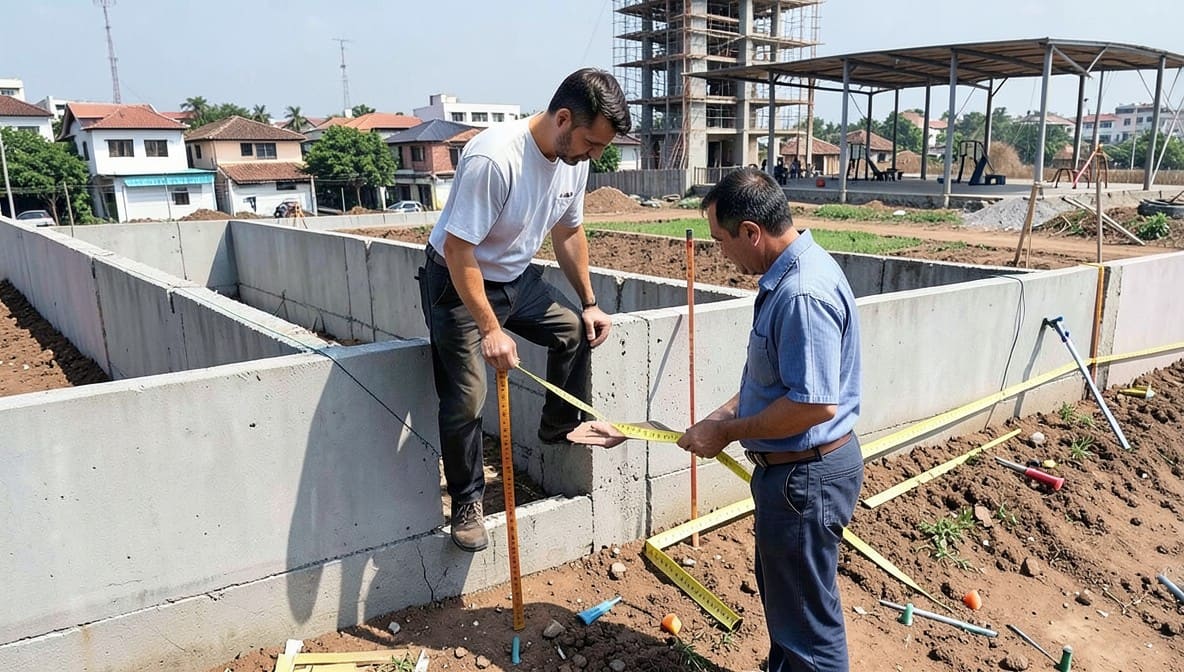
Andhra Pradesh High Court rules that municipal authorities must conduct surveys based on title documents before initiating public works on private land. The judgment mandates due process under Articles 14, 21, and 300-A, ensuring property owners are protected from arbitrary encroachment without statutory acquisition or notice.