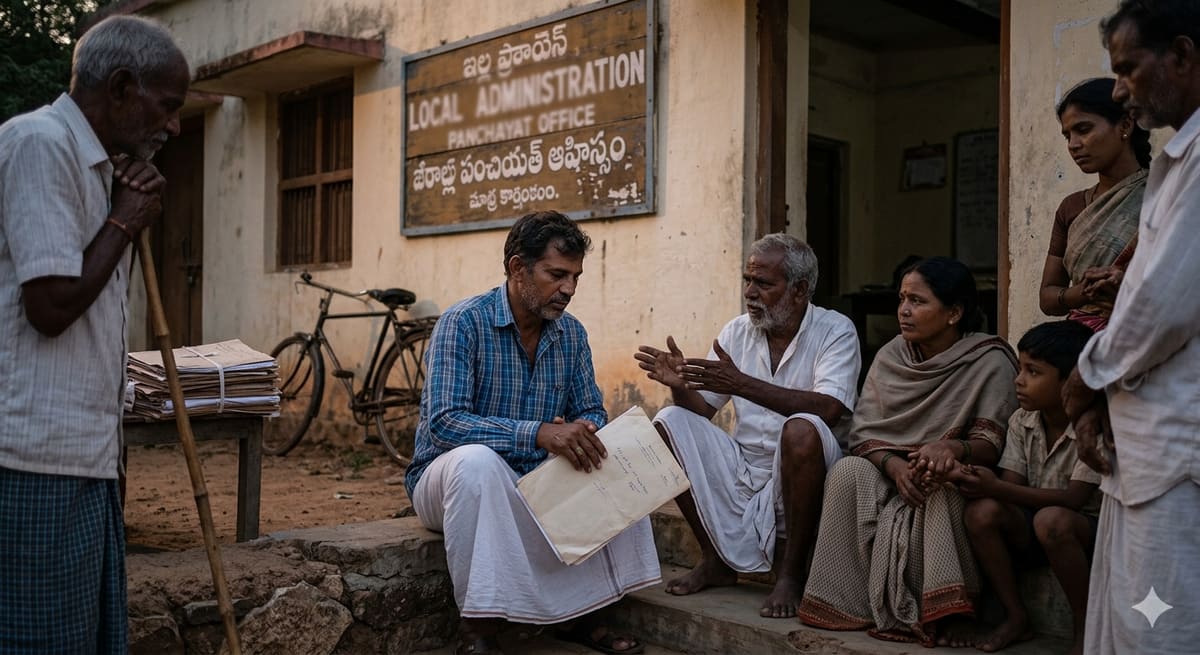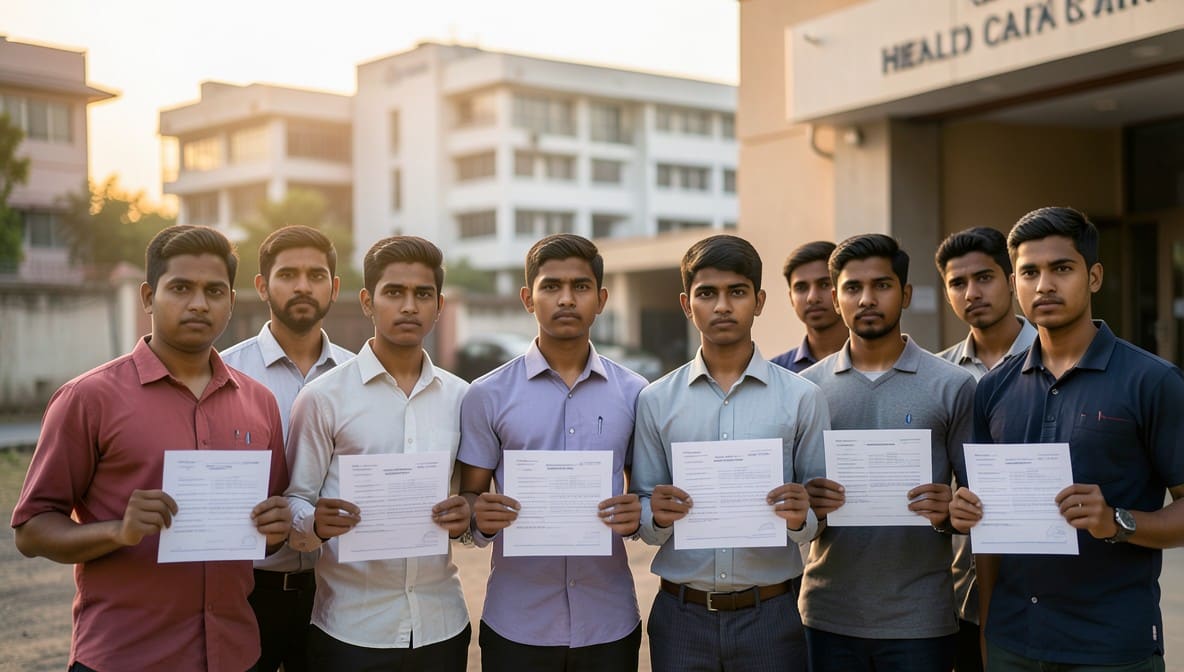
The Andhra Pradesh High Court has reaffirmed the obligation of state authorities to consider displaced persons for employment under the displacement quota scheme, even when applications are submitted beyond the prescribed cut-off date. The judgment underscores the constitutional mandate to prevent arbitrariness and ensure equality in public employment opportunities for project-affected individuals.
Background & Facts
The Dispute
The petitioners, six unemployed individuals from YSR Kadapa District, are displaced persons affected by the Sri Pothuluri Veera Brahmendra Reservoir (SPVBR) under the Telugu Ganga Project. Despite holding displacement certificates issued by the competent authority, they were denied employment under G.O.Ms.No.98, Irrigation & CAD Department, dated 15.04.1986, which mandates employment opportunities for displaced persons. The respondents failed to consider their applications due to the lapse of the one-year limitation period from the date of displacement notification.
Key Facts
The petitioners were displaced due to the SPVBR project, a component of the Telugu Ganga Project
Displacement certificates were issued to all petitioners by the competent authority
G.O.Ms.No.98, Irrigation & CAD Department, dated 15.04.1986, provides for employment to displaced persons under the displacement quota
The Government, through G.O.Ms.No.266 of I & CAD, fixed 18.09.2006 as the cut-off date for receiving applications from displaced persons
The petitioners submitted applications after the cut-off date, leading to their exclusion from consideration
The petitioners relied on precedent judgments where similar relief was granted, including:
WP No. 2436/2011 dated 08.02.2011 (Division Bench)
SLP No. 14305/2011 dated 04.07.2011 (Supreme Court confirmation)
WP (AT) No. 317/2021 dated 08.02.2023
WP No. 32923 of 2023 dated 17.03.2026 (directing consideration within three months)
Procedural History
WP No. 16729/2023: Filed before the Andhra Pradesh High Court seeking a writ of mandamus to direct the respondents to consider their employment under the displacement quota
IA No. 1 of 2023: Interim application seeking consideration pending disposal of the main writ petition
03.07.2026: Final disposal of the writ petition by the High Court
The Parties' Positions
Petitioners' Contentions
The respondents' action in denying employment is illegal, arbitrary, and unconstitutional, violating Articles 14, 16, and 21 of the Constitution
The respondents failed to consider their applications despite holding valid displacement certificates
Precedent judgments, including WP No. 32923 of 2023, mandate relaxation of the one-year limitation for displaced persons
The cut-off date (18.09.2006) should not be rigidly enforced when constitutional rights are at stake
Respondents' Contentions
The respondents, represented by the Learned Assistant Government Pleader for Services-II, did not contest the petitioners' claims on merits
No specific arguments were advanced to justify the exclusion of the petitioners
Relief Sought
The petitioners sought:
A writ of mandamus declaring the respondents' action as illegal and unconstitutional
Directions to the respondents to consider their employment under G.O.Ms.No.98, dated 15.04.1986
Relaxation of the one-year limitation period for filing applications
Compliance with the directions issued in precedent judgments
The Legal Issue
The central question was whether the respondents could rigidly enforce the one-year limitation period for filing applications under G.O.Ms.No.98, thereby denying employment to displaced persons, or whether the constitutional principles of equality and non-arbitrariness mandate relaxation of such a condition in deserving cases.
Arguments Presented
For the Petitioners
Relied on precedent judgments of the High Court and Supreme Court, including WP No. 32923 of 2023, which directed consideration of similarly situated persons
Argued that the cut-off date should not be a bar when the petitioners hold valid displacement certificates
Contended that the respondents' action violates Articles 14, 16, and 21 of the Constitution, which guarantee equality, non-discrimination, and the right to livelihood
For the Respondents
No substantive arguments were presented to counter the petitioners' claims
The Court's Analysis
The Court observed that the petitioners' case was squarely covered by precedent, particularly WP No. 32923 of 2023, wherein identical relief was granted. The Court emphasized that the constitutional rights of the petitioners under Articles 14, 16, and 21 could not be negated by administrative rigidities such as a cut-off date.
"Having considered the submissions of the learned counsel for the petitioners and the learned Assistant Government Pleader for Services-II, and upon perusal of the record as well as the judgment of this Court in W.P.No.32923 of 2023, this Writ Petition is disposed of, directing the respondent authorities to consider the case of the petitioners for appointment as per G.O.Ms.No.98, Irrigation (Project Wing) Department, dated 15.04.1986, and to pass appropriate orders within a period of three (03) months from the date of receipt of a copy of this Court order."
The Court relied on the principle that administrative convenience cannot override constitutional rights, especially when the petitioners were genuinely displaced and held valid certificates. The judgment underscores the duty of the state to ensure that procedural lapses do not defeat substantive justice.
The Verdict
The High Court allowed the writ petition and issued the following directions:
The respondent authorities must consider the case of the petitioners for appointment under G.O.Ms.No.98, Irrigation (Project Wing) Department, dated 15.04.1986
Appropriate orders must be passed within three months from the date of receipt of the court order
No costs were awarded
All pending miscellaneous petitions, if any, were closed
What This Means For Similar Cases
Relaxation of Cut-off Dates Is Mandatory for Displaced Persons
Courts are increasingly recognizing that cut-off dates for schemes like displacement quotas cannot be rigidly enforced when they defeat the very purpose of the scheme
Displaced persons holding valid certificates are entitled to consideration irrespective of procedural lapses, especially when constitutional rights are involved
Practitioners should argue that administrative convenience cannot trump substantive justice in cases involving livelihood and equality
Precedent Judgments Are Binding on State Authorities
The judgment reinforces that precedent directions issued by courts must be followed by state authorities
Failure to comply with court orders in similar cases can lead to contempt proceedings or further writ petitions
State authorities must proactively implement court directions within the stipulated timelines to avoid legal consequences
Constitutional Rights Prevail Over Procedural Rigidities
Articles 14, 16, and 21 impose a positive obligation on the state to ensure equality and livelihood for all citizens
Courts are likely to strike down arbitrary exclusions from welfare schemes, even if based on procedural grounds
Practitioners should anchor arguments in constitutional provisions** to challenge arbitrary administrative actions