The National Consumer Disputes Redressal Commission has reaffirmed that insurers cannot arbitrarily repudiate claims based on policy exclusions when multiple independent surveyors and technical experts consistently conclude that the loss resulted from an accidental breakdown. This judgment underscores the binding weight of surveyor reports under the Insurance Act and the obligation to provide cogent reasons before rejecting them.
Background & Facts
The Dispute
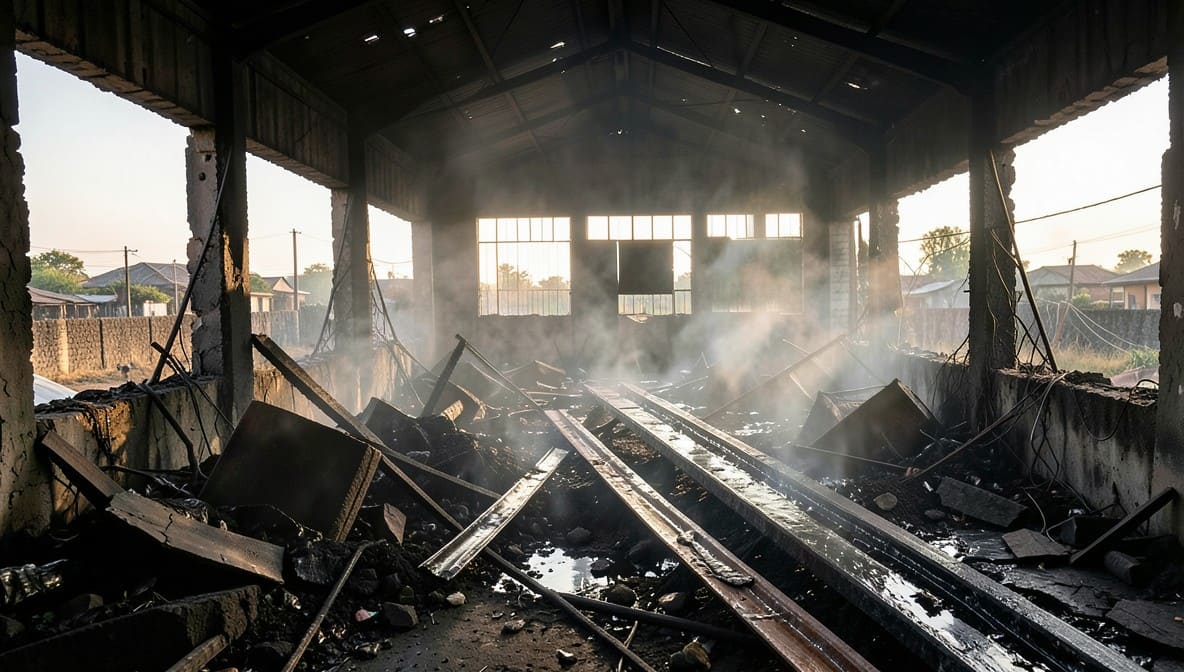
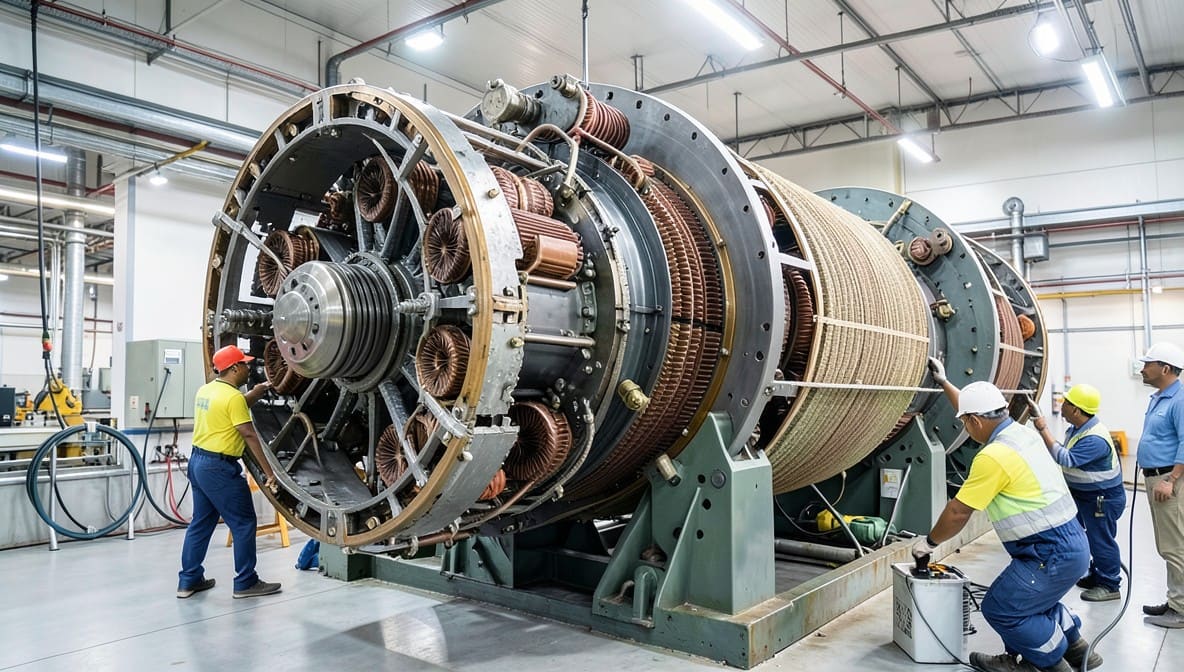
The complainant, M/s SKS Ispat and Power Ltd., operated an integrated steel plant in Siltara, Raipur, and held a Fire Industrial All Risk Policy (Policy No. 191300/11/2014/67) with The Oriental Insurance Co. Ltd. for the period 18.05.2013 to 17.05.2014. The policy included machinery breakdown cover as an add-on, with a sum insured of Rs. 540 Crores. On 14.03.2014 at approximately 11:10 PM, a heavy flashing incident occurred in the 25 MVA Turbo Generator Set (Unit-1), causing a complete breakdown. The complainant immediately intimated the insurer via email on 21.03.2014.
Key Facts
- The Turbo Generator was manufactured by BHEL, Hyderabad, with a capacity of 31,250 KVA and commissioned in 2005.
- On 24.03.2014, the insurer appointed Shri Ramesh Agrawal, an IRDA-licensed surveyor, who confirmed the stator earth fault and breakdown condition.
- BHEL engineers inspected the unit on the same day and recorded a fault in Slot No. 74 of the stator, with low insulation resistance (IR) values in the rotor.
- BHEL’s technical team advised on 26.03.2014 that rewinding the stator was not feasible due to its GVPI manufacturing process and recommended replacement.
- The complainant’s internal technical team on 26.03.2014 concluded that a dislocated core strip punctured the stator coil insulation, causing an accidental electrical fault.
- The insurer appointed M/s Sanjay Dwivedi & Associates as final surveyor, who submitted a report on 17.03.2015 assessing net liability at Rs. 1,26,36,400.
- Upon complainant’s objection, the surveyor issued an addendum on 08.06.2015 revising the liability to Rs. 1,73,84,421, explicitly stating the loss was admissible under the policy.
- BHEL’s technical report dated 06.01.2016 confirmed the fault was rare, accidental, and not due to wear and tear.
- The insurer engaged M/s J. Basheer & Associates, whose report dated 30.03.2016 attributed the failure to wear and tear, citing prior low IR values since 2010 and a 2013 request for replacement.
- The final surveyor, M/s Sanjay Dwivedi & Associates, issued a clarificatory report on 23.05.2016 rejecting Basheer’s conclusions, affirming the breakdown was accidental and citing BHEL’s expertise.
- An independent expert, Shri V.G. Chorghade, opined on 09.08.2016 that the claim was genuine and should be settled.
- Despite this consistent technical consensus, the insurer repudiated the claim on 24.01.2017, invoking General Exception No. 5 (deterioration/wear and tear).
Procedural History
- 14.03.2014: Breakdown of 25 MVA Turbo Generator at SKS Ispat plant.
- 21.03.2014: Complainant intimated loss to insurer via email.
- 24.03.2014: Preliminary survey by IRDA-licensed surveyor Shri Ramesh Agrawal; joint inspection with BHEL.
- 27.03.2014: BHEL issued repair offer; later advised replacement of stator.
- 17.03.2015: Final survey report by M/s Sanjay Dwivedi & Associates (net liability: Rs. 1,26,36,400).
- 08.06.2015: Addendum report revised liability to Rs. 1,73,84,421.
- 30.03.2016: Investigator report by M/s J. Basheer & Associates recommending repudiation.
- 23.05.2016: Final surveyor’s clarification reaffirming accidental nature of loss.
- 09.08.2016: Expert opinion by Shri V.G. Chorghade supporting claim settlement.
- 11.04.2016: Pre-repudiation letter issued by insurer.
- 02.05.2016 & 26.08.2016: Complainant’s detailed replies to pre-repudiation.
- 24.01.2017: Formal repudiation letter issued by insurer.
- 12.06.2018: Consumer Complaint No. 396 of 2018 filed before NCDRC.
- 14.01.2026: Judgment reserved.
- 18.03.2026: Judgment pronounced.
The Parties' Positions
For the Complainant
The complainant argued that the breakdown was an accidental electrical fault covered under the policy, supported by the insurer’s own surveyor, the OEM (BHEL), and an independent expert. It contended that the insurer’s reliance on General Exception No. 5 was baseless, as the damage was not due to gradual deterioration but a sudden, rare failure. The complainant emphasized that the insurer’s prolonged delay (over two years) and selective reliance on a single investigator’s report, while ignoring consistent expert opinions, amounted to deficiency in service and unfair trade practice.
For the Respondent (Insurer)
The insurer contended that the damage resulted from long-term wear and tear, evidenced by low insulation resistance values since 2010 and prior requests for replacement in November 2013. It argued that the complainant suppressed material facts by not disclosing these prior issues. The insurer relied on the report of M/s J. Basheer & Associates and General Exception No. 5 to justify repudiation, asserting that surveyor reports are not binding and that the policy terms must be strictly construed.
Relief Sought
The complainant sought:
- Payment of Rs. 4,85,00,000 for cost of installation and transportation of new stator and rotor.
- Compensation of Rs. 5 Crores for mental agony, suffering, and time/money invested.
- Costs, legal fees, and travelling expenses of Rs. 25 Lakhs.
- Interest at 18% per annum from the date of claim till payment.
- Any other relief deemed fit by the Commission.
The Legal Issue
The central question was whether an insurer can repudiate a machinery breakdown claim under General Exception No. 5 (deterioration/wear and tear) when multiple independent surveyors and the original equipment manufacturer (OEM) conclusively establish that the failure was accidental, and the insurer’s own final surveyor has affirmed coverage.
Arguments Presented
For the Appellant/Petitioner
The complainant relied on S.S. Cold Storage India Pvt. Ltd. v. National Insurance Company Ltd. (2023 SCC OnLine SC 944), Sri Venkateshwara Syndicate v. Oriental Insurance Co. Ltd. (2009) 8 SCC 507, and New India Assurance Co. Ltd. v. Sri Buchiyyamma Rice Mill (2020) 12 SCC 105 to argue that surveyor reports carry substantial evidentiary value and cannot be disregarded without cogent, documented reasons. It emphasized that the final surveyor’s addendum report explicitly classified the loss as an insured peril, and BHEL’s technical report confirmed the fault was rare and accidental. The complainant contended that the insurer’s reliance on a single investigator’s report, which contradicted the final surveyor and OEM, was arbitrary and violated Section 64-UM(5) of the Insurance Act, 1938. The delay of over two years in repudiation, despite clear evidence of coverage, constituted deficiency in service under the Consumer Protection Act, 1986.
For the Respondent/State
The insurer argued that the claim fell squarely within General Exception No. 5, citing low IR values since 2010 and prior correspondence with BHEL seeking replacement in 2013 as evidence of pre-existing deterioration. It contended that the final surveyor’s report was merely an assessment and not binding, and that the insurer had the right to seek multiple opinions. It relied on Khatema Fibres Ltd. v. New India Assurance Co. Ltd. (2021 SCC OnLine SC 818) and Rotex Automation Ltd. v. United India Insurance Co. Ltd. (2015 NCDRC 41) to assert that insurance contracts must be strictly construed and that suppression of material facts (failure to disclose prior maintenance issues) invalidated the claim. It further argued that the complainant’s delay in intimation (7 days) prejudiced the investigation.
The Court's Analysis
The Commission undertook a meticulous review of the documentary and technical evidence, emphasizing that the insurer’s own appointed final surveyor, M/s Sanjay Dwivedi & Associates, had unequivocally concluded that the breakdown was accidental and covered under the policy. The addendum report dated 08.06.2015 explicitly stated that the assessed loss of Rs. 1,73,84,421 was admissible subject to policy terms - a position reaffirmed in the clarificatory report dated 23.05.2016.
"The failure of insulation resulting in electrical breakdown constituted an insured peril under the policy and not an excluded peril."
The Commission noted that BHEL, as the OEM and a Maharatna CPSE, possessed superior technical authority. Its report dated 06.01.2016 stated that such faults were "very rare" and could occur only from "accidental damages." The expert opinion of Shri V.G. Chorghade further corroborated this view.
The Commission held that the insurer’s reliance on M/s J. Basheer & Associates was legally unsustainable. While Section 64-UM(5) permits appointment of a second surveyor, the Supreme Court in Sri Venkateshwara Syndicate and New India Assurance v. Sri Buchiyyamma Rice Mill has held that such appointment must be justified by cogent reasons - not merely because the first report favors the insured. The insurer failed to demonstrate any inherent defect, arbitrariness, or error in the final surveyor’s report. Instead, it selectively relied on an investigator’s opinion that contradicted the surveyor, the OEM, and another expert.
The Commission rejected the insurer’s claim of suppression of material facts, noting that the complainant’s prior correspondence with BHEL in 2013 was for general maintenance planning, not evidence of pre-existing damage. There was no proof that such disclosure would have altered the risk profile or rendered the policy void.
The Commission further held that the delay in claim settlement - spanning over two years - without a valid basis for repudiation, constituted deficiency in service under Section 2(1)(g) of the Consumer Protection Act, 1986. The insurer’s conduct amounted to a failure in its duty to act fairly, promptly, and in good faith.
The Verdict
The complainant succeeded. The Commission set aside the insurer’s repudiation letter dated 24.01.2017 and directed payment of Rs. 1,73,84,421 as the net assessed loss. Simple interest at 8% per annum shall accrue from 21.09.2014 (six months after intimation) until payment. In case of delay beyond 60 days from the date of this order, interest shall increase to 12% per annum. The insurer shall also pay Rs. 40,000 as litigation costs. Payment shall be made within 60 days.
What This Means For Similar Cases
Surveyor Reports Are Presumptively Valid
- Practitioners must treat the final surveyor’s report as prima facie evidence of loss assessment unless the insurer can demonstrate specific, documented defects in methodology, bias, or error.
- Insurers cannot appoint successive surveyors to obtain a favorable outcome; doing so without valid grounds constitutes unfair trade practice.
- Courts and forums will intervene where insurers ignore consistent expert opinions to repudiate claims.
Policy Exclusions Must Be Applied with Precision
- General exceptions like "wear and tear" cannot be invoked to defeat claims where technical evidence proves sudden, accidental failure.
- Low insulation resistance alone does not establish gradual deterioration; context, OEM opinion, and operational history must be considered.
- The burden shifts to the insurer to prove that the damage was not accidental but the result of long-term neglect.
Delay in Claim Settlement Is a Deficiency
- Prolonged processing (beyond 6 - 12 months) without justification, especially after expert assessments are complete, constitutes deficiency in service.
- Consumers may claim compensation for mental agony and delay-related losses even if the claim amount is modest.
- Insurers must establish internal timelines for claim resolution and document all decision-making steps.