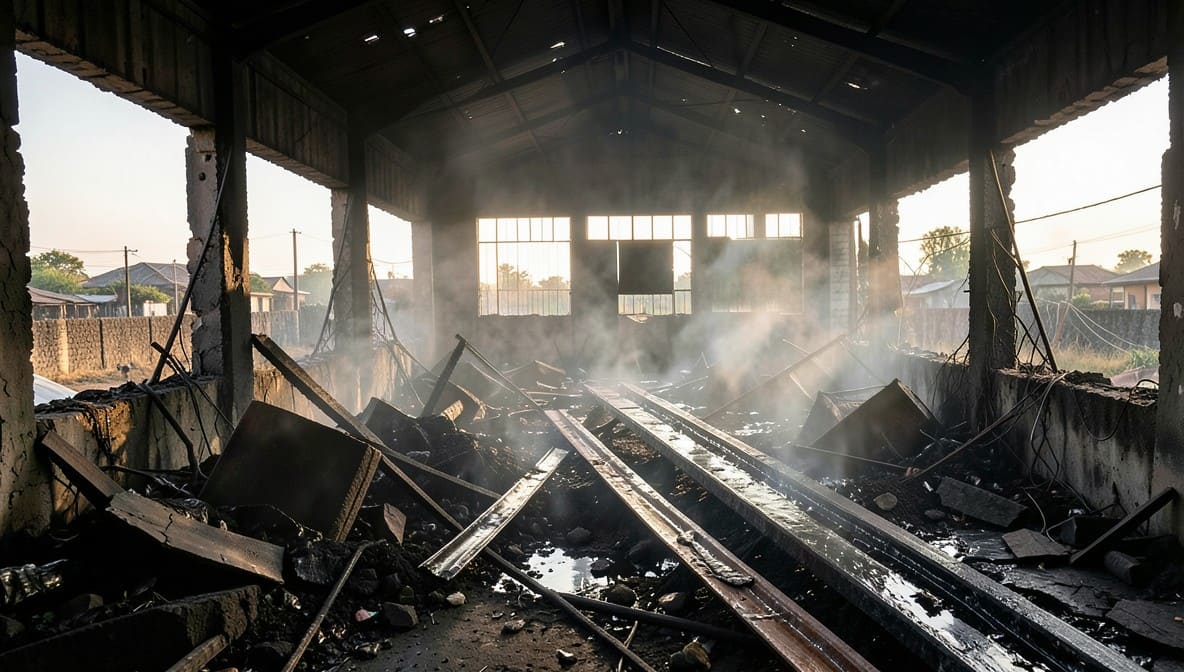
The National Consumer Disputes Redressal Commission has clarified that in fire insurance claims, the precise cause of fire is legally immaterial unless there is concrete evidence of fraud or intentional act by the insured. This judgment reinforces the principle that insurers cannot repudiate claims based on speculative inferences or uncorroborated assumptions, even when the loss appears unusual.
Background & Facts
The Dispute
The complainant, M/s Shri Hira Industries, a proprietary firm engaged in cottonseed oil and cotton cake manufacturing, held a Fire & Special Perils Policy with United India Insurance Company Limited (OP-1) for stock covering the period 30.04.2018 to 29.07.2018. The stock, consisting of cotton bales, was pledged as collateral to Axis Bank Limited (OP-3) under a Facility-cum-Pledge Agreement dated 18.12.2017. Star Agriwarehousing and Collateral Management Limited (OP-2) was appointed by OP-3 as an independent collateral manager under a Collateral Management Agreement dated 21.03.2008 to supervise the pledged goods stored in a warehouse leased by the complainant.
Key Facts
- The complainant purchased raw cotton between November 2017 and March 2018, processing it into approximately 1,800 cotton bales.
- Each bale was secured with iron strips, estimated at 2 kg per bale, totaling approximately 800 kg of iron strips for 400 bales.
- The warehouse was located at Plot No. 33/1, Old No. 104, Agri Product Market Yart, Beed, Maharashtra.
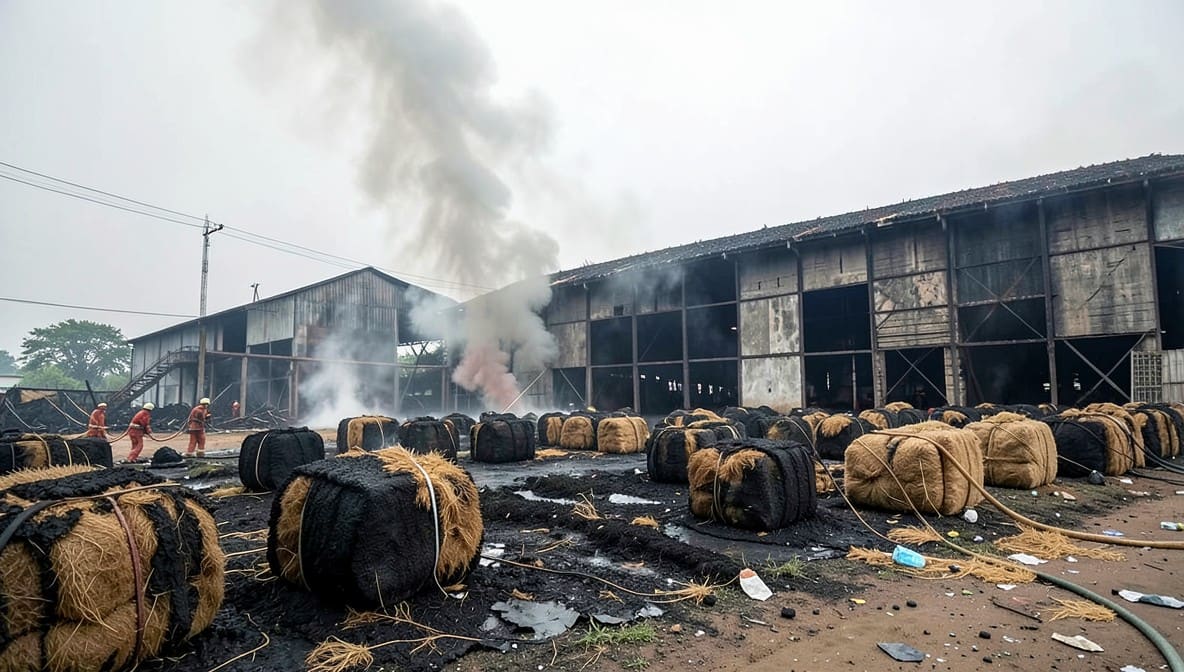
- A fire broke out between 2:30 a.m. and 3:00 a.m. on 22.07.2018.
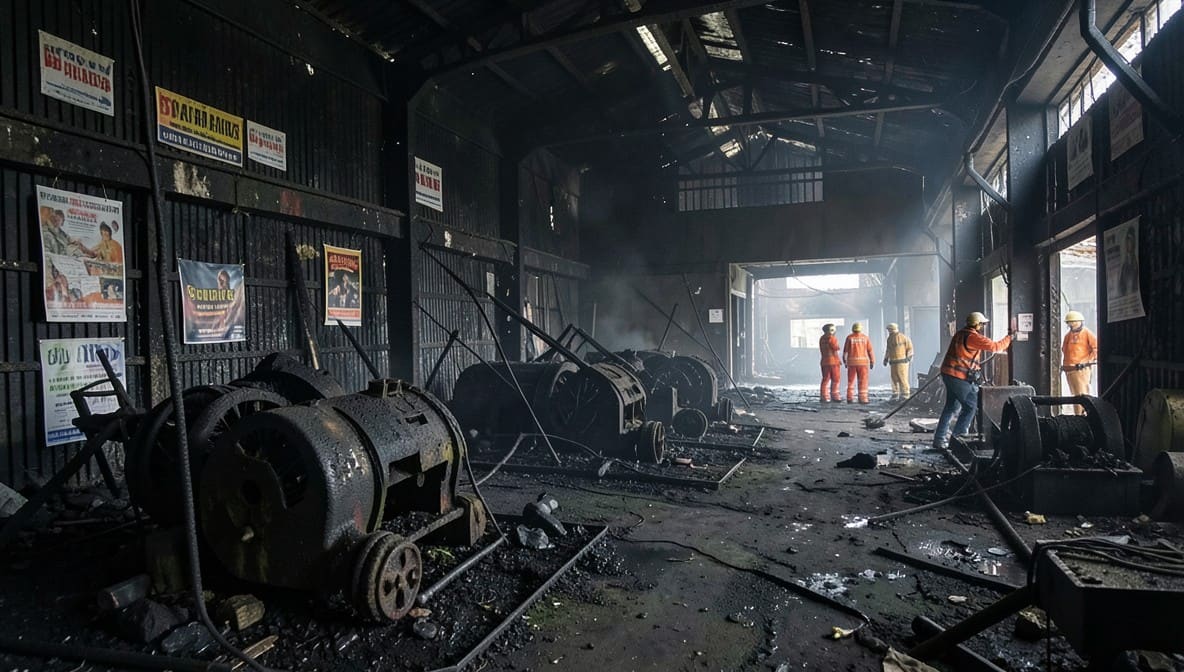
- The fire brigade responded within 30 minutes and operated for over 15 hours, requiring JCB equipment to breach walls and gates.
- FIR No. 06/2018 was registered on 22.07.2018, concluding the fire was accidental, possibly caused by friction between iron strips.
- The complainant submitted a claim of Rs. 3,89,86,650 on 10.08.2018.
- Royal Associates, appointed by OP-1, collected debris samples for forensic analysis.
- Spectro Analytical Labs (Delhi) and Atlas Lab (Mumbai) found no hydrocarbons or flammable substances in debris.
- ICAR, Mumbai, reported that ash samples were too degraded to determine cotton grade reliably.
- Surveyor Navin Jain concluded that only 10% cotton grade was present in debris, suggesting waste cotton was burnt.
- Only 15.70 kg of iron strips were recovered, far below the expected 800 kg.
- OP-1 repudiated the claim on 25.03.2019, alleging fraud under Policy Conditions 1 and 8.
Procedural History
- 22.07.2018: Fire occurred at the warehouse in Beed.
- 26.07.2018: Complainant intimated OP-1 of the loss.
- 10.08.2018: Claim form submitted for Rs. 3,89,86,650.
- 30.07.2018: Atlas Lab report submitted.
- 30.11.2018: Spectro Analytical Labs report submitted.
- 24.12.2018: Final Survey Report by Mr. Navin Jain.
- 25.03.2019: OP-1 repudiated claim.
- 12.06.2019: Consumer Complaint No. 1470 of 2019 filed before NCDRC.
- 23.04.2026: Judgment pronounced.
The Parties' Positions
Complainant: Argued that the fire was accidental, as confirmed by police FIR and forensic reports showing no accelerants. The low iron strip recovery was explained by debris removal and partial melting. The 10% cotton grade in ash was not conclusive of fraud, as ICAR confirmed ash samples were non-representative. Relied on New India Assurance Co. Ltd. v. Mudit Roadways and Cement Corporation of India v. ICICI Lombard.
OP-1 (United India Insurance): Contended that the fire was deliberately staged. Cited: (i) low cotton grade in ash (10%), (ii) insufficient iron strips recovered, (iii) advance payment of processing charges, (iv) open windows post-fire, (v) implausibility of 1,800 bales burning completely. Alleged misrepresentation under Policy Conditions 1 and 8.
OP-2 (Star Agriwarehousing): Denied liability, asserting its role was limited to inspection and supervision under CMA. No negligence proven. Liability for insurance rested with the complainant.
OP-3 (Axis Bank): Denied deficiency, asserting its rights as first chargee over proceeds. OP-2 was an independent service provider, not its agent.
Relief Sought
The complainant sought:
- Payment of Rs. 3,89,86,650 as claim amount.
- Interest at 18% per annum from 22.07.2018.
- Compensation of Rs. 1,00,00,000 for mental agony.
- Litigation costs of Rs. 1,00,000.
The Legal Issue
The central question was whether an insurer can repudiate a fire insurance claim based on speculative inferences about the cause of fire, absent any evidence that the insured was the instigator or acted fraudulently, and whether the insured bears the burden of proving the fire was accidental.
Arguments Presented
For the Appellant/Petitioner
The complainant argued that the police FIR classified the fire as accidental, and forensic reports found no evidence of accelerants. The low iron strip recovery was reasonably explained by debris removal and thermal degradation. The 10% cotton grade in ash was not conclusive, as ICAR confirmed the samples were too degraded for reliable analysis. Reliance was placed on Cement Corporation of India v. ICICI Lombard and New India Assurance Co. Ltd. v. Mudit Roadways, which hold that the cause of fire is immaterial if the insured is not the instigator. The burden of proving fraud lies with the insurer, not the insured.
For the Respondent/State
OP-1 contended that the surveyor’s findings - low cotton grade, insufficient iron strips, advance payment of processing charges, and implausible fire spread - collectively indicated fraud. Policy Conditions 1 and 8 allowed repudiation for misrepresentation or fraudulent claim. The insurer relied on the surveyor’s report as a professional assessment, and the consumer forum was bound by it under Khatema Fibres Ltd. v. New India Assurance. The complainant failed to rebut the surveyor’s conclusions with credible evidence.
The Court's Analysis
The Commission emphasized that fire insurance is designed to indemnify against loss from accidental fire, not to investigate criminal intent. Citing Cement Corporation of India v. ICICI Lombard, the Court held that once it is established that a fire occurred and the insured is not the instigator, the cause becomes immaterial. The burden of proving fraud rests squarely on the insurer.
"The cause of fire, however, becomes material where the circumstances of the case are open to suspicion, and seem to indicate that it would be contrary to the principle of good faith... to permit the Insured to recover. Accordingly, the cause of fire becomes material in cases where the fire is occasioned not by negligence but by the wilful act of Insured himself..."
The Commission found that OP-1’s repudiation was based on assumptions, not evidence. The low iron strip recovery could be explained by debris removal and melting. The 10% cotton grade in ash was not conclusive, as ICAR explicitly stated samples were non-representative. The advance payment of processing charges was not inherently fraudulent, as trade practices permit such arrangements. The open windows could have resulted from fire brigade operations. The police FIR, which concluded the fire was accidental, remained unchallenged.
The Court further held that while surveyor reports are entitled to weight, they cannot be subjected to forensic scrutiny by consumer forums. However, when such reports are based on speculation and lack corroboration, they cannot override the presumption of accident in fire insurance. The insurer failed to discharge its burden of proving fraud or intentional act by the insured.
The Commission accepted the surveyor’s assessment of quantity and quality of stock as reasonable, given the forensic data, but rejected the conclusion of deliberate ignition as unsupported.
The Verdict
The complainant succeeded in part. The NCDRC set aside the repudiation of claim dated 25.03.2019 and directed OP-1 to pay Rs. 98,68,302 as assessed by the surveyor, with interest at 7% per annum from 24.12.2018 until realization. If payment is not made within eight weeks, the interest shall increase to 9% per annum from the date of default. The amount shall first be adjusted against any outstanding loan due to OP-3 Axis Bank, with the balance payable to the complainant. OP-1 shall also pay litigation costs of Rs. 20,000. The claim for compensation for mental agony and 18% interest was rejected.
What This Means For Similar Cases
The Burden of Proving Fraud Lies with the Insurer
- Practitioners must now argue that insurers cannot repudiate claims based on speculative or circumstantial grounds alone.
- Absent direct evidence of intent to defraud, the mere unlikelihood of fire spread or low cotton grade in ash is insufficient.
- Police reports classifying fire as accidental carry significant weight in consumer forums.
Forensic Reports Are Not Absolute, But Must Be Reasonably Interpreted
- When accredited labs report inconclusive or degraded samples, insurers cannot draw definitive conclusions of fraud.
- Surveyor reports are binding only if they are not arbitrary or based on assumptions.
- ICAR’s admission that ash samples were non-representative invalidates reliance on cotton grade as conclusive proof of waste material.
Insurance Policies Cannot Be Used to Avoid Indemnity Through Technicalities
- Policy conditions like misrepresentation must be tied to material non-disclosure, not post-loss speculation.
- Advance payments, changes in plot numbers, and recovery of debris do not, by themselves, constitute fraud.
- Courts will not permit insurers to escape liability by inventing inconsistencies after a loss occurs.