The National Consumer Disputes Redressal Commission has reaffirmed that insurers cannot rely on exclusion clauses in fire insurance policies unless they conclusively prove both the cause of loss and that the insured was adequately informed of the exclusion. This judgment reinforces the principle that insurance contracts, being contracts of utmost good faith, impose a strict burden on insurers to justify denial of claims.
Background & Facts
The Dispute
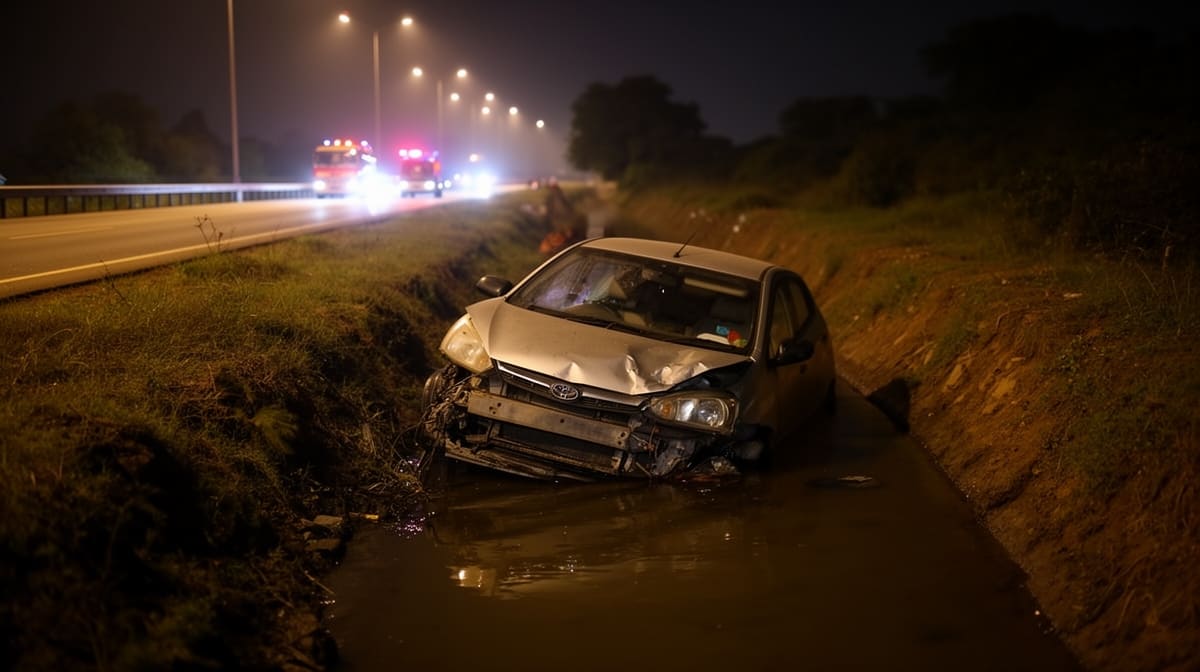
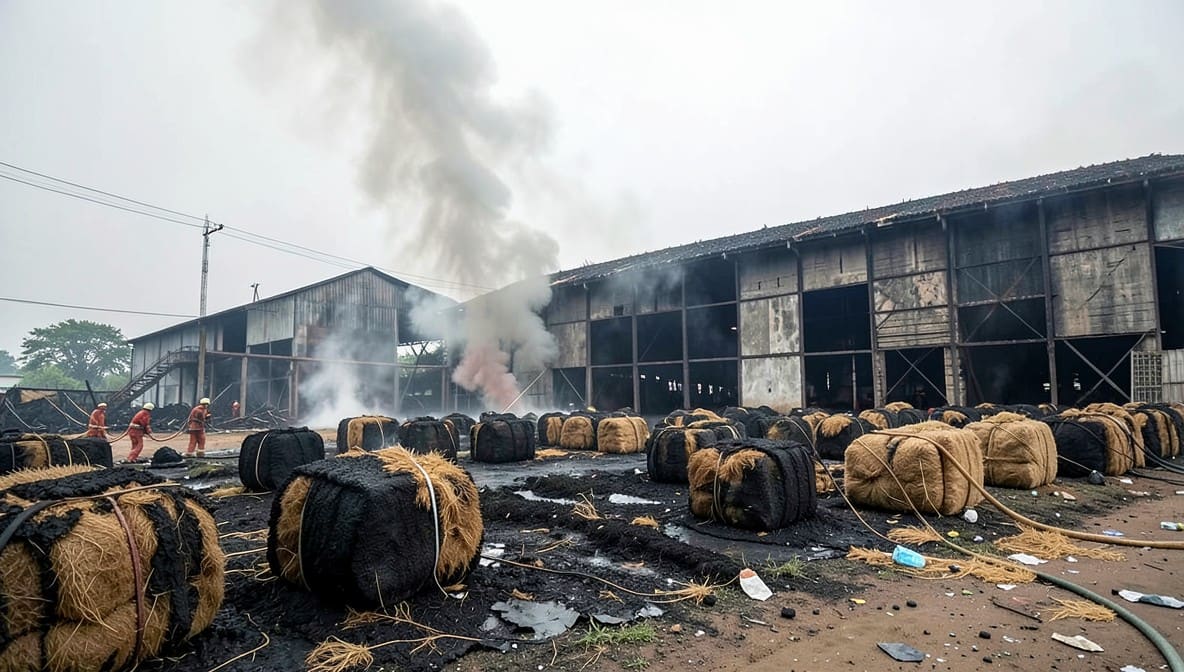
The complainant, Chetan Rana, proprietor of M/s. Chetan Electronics in Pharal, Kaithal, purchased an Air Testing Machine for Rs. 6,00,000 on 09.11.2013. The machine was financed by Canara Bank, Branch Pharal, which arranged for its insurance with United India Insurance Co. Ltd. under Policy No. 110705/11/13/11/00000265, valid from 17.12.2013 to 16.12.2014. On the night of 15/16.07.2014, a fire broke out in the complainant’s unit, completely destroying the Air Testing Machine along with other machinery and batteries. The complainant immediately reported the incident to the police, filing a DDR at PS Pundri on 20.07.2015, and lodged a claim with the insurer. The insurer repudiated the claim invoking an exclusion clause in the Standard Fire and Special Perils Policy.
Key Facts
- The Air Testing Machine was purchased on 09.11.2013 for Rs. 6,00,000
- Insurance policy issued on 17.12.2013, with cover note issued prior to policy dispatch
- Fire occurred on the night of 15/16.07.2014
- DDR filed at PS Pundri on 20.07.2015
- Claim lodged with insurer shortly after fire
- Insurer appointed surveyor Ashish Bahl, who submitted a report on 13.08.2014 assessing loss at Rs. 5,10,000 but denied payment citing exclusion
- Exclusion clause in policy: "Loss, destruction or damage to any electrical machine... arising from... short circuiting..."
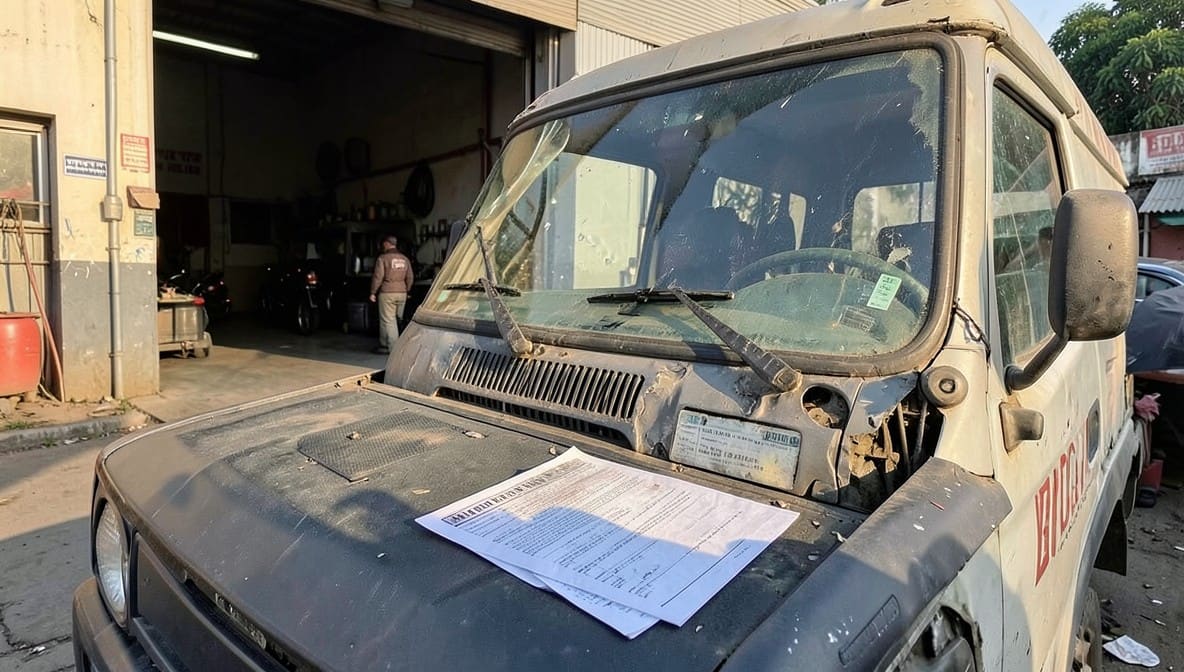
- Policy terms printed in extremely small font; no evidence of explanation to insured
- No expert testimony or technical analysis produced to confirm short circuit as cause
- CCTV footage and DDR not relied upon by insurer to establish cause
Procedural History
- 15.07.2016: District Consumer Forum, Kaithal, partly allowed complaint; directed insurer to pay Rs. 5,10,000 (surveyor’s assessed repair cost) + Rs. 5,000 compensation + litigation costs; compliance within 30 days; 8% p.a. interest if delayed
- 09.10.2017: Haryana State Consumer Commission dismissed insurer’s appeal; upheld District Forum’s order; noted insurer failed to prove cause of fire or explain exclusion clause
- 23.03.2026: National Consumer Commission dismissed revision petition; affirmed both lower orders
The Parties' Positions
For the Petitioner (Insurer): Argued that the surveyor’s report, DDR, and CCTV footage conclusively established fire originated due to short circuit within the machine. Relied on United India Insurance Co. Ltd. v. Samir Chandra (2005) and UIIC v. Subash Chandra (2010) to assert that insured must read policy terms and that admissions are best evidence. Claimed exclusion clause was valid and enforceable.
For the Respondent (Complainant): Contended that insurer failed to prove the fire was caused by short circuit. No expert evidence was produced. The exclusion clause was never explained to him, especially since policy terms were printed in tiny font and issued after the cover note. Relied on Star Health v. Asha and United India v. Maya to argue insurer’s duty to explain exclusions.
Relief Sought
The complainant sought payment of Rs. 6,00,000 (insured value), Rs. 3,00,000 for mental harassment, and Rs. 55,000 litigation costs. The District Forum awarded Rs. 5,10,000 (surveyor’s assessment) + Rs. 5,000 compensation. The insurer sought reversal of this award.
The Legal Issue
The central question was whether an insurer can repudiate a claim under an exclusion clause without proving both (1) the precise cause of loss matches the exclusion, and (2) the exclusion was clearly explained to the insured at the time of policy issuance.
Arguments Presented
For the Appellant/Petitioner
The insurer relied on the surveyor’s report, police DDR, and CCTV footage to assert that the fire originated from short circuit within the machine. It argued that the complainant’s own admission that the fire started in the machine constituted the best evidence against him (UIIC v. Samir Chandra). It further contended that the insured had a duty to read and understand policy terms, citing UIIC v. Subash Chandra and Sushila Devi v. LIC. It asserted that exclusion clauses must be strictly construed and enforced as written, relying on UIIC v. Orient Treasures and V.K. Karyana Store v. OIC.
For the Respondent/State
The complainant argued that the insurer failed to discharge its burden of proving the cause of fire was short circuit. The surveyor’s report was conclusory, lacking technical analysis. Neither the DDR nor CCTV footage established the cause. The insurer also failed to prove the exclusion clause was explained to the insured, particularly since the policy was issued after the cover note and printed in illegibly small font. Reliance was placed on Star Health v. Asha and United India v. Maya, which hold that insurers must prove communication of exclusions.
The Court's Analysis
The National Consumer Commission emphasized that insurance contracts are contracts of uberrimae fidei (utmost good faith), and exclusion clauses, being exceptions to coverage, must be strictly construed against the insurer. The Commission noted that while surveyor reports carry evidentiary weight, they are not conclusive and must be supported by cogent reasoning.
"In this case, except for a general observation made in the survey report, no scientific analysis, expert opinion, or technical material has been produced to conclusively establish that the fire was caused by a short circuit within the machine."
The Commission further held that the insurer’s failure to produce any expert testimony or corroborative evidence to substantiate the alleged cause of fire rendered the exclusion clause inapplicable. The police DDR merely recorded the incident; it did not determine the cause. CCTV footage was not analyzed or presented as evidence.
On the issue of disclosure, the Commission reiterated that the insurer, as the drafter of the contract, bears the burden of proving that exclusionary terms were brought to the notice of the insured. The policy conditions were printed in extremely small font, and the cover note was issued before the policy document. The insurer produced no evidence - no signed acknowledgment, no explanatory note, no witness testimony - to show the insured was made aware of the exclusion.
"The insurer, being the author of the contract, was required to demonstrate that such exclusionary terms were duly communicated to and understood by the insured. In the absence of such proof, reliance upon the exclusion clause becomes doubtful."
The Commission cited United India Insurance Co. Ltd. v. Hyundai Engineering (2024), Texco Marketing v. TATA AIG (2023), and Narsingh Ispat v. Oriental Insurance (2022) to affirm that the burden of proving applicability of an exclusion lies squarely on the insurer, and in case of ambiguity, the benefit must go to the insured.
The Commission also emphasized the limited scope of revisional jurisdiction under Section 21(b) of the Consumer Protection Act, 1986. It held that concurrent findings of fact by two lower fora, based on appreciation of evidence, cannot be disturbed unless shown to be perverse or legally unsustainable. No such perversity was demonstrated.
The Verdict
The Revision Petition was dismissed. The orders of the District Forum dated 15.07.2016 and the State Commission dated 09.10.2017 were upheld. The insurer was directed to pay Rs. 5,10,000 as cost of repair of the Air Testing Machine, Rs. 5,000 as compensation for mental agony and litigation costs, and 8% per annum interest from 15.08.2016 (30 days after the District Forum’s order) until actual payment. There shall be no order as to costs.
What This Means For Similar Cases
Insurer Must Prove Cause with Evidence, Not Assumption
- Practitioners must challenge insurer repudiations where no expert or technical evidence supports the alleged cause of loss
- Police reports or CCTV footage alone are insufficient to establish excluded causes like short circuit or arcing
- Surveyor reports must be detailed, analytical, and corroborated - conclusory statements are inadequate
Disclosure of Exclusions Is Non-Negotiable
- If policy terms are printed in small font or issued after a cover note, insurers must prove actual explanation to insured
- Silence or assumption of knowledge by insured is not a defense
- In consumer cases, the burden of proving communication of exclusions rests entirely on the insurer
Concurrent Findings Are Nearly Immune to Revision
- Revision petitions under Section 21(b) are not appeals; they are limited to jurisdictional errors or perversity
- Practitioners should focus on securing favorable findings at the District and State levels, as reversal at NCDRC is exceptionally rare
- Always ensure surveyor reports are formally submitted and analyzed in evidence