The National Consumer Disputes Redressal Commission has held that undue delay in processing an insurance claim and gross undervaluation of loss by the insurer constitute deficiency in service under the Consumer Protection Act, 1986. The Commission awarded 75% of the claimed amount, emphasizing that insurers cannot exploit procedural delays or conservative assessments to deny fair indemnity to insured parties engaged in commercial activities.
Background & Facts
The Dispute
The complainant, M/s TSR Cotton Ginning Mill, operated a cotton processing unit in Guntur, Andhra Pradesh. It held two Standard Fire and Special Perils Insurance Policies issued by Oriental Insurance Co. Ltd. Policy No. 463300/11/2014/1010, issued on 24.02.2014, covered a sum insured of Rs. 1,50,00,000, valid until 23.05.2014. On 04.03.2014, an additional policy, No. 463300/11/2014/1065, was issued for a further sum insured of Rs. 1,50,00,000, valid until 02.06.2014. The policies collectively insured stocks of cotton Kappas, seeds, lint, and packing materials stored at the insured premises.
Key Facts
- The total sum insured under both policies was Rs. 3,00,00,000.
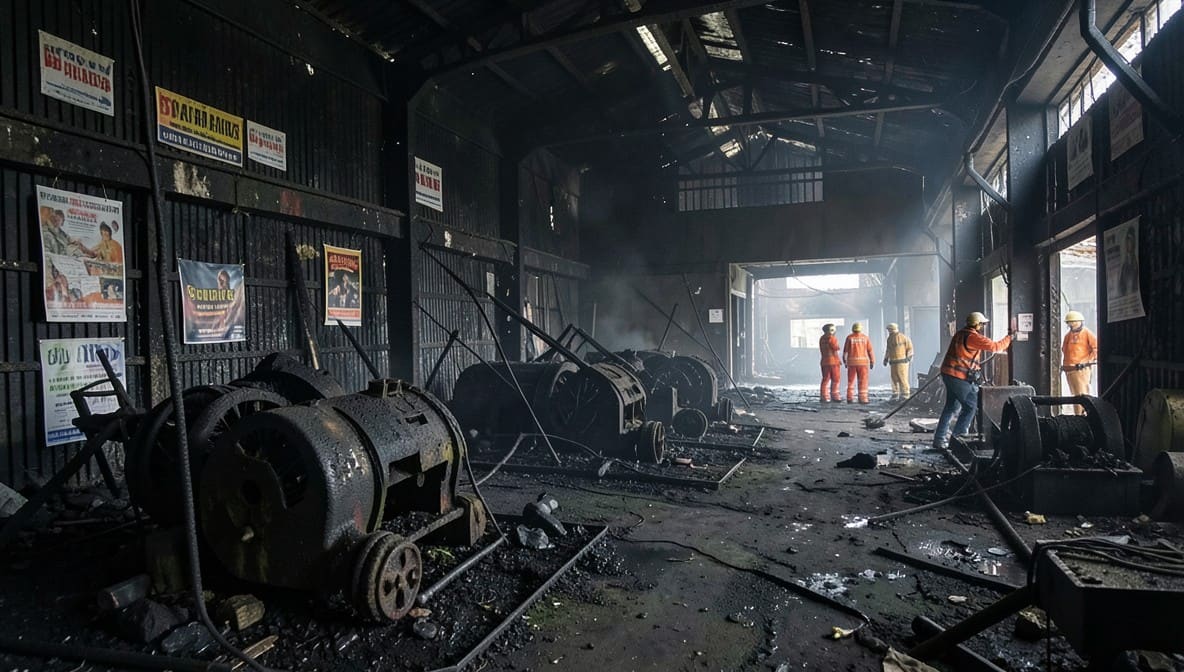
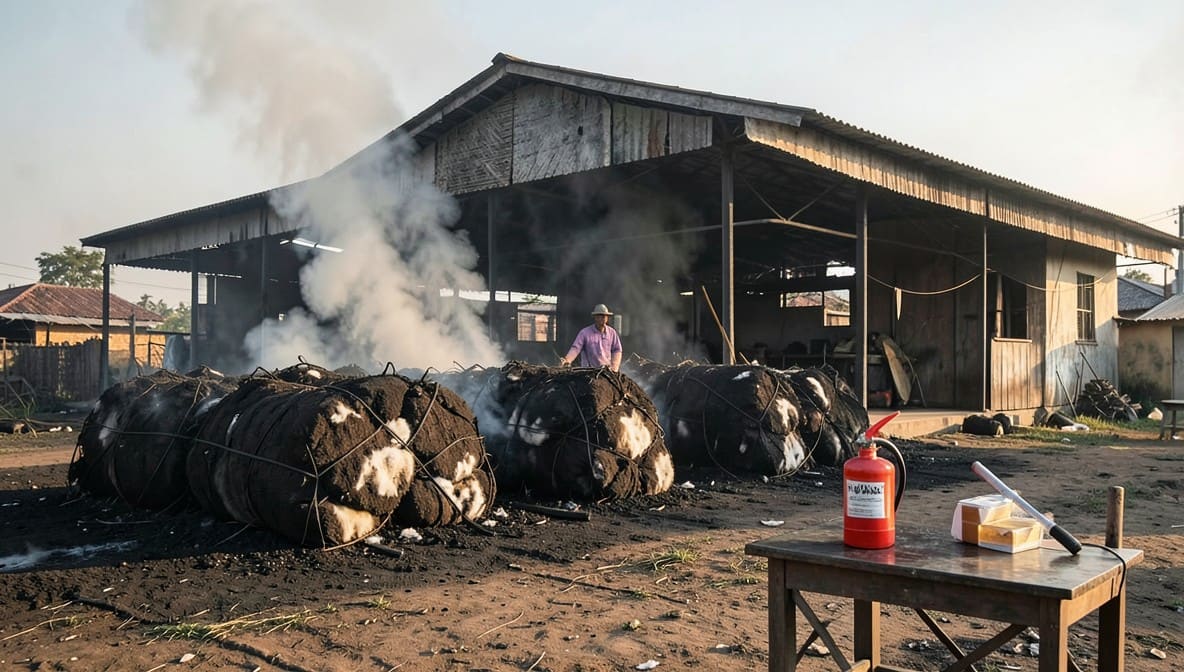
- On 18.03.2014 at approximately 3:00 PM, a fire broke out due to an electric short circuit in the cable of a portable water motor used to spray moisture on raw cotton.
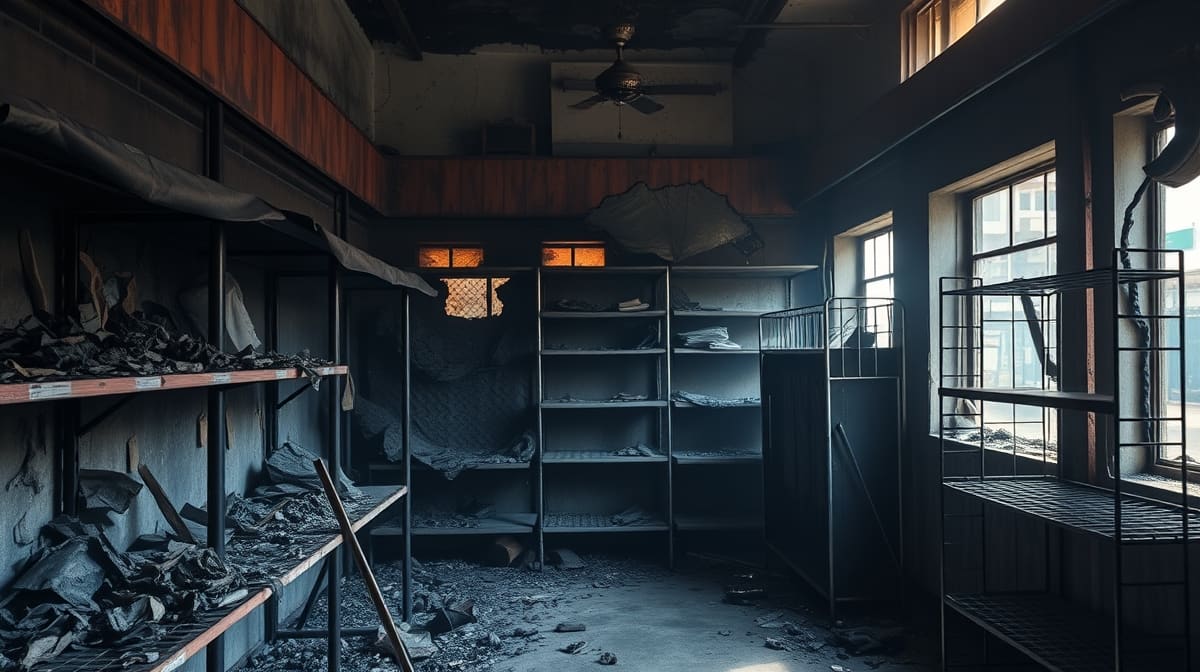
- The fire destroyed a substantial portion of the insured stock. The complainant immediately notified the Fire Department, Police, and the insurer.
- An FIR No. 117/2014 was registered on the same day, recording the fire as accidental.
- The complainant reported to the District Fire Officer on 25.03.2014, estimating a loss of approximately Rs. 95,00,000 due to the destruction of 2000 quintals of cotton Kappas.
- The insurer appointed surveyor Ch. Abshaloam on 18.03.2014, who visited the site on the same day.
- The complainant segregated and sold salvage worth Rs. 67,64,573 under the surveyor’s direction.
- The Deputy Electrical Inspector, Guntur, submitted a report on 17.07.2014 confirming the fire was caused by an electrical short circuit without negligence on the part of the complainant.
- The Andhra Pradesh State Disaster and Fire Service Department issued a Fire Attendance Certificate on 08.08.2014, confirming destruction of 2000 quintals of cotton Kappas.
- The complainant submitted a claim form on 07.07.2015 for Rs. 1,07,45,956.
- The surveyor submitted his report on 14.09.2015, assessing the loss at Rs. 20,77,878.
- The insurer offered a settlement of Rs. 16,71,924 on 27.02.2017, over two years and eleven months after the fire.
- The complainant rejected the offer on 12.04.2017, maintaining its claim for Rs. 95,00,000.
- The complainant’s books of account showed total stock of cotton Kappas as 3741 quintals on the date of fire, valued at Rs. 4,748 per quintal, totaling Rs. 1,77,62,268.
- The surveyor acknowledged 3251 quintals of Kappas were affected by fire and water, valued at Rs. 1,54,35,748.
- The surveyor further classified only 984 quintals as partially damaged and applied depreciation rates of 40% to 80%, reducing the assessed loss to Rs. 20,77,878.
Procedural History
- 18.03.2014: Fire incident at insured premises.
- 18.03.2014: FIR registered; insurer appointed surveyor.
- 25.03.2014: Complainant informed District Fire Officer of loss.
- 17.07.2014: Electrical Inspector’s report submitted.
- 08.08.2014: Fire Attendance Certificate issued.
- 07.07.2015: Claim form submitted for Rs. 1,07,45,956.
- 14.09.2015: Surveyor submitted report assessing loss at Rs. 20,77,878.
- 11.09.2015: Legal notice issued by complainant.
- 26.09.2016: Complainant submitted additional documents.
- 27.02.2017: Insurer offered settlement of Rs. 16,71,924.
- 12.04.2017: Complainant rejected settlement.
- 12.06.2018: Consumer Complaint No. 1362 of 2018 filed before NCDRC.
- 02.03.2026: Judgment reserved.
- 15.06.2026: Judgment pronounced.
The Parties' Positions
For the Complainant
The complainant contended that the insurer failed to settle the claim fairly and promptly. It argued that the surveyor’s report was unduly delayed, the loss assessment was arbitrary and ultra-conservative, and the offer of Rs. 16,71,924 was grossly inadequate. It relied on New India Assurance Co. Ltd. v. Pradeep Kumar and Sri Venkateshwara Syndicate v. Oriental Insurance Co. Ltd. to assert that surveyor reports are not binding and must be evaluated in light of evidence. It further argued that the insurer’s delay violated IRDA guidelines mandating claim settlement within four months.
For the Respondent
The insurer contended that the complaint was not maintainable as the complainant was engaged in commercial activity and thus not a consumer under the Act. It further argued that the delay in claim settlement was attributable to the complainant’s failure to provide essential documents, including tax returns, partnership deeds, and police investigation reports. It relied on United India Insurance Co. Ltd. v. Kantika Colour Lab to assert that insurance is a contract of indemnity and the insured cannot recover more than actual loss. It maintained that the surveyor’s assessment was accurate and the settlement offer was fair.
Relief Sought
The complainant sought:
- Payment of Rs. 1,07,45,956 as claim amount.
- Interest at 18% per annum from 18.06.2014 (three months after fire) until realization.
- Rs. 10,00,000 for mental agony and harassment.
- Costs of proceedings.
The Legal Issue
The central questions were: (1) Whether a commercial entity can be a consumer under the Consumer Protection Act, 1986, in respect of an insurance claim dispute? (2) Whether undue delay in submission of a surveyor’s report and gross undervaluation of loss by the insurer constitute deficiency in service? (3) Whether the insurer’s reliance on a surveyor’s report absolves it of liability when the report is demonstrably unreasonable?
Arguments Presented
For the Appellant/Petitioner
The complainant argued that the definition of consumer under Section 2(d) of the Consumer Protection Act, 1986, includes any person who hires or avails of any service, regardless of commercial purpose. It relied on settled jurisprudence that insurance services fall within the ambit of consumer protection. It contended that the surveyor’s report, submitted 18 months after the fire, was unreasonably delayed despite the insurer’s own appointment of the surveyor. It emphasized that the surveyor’s assessment ignored the actual extent of damage, as evidenced by photographs, fire reports, and the complainant’s own stock records. It cited New India Assurance Co. Ltd. v. Pradeep Kumar to argue that surveyor reports are not sacrosanct and can be departed from. It further invoked the contra proferentem rule from Mahakali Sujatha v. Future Generali India Life Insurance Co. Ltd. to assert that ambiguities in loss assessment must be resolved in favor of the insured.
For the Respondent/State
The insurer argued that the complainant was not a consumer because the insurance was procured for commercial purposes. It contended that the delay in claim settlement was caused by the complainant’s failure to provide documents such as income tax returns, lease agreements, and police investigation reports. It relied on United India Insurance Co. Ltd. v. Kantika Colour Lab to assert that insurance is a contract of indemnity and the insured must prove actual loss. It maintained that the surveyor was an independent professional appointed under the Insurance Act and IRDA Regulations, and his report was the only valid basis for settlement. It further argued that the complainant’s claim of Rs. 1,07,45,956 was inflated and unsupported by documentary evidence.
The Court's Analysis
The Commission first rejected the insurer’s preliminary objection that the complainant was not a consumer. It held that the definition of consumer under Section 2(d) of the Consumer Protection Act, 1986, is broad and includes persons availing services for commercial purposes. The dispute pertained to the insurer’s failure to settle a claim, which is a service under the Act. The Commission relied on New India Assurance Co. Ltd. v. Pradeep Kumar to hold that surveyor reports are not conclusive and are merely a foundation for settlement.
The Commission then examined the delay in claim processing. The fire occurred on 18.03.2014. The surveyor was appointed on the same day. Yet, the surveyor’s report was submitted on 14.09.2015 - over 18 months later. The insurer then took another 17 months to offer settlement on 27.02.2017. The Commission noted that IRDA guidelines mandate surveyor reports to be submitted within three months and claims settled within one month thereafter. The delay was unjustified.
The Commission found the surveyor’s assessment unreasonable. The surveyor acknowledged 3251 quintals of cotton Kappas were affected, valued at Rs. 1,54,35,748. Yet, he assessed the loss at only Rs. 20,77,878 by arbitrarily classifying 2000 quintals as "unaffected" despite fire and water damage. The Commission observed that cotton, when exposed to fire and water, suffers irreversible degradation in commercial value. The surveyor’s method of volumetric estimation and application of depreciation rates of 40% to 80% was speculative and not supported by evidence.
The Commission applied the contra proferentem rule, as affirmed in Mahakali Sujatha, holding that ambiguities in insurance contracts must be construed against the insurer. It noted that the insurer bore the burden of proving non-disclosure or misrepresentation under Section 101 of the Evidence Act, 1872, and failed to do so. The insurer’s reliance on missing documents was misplaced, as the core facts - valid policy, fire incident, and extent of stock - were undisputed.
The Commission further relied on Ashok Kumar v. New India Assurance Co. Ltd., which held that where there is a minor breach or contributory factor, the insurer may deduct proportionately but cannot deny the entire claim. The Commission concluded that the insurer’s conduct amounted to unfair trade practice and deficiency in service.
"The surveyor/OP adopted ultra conservative method in determining the damage and the liability of the OP by significantly limiting the quantity of affected stocks... Such action by the OP is highly untenable and verges to unfair trade practice."
The Commission found the complainant’s claim of Rs. 1,07,45,956 to be within the bounds of the actual loss, as it was less than the total affected stock value of Rs. 1,54,35,748. It awarded 75% of this claim, consistent with the non-standard settlement guidelines in Ashok Kumar.
The Verdict
The complainant succeeded. The Commission directed the insurer to pay Rs. 79,51,811, which is 75% of the claimed amount of Rs. 1,07,45,956, less Rs. 1,00,000 as salvage value. Simple interest at 6% per annum shall accrue from 18.09.2014 (six months after the fire) until payment. In case of default, interest shall increase to 9% per annum. The insurer shall make payment within one month. Additionally, the insurer shall pay Rs. 30,000 as litigation costs.
What This Means For Similar Cases
Surveyor Reports Are Not Final or Binding
- Practitioners must challenge surveyor reports that are delayed, speculative, or inconsistent with physical evidence.
- The burden shifts to the insurer to justify deviations from the insured’s claim, especially when the surveyor’s methodology is opaque.
- Courts and forums may apply proportionate deductions under Ashok Kumar rather than outright repudiation.
Delay in Claim Settlement Constitutes Deficiency in Service
- Insurers cannot use procedural delays as a tactic to pressure claimants into accepting low settlements.
- Delays beyond IRDA timelines (3 months for survey, 1 month for settlement) are prima facie evidence of deficiency.
- Interest claims from the date of loss are maintainable, even if the claim is partially allowed.
Commercial Entities Are Consumers Under the Act
- Insurance disputes involving businesses are squarely within the jurisdiction of consumer forums.
- The purpose of insurance (commercial or personal) is irrelevant; the nature of the service (claim settlement) determines consumer status.
- This removes a common defense used by insurers to avoid consumer forum jurisdiction.
Burden of Proof Lies with the Insurer
- Insurers must prove non-disclosure, misrepresentation, or breach of policy conditions with credible documentary evidence.
- Mere allegations or unverified tabulations are insufficient.
- The contra proferentem rule applies strictly to standard form insurance contracts, favoring the insured in case of ambiguity.
Practical Takeaways for Practitioners
- Always document the timeline of claim submission, surveyor visits, and insurer communications.
- Challenge surveyor reports that ignore physical evidence or apply arbitrary depreciation.
- Seek 75% of the claim as a default remedy where insurer conduct is unreasonable but not fraudulent.
- Claim interest from the date of loss, not from the date of claim submission.
- Use Ashok Kumar and Mahakali Sujatha to argue for proportionate relief and contra proferentem interpretation.