The National Consumer Disputes Redressal Commission has reaffirmed that insurers cannot repudiate claims based on speculative allegations of overloading without concrete, contemporaneous evidence. This judgment reinforces the principle that consumer fora must rely on documented proof, not post-hoc interpretations, to determine policy breaches.
Background & Facts
The Dispute
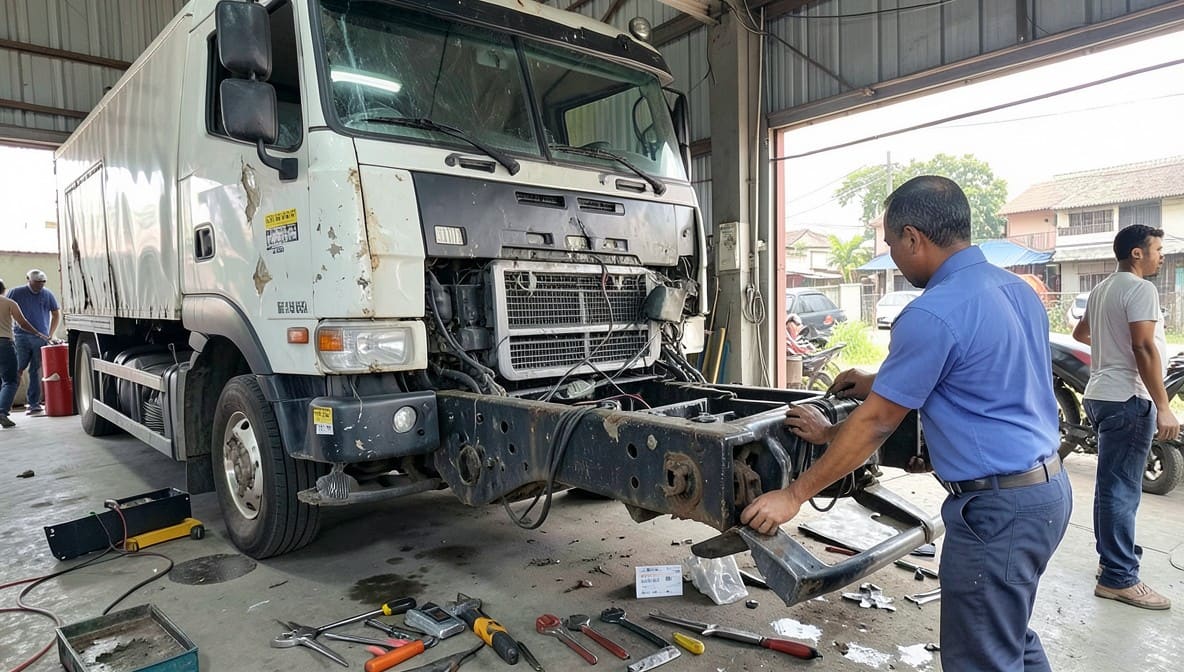
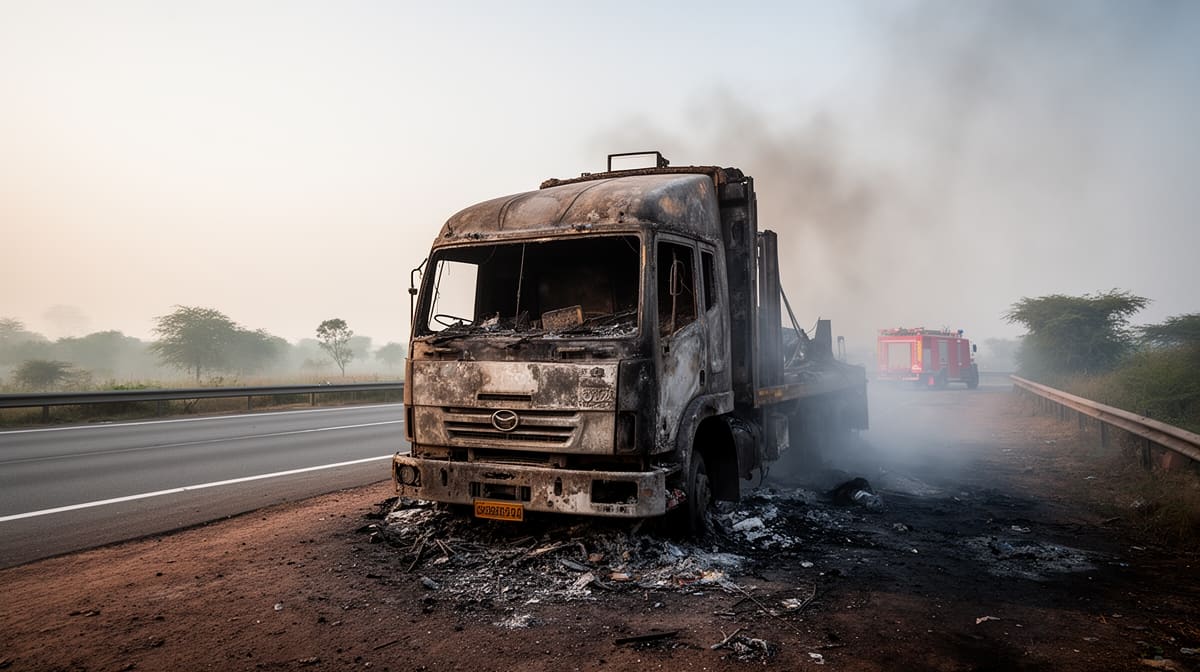
The respondent, Sanjeev Kumar, owned a Hiva make truck (Registration No. JH-04N-3962) insured under Policy No. 540704511170100001510 with the petitioner, New India Assurance Company Limited, for the period 24.10.2017 to 23.10.2018. On 19.09.2018, the vehicle met with a severe accident near Ratanganj Bazar, Bhagalpur, while carrying yellow sand. The conductor, Ramesh Yadav, sustained injuries, and the vehicle was rendered a total loss. The respondent immediately intimated the accident to the local police station at Sajore and to the insurer via mobile phone on the same day.
Key Facts
- The vehicle’s Registration Certificate showed a Gross Vehicle Weight (GVW) of 25,000 kg and unladen weight of 11,382 kg
- The load challan produced by the respondent was dated 14.09.2018 to 15.09.2018, indicating a load of 18,000 kg of sand
- The accident occurred on 19.09.2018, five days after the challan’s validity expired
- The insurer appointed a surveyor who inspected the vehicle and advised the respondent to proceed with repairs
- The respondent obtained a repair estimate of Rs. 5,65,440/- from Vikramsheela Automobile Pvt. Ltd., Bhagalpur, and submitted it to the insurer
- After repairs were completed on 11.11.2018, a final bill of Rs. 6,57,634/- was raised and submitted
- The insurer then appointed a second surveyor, R.K. Bhagat, who assessed the loss at Rs. 3,42,330/-
- On 20.11.2018, the respondent signed an Assessment Acceptance Note agreeing to Rs. 3,42,330/- under financial pressure
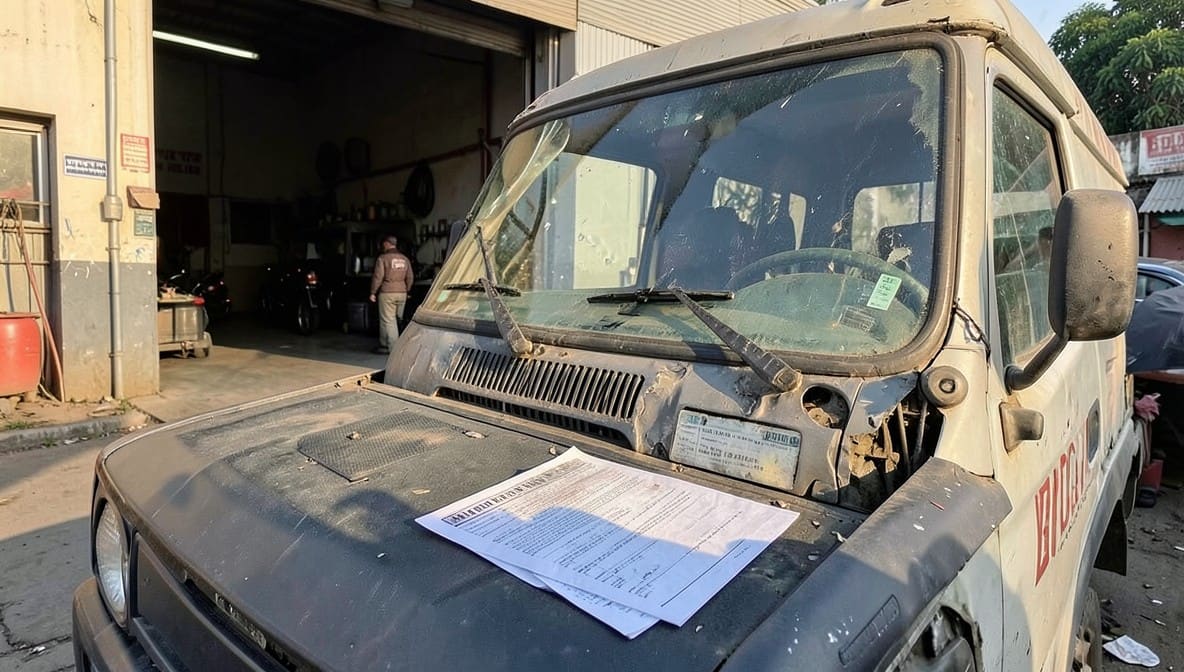
- The insurer issued communications dated 20.02.2019 and 22.05.2019 questioning the load challan’s validity and alleging overloading beyond 12.5% of GVW
- The respondent did not respond to these communications
- The insurer repudiated the claim via letter dated 11.06.2019 on grounds of overloading
- The respondent filed a consumer complaint (CC/09/2019) before the District Forum, Banka on 16.12.2019
Procedural History
- 19.09.2018: Accident occurred
- 19.09.2018: Accident intimated to police and insurer
- 05.10.2018: First surveyor submitted report
- 11.11.2018: Vehicle repaired; final bill submitted
- 20.11.2018: Respondent signed Assessment Acceptance Note
- 20.02.2019: Insurer issued first clarification notice
- 22.05.2019: Insurer issued second notice alleging overloading
- 11.06.2019: Claim repudiated by insurer
- 16.12.2019: Consumer complaint filed before District Forum, Banka
- 25.06.2020: District Forum allowed complaint; directed payment of Rs. 6,57,634/- + 9% interest from 11.11.2018 + Rs. 25,000/- for mental harassment + Rs. 5,000/- litigation costs
- 23.11.2023: State Commission dismissed appeal and upheld District Forum’s order
- 12.06.2026: Revision Petition decided by NCDRC
Relief Sought
The respondent sought payment of Rs. 6,57,634/- for repair costs, 9% interest from 11.11.2018, Rs. 25,000/- for mental agony, Rs. 5,000/- for litigation costs, and continuation of daily losses. The petitioner sought to set aside the orders and repudiate the claim on grounds of overloading.
The Legal Issue
The central question was whether an insurer can repudiate a motor insurance claim based solely on a load challan dated prior to the accident, in the absence of any contemporaneous evidence proving overloading at the time of the incident, and whether such repudiation constitutes deficiency in service under the Consumer Protection Act, 2019.
Arguments Presented
For the Petitioner
The petitioner contended that the vehicle’s total weight at the time of accident was 29,382 kg (11,382 kg unladen + 18,000 kg load), exceeding the GVW of 25,000 kg by 4,382 kg (17.52%), which violated Section 113(3)(b) of the Motor Vehicles Act, 1988. Reliance was placed on the load challan, the second surveyor’s report, and the Assessment Acceptance Note. The insurer cited IRDAI Circular dated 13.05.2016 and internal circulars permitting repudiation where overloading exceeds 12.5% of GVW. It argued that the respondent’s failure to respond to show-cause notices amounted to admission of guilt. Precedents in Suraj Mal Ram Niwas Oil Mills (P) Ltd. v. United India Insurance Co. Ltd., Vikram Greentech (I) Ltd. v. New India Assurance Co. Ltd., and United India Insurance Co. Ltd. v. Harchand Rai Chandan Lal were cited to support strict construction of policy terms.
For the Respondent
The respondent argued that the load challan was not a traffic challan and was invalid on the date of accident. He emphasized that the insurer’s own surveyor had advised repairs and accepted the vehicle’s condition before raising objections. The Assessment Acceptance Note was signed under duress and did not constitute waiver of rights. He relied on Rubi (Chandra) Dutta v. United India Insurance Co. Ltd., Sunil Kumar Maity v. State Bank of India, Rajiv Shukla v. Gold Rush Sales and Services Ltd., and Rajesh Kumar v. National Insurance Co. Ltd. to argue that revisional jurisdiction cannot be used to re-appreciate evidence or overturn concurrent findings of fact.
The Court's Analysis
The National Consumer Disputes Redressal Commission emphasized that revisional jurisdiction under Section 58(1)(b) of the Consumer Protection Act, 2019 is not an appellate forum. It cannot be invoked to re-evaluate evidence or substitute its own view on factual findings. The Commission noted that both the District Forum and the State Commission had independently concluded that the insurer failed to establish overloading at the time of the accident.
"The mere reliance on a load challan or subsequent correspondence, in absence of any clear evidence demonstrating overloading at the relevant time, cannot be treated as sufficient proof of violation of policy conditions."
The Court observed that the load challan dated 14.09.2018 - 15.09.2018 could not prove the vehicle’s weight on 19.09.2018. No weight measurement records, weighbridge receipts, or photographs from the accident site were produced. The second surveyor’s assessment of Rs. 3,42,330/- was not binding, as the respondent signed the acceptance note under financial pressure and without legal advice. The insurer’s internal circulars, while relevant, could not override the burden of proof required under consumer law.
The Commission reiterated the Supreme Court’s holding in Rajesh Kumar v. National Insurance Co. Ltd. that revisional jurisdiction is confined to jurisdictional errors, material irregularities, or patent perversity. No such grounds were demonstrated. The insurer’s conduct, including delayed settlement and shifting grounds for repudiation, amounted to deficiency in service under Section 2(1)(g) of the Consumer Protection Act, 2019.
The Verdict
The Revision Petition was dismissed. The order dated 23.11.2023 of the Bihar State Consumer Disputes Redressal Commission, affirming the District Forum’s order dated 25.06.2020, was upheld. The petitioner is directed to pay the respondent Rs. 6,57,634/- towards repair costs, 9% interest per annum from 11.11.2018 until realization, Rs. 25,000/- for mental agony, and Rs. 5,000/- for litigation costs. The total amount of Rs. 6,87,634/- must be paid within four weeks from the date of this order. Pending applications are disposed of.
What This Means For Similar Cases
Documentary Evidence Must Be Timely and Relevant
- Insurers cannot rely on expired or unrelated documents (e.g., load challans) to prove overloading at the time of accident
- Proof of violation must be contemporaneous, verifiable, and directly linked to the incident date
- Post-accident investigations alone are insufficient to discharge the burden of proof
Revisional Jurisdiction Is Not a Second Appeal
- Consumer fora’s concurrent factual findings are binding unless there is patent perversity or illegality
- Parties cannot use revision petitions to reargue evidence or challenge credibility assessments
- Practitioners must focus on procedural flaws, not factual disagreements, when approaching higher forums
Repudiation Must Be Based on Objective Standards
- Internal insurer guidelines cannot override the requirement to prove policy breaches with credible evidence
- Financial pressure on consumers to sign settlement notes does not validate repudiation
- Delayed repudiation after repairs are completed constitutes deficiency in service under consumer law