A landmark ruling by the Delhi State Consumer Disputes Redressal Commission has clarified that collapse due to implosion constitutes a covered peril under Standard Fire & Special Perils Insurance Policies, irrespective of the age of the structure. The decision reinforces the insurer’s duty to honor claims when the policy wording explicitly includes implosion, and condemns the practice of denying legitimate claims based on extraneous factors like building age.
Background & Facts
The Dispute
The complainant, Sundent India, a sole proprietorship dealing in dental equipment, purchased two insurance policies from Bajaj Allianz General Insurance Co. Ltd. (Opposite Party No. 1) for its shop located at Shop No. 5, 1st Floor, 1487/2, Moti Cinema Compound, Chandni Chowk, Delhi-110006. The policies were taken on 05.07.2013, following advice from United Bank of India (Opposite Party No. 2) as a condition for availing an overdraft facility. The policies were valid from 24.06.2013 to 23.06.2014, with a sum insured of Rs. 28,50,000 each under the Standard Fire & Special Perils Policy and the Burglary Insurance Policy. The complainant paid premiums of Rs. 8,646 and Rs. 640 respectively.
Key Facts
- The Standard Fire & Special Perils Policy (No. OG-14-1104-4001-00000732) covered 12 specified perils, including: Fire, Lightning, Explosion/Implosion, Aircraft Damage, Riot, Storm, Flood, Impact Damage, Subsidence and Landslide, Bursting of Water Tanks, Missile Testing, Leakage from Sprinklers, and Bush Fire.
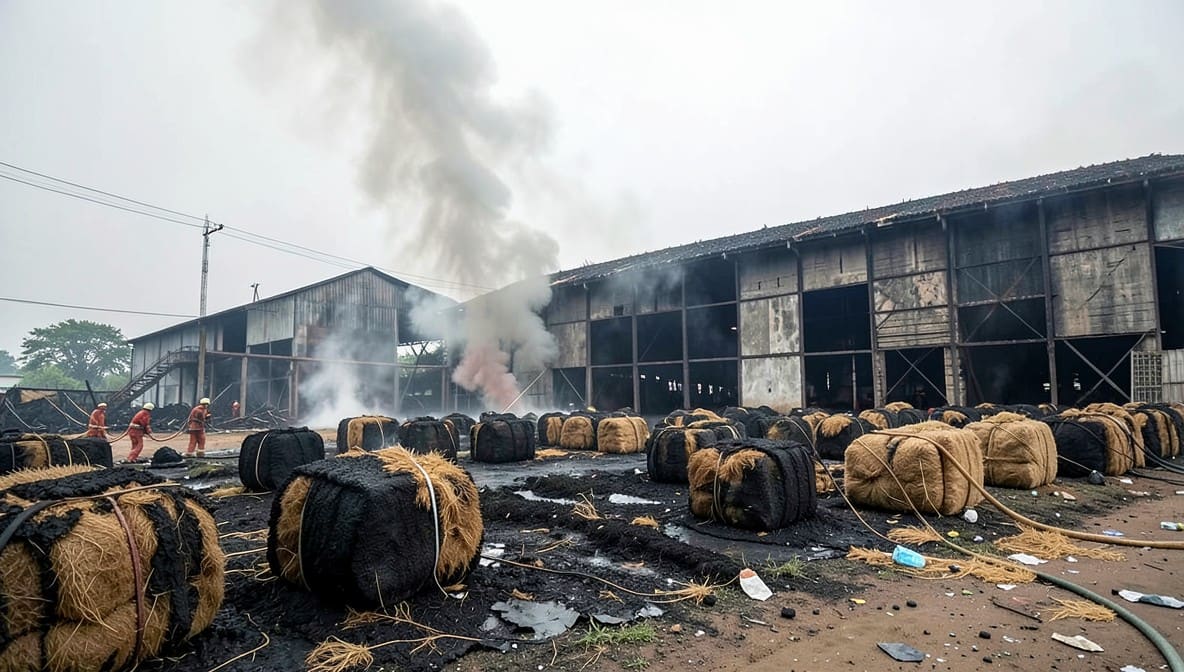
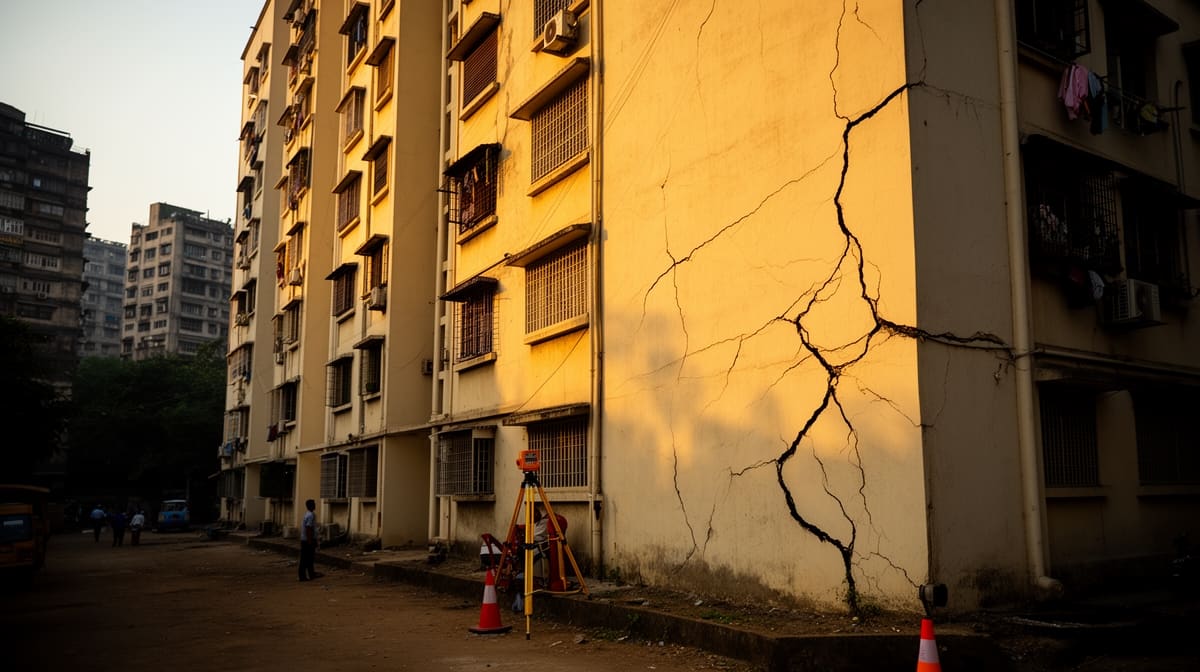
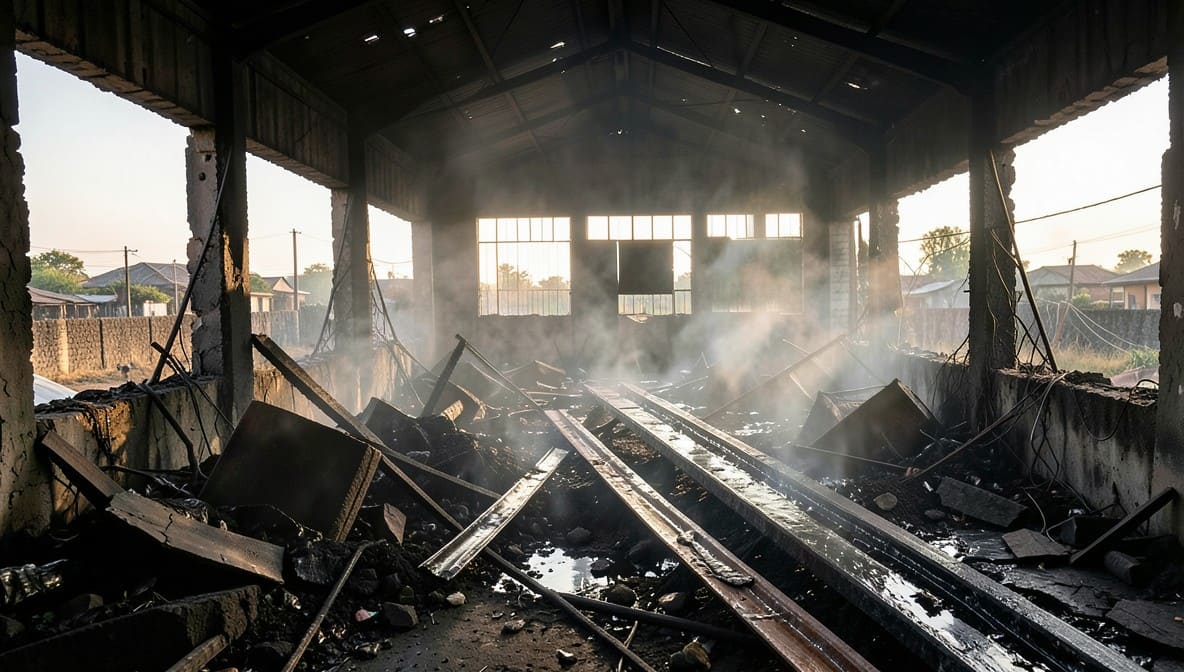
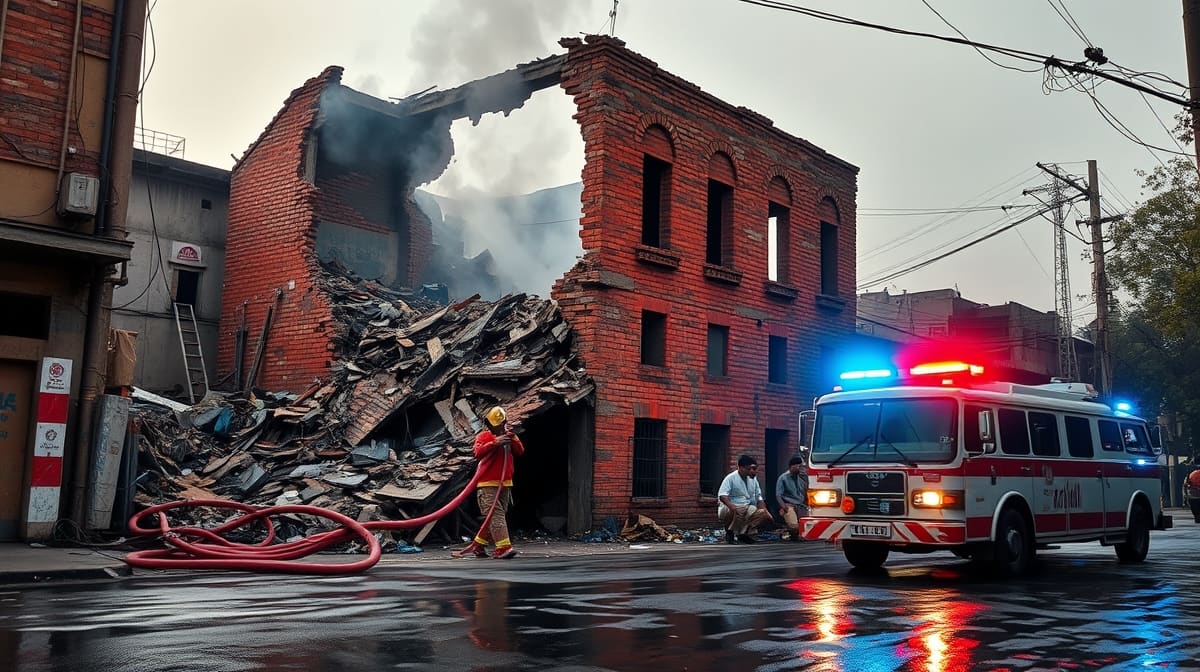
- On 04.08.2013, the building housing the shop collapsed, resulting in fire, injury to two persons, and total destruction of all units.
- An FIR (No. 144) was registered at Kotwali Police Station on 04.08.2013, recording the cause as "collapse" of the building.
- The complainant intimated the claim to Bajaj Allianz on 05.08.2013.
- Bajaj Allianz appointed M/s Skaad Surveyors & Loss Adjusters Pvt. Ltd. (Opposite Party No. 3) to survey the loss.
- On 28.10.2013, Bajaj Allianz issued a repudiation letter (No. 18125) rejecting the claim, citing a survey report that attributed the collapse to "ageing and normal wear and tear", and stating that "none of the insured perils" had operated.
- The complainant sent a legal notice on 02.07.2015, which remained unaddressed.
- The complainant filed the complaint before the Commission on 20.10.2015.
Procedural History
- 20.10.2015: Complaint filed before Delhi State Consumer Disputes Redressal Commission (CC/1102/2015)
- 03.12.2015: Notice issued to all opposite parties
- 20.09.2016: Opposite Party No. 1 proceeded ex-parte for non-appearance
- 28.02.2017: Opposite Party No. 2 proceeded ex-parte for non-filing of written statement
- 05.08.2013: Opposite Party No. 3 filed written statement, disputing liability
- 09.05.2016: Advocate for Opposite Party No. 2 appeared but failed to file written statement
- 20.03.2026: Final arguments concluded and order reserved
- 24.03.2026: Judgment pronounced
The Parties' Positions
For the Complainant: The collapse was caused by implosion, a peril explicitly covered under the policy. The insurer’s reliance on building age was irrelevant since the policy did not exclude structural failure due to implosion. The insurer failed to conduct pre-insurance inspection despite having the duty to do so. The repudiation was arbitrary, mala fide, and constituted deficiency in service.
For Opposite Party No. 3 (Surveyor): The building was approximately 100 years old and in a dilapidated state. The collapse was due to ageing and structural decay, not any insured peril. The survey report was accurate and acted in good faith. No deficiency in service was established.
Relief Sought
The complainant sought:
- Payment of claim amount of Rs. 28,50,000
- Interest at 12% per annum compounded quarterly from the date of loss
- Rs. 10,00,000 for mental agony and harassment
- Rs. 1,50,000 as litigation costs
The Legal Issue
The central question was whether collapse due to implosion constitutes a covered peril under a Standard Fire & Special Perils Policy, and whether an insurer can deny a claim by attributing the loss to building age when the policy explicitly includes "implosion" as an insured risk.
Arguments Presented
For the Appellant/Petitioner
The complainant relied on the express terms of the policy, which listed "implosion" as a covered peril. He argued that the term "implosion" - defined in the Oxford Dictionary as "a sudden collapse inwards" - accurately described the event. The FIR and media reports corroborated the nature of the collapse. He cited United India Insurance Co. Ltd. v. M/s Kiran Combers & Spinners to establish that insurers have a duty to inspect premises before issuing policies, and cannot later deny claims on grounds of pre-existing defects they failed to detect. He further emphasized that the insurer’s conduct - delayed response, reliance on a biased survey report, and refusal to provide information - constituted unfair trade practice and deficiency in service under Section 2(1)(g) of the Consumer Protection Act, 1986.
For the Respondent/State
Opposite Party No. 3 contended that the building’s age and structural deterioration were the sole causes of collapse, and that no insured peril such as explosion, fire, or storm had occurred. It argued that the survey report was objective and that the insurer acted in good faith by relying on it. It cited Ravneet Singh Bagga v. KML Royal Dutch Airlines to assert that where a service provider acts after due consideration, no deficiency arises. It also alleged that the complainant had not approached the Commission with clean hands due to alleged misrepresentation.
The Court's Analysis
The Commission undertook a detailed textual analysis of the policy document, noting that "implosion" was explicitly listed as an insured peril among 12 specific risks. The term was not qualified by any exclusion for building age or structural condition. The Commission rejected the surveyor’s conclusion that the collapse was due to "ageing" as legally insufficient, since ageing is not an excluded peril under the policy, nor is it a substitute for identifying the proximate cause.
"The policy covers implosion. The fact that the building was old does not negate the occurrence of implosion. If the insurer wished to exclude structural failure due to age, it should have inserted an express exclusion."
The Commission emphasized that the insurer had a duty to inspect the premises before underwriting the policy. Citing United India Insurance Co. Ltd. v. M/s Kiran Combers & Spinners, it held that an insurer cannot disclaim liability for defects it failed to detect during pre-insurance assessment. The insurer’s certification of the building as insurable, followed by denial of claim on grounds of age, amounted to a breach of good faith.
The Commission further noted that the FIR recorded the collapse as the primary event, with fire being a consequence. This supported the complainant’s version that implosion triggered the collapse. The insurer’s reliance on the survey report was found to be misplaced, as the surveyor conflated cause with condition. The report did not rule out implosion; it merely speculated about ageing.
The Commission also invoked Oriental Insurance Co. Ltd. v. M/S Ozma Shipping Company, observing that insurers must not adopt a "refusal to pay on one pretext or the other" attitude, as it undermines public trust. The conduct of the insurer - delay, non-communication, and arbitrary repudiation - was held to be a clear case of deficiency in service.
The Verdict
The complaint was allowed. The Commission directed Opposite Party No. 1 (Bajaj Allianz) to pay Rs. 14,33,347 (the net loss assessed by the surveyor), along with:
- Interest at 6% per annum from 20.10.2015 (date of complaint) to 24.03.2026 (date of judgment);
- If payment is not made by 24.05.2026, the entire amount shall bear interest at 9% per annum from 20.10.2015 until actual realization;
- Rs. 1,00,000 as compensation for mental agony and harassment;
- Rs. 50,000 as litigation costs.
All pending applications were disposed of. The judgment was to be uploaded on the Commission’s website and provided free of cost to all parties.
What This Means For Similar Cases
Implosion Is a Covered Peril Unless Excluded
- Practitioners must argue that any structural collapse involving inward force qualifies as implosion under fire policies, even if the building is old.
- Insurers cannot invoke "ageing" or "wear and tear" to deny claims when implosion is an explicitly listed peril.
- Policy wordings must be interpreted strictly against the insurer under the doctrine of contra proferentem.
Insurer’s Pre-Inspection Duty Is Non-Negotiable
- Insurers who issue policies without inspecting premises cannot later deny claims based on pre-existing structural conditions.
- Failure to inspect constitutes negligence and shifts the burden to the insurer to prove the loss was not caused by an insured peril.
- This judgment reinforces the principle that insurers cannot benefit from their own omission.
Delay and Arbitrariness Constitute Deficiency in Service
- Repudiation without proper investigation, refusal to communicate, and reliance on biased survey reports are actionable as deficiency in service.
- Compensation for mental agony is justified where the insurer’s conduct is mala fide or grossly negligent.
- Litigation costs must be awarded proportionate to the insurer’s conduct, not merely the claim amount.