The National Consumer Disputes Redressal Commission has clarified that insurers cannot deny fire insurance claims by invoking exclusion clauses based on speculative or unproven causes such as spontaneous combustion. The judgment reinforces the principle that the precise cause of fire is immaterial if the insured is not the instigator, shifting the burden squarely onto the insurer to substantiate its repudiation.
Background & Facts
The Dispute
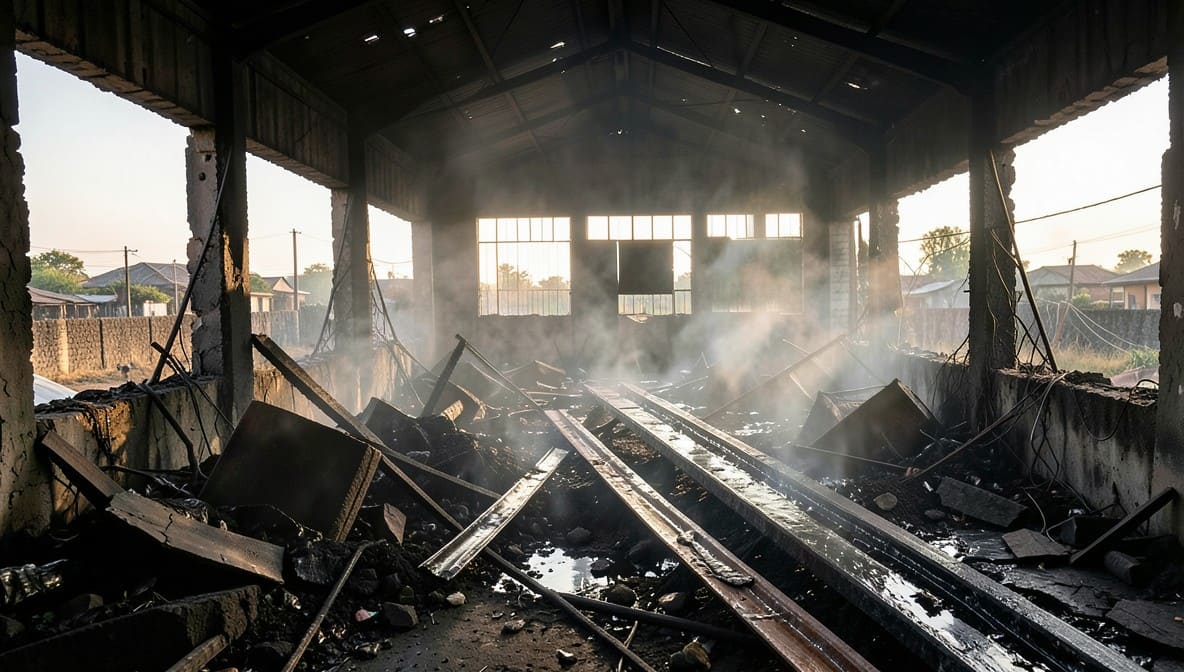
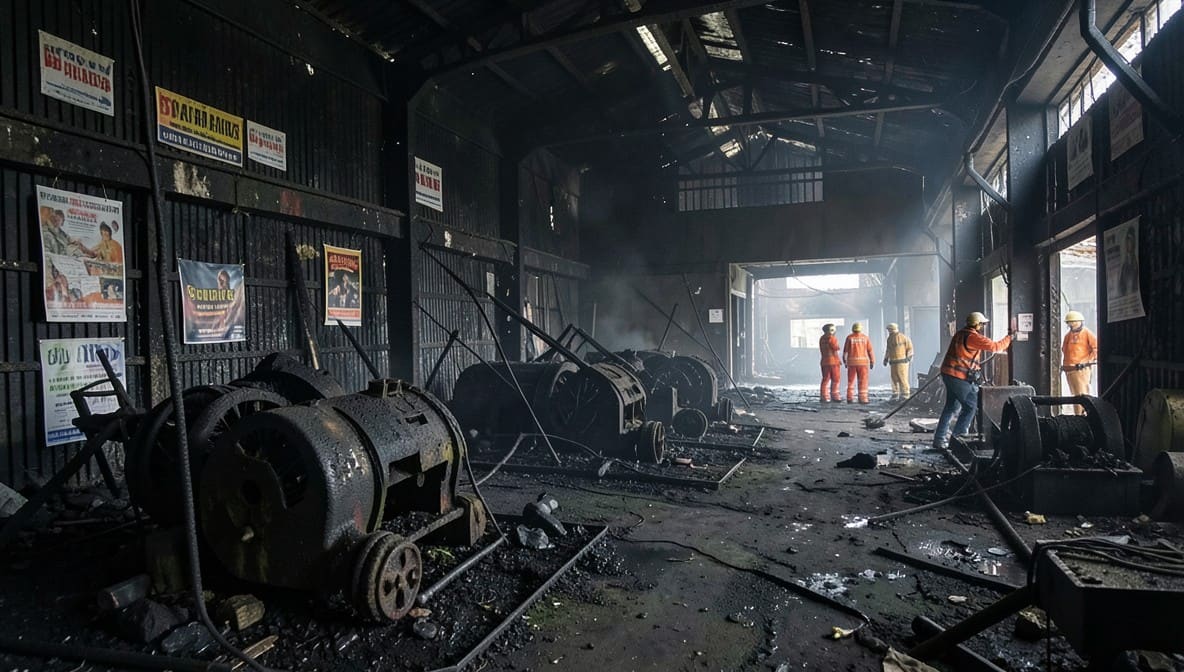
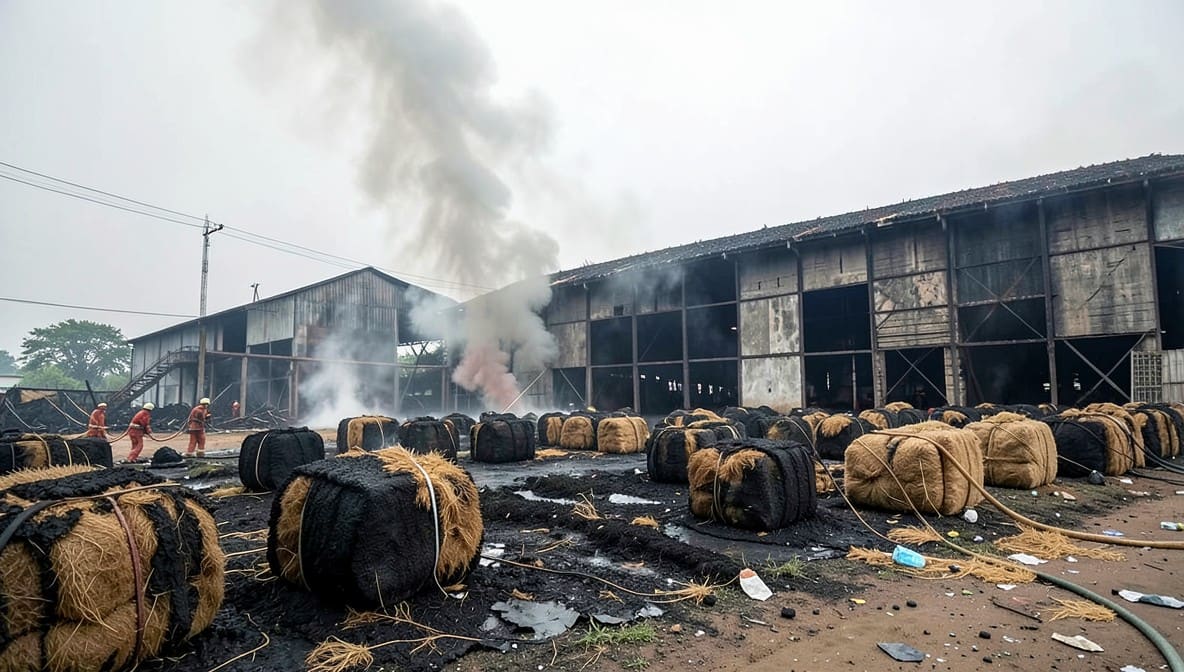
The complainant, Ludlow Jute & Specialities Ltd., held a fire insurance policy with the opposite party, New India Assurance Co. Ltd., for its jute stock, machinery, and buildings at its mill in Sijberia Village, Howrah. On 01.10.2010, a fire broke out in Godown AS-06, causing extensive damage to raw jute stocks. The complainant filed a claim for compensation under the policy. On 30.01.2012, the insurer repudiated the claim on two grounds: (1) the fire originated due to spontaneous combustion, an excluded peril under the policy; and (2) the complainant failed to maintain functional water sprinkler and hydrant systems, violating Section 38(i)(b) of the Factories Act, 1948.
Key Facts
- Fire occurred on 01.10.2010 at Godown AS-06 of Ludlow Jute & Specialities Ltd.
- Claim filed with insurer shortly after the incident
- Survey report dated 09.05.2011 concluded fire was due to spontaneous combustion
- Repudiation letter issued on 30.01.2012 by New India Assurance Co. Ltd.
- Complainant submitted evidence including:
- Daily stock statements for Godowns AS-06, AS-05, AS-04, and AS-02 from 01.09.2010 to 30.09.2010
- Temperature data from Regional Meteorological Centre, Alipore, Kolkata, for September 2010: minimum 21.60°C, maximum 35.04°C
- Certificate from Indian Jute Industries’ Research Association dated 07.05.2012, certifying that jute fibre requires a minimum ignition temperature of 193°C for spontaneous combustion, which is unattainable under ambient conditions in Indian jute godowns
- Fire service report did not indicate any cause of fire; five fire tenders responded promptly
- No injury or damage to workers or factory infrastructure reported
Procedural History
- 01.10.2010: Fire incident at Ludlow Jute mill
- 09.05.2011: Surveyor’s report submitted by insurer concluding spontaneous combustion
- 30.01.2012: Insurer issued formal repudiation letter
- 2013: Original consumer complaint filed before NCDRC (No. NC/CC/227/2013)
- 2020 - 2024: Proceedings delayed due to adjournments and non-filing of synopsis
- 19.09.2025: NCDRC directed parties to prepare for final hearing on cause of fire
- 28.01.2026: Hearing held; parties submitted detailed arguments and evidence
- 21.04.2026: Final judgment delivered
The Parties' Positions
For the Complainant (Ludlow Jute & Specialities Ltd.):
- Argued that the insurer failed to provide any scientific or documentary proof of spontaneous combustion
- Presented temperature data and expert certification proving ambient conditions could not trigger self-ignition of jute
- Contended that the surveyor’s conclusion was based on process of elimination, not positive evidence
- Asserted that fire-fighting systems were functional; five fire tenders arrived promptly
- Relied on New India Assurance Co. Ltd. v. Mudit Roadways (2024) 3 SCC 193 and Orion Conmerx Pvt. Ltd. v. National Insurance Co. Ltd. (2025 INSC 1271)
For the Respondent (New India Assurance Co. Ltd.):
- Relied on the surveyor’s report and repudiation letter
- Argued that spontaneous combustion is a known risk with jute and no other cause was identified
- Denied the complainant’s temperature and certification evidence as "argumentative" and "bald denial" without rebuttal data
- Invoked exclusion clause and alleged non-compliance with Factories Act
Relief Sought
The complainant sought payment of the full claim amount of Rs. 1.25 crore, interest, and costs. The insurer sought dismissal of the complaint.
The Legal Issue
The central question was whether an insurer can repudiate a fire insurance claim by invoking an exclusion clause for "spontaneous combustion" when the cause of fire is not scientifically established, and whether the burden of proof lies with the insurer to demonstrate the applicability of the exclusion.
Arguments Presented
For the Appellant/Petitioner
The complainant relied on two landmark Supreme Court judgments: New India Assurance Co. Ltd. v. Mudit Roadways (2024) 3 SCC 193 and Orion Conmerx Pvt. Ltd. v. National Insurance Co. Ltd. (2025 INSC 1271). It argued that once it is established that a loss occurred due to fire and there is no allegation of fraud or intentional act by the insured, the cause of fire becomes irrelevant. The insurer’s burden to prove the exclusion clause applies was not discharged, as the survey report offered no empirical data to support spontaneous combustion. The expert certificate from the Indian Jute Industries’ Research Association, corroborated by meteorological data, conclusively negated the possibility of self-ignition under ambient temperatures.
For the Respondent/State
The insurer contended that spontaneous combustion is a recognized peril in jute storage and that the surveyor’s conclusion, based on absence of other plausible causes, was reasonable. It argued that the complainant failed to prove the fire was caused by an insured peril and that the non-functional hydrant system violated statutory obligations under the Factories Act. The insurer maintained that the complainant’s evidence was speculative and lacked corroboration.
The Court's Analysis
The Commission undertook a rigorous analysis of the insurer’s reliance on the exclusion clause. It emphasized that fire insurance is a contract of indemnity designed to protect the insured against financial loss from accidental fire. The Supreme Court in Orion Conmerx (2025 INSC 1271) had unequivocally held that "once it is established that the loss is due to fire and there is no allegation or finding of fraud or that the Insured is the instigator of the fire, the cause of fire is immaterial and it will have to be assumed and presumed that the fire is accidental and falls within the ambit and scope of fire policy."
"The precise cause of a fire, whether attributed to a short-circuit or any alternative factor, remains immaterial, provided the claimant is not the instigator of the fire."
The Commission noted that the insurer’s survey report offered no physical, chemical, or instrumental evidence of spontaneous combustion. The conclusion was based solely on deductive reasoning - eliminating other causes without affirmatively proving spontaneous combustion. This approach was deemed legally insufficient.
The complainant’s evidence - temperature logs from September 2010 and the expert certification from the Indian Jute Industries’ Research Association - established that the ambient temperature (max 35.04°C) was far below the 193°C required for jute to self-ignite. The insurer did not rebut this with any scientific counter-evidence. The Commission held that a mere bald denial of evidence, without any material to contradict it, cannot sustain a repudiation.
Regarding the second ground - non-functional hydrants - the Commission observed that five fire tenders arrived promptly and fought the fire. No injury or damage to personnel or infrastructure was reported, negating any violation of the Factories Act. The insurer’s reliance on this ground was therefore untenable.
The Commission also referenced its own prior decision in Sunbeam Vanijya Pvt. Ltd. v. National Insurance Co. Ltd. (2023) and Gayatri Sugars Ltd. v. New India Assurance Co. Ltd. (2024), both of which held that exclusion clauses cannot be invoked on speculative grounds.
The Verdict
The complainant succeeded. The NCDRC allowed the complaint and directed New India Assurance Co. Ltd. to pay Rs. 74,29,117/- as compensation, together with 6% interest from the date of filing of the complaint on 01.01.2013 until actual payment. All pending applications were disposed of. The insurer’s repudiation was set aside as legally unsustainable.
What This Means For Similar Cases
Burden of Proof Rests Entirely on the Insurer
- Practitioners must insist that insurers produce scientific, empirical evidence to substantiate exclusion clauses like spontaneous combustion, arson, or wilful damage
- Bald denials or reliance on survey reports based on elimination are insufficient under current jurisprudence
- Expert certifications and meteorological data can effectively rebut speculative claims
Cause of Fire Is Irrelevant Unless Fraud Is Proven
- In fire insurance claims, the focus must shift from "what caused the fire" to "was the insured responsible?"
- If no fraud or intentional act is alleged or proven, the insurer must pay regardless of whether the fire was due to short-circuit, lightning, or spontaneous combustion
- This principle now applies uniformly across all consumer forums and courts
Exclusion Clauses Cannot Be Used as Escape Hatches
- Insurers cannot use exclusion clauses to avoid liability in the absence of concrete proof
- Policy wordings must be interpreted strictly against the insurer (contra proferentem)
- Courts will not uphold repudiations based on assumptions, especially when the insured provides credible scientific rebuttal